Chitra Nakshatra & Shukla Dwadashi: A Day of Radiance and Renewal
When the Moon dwells in the architect's star on the twelfth tithi, the cosmos invites beauty, refinement, and heartfelt offering.
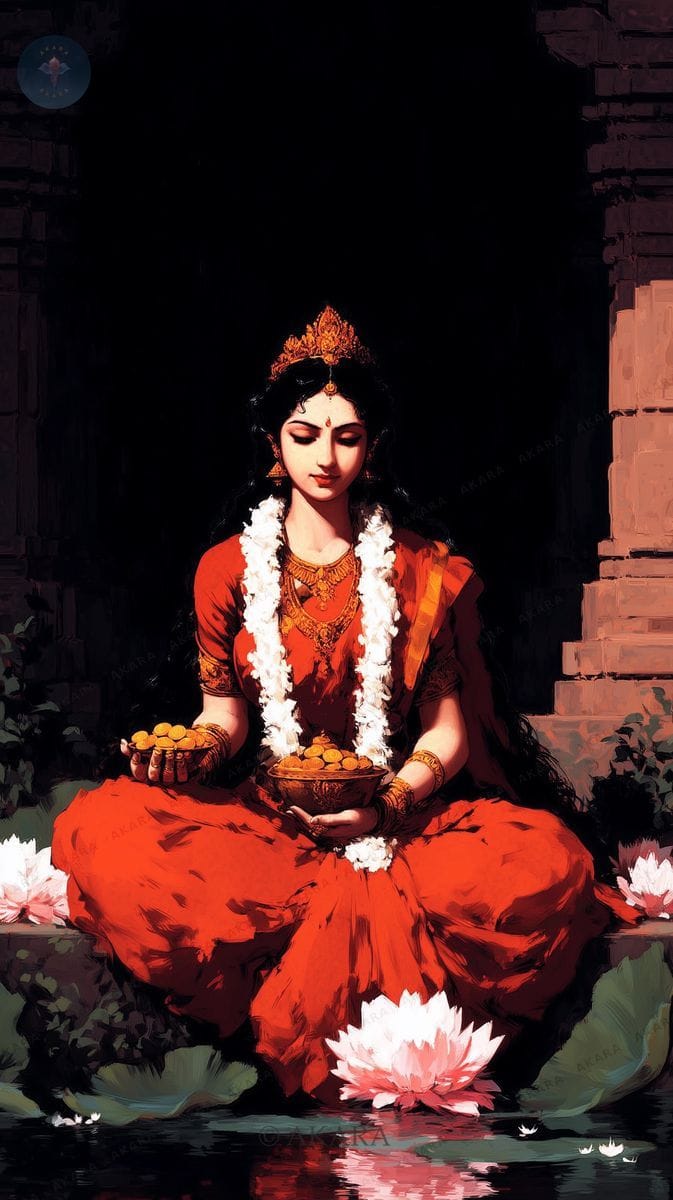
Every morning, before the world fills with its noise, the panchang whispers the quality of the day. Today, on Shukla Dwadashi — the luminous twelfth day of the waxing fortnight — the Moon moves through the fourth pada of Chitra nakshatra and rests in Tula rashi. The Sun stands firm in Vrishabha, grounded and unhurried. This is not a moment for reckless haste or hollow ambition. It is a day the tradition regards as alive with creative intelligence, devotional warmth, and the quiet satisfaction of work done with care. Understanding that texture, through the lens of Vedic jyotish and Sanatana Dharma, is what the panchang offers us each dawn.
The Panchang as a Living Map
The panchang — literally 'five limbs' (pancha: five, anga: limb) — measures the day through five sacred coordinates: tithi (lunar day), vara (weekday), nakshatra (lunar mansion), yoga (a combined solar-lunar arc), and karana (half-tithi). Together they sketch the energetic climate of a day with remarkable subtlety. This is not fatalistic fortune-telling. The tradition is clear: the panchang does not determine your choices; it illuminates the current of the river so you may row with greater wisdom. As the Vishnu Purana reminds us, kāla — time — is one of the great manifestations of the Divine. To attune to its rhythm is itself a form of bhakti, of devotion.
Today's reading — Shukla Dwadashi, Chitra nakshatra pada 4, Yoga Variyana, Moon in Tula, Sun in Vrishabha — composes a day of particular refinement and purposeful beauty.
Chitra Nakshatra: The Star of the Architect
Chitra (Sanskrit: चित्रा, 'the bright one' or 'the brilliant jewel') is the fourteenth nakshatra in the sequence of twenty-seven. It spans from 23°20' Kanya (Virgo) to 6°40' Tula (Libra), and today's Moon occupies its fourth pada, which falls entirely within Tula rashi, giving this nakshatra's energy a distinctly Venusian, relationship-oriented flavour.
Chitra's presiding deity is Tvashtr (also called Vishvakarma in some traditions) — the divine architect and master craftsman of the cosmos. Its symbol is the luminous pearl or bright jewel, and its planetary ruler is Mars (Mangala). This combination — Martian drive governed by the principle of divine craftsmanship — produces an energy that is precise, creative, and beauty-seeking. Chitra is the nakshatra of the artist, the architect, the jeweller, the designer, the writer who labours over a single sentence until it shines.
Pada 4 of Chitra falls in the Libra navamsha, amplifying themes of partnership, aesthetic harmony, and refinement in relationship. The Moon here is comfortable, even luminous. This is a time when the mind reaches naturally toward beauty — in form, in word, in gesture.
"The universe itself is Chitra — a brilliant tapestry woven by the divine artisan." — A traditional reflection on Tvashtr's cosmic craft.
For the seeker, Chitra nakshatra counsels: whatever you do today, do it with care and intention. A meal prepared with love, a letter written with attention, a puja arranged with fresh flowers — these acts carry unusual potency when Chitra is active.
Shukla Dwadashi: The Tithi of Vishnu and Completion
In the Vedic calendar, the tithi today is Shukla Dwadashi — the twelfth day of the bright (waxing) fortnight, Shukla Paksha. The Moon has been growing for twelve days toward her fullness, and the accumulated lunar energy is powerful and almost ripe.
Dwadashi is considered among the most auspicious tithis. It is traditionally associated with Bhagavan Vishnu — the sustainer, the preserver, the one who holds the cosmic order in gentle balance. Ekadashi (the eleventh tithi) is the day of fasting and surrender; Dwadashi is the day of gentle breaking of that fast, of nourishment and renewal. The Skanda Purana and Padma Purana both extol Dwadashi as a tithi favourable for charity (dana), worship (puja), beginning new projects rooted in dharmic purpose, and acts of service to others.
Activities the tradition favours on Dwadashi:
- Devotional worship, especially of Vishnu, Lakshmi, and their forms
- Dana — giving, whether food, time, or resources, to those in need
- Beginning creative or constructive work that will endure
- Reconciliation and relationship repair — Tula's influence deepens this
- Study of scripture or any wisdom literature
Activities calling for patience: major confrontations, speculative financial risk, or any act driven purely by ego ambition may feel out of step with the day's quieter, more refined current.
Moon in Tula: The Heart Seeks Harmony
With the Moon in Tula rashi (Libra) — the sign of the scales, of Venus, of balance — the emotional intelligence of the day tilts toward fairness, beauty, and connection. Tula is a sign that values relationship above solitude, negotiation above force, grace above brute efficiency.
Combined with Chitra nakshatra's creative radiance and Dwadashi's devotional warmth, this is a day when the heart is particularly open to beauty and to the Other. It is a good day to mend what has been strained, to appreciate what is often taken for granted, and to express gratitude — in prayer, in conversation, or simply in the quiet interior of one's own attention.
Yoga Variyana — today's panchang yoga — is counted among the moderately auspicious yogas and supports careful, considered action rather than explosive leaps. It reinforces the day's overall counsel: move with intention, not with haste.
A Reflective Practice for Today
The Vedic tradition does not merely ask us to observe the day's quality — it invites us to participate in it consciously. Here is a simple practice rooted in the spirit of this panchang:
Morning: Light a diya (lamp) and offer it before your family deity or a simple image of Vishnu or Lakshmi. Chitra nakshatra responds to light and to beauty — a fresh flower, a clean altar cloth, a moment of stillness before the lamp's flame are all in harmony with the day's quality.
Through the day: Choose one task — however ordinary — and bring complete, unhurried attention to it. Cook with care. Write with care. Speak with care. Tvashtr, the divine artisan, is honoured not through grand gestures but through the loving precision of small acts.
Evening: Offer a moment of dana — give something, even if it is only kind words or an attentive ear, to someone who needs it. Dwadashi asks us to be generous.
A Closing Reflection
The panchang is one of the oldest and most practical expressions of Sanatana Dharma's vision: that time is not an empty container, but a living, sacred presence. Vedic astrology today — rooted in the same wisdom that informed the Vedanga Jyotisha, composed more than three thousand years ago — does not promise outcomes. It offers orientation. On Shukla Dwadashi, beneath the light of the Moon in Chitra's radiant field, the invitation is simple and profound: create something beautiful, offer it with love, and remember that you yourself are part of the great tapestry the divine artisan is always weaving.
Whatever you do today, do it with care and intention — for Chitra honours the luminous in the ordinary.
शान्ताकारं भुजगशयनं पद्मनाभं सुरेशम् śāntākāraṃ bhujagaśayanaṃ padmanābhaṃ sureśam
The peaceful one resting on the serpent, lotus-naveled lord of the gods. Vishnu in his element — holding the universe together while looking effortlessly serene.
Questions & answers
What is Chitra nakshatra and why is it considered significant in Vedic astrology?
Chitra is the fourteenth of the twenty-seven nakshatras, spanning late Virgo into early Libra. Its presiding deity is Tvashtr, the divine craftsman, and its symbol is a brilliant jewel. It is associated with creativity, precision, beauty, and skilled work. Days governed by Chitra are traditionally considered auspicious for artistic endeavours, skilled craftsmanship, and any work requiring careful attention to form and detail.
What activities are favoured on Shukla Dwadashi according to the Vedic tradition?
Shukla Dwadashi, the twelfth day of the waxing fortnight, is associated with Bhagavan Vishnu and is considered auspicious for devotional worship, charitable giving (dana), beginning constructive projects, acts of service, and reconciliation. Texts like the Skanda Purana and Padma Purana highlight Dwadashi as a tithi of spiritual merit and renewal.
Is the daily panchang a form of prediction or guidance?
The panchang is best understood as traditional guidance rather than prediction. Vedic jyotish maps the quality and current of time — much as a weather forecast describes conditions without controlling them. The tradition is clear that human intention and dharmic action remain sovereign; the panchang illuminates the energetic climate so one may act with greater wisdom and alignment.
What does Moon in Tula (Libra) mean for the day's emotional quality?
When the Moon transits Tula rashi, the emotional tone of the day tends toward harmony, fairness, appreciation of beauty, and a desire for connection. Tula is ruled by Venus and is a sign that values balance and relationship. This makes days with Moon in Tula particularly well-suited for reconciliation, collaborative work, heartfelt appreciation, and any activity that benefits from grace and diplomacy.
How can someone unfamiliar with Vedic astrology begin using the panchang in daily life?
A simple way to begin is to check the tithi and nakshatra each morning and read a brief summary of their qualities. From there, one can align even small acts — how one begins the workday, which tasks one prioritises, how one approaches relationships — with the day's energy. Starting with a morning lamp-lighting (diya) and a moment of intention-setting is a practice accessible to anyone regardless of their depth of jyotish knowledge.