Eight Bada Mangal 2026: The Rare Season of Hanuman's Grace
A once-in-a-generation alignment of Adhik Jyeshtha is stretching Bada Mangal across eight sacred Tuesdays — an extraordinary window of bhakti, seva, and Hanuman's boundless grace.
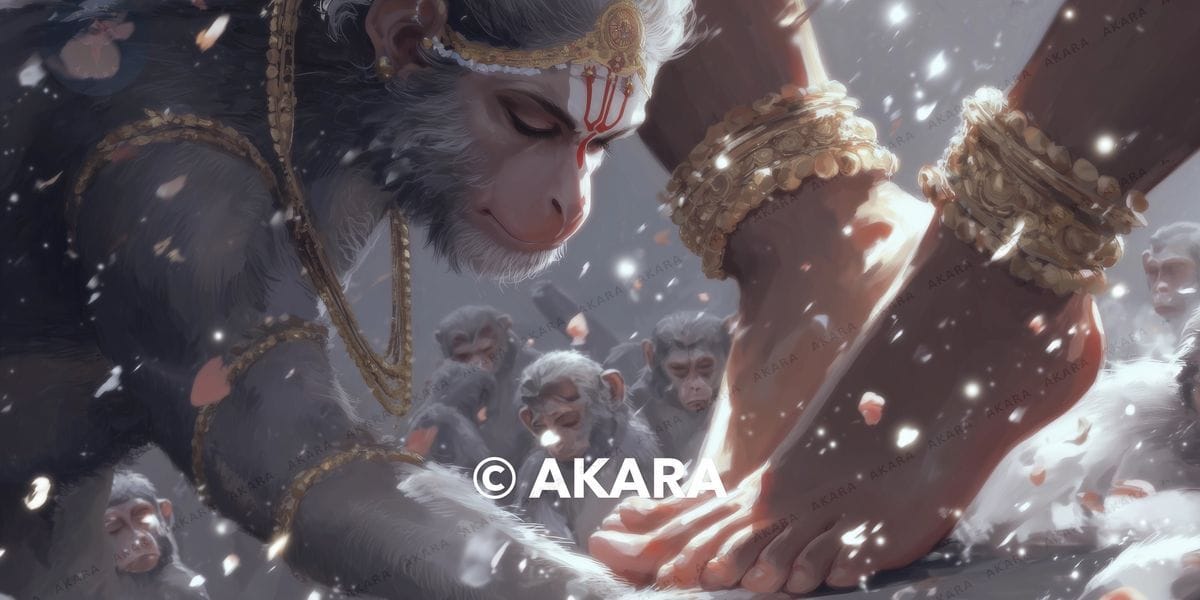
Across the ancient lanes of Lucknow, the scent of jasmine oil rises before dawn on every Tuesday of the month of Jyeshtha. Thousands queue at the Aliganj Hanuman Mandir, bhandaras of puri and halwa stretch across entire blocks, and the Hanuman Chalisa rolls out of every corner in continuous waves. This is Bada Mangal — the Great Tuesday — one of the most exuberantly living festivals in all of Sanatana Dharma. And in 2026, thanks to a rare calendrical grace called Adhik Maas, this beloved season is not four or five Tuesdays long as in a normal year, but eight — a spiritual window that, according to tradition, returns only once every fifteen to twenty years.
Bada Mangal: What It Is and Why It Matters
<cite index="21-3,21-4">Bada Mangalwar — also known as Bada Mangal or Budhwa Mangal — is a deeply revered Hindu observance dedicated to Lord Hanuman, celebrated on the Tuesdays of the Hindu month of Jyeshtha, which usually falls in May and June.</cite> The name is beautifully transparent: Bada (Sanskrit/Hindi: great, large) and Mangal (Tuesday, but also auspiciousness, well-being). <cite index="21-12,21-13">Since Tuesday is already considered especially auspicious for worshipping Hanuman Ji, the Tuesdays of Jyeshtha month are believed to carry even greater spiritual power — and this observance is particularly associated with faith, service, and devotion.</cite>
<cite index="24-17,24-18">In Hinduism, Tuesday (Mangalavara) is the day of the week considered most auspicious for devotees of Lord Hanuman. The qualities of Hanuman — physical strength, courage, and selfless devotion — are closely associated with Mangala (Mars), which in astrology governs Tuesday.</cite> Jyeshtha, the scorching peak of North Indian summer, adds its own sacred register: heat is understood in Dharmic cosmology as tapas — austerity, purification, transformation. To worship the great devotee of Rama in the blazing heart of summer is itself a form of inner tapas.
Why Eight Tuesdays in 2026 — The Gift of Adhik Maas
Most years, Bada Mangal offers four or five Tuesdays. <cite index="12-1,12-2,12-3">Bada Mangal 2026 is a rare cosmic alignment: there are eight Bada Mangal spread across sixty consecutive days — a spiritual window that, according to the Hindu calendar, occurs roughly once every fifteen to twenty years.</cite>
The reason lies in one of the most elegant features of the Vedic time-keeping system. <cite index="9-1,9-2">The year 2026 features a rare Adhik Jyeshtha Maas — an intercalary or Purushottam Maas — running from approximately May 17 to June 15. This extra lunar month appears once every two to three years to align the lunar and solar calendars.</cite> Because Jyeshtha effectively runs twice — first as Adhika (extra) Jyeshtha, then as Nija (regular) Jyeshtha — <cite index="23-4,23-5">the month of Jyeshtha runs from May 2 until June 29 in 2026, and this extended duration naturally results in eight Tuesdays, all celebrated as Bada Mangal.</cite>
<cite index="19-19">The eight sacred Tuesdays fall on: May 5, May 12, May 19, May 26, June 2, June 9, June 16, and June 23, 2026.</cite> We are, as these lines are read today, in the living heart of this season.
Lucknow's Living Festival: Bhakti Meets Ganga-Jamuni Tehzeeb
No city in India inhabits Bada Mangal quite like Lucknow. <cite index="21-5">The festival is especially famous in Lucknow and many parts of Uttar Pradesh, where temples, streets, markets, and colonies come alive with devotion, bhandaras, prasad distribution, and Hanuman Ji's worship.</cite> But what makes this tradition uniquely precious is its origin story — one that crosses the boundaries of faith.
<cite index="24-5,24-6">Bada Mangal has its origins in Lucknow and is seen as symbolic of the city's syncretic Hindu-Muslim culture — the Ganga-Jamuni tehzeeb — dating back centuries to the era of Nawabi rule of Awadh.</cite> <cite index="24-21">Janab-e-Alia, the Hindu wife of the third Nawab of Awadh, Shuja-ud-Daula, is often credited with founding a Hanuman temple in Aliganj and inspiring the tradition of Bada Mangal.</cite> <cite index="24-23,24-24,24-25">According to popular folklore, in the mid-18th century, she was blessed with a baby boy after praying at the old Hanuman temple in Aliganj. In gratitude, she named her son Mirza Mangli — derived from the word for Tuesday — and in a dream, a divine entity told her to build a new Hanuman temple, thus starting the tradition of Bada Mangal.</cite>
<cite index="24-32">As of 2025, descendants of Muhammad Ali Shah — the ninth Nawab of Awadh — continue to organise bhandaras during Bada Mangal to honour their ancestral tradition and support interfaith harmony.</cite> Bhakti, it seems, has always found a way to dissolve what divides.
<cite index="24-16">Free meals (bhandaras) are distributed to large crowds of devotees each week from an estimated 3,000 food stalls across Lucknow.</cite> <cite index="21-30,21-31">Many devotees also set up pyaau — drinking-water stalls — because Jyeshtha is one of the hottest months in North India, and offering water to travellers, workers, and the poor is considered an act of great punya (merit).</cite>
Hanuman: The Deity of This Moment
Lord Hanuman (Śrī Hanumān) is the Mahābhakta — the supreme devotee — whose entire being is a living instruction in how to serve, how to be fearless, and how to remain humble at the height of one's power. The Sundarkanda of the Valmiki Ramayana — sung and read widely during Bada Mangal — is in essence a portrait of that fearlessness: Hanuman crossing the ocean alone, locating Sita, and never once doubting the grace of Rama.
<cite index="19-1">Bada Mangal is connected with devotion to Lord Hanuman, who represents strength, courage, humility, protection, and selfless service.</cite> The Hanuman Chalisa, composed by Tulsidas in the 16th century, remains the central prayer of the season. <cite index="24-14">During Bada Mangal, a popular prayer is the 40-verse Hanuman Chalisa written by Tulsidas, who once stayed in old Lucknow on his way to Mathura.</cite> The coincidence of geography and devotion is itself an act of grace — the poet-saint passed through the very city where his beloved Chalisa would one day be recited by millions, week after week, through the summer heat.
The Mahabharata offers another beautiful layer to the Budhwa Mangal name. <cite index="23-11,23-12">One traditional belief comes from the time of the Mahabharata, where Hanuman humbled Bhima by appearing as an old monkey — budhwa meaning old or wise — symbolising the importance of humility over pride, giving rise to the name Budhwa Mangal.</cite>
How to Observe Bada Mangal — A Sadhana for the Season
The beauty of Bada Mangal is that its sadhana (practice) weaves the inner and the outer, the contemplative and the communal, into one living fabric.
- Darshan and Puja: Visit your nearest Hanuman temple before sunrise if possible. <cite index="21-7">Devotees offer sindoor and chola, chant the Hanuman Chalisa, and pray for courage, protection, strength, and the removal of obstacles.</cite>
- Offerings: <cite index="20-29">Light a diya with chameli (jasmine) oil — specifically associated with Hanuman Ji's worship — and wear clean red or saffron clothing.</cite>
- Recitation: Chant the Hanuman Chalisa and, if possible, read or listen to Sundarkanda. The 108 names of Hanuman (Hanuman Ashtottara) are equally potent.
- Seva — the heart of the festival: <cite index="19-4,19-5">Unlike many festivals centred only around temple worship, Bada Mangal beautifully combines bhakti, seva, food distribution, water service, community harmony, and Hanuman Ji's worship — making it both spiritually powerful and socially meaningful.</cite> Even if you cannot organise a bhandara, offering water to a stranger on a hot day is a complete act of worship.
- Sankalpa: <cite index="12-9">Taking a sankalpa — a sacred vow or intention — before beginning any spiritual cycle is fundamental in Sanatana Dharma.</cite> With eight Tuesdays available, consider setting a sixty-day intention: a quality to cultivate, a habit to offer up, a service to perform.
<cite index="22-28">Many devotees also observe Bada Mangal to reduce the effects of Shani Sade Sati or Shani Dhaiya, as Hanuman Ji is believed to help in balancing Shani's influence.</cite> Today's Panchang itself — Yoga Shiva, Nakshatra Vishakha — carries a resonance: Vishakha is the nakshatra of both Indra and Agni, ruled by Jupiter, a nakshatra of intense aspiration and eventual fulfilment. To do sadhana today is to walk a path already lit by the cosmos.
A Reflection
In a world that accelerates relentlessly, Bada Mangal offers something quietly radical: the command to stop, to serve, to remember. Hanuman's gift is not magic — it is the courage to cross your own ocean. This year, with eight Tuesdays stretching from May into late June, the tradition offers eight crossings, eight chances to begin again. The bhandara on the street corner is not charity — it is Dharma in action, the recognition that the stranger eating beside you is as much a face of the Divine as the murti inside the temple. Come to the Hanuman temple. Offer water. Recite the Chalisa. Let the season do what it has done for centuries: dissolve fear, build devotion, and return you — quietly, completely — to yourself.
Buddhir balaṃ yaśo dhairyaṃ nirbhayatvamarogitā / Ajāḍyaṃ vākpaṭutvaṃ ca Hanumatsmaraṇādbhavet — "Intelligence, strength, fame, courage, fearlessness, good health, and eloquence: all arise from remembrance of Hanuman." (Traditional verse, widely cited in Bada Mangal sadhana literature)
Eight Tuesdays, sixty days, one unbroken season of grace — Bada Mangal 2026 is a gift that the cosmos offers only once in a generation.
सेवक सेवाधर्मो हि सेवायां तत्परो भवेत् sevaka sevādharmo hi sevāyāṃ tatparo bhavet
Service is the highest dharma; in service, one becomes complete.
Questions & answers
What is Bada Mangal and why is it celebrated?
Bada Mangal — also called Budhwa Mangal — is a sacred series of Tuesdays in the Hindu month of Jyeshtha (May–June), dedicated to Lord Hanuman. Tuesday (Mangalavar) is already auspicious for Hanuman worship, and Jyeshtha amplifies that energy further. Devotees observe puja, chant the Hanuman Chalisa, and perform seva through community feasts (bhandaras) and offering water to travellers. The festival is especially grand in Lucknow, Uttar Pradesh.
Why are there 8 Bada Mangal in 2026 instead of the usual 4 or 5?
In 2026, the Hindu lunar calendar includes an Adhik Jyeshtha Maas — an extra intercalary month added approximately every 2–3 years to align the lunar and solar calendars. This extends the Jyeshtha period from approximately May 2 to June 29, creating eight Tuesdays rather than the usual four or five. Such an alignment is considered to occur only once every 15–20 years, making the 2026 season rare and especially auspicious.
What are the eight Bada Mangal dates in 2026?
The eight Bada Mangal dates in 2026 are: May 5, May 12, May 19, May 26, June 2, June 9, June 16, and June 23. All fall within the extended Jyeshtha/Adhik Jyeshtha period.
How is Bada Mangal connected to Lucknow's syncretic culture?
According to tradition, the festival traces its roots to the Nawabi era of Awadh (18th–19th century). Janab-e-Alia, the Hindu wife of Nawab Shuja-ud-Daula, is credited with founding the Aliganj Hanuman temple after her prayers were answered. Subsequent Nawabs also became patrons of the bhandaras. As of recent years, descendants of the Nawabi family still organise community feasts during Bada Mangal, making it a living emblem of the Ganga-Jamuni tehzeeb — a tradition of interfaith harmony unique to the region.
How can devotees outside Lucknow observe Bada Mangal meaningfully?
Bada Mangal is not bound to any single temple or city. Wherever you are, you can: visit a local Hanuman temple on a Tuesday morning; light a diya with jasmine (chameli) oil; chant the Hanuman Chalisa or Sundarkanda; offer sindoor; and — most importantly — perform some act of seva, such as distributing food, offering water to those in need, or feeding animals. Taking a 60-day sankalpa (sacred intention) at the start of the season is a deeply traditional way to use all eight Tuesdays.