Mahadeva: Who Shiva Is, and What He Asks of the Seeker
On this Monday, as Yoga Siddha graces the panchang, we turn toward the one who is beyond all turning — the lord of dissolution, stillness, and supreme grace.
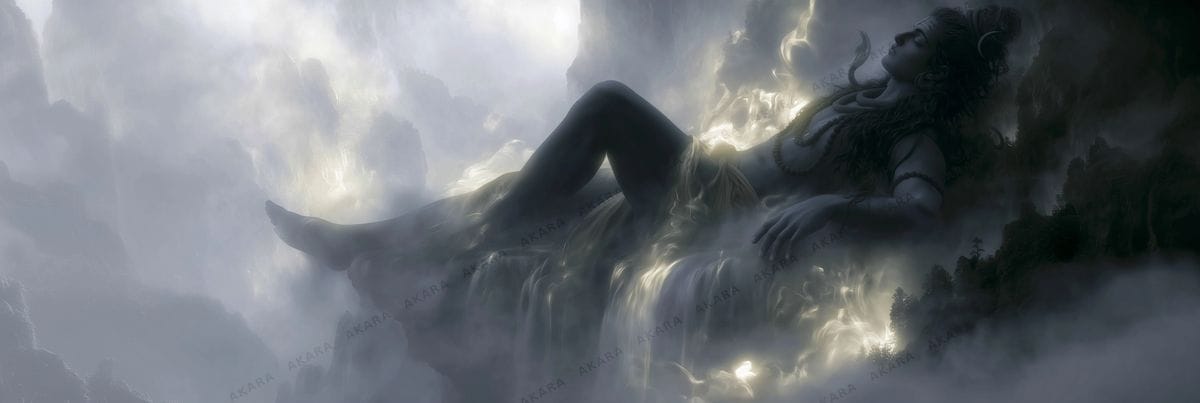
Long before the first temple was built, before the first hymn was set to raga or the first lamp was lit at dusk, there was silence. Sanatana Dharma tells us that this silence was not empty — it was Shiva. The great lord called Mahadeva, the Auspicious One, the destroyer who is also the deepest friend of the seeker, sits at the very heart of Hindu spirituality as a reminder that what we most fear — change, loss, dissolution — is, in truth, the most sacred gift the cosmos offers us.
The Name and the Nature
The word Shiva (Sanskrit: शिव) means simply 'the auspicious one,' 'the benevolent,' 'the good.' It is one of the most tender names in all of Sanatana Dharma — surprising, perhaps, for a deity so often pictured seated among cremation grounds, draped in ash, garlanded with serpents. But this is precisely the teaching. The Shiva Purana and the Linga Purana both insist that what appears terrifying is only the surface of boundless compassion. Shiva dissolves, yes — but he dissolves what is false, what is decayed, what keeps the soul in bondage. His name, Mahadeva (महादेव, 'the great god'), is not a claim of superiority over other deities so much as a recognition that in him, all qualities of divinity are held in their fullest measure.
The tradition places Shiva within the Trimurti — the triune cosmic function shared with Brahma the creator and Vishnu the sustainer — yet Shaiva philosophy, and indeed much of popular devotion, sees him as the Absolute itself, Paramashiva, the ground from which creation, preservation, and dissolution all arise and into which they all return.
Reading the Iconography
To see Shiva is to read a complete scripture in a single glance. Every element of the classical image carries precise meaning:
- The third eye (trinetra): The eye of wisdom that perceives beyond duality. When opened, it burns away illusion — and, in the story of Kamadeva, burns away desire itself.
- The crescent moon (chandrakala): Worn in the matted hair (jata), it signals mastery of time and the mind. The moon waxes and wanes; Shiva holds it steady.
- The river Ganga: Tradition holds that the sacred Ganga descended from the heavens with a force that would have shattered the earth. Shiva caught her in his locks, releasing her gently. He absorbs what overwhelms the world and offers it back as grace.
- The serpent Vasuki: Coiled at his neck, the serpent represents the kundalini — primordial energy — and the fearlessness of one who has transcended death.
- Vibhuti (sacred ash): Smeared across his body, ash is the final truth of all material things. Wearing it, Shiva invites us to remember what remains when everything else burns away.
- The trishula (trident): The three prongs are read variously as the three gunas (rajas, tamas, sattva), the three states of consciousness (waking, dreaming, deep sleep), and the three dimensions of time — all held, all transcended.
- The damaru (hourglass drum): The primordial sound. When Shiva dances as Nataraja, the lord of the cosmic dance, the damaru's beat is the heartbeat of creation itself.
Two Stories the Tradition Loves to Tell
The churning of the ocean (Samudra Manthan): Gods and demons, in uneasy alliance, churned the cosmic ocean to obtain amrita, the nectar of immortality. But before the nectar came a terrible poison, Halahala, which threatened to destroy all existence. No one could hold it. Shiva alone stepped forward, took the poison into his palm, and swallowed it — holding it at his throat, which turned blue. This is why he is called Neelakantha, the blue-throated one. Devotees today who offer water to the Shivalinga on Monday recall this act: he who absorbed the world's poison so that life could continue.
Shiva and the seeker Markandeya: Born with a lifespan of sixteen years, the boy Markandeya was a devoted bhakta of Shiva. When Yama, the god of death, came to claim him, Markandeya clung to the Shivalinga in prayer. Shiva emerged, defeated Yama, and declared his devotee chiranjeevi — immortal. The story is not merely mythological comfort. It is a map: sincere devotion (bhakti) carried all the way to the centre of one's being places the seeker beyond the reach of what is mortal and temporary.
Om Namah Shivaya — The Five-Syllable Heart
The Panchakshara mantra — Na, Ma, Shi, Va, Ya — is one of the oldest and most revered mantras in Sanatana Dharma, appearing in the Krishna Yajurveda within the Sri Rudram (the Namakam section). Each syllable corresponds to one of the five elements: Na to earth (prithvi), Ma to water (jala), Shi to fire (agni), Va to air (vayu), Ya to space (akasha). To chant Om Namah Shivaya is not merely to repeat a formula; it is to acknowledge that every particle of creation is Shiva, and to offer that recognition back to its source.
On this Monday — Somavara, the day of the moon, traditionally Shiva's own day — devotees across India and the world rise before dawn, bathe, and go to the temple or their home shrine. They offer abhisheka: a ritual bathing of the Shivalinga with water, milk, honey, yoghurt, ghee, and rose water, each substance representing a quality they wish to purify in themselves. Bilva leaves (bel patra), sacred to Shiva, are placed with reverence — their three-lobed form said to represent the three eyes, or the Trimurti, or the Aum. Incense rises. The mantra is chanted, softly or aloud, 108 times or simply as many times as the heart allows.
Namami Shamishan Nirvana Rupam — I bow to the lord of all, the very form of liberation. — Shiva Tandava Stotram
What Shiva Asks of the Seeker
In the Shiva Purana, the great lord is asked what he most desires from his devotees. He does not ask for elaborate ritual, costly offering, or learned scholarship. He asks for shraddha — sincere faith — and vairagya — the willingness to let go. These two qualities, paired together, form the path he himself embodies. He sits in stillness (the deepest samadhi) because he is attached to nothing. He dances in ecstasy (the Tandava) because he withholds nothing.
For the contemporary devotee, this is the living teaching. Shiva is not distant or demanding. Monday's panchang today carries the Yoga Siddha — the yoga of accomplishment — and Nakshatra Jyeshtha, associated with the elder, the protector, the one who does not flinch. It is a fitting sky under which to sit with this deity. He asks us to release what we have been clutching — our certainties, our wounds, our carefully managed identities — and to discover what remains in that release. Vedanta would call that remainder sat-chit-ananda: pure being, pure awareness, pure joy. Shiva simply calls it home.
A Monday Reflection
Light a lamp this evening. Place a bilva leaf or simply your open, empty hand before the image or the Shivalinga in your heart. Chant Om Namah Shivaya slowly enough to hear each syllable. Notice that the silence between the syllables is as full as the sound. That fullness — the Akara, the first letter, the primordial resonance from which all sound arises — is Shiva listening. He who swallowed the world's poison and turned it to grace is not indifferent to your offering. He is, the tradition whispers, closer than your own breath.
He who swallowed the world's poison and turned it to grace is not indifferent to your offering. He is closer than your own breath.
गिरिशं गंगाधरं सोमशेखरम् giriśaṃ gaṅgādharaṃ somaśekharam
the mountain lord who holds ganga and wears the moon as his crown. bholenath makes nature his temple.
Questions & answers
Why is Monday considered Shiva's day?
Monday is called Somavara in Sanskrit — soma meaning moon. Shiva wears the crescent moon in his matted hair and is intimately associated with it. Tradition holds that worshipping Shiva on Monday is especially auspicious, and many devotees observe a fast (upavasa) on this day as an act of devotion.
What is the meaning of the Om Namah Shivaya mantra?
Om Namah Shivaya translates as 'I bow to Shiva' or 'I honour the auspiciousness within.' Its five syllables — Na, Ma, Shi, Va, Ya — correspond to the five elements of creation (earth, water, fire, air, space), making it both a personal prayer and a cosmic acknowledgement. It appears in the Sri Rudram of the Krishna Yajurveda.
What is abhisheka and why is it offered to the Shivalinga?
Abhisheka is the ritual bathing of the Shivalinga with sacred substances such as water, milk, honey, yoghurt, ghee, and rose water. Each substance carries symbolic meaning — milk for purity, honey for sweetness, ghee for illumination. The practice recalls Shiva's act of absorbing the Halahala poison to protect creation, and devotees offer it as gratitude and purification.
Who is Neelakantha and what is the story behind the name?
Neelakantha means 'blue-throated one.' During the churning of the cosmic ocean (Samudra Manthan), a deadly poison called Halahala emerged that threatened all of existence. Shiva alone was able to consume it, holding it in his throat rather than swallowing it fully. His throat turned blue from the poison. The name honours his supreme sacrifice and compassion.
What are bilva leaves and why are they sacred to Shiva?
Bilva (bel) leaves come from the Aegle marmelos tree and are considered among the most sacred offerings to Shiva. Their trifoliate shape is said to represent Shiva's three eyes, the Trimurti, or the syllable Aum. The Shiva Purana states that offering even a single bilva leaf with true devotion pleases Shiva more than elaborate ritual without sincerity.