Nirjala Ekadashi 2026: The Supreme Fast of Jyeshtha
Once a year, devotion asks for everything — even water. Here is why millions answer that call.
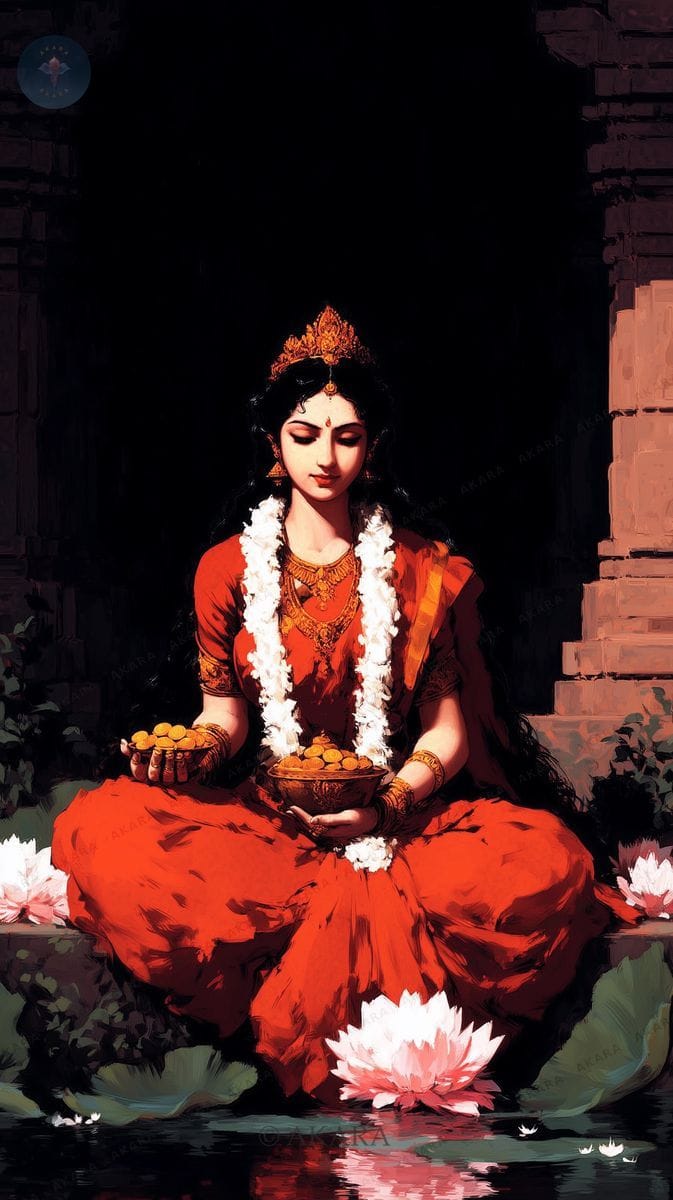
In the blazing heat of Jyeshtha, when summer lies heavy upon the land and the body craves nothing more than a cool draught of water, a remarkable fast arrives. Nirjala Ekadashi — 'the waterless eleventh' — asks the devotee to surrender even the most elemental comfort. No food. No water. Sunrise to sunrise, a full day in the company of Lord Vishnu alone. This year, on Thursday 25 June 2026, millions of seekers across India and throughout the Hindu world will take up that challenge — and the sacred calendar of 2026, shaped by the rare presence of Adhika Jyeshtha Maas, makes this particular Nirjala Ekadashi exceptionally charged.
The Most Powerful Ekadashi of the Year
The Hindu lunar calendar observes twenty-four Ekadashis annually — the eleventh lunar tithi, twice a month, in both the waxing (Shukla Paksha) and waning (Krishna Paksha) fortnights. Each is held sacred, each bears a name and a unique narrative. Yet tradition unanimously crowns one above all others. <cite index="16-1,16-2">Nirjala Ekadashi falls on the Jyeshtha Shukla Paksha Ekadashi — widely and unanimously regarded as the most important and most meritorious Ekadashi of the entire Hindu calendar year — offering the combined spiritual merit of all 24 Ekadashis of the year in a single day of wholehearted, waterless fasting and devotion to Lord Vishnu.</cite>
The word itself is unambiguous. <cite index="16-3">"Nirjala" means "without water" in Sanskrit — pointing to the complete, uncompromising fast that defines this observance: no food, no water, from sunrise on June 25 to the Parana on the morning of June 26.</cite> <cite index="19-6,19-7">Every other Ekadashi fast permits fruit, milk, or at least water. Nirjala permits none of these.</cite> It is a fast that does not negotiate.
Bhima's Question: A Story of Sincere Imperfection
Behind every great observance in Sanatana Dharma stands a living story — and Nirjala Ekadashi is no exception. <cite index="21-24,21-25,21-26,21-27,21-28">Nirjala Ekadashi is also known as Pandava Ekadashi or Bhimseni Ekadashi due to a legend closely associated with it. Bhimsen, the second Pandava brother and a voracious eater, was not able to control his desire for food and could not observe Ekadashi fasting. Except for Bhima, all the Pandava brothers and Draupadi used to observe every Ekadashi. Bhima, upset at his weak determination and feeling he was dishonoring Lord Vishnu, met Maharishi Vyasa to find a solution. Sage Vyasa advised him to observe a single Nirjala Ekadashi fast to compensate for not observing all Ekadashi fasts in the year.</cite>
This is, at its heart, a story of compassion — of a tradition that makes room for human limitation. <cite index="19-27,19-28,19-29">This story matters because it tells you something essential about the spirit of this fast. It was never designed for the perfect devotee. It was designed for someone sincere but imperfect — which is most of us.</cite> Bhima's gift to seekers down the ages is this: one fierce, total, wholehearted day of surrender can hold a year's worth of devotion.
<cite index="22-6">According to scriptures such as the Padma Purana, Bhagavata Purana, and Narada Purana, observing this fast is believed to grant the spiritual merits of all other Ekadashis combined.</cite> <cite index="18-15">An ancient text records Shri Krishna explaining to Yudhishthira that "Nirjala Ekadashi is greater than all sacrifices, or charity to the needy, or the sacrifice of horses (Ashvamedha), or even seeing Bhagwan Vishnu Himself."</cite> One pauses at the magnitude of that claim — and recognises that it is the claim not of a rule-giver but of love itself, for which no measure is ever too great.
A Rare Year: Adhika Maas and the Double Jyeshtha
The 2026 Nirjala Ekadashi arrives in a calendrically unusual year — one that deepens its resonance for attentive seekers. <cite index="25-2,25-3">In 2026, the Hindu Panchang observes the rarer occurrence where the lunar month of Jyeshtha appears twice: first as the regular Jyeshtha, and then as an Adhik Jyeshtha Maas — an extra month.</cite> This intercalary month, which runs from 17 May to 15 June, is known as Purushottam Maas. <cite index="27-15,27-16,27-17">According to Hindu mythology, this additional month was once called "Mal Maas" and considered inauspicious because no deity accepted it as their own. Feeling neglected, the month approached Lord Vishnu and sought refuge. Lord Vishnu compassionately accepted the month and blessed it with his divine name "Purushottam" — meaning "The Supreme Being" — declaring that devotees who worship Him sincerely during this sacred month would receive immense spiritual merit and blessings greater than ordinary worship performed throughout the year.</cite>
<cite index="8-11,8-12,8-13">Nirjala Ekadashi in 2026 holds exceptional importance due to a rare calendar alignment caused by the Adhik month occurring during Jyeshtha. Traditionally, the fast is observed a day after Ganga Dussehra, but this year Padmini Ekadashi was observed after Ganga Dussehra because of the additional lunar month. As a result, Nirjala Ekadashi will be observed on June 25, 2026, after the completion of the Adhik month.</cite> The season of Vishnu's grace — Purushottam Maas — thus pours itself into Nirjala Ekadashi like a river returning to the sea.
Further amplifying the day's auspiciousness: <cite index="16-15,16-16">Thursday (Guruvar) is the day of Lord Vishnu and Jupiter (Brihaspati) — the planet of divine wisdom, grace, and expansion. Nirjala Ekadashi falling on Thursday in 2026 is considered particularly auspicious, combining the maximum spiritual power of the year's supreme Ekadashi with the weekly blessing of Lord Vishnu's own day.</cite>
How to Observe: A Devotee's Guide
The vrat is austere, but it is also beautifully structured. <cite index="20-39,20-40,20-41,20-42">The ritual begins with an evening aarti called Sandhyavandanam on the tenth day (Dashami). The devotee finishes prayers and offerings, then eats a sattvic diet before sunset — a meal that should be devoid of rice.</cite> On the Ekadashi day itself, <cite index="19-34,19-35">the fast begins at sunrise on Ekadashi and ends at sunrise the following day, Dwadashi. Devotees wake before sunrise, take a ritual bath, resolve to observe the complete fast, abstain entirely from food and water throughout the day and night, and set up a Vishnu altar — placing an idol or image of Lord Vishnu or Lord Krishna, offering tulsi leaves, yellow flowers, and a lamp.</cite>
The night of Ekadashi calls for jagaran — a night vigil. <cite index="24-27,24-28">True devotees do not sleep during the night of Ekadashi. Instead, they engage in continuous prayer, singing traditional bhajans and reciting the powerful Vishnu Sahasranama.</cite> <cite index="23-29">Some devotees spend the day reading the Bhagavad Gita or Vishnu Sahasranama.</cite> The next morning brings parana — the sacred breaking of the fast. <cite index="16-5,16-6">Devotees must break the Nirjala Ekadashi fast between 5:25 AM and 10:04 AM on Friday, 26 June 2026. For those who have observed the complete Nirjala fast, the first sip of water after the complete fast is itself an act of deep devotion and marks the completion of the vrat.</cite>
After parana, the tradition of daan — giving — completes the observance. <cite index="22-3,22-4">Devotees are encouraged to donate food, clothing, water, and other essential items to the needy. According to the Padma Purana, these acts of charity are believed to bring immense spiritual merit and help ensure the attainment of Swarga Loka.</cite> On a day when one has experienced thirst, the offering of water to another becomes something genuinely felt.
The Deeper Teaching: Jal, Life, and Surrender
Why water, specifically? <cite index="19-30,19-31,19-32">In Vedic tradition, Jal — water — represents life itself. To willingly abstain from it for a full day is not just physical discipline. It is a declaration that on this one day, your longing for something beyond the physical outweighs your most basic need.</cite> The bhakta, standing in the heat of Jyeshtha, parched and steady, is enacting in their very body the teaching of the Bhagavad Gita: that the Atman is not the body, that the deepest thirst is for the Divine alone.
<cite index="17-6,17-7">For many practitioners, this day is a powerful test of resolve and a gateway to heightened bhakti — devotion, humility, and gratitude. The festival also serves as a reminder of important spiritual themes: renunciation, compassion for all beings, and the cultivation of inner peace amid life's demands.</cite>
In the Akara understanding, every act of devotion — a wallpaper set as a morning offering, a mantra chanted before sleep, an image of Vishnu lit by a single lamp — is a thread in this same weaving. Nirjala Ekadashi is the day when the weaving becomes total. The Panchang for today bears Yoga Shukla — the yoga of purity and brightness — and the Sun rests in Vrishabha, the steadfast earth-sign of sustenance and value. The cosmos seems, quietly, to agree: this is a season to root oneself in what is real, and to discover that what is most real is the grace of the Sustainer, Shri Hari Vishnu himself.
"Om Namo Bhagavate Vasudevaya" — the twelve-syllable mantra that, recited with a Tulasi mala on Nirjala Ekadashi, carries a devotee across all accumulated karma, one bead at a time.
To willingly abstain from water for a full day is a declaration that your longing for the Divine outweighs your most basic need.
शान्ताकारं भुजगशयनं पद्मनाभं सुरेशम् śāntākāraṃ bhujagaśayanaṃ padmanābhaṃ sureśam
The peaceful one resting on the serpent, lotus-naveled lord of the gods. Vishnu in his element — holding the universe together while looking effortlessly serene.
Questions & answers
When is Nirjala Ekadashi in 2026?
Nirjala Ekadashi 2026 falls on Thursday, 25 June 2026, during the Shukla Paksha of the Jyeshtha month. The Ekadashi tithi begins at 6:13 PM on 24 June and ends at 8:10 PM on 25 June. The parana (fast-breaking) window is from approximately 5:25 AM to 10:04 AM on 26 June. Local timings may vary by region; always verify with your regional Panchang.
Why is Nirjala Ekadashi considered the most powerful Ekadashi?
According to the Padma Purana, Bhagavata Purana, and Narada Purana, a devotee who observes this single, complete waterless fast earns the combined spiritual merit of all 24 Ekadashis of the year. The story originates from Sage Vyasa's advice to Bhima (the Pandava) — hence the fast is also called Bhimseni or Pandava Ekadashi. Observing it with sincerity is said to grant liberation and entry into Vaikuntha, Lord Vishnu's divine abode.
What makes the 2026 Nirjala Ekadashi especially rare?
In 2026, the lunar calendar contains an extra intercalary month — Adhika Jyeshtha Maas (Purushottam Maas) — running from 17 May to 15 June. This 'double Jyeshtha' year occurs roughly once every 32–33 months. Nirjala Ekadashi follows immediately after this spiritually intensified month closes, and falls on a Thursday — Lord Vishnu's own weekday — amplifying its auspiciousness further.
Can a person observe a modified fast if a waterless fast is not medically feasible?
Classical scripture directs that those with genuine health concerns, pregnant women, and the elderly may observe a modified form — phalahar (fruits, milk, and sattvic food) — while maintaining the devotional spirit of the day through Vishnu Puja, mantra chanting (Om Namo Bhagavate Vasudevaya), and reading the Bhagavad Gita or Vishnu Sahasranama. The tradition's compassion, embodied in Bhima's own story, recognises that sincere intention matters most.
What charity is traditionally offered on Nirjala Ekadashi?
The Padma Purana specifically commends donating water, food, clothing, umbrellas, footwear, and beds to the poor and to Brahmins on Dwadashi (the day after Ekadashi). Offering clean drinking water to the thirsty is considered especially meritorious given the waterless nature of the fast — the devotee who has experienced thirst becomes a giver of what they themselves have renounced.