Shravana Nakshatra & Krishna Shashthi: Daily Panchang Guidance
On this Krishna Shashthi under Shravana's watchful star, the cosmos invites us to still ourselves and truly hear.
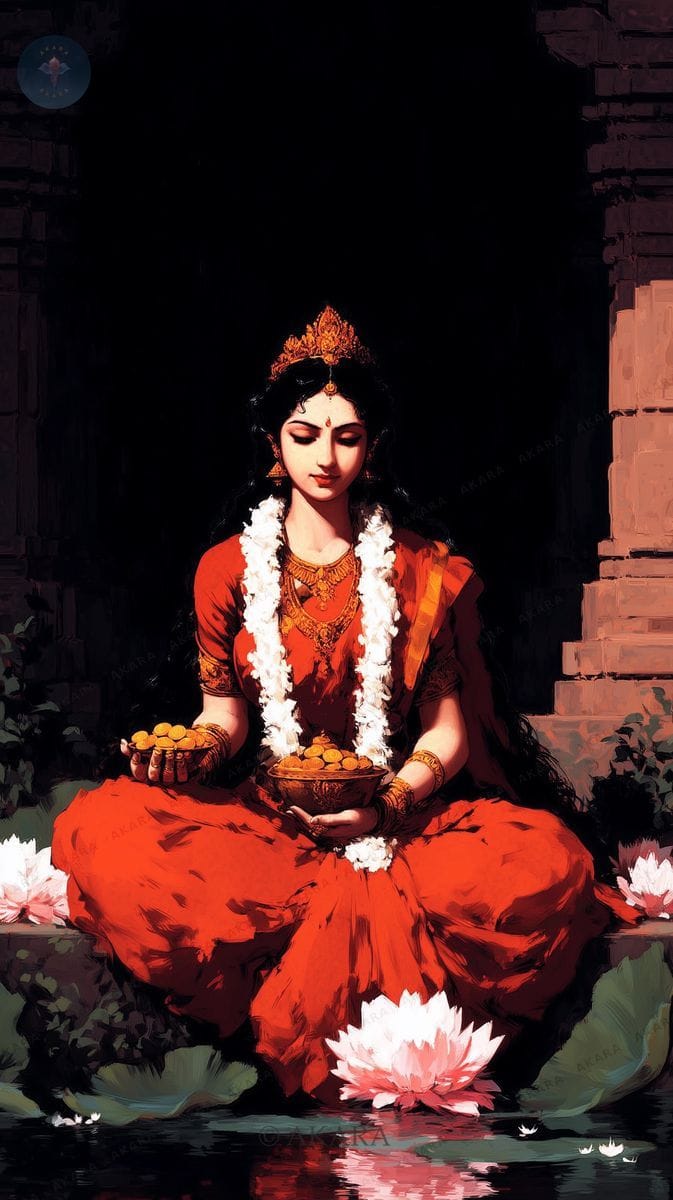
Long before the clock measured our mornings, the Vedic rishis mapped time itself — not as a straight line racing forward, but as a living, breathing field of qualities. Each day carries its own rasa, its own flavour of consciousness. Today, with the tithi resting at Krishna Shashthi, the nakshatra at Shravana's fourth pada, the Moon settled in Makara, and the Sun warming Vrishabha, the panchang offers a particular invitation: to slow the restless mind, to listen with the whole being, and to act with quiet, steady intention. This is not prediction — it is the ancient art of attunement, as alive and useful today as it was in the age of the Vedas.
The Panchang: A Living Map of Time
The word panchang (Sanskrit: पञ्चाङ्ग, pañcāṅga) means 'five limbs' — the five dimensions through which Vedic jyotish reads the quality of any given day: Tithi (lunar day), Vara (weekday), Nakshatra (lunar mansion), Yoga (luni-solar combination), and Karana (half-day unit). Together they form a portrait of the day's underlying energy, the way a physician reads pulse, colour, and breath before offering counsel. To engage with the panchang is not superstition; it is a refined form of sacred attentiveness — a practice woven into the very fabric of Sanatana Dharma.
Today's five limbs present a coherent and meaningful picture: a day that rewards inner work, disciplined effort, and above all, the art of deep listening.
Shravana Nakshatra: The Star of Sacred Listening
Of all twenty-seven lunar mansions, Shravana (Sanskrit: श्रवण, Śravaṇa) carries perhaps the most luminous spiritual instruction. Its very name derives from the root śru — to hear, to listen, to learn. The nakshatra spans 10°00' to 23°20' Makara (Capricorn) and is presided over by Lord Vishnu himself, the Sustainer of the cosmos, whose quality of all-pervading awareness is mirrored in the act of true listening.
The deity of Shravana is Vishnu Trivikrama, whose three strides measured the entire universe — a symbol that what the ear receives can span worlds. The nakshatra's symbol is three footprints, or sometimes an ear; both point to the same truth: reality reaches us through what we are willing to receive, not merely what we project.
Today's Moon transits Shravana's fourth pada, which falls in the Vrishabha (Taurus) navamsha. This pada carries a grounded, even sensory quality — a focus on beauty, on craft, on bringing subtle understanding into tangible form. The fourth pada of Shravana is associated with practical wisdom: insight that does not merely float in the mind but settles into the hands, the voice, the daily gesture.
Traditionally, Shravana is considered highly auspicious for:
- Study and learning, particularly of scripture, music, and oral traditions
- Receiving teachings from elders, gurus, or trusted guides
- Travel with a purpose, especially pilgrimage or journeys of inquiry
- Beginning devotional practices or recommitting to a spiritual discipline
- Listening to sacred recitation — the Vishnu Sahasranama, the Bhagavata Purana, or simple bhajans
The nakshatra counsels patience in one sphere above others: hasty speech. When Shravana is active, the cosmic current asks us to receive before we transmit. Today is a day to ask questions before offering answers, to pause before responding in any conversation that matters.
Krishna Shashthi: The Sixth Tithi in the Dark Fortnight
The tithi is the lunar day, calculated by the angular distance between Sun and Moon. Today is Krishna Shashthi — the sixth day of the waning (krishna) paksha, the fortnight of inward-turning light.
Shashthi (षष्ठी) is traditionally associated with Skanda, the warrior son of Shiva, and with the goddess Shashthi Devi, protector of children and life-force. The sixth tithi in either paksha carries an energy of discriminative clarity — the capacity to separate the essential from the inessential. In the waning phase, this discernment turns naturally inward: what within me is truly nourishing, and what may I gently release?
Krishna paksha tithis are not inauspicious — that is a common misunderstanding. They are inward-facing. Activities that benefit most from the dark fortnight include meditation, introspection, repaying debts (material or karmic), completion of projects, and practices oriented toward ancestors (pitru karma). Bold new ventures, however, traditionally find more wind in their sails during the shukla (waxing) paksha.
"Kālena sarvam prāpnoti" — Through time, all things are attained. The Mahabharata reminds us that sacred timing is not about limitation but about alignment.
Moon in Makara: Steady the Ship
With the Moon in Makara (Capricorn) — the sign of discipline, structure, and patient endurance — the emotional field today inclines toward steadiness rather than spontaneity. Makara is ruled by Shani (Saturn), whose great teaching is that endurance, honesty, and methodical effort are themselves forms of devotion.
This is not a day that sparks with impulsive inspiration. It is a day that rewards those who show up, do the necessary work, and find dignity in the unglamorous. The Moon in Makara combined with Shravana nakshatra creates a particularly effective atmosphere for long-form study, administrative tasks, organisational work, and any craft that demands sustained concentration.
The Yoga for today is Indra — named for the king of the gods, traditionally considered a powerful and favourable yoga associated with courage, leadership, and the capacity to accomplish. Indra yoga lends a quiet confidence to today's endeavours, particularly those that serve a larger community or purpose.
Sun in Vrishabha: Beauty as Dharma
The Sun's transit through Vrishabha (Taurus) — the sign of Venus — brings the solar life-force into contact with the realm of beauty, material sustenance, and the senses as pathways to the sacred. This is a season (roughly mid-May to mid-June) that reminds us that the material world is not an obstacle to the divine but its very expression. Beauty, music, art, fragrance, taste — when offered with awareness, these are acts of bhakti, of devotion.
At Akara, this resonance is felt deeply: the creation of sacred wallpapers, devotional music, and visual art is itself a form of worship — nirmāṇa yajña, a sacrifice made through craft.
A Reflective Practice for Today
Given the panchang's convergence — Shravana's call to listen, Shashthi's inward discernment, the Moon's steadiness in Makara — here is a simple practice for any moment in today's day:
The Shravana Sit (5–10 minutes): 1. Find a quiet place. Sit comfortably with a straight spine. 2. Close your eyes and spend two minutes simply listening — to every sound without naming or judging it. Near and far, pleasant and mundane. Let all of it arrive. 3. Then ask yourself, silently: What is the deepest thing I need to hear today? Do not force an answer. Simply hold the question. 4. Close with a single recitation of Om Namo Narayanaya (OM Na-mo Na-ra-ya-na-ya) — Shravana's presiding mantra — offered with gratitude for the faculty of hearing and the grace of learning.
This is not a ritual demanding initiation or elaborate preparation. It is available to anyone, anywhere, in the spirit of Sanatana Dharma's great democratic generosity: the cosmos itself is always teaching, and today it teaches through the quality of sacred listening.
Closing Reflection
The panchang does not govern us — it counsels us. These ancient limbs of sacred time are like a trusted elder who says, today the wind blows from the east; plant accordingly. Whether you follow the full jyotish tradition or simply find meaning in its rhythms, there is something quietly revolutionary in the act of pausing to ask: what is the quality of this moment, and how may I align with it rather than fight it?
Shravana reminds us that the universe has been speaking since before the first syllable of the Vedas was heard. The question is always the same: are we listening?
Shravana reminds us that the universe has been speaking since before the first syllable of the Vedas was heard. The question is always the same: are we listening?
शान्ताकारं भुजगशयनं पद्मनाभं सुरेशम् śāntākāraṃ bhujagaśayanaṃ padmanābhaṃ sureśam
The peaceful one resting on the serpent, lotus-naveled lord of the gods. Vishnu in his element — holding the universe together while looking effortlessly serene.
Questions & answers
What is Shravana nakshatra and why is it significant?
Shravana is the 22nd lunar mansion in Vedic astrology, spanning 10°–23°20' Makara (Capricorn). Its name comes from the Sanskrit root 'śru' meaning to hear or listen. Presided over by Lord Vishnu, it is associated with learning, sacred listening, disciplined inquiry, and the transmission of wisdom. Days ruled by Shravana are traditionally considered favourable for study, receiving teachings, and devotional practice.
What does Krishna Shashthi tithi mean for daily activities?
Krishna Shashthi is the sixth lunar day of the waning fortnight. The dark fortnight (krishna paksha) is generally an inward-facing period suited to meditation, completion of tasks, introspection, and ancestor-related observances. Shashthi specifically carries an energy of discernment — helpful for separating what is essential from what may be released. It is traditionally associated with Skanda and Shashthi Devi.
Is this panchang guidance a form of prediction or fortune-telling?
No. Vedic panchang guidance is about understanding the qualitative nature of time — not predicting fixed outcomes. It is more akin to reading the weather before planning your day. The tradition holds that certain activities align more naturally with specific tithis, nakshatras, and planetary positions, but free will and personal effort (purushartha) remain primary. This guidance is offered as a tool for attunement, not fate.
What is the significance of Moon in Makara (Capricorn) today?
When the Moon transits Makara, the emotional tone of the day tends toward steadiness, patience, and methodical effort. Makara is ruled by Shani (Saturn), whose lessons centre on discipline, honesty, and endurance. This placement supports focused, sustained work and counsels against impulsive decisions. Combined with Shravana nakshatra, it is particularly supportive of study, administrative tasks, and long-form creative or spiritual work.
What is Yoga Indra in the panchang?
Yoga in the panchang context refers to one of 27 luni-solar combinations calculated from the combined longitude of the Sun and Moon. Indra Yoga is named after the king of the gods and is considered one of the more auspicious yogas, associated with courage, the capacity to lead, and successful accomplishment — especially in endeavours that serve a broader community or purpose.