Purushottam Maas 2026: The Sacred Month That Belongs to God
As Adhik Maas draws to its final days, a timeless story of rejection, surrender, and divine grace unfolds for every seeker willing to listen.
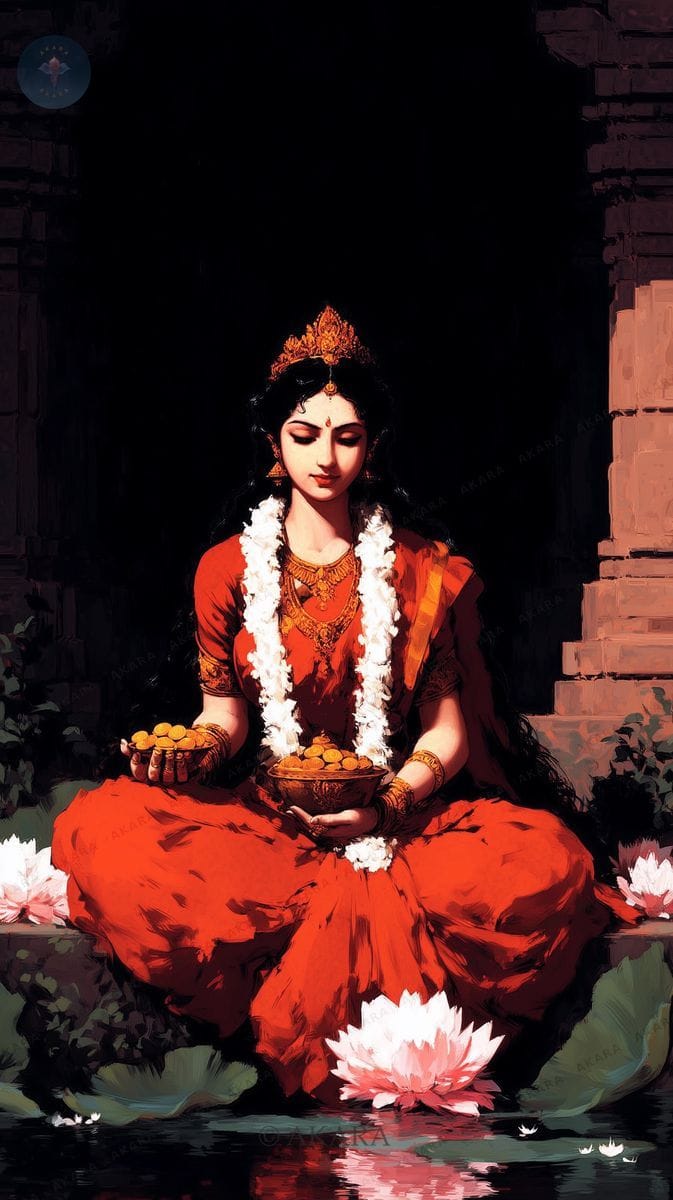
There are thirty days left in a month that nobody wanted. Once every thirty-two or thirty-three months, the Hindu lunisolar calendar quietly inserts an extra month — a thirteenth chapter — to reconcile the moon's cycles with the sun's passage. Ancient custom called it Mal Maas, the impure month: no weddings, no housewarming ceremonies, no auspicious beginnings. And then, according to the Padma Purana, something extraordinary happened. The month itself went to Lord Vishnu, stood before Him with nothing to offer, and simply asked to belong. The Lord gave it His own name. That month is Purushottam Maas — and in 2026 it runs from May 17 to June 15, entering its final, most luminous week even as you read these words.
A Calendar That Breathes
Most of the world measures time with a ruler — a flat, solar line of 365 days. The Hindu Panchang, by contrast, measures time the way a living body breathes: expanding and contracting, lunar and solar rhythms woven together. The Hindu lunar year consists of approximately 354 days, roughly eleven days shorter than the solar year. Left uncorrected, festivals would drift across seasons — Diwali slipping into summer, Holi arriving in autumn. To prevent this, Sanatana Dharma's astronomical sages devised an elegant solution: every thirty-two to thirty-three months, an extra lunar month is inserted into the calendar.
This month carries the name of the lunar month it doubles, prefixed with Adhik (अधिक — meaning 'extra' or 'additional'). In 2026, the doubling falls on Jyeshtha, creating what tradition affectionately calls Dwi-Jyeshtha — a double Jyeshtha, a thirteen-month year. The extra month runs from May 17 to June 15, observed as Adhik Jyeshtha Maas.
Today — the eighth day of June, the Adhika Kalashtami and the monthly Krishna Janmashtami in this sacred intercalary month — we sit in the final seven days of this rare window. The Panchang is alive with resonance.
The Story at the Heart of This Month
Scripture does not merely explain Purushottam Maas; it tells us a story, because in Sanatana Dharma, the deepest truths arrive wrapped in narrative.
In the Sanatana Dharma lunar calendar, each of the twelve months has a presiding deity — a divine guardian who claims it, protects it, gives it purpose and character. Then there is the thirteenth month. It appears, unasked for, in the gaps of the cosmic calendar. No deity claimed it. Priests would not schedule prayers within it. Families would not plan weddings. Communities looked upon it as Mal Maas — the inauspicious month, the one left out.
According to the Padma Purana, this orphaned month sought refuge in Lord Vishnu, approaching Him in humility — not with grand offerings, not with bargaining, but with simple, sincere supplication. Moved by its devotion, the Supreme Lord accepted the month as His own and gave it the most exalted of His names: Purushottama (पुरुषोत्तम — 'the supreme among all beings'). From that moment, what the world had rejected became the most precious. The forgotten month became, in the Lord's own declaration, the holiest month of all.
The spiritual symbolism reverberates far beyond the calendar. What the world overlooks can become radiant when surrendered to the Divine. This is the teaching at the centre of Purushottam Maas — that grace is not earned by status or prestige, but drawn down by sincere longing.
Science and Scripture, Held Together
One of the most striking qualities of Sanatana Dharma is its refusal to separate the mathematical from the sacred. The insertion of Adhik Maas is, on one level, pure astronomical precision: the Hindu lunar year runs short by approximately eleven days annually, and without correction, the luni-solar calendar would lose synchronisation entirely. The extra month restores that alignment — practically, cosmically, and spiritually.
Because Adhik Maas contains no Surya Sankranti — no moment when the Sun transitions into a new zodiac sign — it stands outside the normal grid of worldly auspiciousness. There is no solar momentum carrying things forward toward material outcomes. Weddings, Griha Pravesh (housewarming ceremonies), Upanayana, and major investments are traditionally deferred. The month, in a very precise sense, pauses the world.
And in that pause, something extraordinary opens. When the world's agenda is cleared, space is made for the only agenda that lasts. This is why the Padma Purana declares that spiritual acts performed during Purushottam Maas — japa (जप — mantra repetition), dhyana (ध्यान — meditation), dana (दान — charity), vrata (व्रत — fasting), and homa (होम — sacred fire offerings) — yield Akshaya Phala: imperishable, everlasting merit.
What the Tradition Asks of Devotees
The practices of Purushottam Maas are simple enough for any household, any seeker, at any level of devotion:
- Vishnu Puja and Satyanarayan Katha — worshipping the Lord in His sustaining, all-pervading form, ideally with family or community
- Vishnu Sahasranama — daily recitation of the thousand names of the Lord, each one a window into a different facet of the Infinite
- Bhagavad Gita and Srimad Bhagavatam — reading even a few verses daily compounds spiritual understanding across the month
- Ekadashi fasts — Purushottam Maas adds two additional Ekadashis to the year; 2026 carries twenty-six Ekadashis in all, a rare abundance for devotees of Lord Vishnu
- Dana (charity) — feeding the poor, contributing to temples, offering lamps, serving animals; even a single diya lit with true devotion, says the Padma Purana, carries extraordinary weight
At the temple and in the home, the emphasis is not on grand ceremony but on bhav — the quality of feeling brought to even the smallest offering. A lamp lit in love reaches farther than a ritual performed in distraction.
The Final Seven Days — And Parama Ekadashi
For those who have observed Adhik Maas with diligence since May 17, these final days carry the accumulated warmth of the month's whole arc. For those just discovering this sacred window, there is no shame in beginning here — the tradition is clear that even a sincere start, however late, is honoured by the Lord.
Pausing on June 11 for Parama Ekadashi — the Ekadashi of Adhik Maas, held especially dear by Lord Vishnu's devotees — and then carrying that devotional thread through to June 15 (Adhik Amavasya) forms a powerful closing practice. These final days of the month, marked by the gradual withdrawal of the moon's light, invite inward stillness: less noise, more prayer; less agenda, more presence.
The month then closes, and the regular Nija Jyeshtha begins — but the merit accumulated does not vanish. Akshaya means inexhaustible. The Purana promises that what is sown in these days continues to bloom.
A Reflection: The Month That Teaches Grace
Purushottam Maas is perhaps the most tender teaching in the entire Hindu calendar — not because it asks great deeds, but because it asks for genuine feeling. It was given to the world not by calculation but by compassion: a Lord who saw what was overlooked and claimed it as His own.
For the modern seeker navigating a world of relentless doing, this month extends a quiet invitation. Step outside the usual rhythm. Light a lamp. Say a name. Offer something — your time, your worry, your longing itself — at the feet of the One who, the tradition tells us, is already waiting to receive it.
The month closes on June 15. The door is open now.
What the world overlooks can become radiant when surrendered to the Divine — this is the teaching at the centre of Purushottam Maas.
शान्ताकारं भुजगशयनं पद्मनाभं सुरेशम् śāntākāraṃ bhujagaśayanaṃ padmanābhaṃ sureśam
The peaceful one resting on the serpent, lotus-naveled lord of the gods. Vishnu in his element — holding the universe together while looking effortlessly serene.
Questions & answers
What is Purushottam Maas and when does it occur?
Purushottam Maas, also called Adhik Maas or Mal Maas, is an extra lunar month inserted into the Hindu calendar approximately every 32–33 months to reconcile the lunar and solar years. In 2026, it runs from May 17 to June 15 as Adhik Jyeshtha Maas, and is considered the holiest month, directly presided over by Lord Vishnu in His Purushottam form.
Why is Adhik Maas considered inauspicious for worldly events but spiritually powerful?
Because Adhik Maas contains no Surya Sankranti — no transition of the Sun into a new zodiac sign — it sits outside the usual grid of material auspiciousness. Weddings, housewarmings, and new business ventures are traditionally deferred. However, this same quality makes it supremely auspicious for spiritual practice: with worldly momentum paused, devotional acts such as japa, fasting, charity, and Vishnu worship yield multiplied, imperishable spiritual merit according to the Padma Purana.
What is the story of how Mal Maas became Purushottam Maas?
According to the Padma Purana, the thirteenth month had no presiding deity and was considered inauspicious. Feeling neglected, it approached Lord Vishnu in humility and surrendered to Him. Moved by its devotion, the Lord adopted the month as His own and bestowed upon it His name, Purushottama — 'the supreme among all beings'. From that moment, the rejected month became the most sacred of all.
What are the most important spiritual practices during Purushottam Maas?
Key practices include daily Vishnu Puja and recitation of the Vishnu Sahasranama (the thousand names of the Lord), reading the Bhagavad Gita and Srimad Bhagavatam, observing Ekadashi fasts (there are two special Ekadashis within Adhik Maas itself), performing dana (charity such as feeding the poor and donating to temples), and lighting lamps with sincere devotion. The tradition emphasises that the quality of bhav — genuine feeling and surrender — matters more than elaborate ritual form.
Is it still worthwhile to begin observing Purushottam Maas practices in the final week?
Absolutely. The tradition consistently affirms that sincere devotion begun at any point in the month is welcomed by the Lord. The final days leading to Parama Ekadashi (June 11) and the Adhik Amavasya (June 15) carry powerful energy in their own right. The Padma Purana's promise of Akshaya Phala — imperishable merit — applies to any genuine act performed during this window, however brief.