Parama Ekadashi 2026: The Supreme Fast of the Eleventh Lunar Day
On this rare Thursday Ekadashi in the sacred Jyeshtha month, seekers across the world are invited to pause, fast, and remember the Preserver of all worlds.
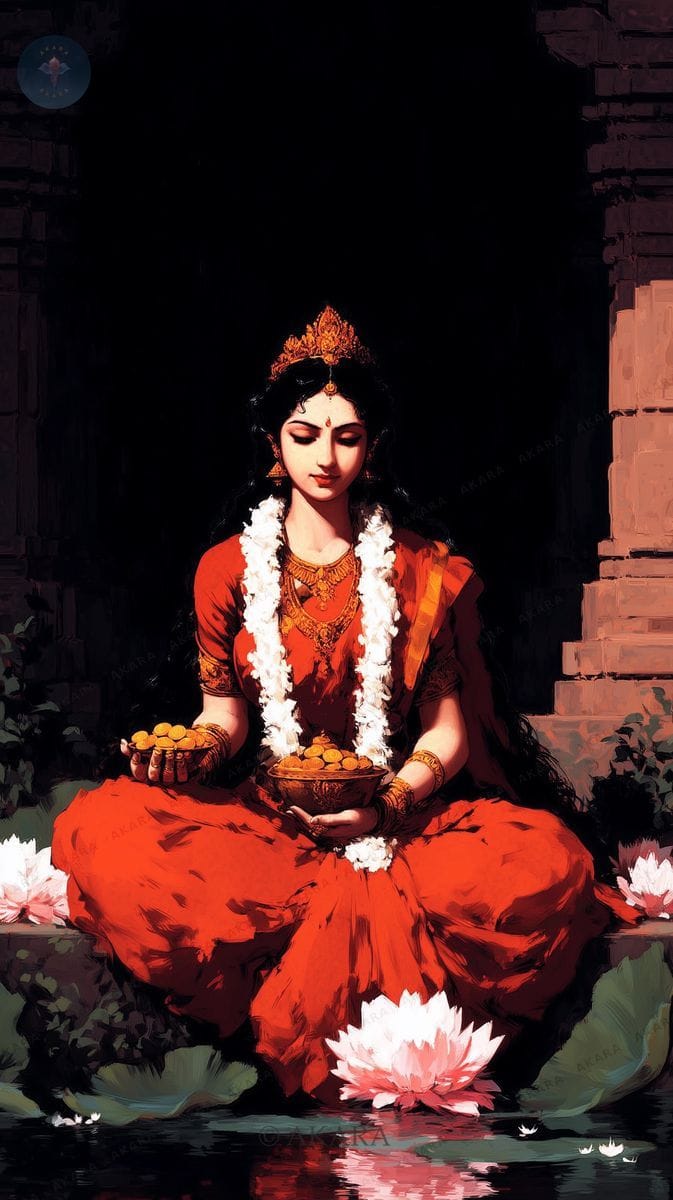
Before dawn breaks on Thursday, 11 June 2026, millions of devotees will have already bathed, lit a lamp before Lord Vishnu, and drawn the quiet boundary that separates this day from all others. Today is Parama Ekadashi — the 'supreme' eleventh — a tithi that arrives in the Krishna Paksha of Jyeshtha, carried further this year by the rare grace of Purushottam Maas. It is a day whose name alone contains its invitation: parama, meaning the highest. To keep it is to step, however briefly, out of the gravity of ordinary life and into the lightness of bhakti.
What Is Ekadashi — and What Does the Name Mean?
<cite index="4-15">Ekadashi is the eleventh tithi of the lunar fortnight, observed twice each lunar month — once during the waning moon (Krishna Paksha) and once during the waxing moon (Shukla Paksha).</cite> The word itself is pure Sanskrit arithmetic: eka (one) + daśī (tenth), signifying the eleventh count. Simple in form, enormous in meaning. <cite index="2-6,2-7">It is considered one of the most sacred tithis, dedicated to Lord Vishnu.</cite>
<cite index="11-10,11-11">There are 24 Ekadashis in a calendar year, occasionally rising to 26 in a year with an Adhika Maas.</cite> <cite index="17-13">This extra month includes two additional Ekadashis — typically Padmini Ekadashi in Shukla Paksha and Parama Ekadashi in Krishna Paksha.</cite> Today's observance belongs to this rare and elevated company.
Today's Tithi: Parama Ekadashi, 11 June 2026
<cite index="4-2,4-3">The Parama Ekadashi tithi begins at 12:57 AM on 11 June 2026 and ends at 10:36 PM. Since the tithi is fully active at sunrise (5:23 AM) on June 11, the fasting day is Thursday, June 11.</cite> Devotees observing the parana — the sacred fast-breaking — should note <cite index="4-22">the window on 12 June: 5:23 AM to 8:10 AM.</cite>
A beautiful confluence marks this day: <cite index="4-6">both Ekadashis in June 2026 fall on Thursdays (Guruvar) — a day traditionally associated with Lord Vishnu and Brihaspati (Jupiter).</cite> <cite index="4-28">Thursday is the day associated with Lord Vishnu and Jupiter, the planet of divine wisdom and grace, amplifying the spiritual energy of the fast.</cite>
<cite index="16-1,16-2">The word parama means supreme, highest, or transcendental, and this Ekadashi is observed during the Krishna Paksha of Adhika Jyeshtha — the sacred Purushottam Maas.</cite> <cite index="16-4">Because it occurs during Lord Krishna's own month, the benefits of fasting, chanting, charity, and devotional service performed on this day are believed to be multiplied many times over.</cite>
Scriptural and Mythic Roots: Ekadashi Devi and the Demon Mura
Every Ekadashi carries a vrat katha — a sacred narrative that illuminates why the day exists. The foundational story is found in the Padma Purana and recounted across Vaishnava literature.
<cite index="11-24,11-25,11-26">As described in the Padma Purana, when the demon Mura began troubling the devas and the world, Lord Vishnu created a radiant energy from Himself. This energy took the form of Ekadashi Devi, who defeated Mura. Pleased with her devotion, Vishnu blessed her and declared that anyone who observes the Ekadashi fast with sincerity will be freed from sins and blessed with health and prosperity.</cite>
<cite index="8-24">This Puranic narrative symbolises the conquest of inner impurity by devotion and self-control, and forms the mythic basis for Ekadashi observance across Vaishnava communities.</cite> The demon Mura — whose name echoes moha, delusion — is not merely a cosmic villain; he is the inner tyranny of unexamined desire. Ekadashi Devi, born of Vishnu's own energy, is the power of viveka (discernment) and bhakti that arises within the sincere seeker.
For the specific narrative of Parama Ekadashi, <cite index="16-5">the glories are described in the Skanda Purana, where Lord Krishna narrated this history to Maharaja Yudhishthira.</cite> <cite index="17-7">The story describes the sage Angiras narrating to King Yudhishthira how a poor Brahmin named Sumana observed this fast despite extreme hardships</cite> — and received extraordinary grace. <cite index="17-4">It is said that the merit of this Ekadashi surpasses that of performing great yagnas and pilgrimages.</cite>
<cite index="12-6">Ancient scriptures such as the Padma Purana, Bhavishya Purana, and Hari Bhakti Vilasa glorify the immense benefits of observing Ekadashi.</cite> The Bhagavata Purana, too, praises the spiritual upliftment of this vrat, and in the Mahabharata, <cite index="7-9">the Pandavas are advised to observe Ekadashi Vrat for spiritual strength and mental clarity.</cite>
How to Observe the Vrat: Puja, Fasting, and Mantra
<cite index="9-1,9-2">Rooted in devotion to Lord Vishnu, Ekadashi transcends a simple dietary restriction. It is designed as a full-day spiritual retreat — an opportunity to step back from material life and redirect one's energy toward the divine.</cite>
The traditional threefold structure of the vrat is:
The Day Before (Dashami): <cite index="6-9">Devotees take a single meal in the afternoon on the day before, ensuring there is no residual food in the stomach on the fasting day.</cite>
Ekadashi Itself:
- Rise in Brahma Muhurta (before dawn), bathe, and offer a sankalpa — a solemn vow of intent before the image or shaligrama of Lord Vishnu or Narayana.
- <cite index="8-10">Devotees worship Vishnu by offering tulasi leaves, chanting Vishnu mantras, and reciting the Vishnu Sahasranama.</cite> The primary mantra for today is Om Namo Narayanaya — eight syllables, each one a refuge. The ashtakshara (eight-syllabled) mantra of Narayana is one of the most ancient and potent in the Vaishnava canon; to repeat it throughout the day is itself the complete observance.
- <cite index="6-11">Eating of all grains and cereals is prohibited during Ekadashi fasting.</cite> <cite index="9-7">Permitted foods include fruits of all kinds, milk and dairy products such as paneer and ghee, makhana (fox nuts), and non-grain flours like singhara atta, kuttu atta, and rajgira atta.</cite>
- <cite index="7-12,7-13">Meditation on Ekadashi is believed to be particularly powerful, as the mind and soul are considered more receptive to spiritual energies on this day. Devotees engage in japa — the repetition of a mantra — or dhyana, focused meditation, to seek inner peace and divine blessings.</cite>
The Parana (Fast-Breaking): <cite index="6-10">Devotees keep a strict fast on Ekadashi day and break the fast on the next day only after sunrise</cite> — and after Hari Vasara (the first quarter of Dwadashi) has passed. <cite index="5-2,5-3">Hari Vasara is the first quarter of the Dwadashi Tithi and is generally avoided for parana; the most auspicious time for breaking the fast is in the morning period after daybreak.</cite>
<cite index="8-17,8-18">Classical dharma texts exempt those for whom fasting is harmful — young children, the elderly, pregnant or nursing women, and the medically unfit. Scriptures permit adapted observances: phalahara (fruit-based diet), charitable acts, and extended chanting — so that health and compassion are preserved alongside devotion.</cite>
Regional Flavours of Devotion
Sanatana Dharma is vast, and Ekadashi is kept in ways as varied as the land itself. <cite index="7-22">In North India, the focus is often on strict fasting and visiting temples, with particular emphasis on the worship of Lord Vishnu.</cite> <cite index="7-23">South Indian communities may incorporate regional deities and emphasise the singing of devotional songs, known as bhajans.</cite> <cite index="7-24">In Gujarat, Ekadashi is observed with night-long prayers, and sometimes includes devotional music.</cite> <cite index="7-25">Eastern Indian traditions, especially in West Bengal, may involve reading or listening to sacred texts related to Ekadashi.</cite>
In Maharashtra — the home of the Akara Times — the warkari tradition centres Ekadashi on Vitthal (a beloved form of Vishnu-Krishna) at Pandharpur. Countless pilgrims begin or complete their wari (pilgrimage) around this tithi, filling the roads of the Deccan with the sound of abhangas and the name of Hari.
Why Ekadashi Matters Now
In an age of relentless stimulation, the Ekadashi vrat offers something almost countercultural: chosen restraint. <cite index="12-13,12-14">Ekadashi is a day of self-control, detachment, and divine remembrance. Fasting on this day is not only a restriction of food, but also of negative thoughts, speech, and habits.</cite>
<cite index="8-5">The Puranas praise Ekadashi as a time when sattva predominates and the mind becomes more receptive to nama-japa and meditation.</cite> Modern sleep science notes that reduced digestive load improves cognitive clarity; Ayurveda has said the same for millennia, observing that the lunar phase alters digestive capacity and prescribes a lighter diet. But the deeper wisdom runs further than biology: <cite index="12-15">on Ekadashi, the subtle energies of the body and mind naturally align toward sattva (purity).</cite>
<cite index="9-31,9-32">Ekadashi returns every two weeks — not as a burden, but as an invitation. Each one is a chance to pause, reconnect, and remember what truly matters.</cite> In the vocabulary of Sanatana Dharma, this rhythm is niyama — the discipline that does not confine but liberates, the way a river's banks do not diminish its power but give it direction and force.
Om Namo Narayanaya — I bow to Narayana. In eight syllables, the entire relationship between the soul and the Preserver is contained.
Today, whether you maintain a strict nirjala fast or simply set your phone aside for an hour and sit with the Lord's name, Parama Ekadashi offers a threshold. Step across it. The one who preserves all worlds is also the one who preserves you — and He is never far from those who remember Him.
Parama means the highest — and today, every act of restraint and remembrance is multiplied by the grace of Purushottam Maas.
शान्ताकारं भुजगशयनं पद्मनाभं सुरेशम् śāntākāraṃ bhujagaśayanaṃ padmanābhaṃ sureśam
The peaceful one resting on the serpent, lotus-naveled lord of the gods. Vishnu in his element — holding the universe together while looking effortlessly serene.
Questions & answers
What is Parama Ekadashi and when does it fall in 2026?
Parama Ekadashi is the Krishna Paksha Ekadashi of the Jyeshtha month, occurring in the rare Purushottam Maas (Adhika Maas). In 2026, it falls on Thursday, 11 June. The tithi begins at 12:57 AM and ends at 10:36 PM IST, with the fast observed through the day and broken on 12 June between 5:23 AM and 8:10 AM.
Why is this Ekadashi called 'Parama'?
Parama means supreme or transcendental in Sanskrit. This Ekadashi is so named because it occurs during Adhika Maas (Purushottam Maas), Lord Vishnu's own sacred extra month, in which the merit of all devotional acts — fasting, chanting, charity — is believed to be greatly multiplied. Its glories are narrated in the Skanda Purana.
What are the fasting rules for Ekadashi?
The primary rule is to abstain from all grains, cereals, and legumes. Fruits, dairy (milk, ghee, paneer), nuts, makhana, and non-grain flours (singhara, kuttu, rajgira) are permitted for a phalahari fast. Those who are unable to fast fully — children, the elderly, pregnant women, and the unwell — may take adapted observances with fruits and chanting. The spirit of the vrat is sincerity of bhakti, not mere physical endurance.
What mantra should I chant on Ekadashi?
The primary mantra is Om Namo Narayanaya — the eight-syllabled (ashtakshara) mantra of Lord Narayana, one of the most ancient and revered Vaishnava mantras. Devotees also chant Om Namo Bhagavate Vasudevaya (the twelve-syllabled mantra), recite the Vishnu Sahasranama (thousand names of Vishnu), and sing bhajans or kirtans in praise of Hari throughout the day.
Can I observe Ekadashi if I have a health condition?
Yes, in an adapted form. Classical dharma texts and the spirit of the scriptures prioritise health and compassion alongside devotion. Those unable to fast completely may take a phalahari diet of fruits, milk, and sattvic foods, or simply observe the day through increased prayer, japa, and abstinence from tamasic foods and habits. As tradition teaches, the essence of Ekadashi is devotion, not physical endurance.