Snana Yatra 2026: When the Lord of the Universe Steps into the Light
On the full moon of Jyeshtha, the Lord of the Universe emerges for his first public darshan of the year — and the great wheel of Puri's sacred season begins to turn.
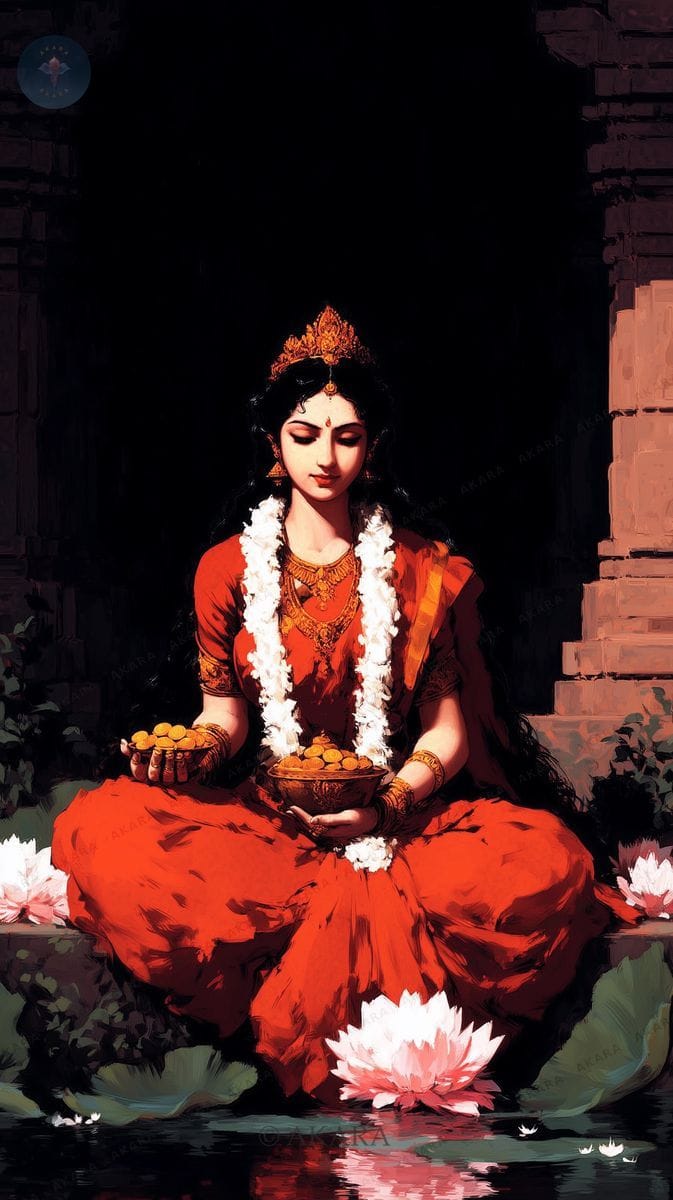
Thirteen days from now, before the monsoon has fully settled over Odisha and while the rest of the Hindu world is still in the quiet weeks between solstice and Ashadha, something ancient and luminous will unfold on the Snana Bedi — the great bathing platform — of the Jagannath Temple in Puri. Lord Jagannath, together with his elder brother Balabhadra and his sister Subhadra, will be brought out in a slow, majestic procession and bathed with 108 pots of sacred water. This is Snana Yatra — Deva Snana Purnima — and it is not merely a ritual. It is the moment the Lord chooses to be seen.
The Festival at a Glance
<CITE_18_3>Every year on the full moon day of the Hindu month of Jyeshtha, devotees across the globe come together to witness one of the most sacred bathing rituals in Hinduism, known as the Jagannath Snana Yatra, Snana Purnima, or Deva Snana Purnima.</CITE_18_3> <CITE_22_4_5>In 2026, it falls on June 29 — one of the most sacred and visually spectacular events in the Hindu calendar, marking Lord Jagannath's first public appearance of the year and setting in motion the grand Rath Yatra journey.</CITE_22_4_5>
<CITE_20_5>Preparations are already underway: the Chief Administrator of the Shree Jagannath Temple has confirmed that arrangements for Snana Purnima and the forthcoming Rath Yatra are in progress.</CITE_20_5> For those on the path of bhakti — devotion — this is the opening chapter of the most sacred pilgrimage season in eastern India.
Jagannath: The Lord Whose Form Defies Form
Before one can understand the Snana Yatra, one must sit quietly with the mystery of Jagannath himself. The name is Sanskrit: Jagat (जगत्, universe) and Nātha (नाथ, lord or master) — the Lord of the Universe. Yet unlike the finely sculpted mūrtis of most Hindu temples, the Jagannath deity is deliberately unfinished — large eyes, abbreviated limbs, a face of infinite simplicity. Theologians of the Puri tradition say this is intentional: the Lord's form is brahma-rūpa, beyond the capacity of any artisan to complete. The unfinished wood holds the mystery that all of creation holds.
<CITE_22_8>According to the Skanda Purana, one of the eighteen Mahāpurāṇas, the day of Snana Yatra is celebrated as the appearance day — the birthday — of Lord Jagannath.</CITE_22_8> <CITE_20_12>Descriptions of the Rath Yatra and its associated ceremonies can also be found in the Brahma Purana, Padma Purana, and the Skanda Purana.</CITE_20_12> The tradition, then, is not medieval folklore but scripture-backed sampradāya (sacred lineage of practice) — rooted, verified, alive.
The Ritual: 108 Pots and the Lord's Retreat
The Snana Yatra unfolds in precise, ancient steps that have changed little across centuries.
<CITE_22_12>The ceremonial bathing rituals begin early in the morning of June 29, shortly after sunrise, with the Pahandi procession bringing the deities to the Snana Bedi.</CITE_22_12> Pahandi (पाहंडि) is the slow, swaying walk of the deities as they are carried — a gait that mimics the gentle motion of an elephant, conveying both power and tenderness.
<CITE_18_5>The festival includes a grand abhishekam (bathing) of Lord Jagannath, Baladeva, and Devi Subhadra with 108 pots of purified water.</CITE_18_5> The water is not ordinary; <CITE_17_8>the idols are ritually bathed with 108 pots of sacred water mixed with sandalwood and aromatic herbs.</CITE_17_8> The number 108 carries its own cosmic weight in Sanatana Dharma — it is the ratio of the Sun's diameter to its distance from Earth, the count of the Upanishads, the beads on a mālā (rosary). Nothing in these rituals is accidental.
After the bathing comes a period that surprises newcomers. <CITE_19_2>After the bath, the deities rest inside the temple for a few days, and public darshan is restricted.</CITE_19_2> This is Anasara — the Lord's convalescence. Tradition says the Lord falls into a mild fever after his elaborate bath and withdraws for approximately fifteen days. Devotees who find the temple closed during Anasara often feel a first pang of longing — and that longing, say the Vaishnava teachers, is itself a form of viraha-bhakti, the devotion born of separation. The Lord is teaching the heart to yearn.
<CITE_21_3>The idols are kept in seclusion during this period called Ansara, representing a time of rest and spiritual renewal.</CITE_21_3> When the Lord re-emerges at Navayauvana Darshan — the vision of eternal youth — just before Rath Yatra, devotees who have held that longing through Anasara experience a joy that is said to be incomparable.
The Wheel Begins to Turn: From Snana Yatra to Rath Yatra
<CITE_22_3>Snana Yatra is observed approximately fifteen to eighteen days before Rath Yatra,</CITE_22_3> making it the true overture of the greatest chariot festival on earth. <CITE_14_6_7>The Rath Yatra — the Festival of Chariots — is one of the most spectacular events in the Hindu calendar. In 2026 it falls on Thursday, July 16, when Lord Jagannath, his elder brother Balabhadra, and sister Subhadra leave the great temple in Puri, Odisha, and ride in towering wooden chariots.</CITE_14_6_7>
<CITE_10_7_8_9>The chariot of Lord Jagannath — called Nandighosa — stands 45 feet high with 16 wheels. Balabhadra's chariot, Taladhwaja, rises 45.6 feet on 14 wheels. Subhadra's chariot, Devadalana, has 12 wheels and stands 44.6 feet high.</CITE_10_7_8_9> Each is constructed fresh every year from sacred timber — <CITE_17_5>hand-crafted in a specific order that follows traditional family hierarchy, with Lord Balabhadra's chariot leading the procession, followed by Goddess Subhadra's, and Lord Jagannath's Nandighosha completing the divine convoy.</CITE_17_5>
One of the most beloved moments in the entire Yatra cycle is the ritual called Chhera Pahara. <CITE_21_6_7>The royal successor of Odisha — the Gajapati King — sweeps the chariot with a golden broom and sprinkles sandalwood water, humbling himself before the Lord. This act symbolises that even the mightiest of kings is merely a servant in the presence of God.</CITE_21_6_7> Here, dharma speaks without a single word: power kneels before the divine.
Snana Yatra Beyond Puri: How to Observe at Home
For the vast majority of devotees — in Pune, in Mumbai, in London, in Houston — attending Puri on June 29 is not possible. The tradition generously accommodates this reality.
<CITE_18_9_10>At home, devotees can perform the sacred Abhishekam of the deities using Panchamrita, followed by traditional bhog offerings and Aarti. The day begins by waking up early, cleaning the altar, and taking a holy bath before beginning the sacred ceremony.</CITE_18_9_10> <CITE_18_11>Holy water can be prepared by adding rose water, a few drops of Ganga water, and sandalwood paste.</CITE_18_11>
Chant the Jagannatha Ashtakam or simply sit with the great invocation from the Nilachala tradition:
Nīlādri-nilaya nityam, namāmi Jagannātham — I salute Jagannatha, who ever dwells on the Blue Mountain.
Offer tulasī (holy basil), white flowers, and coconut. Read a passage from the Skanda Purāṇa or the Gīta Govinda of Jayadeva, <CITE_22_15_16>one of the most ancient living traditions in India, its literary roots going back to at least the 12th century CE when the great poet-saint Jayadeva composed the Gita Govinda at the Jagannath Temple in Puri.</CITE_22_15_16>
And if you can, observe a gentle fast until noon — not as austerity, but as solidarity with the Lord who himself withdraws for a season of quiet.
A Reflection: The God Who Bathes
In most theologies, the divine is remote, untouchable, beyond ablution. In Sanatana Dharma — and nowhere more tenderly than at Puri — the God descends to be bathed, to fall sick, to rest, to long for his own temple. This saulabhya (सौलभ्य, divine accessibility) is the beating heart of the Jagannath tradition. The Lord of the Universe submits to 108 pots of water so that a human being can feel, for one sacred morning, that they are caring for God.
In an age of anxious seeking — scrolling through the noise of what passes for hindu news today, looking for the trending spiritual experience that will finally satisfy — the Snana Yatra offers something quieter and more radical: not a spectacle to consume, but a relationship to enter. Pour the water. Offer the tulasī. Wait through the Anasara. Let the longing deepen.
The Lord will re-emerge. He always does.
The Lord of the Universe submits to 108 pots of water so that a human being can feel, for one sacred morning, that they are caring for God.
शान्ताकारं भुजगशयनं पद्मनाभं सुरेशम् śāntākāraṃ bhujagaśayanaṃ padmanābhaṃ sureśam
The peaceful one resting on the serpent, lotus-naveled lord of the gods. Vishnu in his element — holding the universe together while looking effortlessly serene.
Questions & answers
When is Snana Yatra 2026?
Snana Yatra 2026 — also called Deva Snana Purnima or Snana Purnima — falls on Monday, June 29, 2026. It is observed on the full moon (Purnima) of the Hindu month of Jyeshtha at the Jagannath Temple in Puri, Odisha.
What is the significance of Snana Yatra?
According to the Skanda Purana, Snana Yatra marks the birthday (appearance day) of Lord Jagannath. It is the first occasion in the year when the deities emerge for public darshan and are ceremonially bathed with 108 pots of sacred water mixed with sandalwood and herbs. It also inaugurates the ritual season that culminates in the Rath Yatra chariot festival.
What happens after the Snana Yatra bathing ceremony?
After the ceremonial bath, the deities enter a period of seclusion called Anasara, during which public darshan at the Jagannath Temple is restricted. Tradition holds that the Lord rests and recuperates for approximately fifteen days before re-emerging at Navayauvana Darshan, just before the Rath Yatra procession on July 16, 2026.
How can I observe Snana Yatra at home?
Devotees at home can perform an Abhishekam (ritual bathing) of a Jagannath deity or image using Panchamrita (a mixture of milk, curd, honey, ghee, and sugar) or holy water prepared with rose water, Ganga water, and sandalwood paste. Follow with tulasī offering, bhog (food offering), and Aarti. A gentle fast until noon, reading from the Gita Govinda or Jagannatha Ashtakam, deepens the observance.
What is the connection between Snana Yatra and Rath Yatra?
Snana Yatra is the ritual and devotional overture to the Rath Yatra. Observed approximately 15–18 days before the chariot festival, it marks Lord Jagannath's first public appearance of the year. In 2026, Rath Yatra falls on July 16, with the return journey (Bahuda Yatra) on July 24, and the festival officially concluding with Niladri Bijay on July 28.