Pushya Nakshatra on Shukla Chaturthi: A Day for Nourishment
When the Moon rests in Pushya under Shukla Chaturthi, tradition invites us to nourish what truly matters.
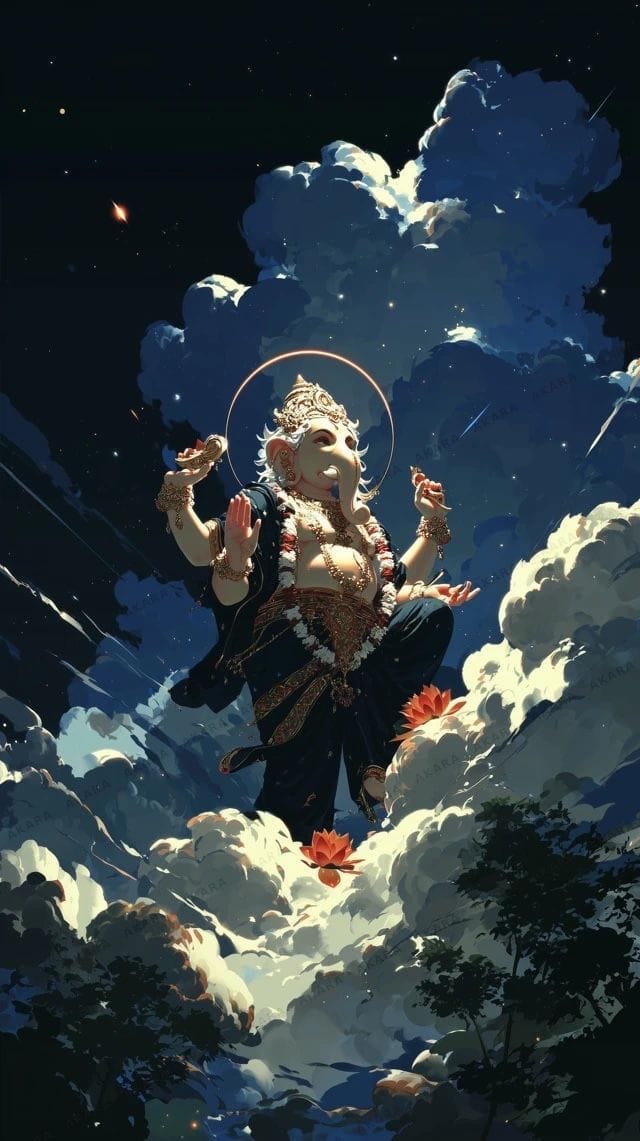
There are days in the Vedic calendar that carry an almost palpable quality of grace — a certain quality of light, as if the cosmos has arranged itself to help us do the good that we have been putting off. Today, with the Moon dwelling in Pushya nakshatra at its fourth pada, transiting through Karka rashi under a waxing Chaturthi tithi, the daily panchang offers precisely such a moment. This is traditional guidance drawn from Jyotisha, not a prophecy; it is an invitation to align with the rhythms that the rishis mapped across millennia for exactly this purpose.
Pushya Nakshatra: The Star of Nourishment
Pushya (पुष्य) occupies the arc between 3°20' and 16°40' of Karka (Cancer) in the sidereal zodiac. Its name derives from the Sanskrit root push — to nourish, to blossom, to sustain. Ancient texts are almost unanimous in honouring it: the Vishnu Purana calls Pushya the most auspicious of all nakshatras (pushyami sarva-nakshatranam), and the tradition of Guru Pushya Yoga — beginning new ventures when Pushya coincides with Thursday — has guided merchants, healers, and householders for centuries.
The presiding deity is Brhaspati (बृहस्पति), the great teacher of the gods, lord of wisdom and sacred speech. The symbol is the udder of a cow — a profoundly elemental image of nourishment freely given. The ruling planet is Saturn (Shani), which might seem surprising for so gentle a star, but Saturn here is the disciplined steward, ensuring that what is nourished endures. Think of the slow, patient work of a gardener: Saturn tends, Brhaspati blesses, and Pushya causes things to flower.
At its fourth pada, Pushya falls in the Pisces navamsha, adding a quality of surrender and spiritual sensitivity. The Moon in this position softens even practical tasks with an undercurrent of compassion. People may feel more emotionally open today, more inclined toward generosity and service — an impulse worth honouring rather than rushing past in the business of the day.
The Chaturthi Tithi: Ganesha's Own Day
The lunar day — tithi — is Shukla Chaturthi, the fourth day of the bright fortnight. Chaturthi belongs to Lord Ganesha (Ganapati), the remover of obstacles and lord of beginnings. The Skanda Purana and various tantras affirm that Chaturthi, particularly in the bright half, is most auspicious for Ganesha puja, for initiating studies, and for clearing old impediments — internal as much as external.
Shukla Chaturthi carries the energy of a tide still rising: the Moon is waxing, light is accumulating, momentum is building. Unlike the full moon's completion or the new moon's introspection, Chaturthi sits in that purposeful middle space where intention, once seeded, can grow robustly. The Vedic tradition counsels using this tithi to begin — a discipline, a new course of study, a creative project — because both Ganesha's blessing and the Moon's growing light stand behind the effort.
Yoga Vyaghata: A Note of Caution
The Yoga for today is Vyaghata (व्याघात), which translates literally as 'obstruction' or 'striking against.' Of the twenty-seven yogas calculated from the combined longitudes of Sun and Moon, Vyaghata is counted among the inauspicious ones in classical texts like Muhurta Chintamani. This need not be cause for alarm — it is simply a signal to proceed with care.
The traditional advice under Vyaghata is to avoid major new contracts, journeys of great importance, or irreversible decisions if these can be deferred. It favours introspection over outward assertion. Interestingly, when Vyaghata falls within Pushya, many Jyotisha commentators soften the caution considerably, because Pushya's inherent auspiciousness is considered strong enough to mitigate ordinary Yoga deficiencies. The wise course is neither fearfulness nor recklessness: move ahead in matters of devotion and learning; hold pause on purely worldly gambles.
Sun in Mithuna, Moon in Karka: The Day's Elemental Texture
The Sun currently transits Mithuna (Gemini), a sign of communication, exchange, and quickened intellect — a period that naturally inclines us toward conversation, writing, and the gathering of information. Meanwhile, the Moon in Karka (Cancer) is in its own sign, deeply at home, making the emotional and intuitive faculties especially sensitive and receptive. The Moon does not merely transit Karka; it belongs there. This amplifies everything that Pushya already represents: care, nourishment, home, memory, and the sacred bonds of family.
When head (Sun in the sign of the mind) and heart (Moon in its own watery, feeling sign) are in this complementary relationship — in astrological terms, they occupy signs that are in a parivartana-adjacent harmony — the day offers a rare ease of integration. What you think and what you feel need not be at war today.
What the Day Favours — and Where to Move Gently
Favoured by today's panchang:
- Ganesha puja, especially in the morning hours
- Beginning a course of study, reading scripture, or revisiting a neglected spiritual practice
- Offering care and hospitality — feeding guests, supporting family elders, volunteering
- Charitable giving (daana), particularly of food or educational resources
- Creative and devotional arts: bhakti music, painting, poetry in a spirit of offering
- Planting herbs or tending a garden (Pushya's agricultural resonance is deep)
Where traditional guidance counsels patience:
- Major financial speculation or irreversible legal commitments (Vyaghata)
- Confrontational conversations that can wait
- Hastiness in any form — the day rewards the unhurried
A Short Reflective Practice for Today
In the spirit of bhakti and alignment with today's energies, consider this brief practice for morning or early evening:
Light a lamp or a single candle. Sit quietly for five minutes before it. Breathe with awareness. Then offer a simple mental invocation to Brhaspati — the inner teacher — asking: What in my life truly needs nourishing right now? What have I been withholding care from?
Do not rush to answer. Allow Pushya's quality of patient abundance to work inwardly. You might close with a verse from the Brihadaranyaka Upanishad: "Asato mā sad gamaya" — Lead me from the unreal to the Real. Then carry whatever arose with you gently through the day.
This is, at its heart, what the panchang has always been for in Sanatana Dharma — not to frighten us with fate, but to help us live each day with a little more consciousness, a little more grace. Akara holds this intention in its work: that art, sound, and sacred learning can return us, daily, to that remembrance.
The cosmos does not dictate — it suggests. The rishis gave us the panchang not as a cage but as a compass.
The cosmos does not dictate — it suggests. The rishis gave us the panchang not as a cage but as a compass.
वक्रतुण्ड महाकाय सूर्यकोटि समप्रभ । निर्विघ्नं कुरु मे देव सर्वकार्येषु सर्वदा ॥ vakratuṇḍa mahākāya sūryakoṭi samaprabha | nirvighnaṃ kuru me deva sarvakāryeṣu sarvadā ||
O Lord with the curved trunk and mighty form, whose radiance equals a million suns, remove all obstacles from my path in all endeavors, always.
Questions & answers
Why is Pushya nakshatra considered so auspicious?
Pushya is praised in texts like the Vishnu Purana as the most auspicious of the 27 nakshatras. Its presiding deity is Brhaspati, lord of wisdom, and its symbol is a cow's udder — an image of abundant nourishment. It favours beginnings, learning, and acts of care and generosity.
What is Shukla Chaturthi and why is it associated with Ganesha?
Shukla Chaturthi is the fourth lunar day (tithi) of the bright fortnight, when the Moon is waxing. It is dedicated to Lord Ganesha, remover of obstacles, and is traditionally excellent for beginning new studies, performing Ganesha puja, and clearing impediments in one's life or work.
What does Yoga Vyaghata mean in a panchang?
Vyaghata is one of the 27 yogas calculated from the combined positions of the Sun and Moon. Its name means 'obstruction,' and classical texts regard it as inauspicious for major new commitments. However, when it falls within Pushya nakshatra, many Jyotisha authorities consider its negative influence significantly mitigated.
Does Vedic astrology predict the future with certainty?
No. Vedic Jyotisha (astrology) offers a framework of tendencies and auspicious timings drawn from long astronomical and experiential tradition. It is best understood as guidance for aligning one's actions with natural rhythms, not as fixed prediction. Free will and devotion remain central in Sanatana Dharma.
What is a simple way to honour today's energies if I am not a practising Hindu?
The essence of today's panchang — nourishment, learning, generosity — transcends any formal practice. You might simply take time to care for someone, begin reading something meaningful, offer a meal to another person, or sit quietly and reflect on what in your inner life needs tending. Intention and sincerity are the real offering.