What Is Sanatana Dharma? The Eternal Way, Explained
Beyond religion and ritual lies a timeless current of truth — here is what Sanatana Dharma really means, and why it matters today.
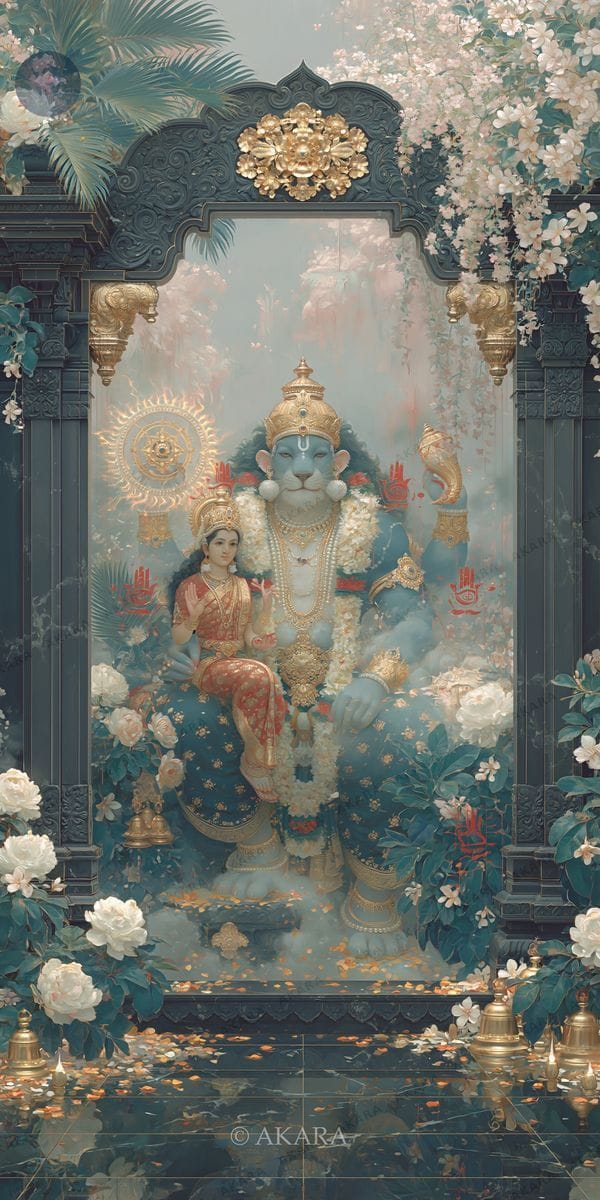
There is a word in Sanskrit that resists easy translation, not because it is vague, but because it is too precise for the categories we usually reach for. That word is Dharma. Pair it with Sanatana — 'that which has no beginning and no end' — and you arrive at something the ancient rishis regarded not as a religion invented by humans, but as a universal order discovered by them: Sanatana Dharma, the Eternal Way.
The Words Themselves: Unpacking the Sanskrit
Sanskrit is a language of compressed meaning, and both words in this phrase reward careful attention.
Sanatana (सनातन) derives from the root sana, meaning 'of old' or 'always,' combined with the suffix -tana, extending it across time. The Rigveda uses the word to describe that which is primordial and unceasing. It is not merely 'ancient' — it is beginningless (anādi) and endless (ananta).
Dharma (धर्म) comes from the root dhṛ, meaning 'to hold' or 'to sustain.' Dharma is that which upholds — the individual, the family, the cosmos. It is at once cosmic law, moral order, righteous conduct, and the inner nature of a thing. The dharma of fire is to burn and illuminate; the dharma of water is to flow and nourish. The dharma of a human being is to live in alignment with truth, compassion, and the divine.
Together, Sanatana Dharma means the eternal law that sustains all existence — a way of being, not merely a set of beliefs.
Not a Religion, But a Civilisation of Inner Inquiry
The term 'Hinduism' was largely applied from outside — by Persian and later European observers describing the people and practices found beyond the Sindhu (Indus) River. The tradition itself never called itself a religion in the Western sense of a fixed creed with a single founder and a definitive text. Instead, it described itself as Sanatana Dharma — or sometimes as Vaidika Dharma, the way illuminated by the Vedas.
This distinction matters enormously. Sanatana Dharma is not a club with membership rules. It is a civilisational inheritance — a vast, living river fed by countless streams: the four Vedas, the Upanishads, the Bhagavad Gita, the Puranas, the Agamas, the six darshanas (philosophical schools), and the oral wisdom of millions of households. It holds space for the bhakta (devotee) weeping before an image of Krishna, the jnani (sage) absorbed in non-dual contemplation, and the karma yogi who finds the sacred in selfless action.
As the Rigveda itself proclaims: Ekam sat viprā bahudhā vadanti — "Truth is one; the wise call it by many names" (RV 1.164.46). This is not relativism. It is the recognition that the Infinite cannot be exhausted by any single formulation.
The Living Pillars of Sanatana Dharma
While it resists rigid codification, several principles form the shared architecture of Sanatana Dharma across traditions:
- Ṛta (ऋत) — cosmic order; the moral and natural law woven into existence itself.
- Ahiṃsā (अहिंसा) — non-harm; reverence for all sentient life as expressions of the divine.
- Karma (कर्म) — the law of action and consequence, operating across lifetimes.
- Moksha (मोक्ष) — liberation; the soul's ultimate homecoming into its true nature.
- Ātman and Brahman — the individual self and the universal Self, which the Upanishads declare to be, in essence, one: Aham Brahmāsmi, 'I am Brahman.'
- Dharma as context-sensitive duty — the Bhagavad Gita's core teaching is that right action must be understood in relation to one's svadharma (one's own nature and station), performed without grasping for personal reward.
None of these are arbitrary rules. Each is a pointer toward a lived, experiential truth.
Bhakti: The Heart Road
Among the many paths Sanatana Dharma offers — Jnana (knowledge), Karma (action), Raja (meditation), and Bhakti (devotion) — it is Bhakti that has touched the most lives across history. From Mirabai's ecstatic songs for Krishna to the Shaiva poems of the Nayanmars, from Tukaram's abhangas to Annamacharya's compositions before Venkateswara — devotion is the thread that binds the tradition's most intimate moments.
Bhakti is not passive sentiment. The Bhagavata Purana describes it as parā bhakti — supreme love — in which the devotee and the divine draw so close that the boundary between them grows luminous. This is precisely the spirit that animates devotional art, music, and offerings: not performance, but the sincere act of placing the beloved at the centre of one's life.
"Let a man lift himself by his own Self alone, let him not lower himself; for this self alone is the friend of oneself, and this self alone is the enemy of oneself." — Bhagavad Gita 6.5
Sanatana Dharma in the Present Day
One of the remarkable qualities of this tradition is that it has never required a reformation, because it was never built on a single fixed dogma that could become obsolete. It adapts without abandoning its roots — which is precisely what it means to be sanatana.
Today, millions of seekers worldwide — Hindu by birth or by calling — engage with Sanatana Dharma through temple worship, yoga, meditation, Sanskrit study, devotional music, and the creation of sacred art. The tradition is not a museum exhibit. It is a living current, continuously flowing.
The Akara vision of devotional wallpapers, music, and art participates in this ancient continuum: making the sacred beautiful and accessible, so that even a glance at one's phone screen can become a moment of smṛti — remembrance of the divine. In Sanatana Dharma, beauty itself is a form of worship. The Shaivite tradition calls this abhinavagupta's concept of rasa — aesthetic experience as a doorway to transcendence.
A Reflection: The River That Was Always Here
Sanatana Dharma does not ask you to convert. It asks you to look — honestly, fearlessly — at the nature of existence, the movements of your own mind, and the longing that does not quite go away no matter how much the world offers. It says: that longing is itself the trail of the divine.
On this Shukla Panchami, with the moon waxing in Ashlesha nakshatra and the sun coursing through Mithuna, the cosmos continues its ordered dance — ṛta in motion, just as it has been since before memory. Sanatana Dharma is the name the rishis gave to that dance, and the invitation they left for all of us to join it — not someday, but now, in whatever small act of truth or devotion is available to us in this very moment.
Truth is one; the wise call it by many names — Rigveda 1.164.46
शुक्लाम्बरधरं विष्णुं शशिवर्णं चतुर्भुजम्। प्रसन्नवदनं ध्यायेत् सर्वविघ्नोपशान्तये॥ Shuklambara-dharam Vishnum shashi-varnam chatur-bhujam. Prasanna-vadanam dhyayet sarva-vighno-pasantaye.
Meditate on Vishnu, clad in white, of moon-like complexion, with four arms and a serene face — for the removal of all obstacles.
Questions & answers
What does Sanatana Dharma literally mean?
Sanatana (सनातन) means 'eternal' or 'beginningless and endless,' and Dharma (धर्म) means 'that which upholds or sustains.' Together, Sanatana Dharma means the eternal law or way that sustains all existence — a cosmic and moral order, not merely a religion.
Is Sanatana Dharma the same as Hinduism?
'Hinduism' is largely an external label applied by Persian and European observers. The tradition refers to itself as Sanatana Dharma or Vaidika Dharma. While the two terms largely overlap, Sanatana Dharma is broader — emphasising universal, timeless principles rather than a fixed creed or single founder.
What are the core beliefs of Sanatana Dharma?
Core principles include Ṛta (cosmic order), Ahiṃsā (non-harm), Karma (law of action), Moksha (liberation), and the relationship between Ātman (individual self) and Brahman (universal Self). These are not dogmas but pointers toward experiential truth, discoverable through any sincere path of knowledge, devotion, or righteous action.
What is the difference between Dharma and religion?
'Religion' in the Western sense implies a fixed founder, creed, and membership. Dharma is cosmic law — the inner nature and righteous order of all things. It is closer to a universal principle of right living than to an organised religion, which is why Sanatana Dharma has historically been extraordinarily pluralistic.
How can someone practice Sanatana Dharma today?
Practice can take countless forms: daily meditation or prayer (sandhyā), devotional worship (pūjā), study of scripture, yoga, selfless service (sevā), and engaging with sacred art and music. Sanatana Dharma is lived in small, consistent acts of truth, compassion, and remembrance of the divine — wherever one happens to be.