Lord Jagannath's Sacred Bath: The Snana Yatra That Opens Heaven's Door
On June 29, the Lord of the Universe steps out of his sanctum for his once-a-year ritual bath — and every soul who witnesses it is said to be washed clean.
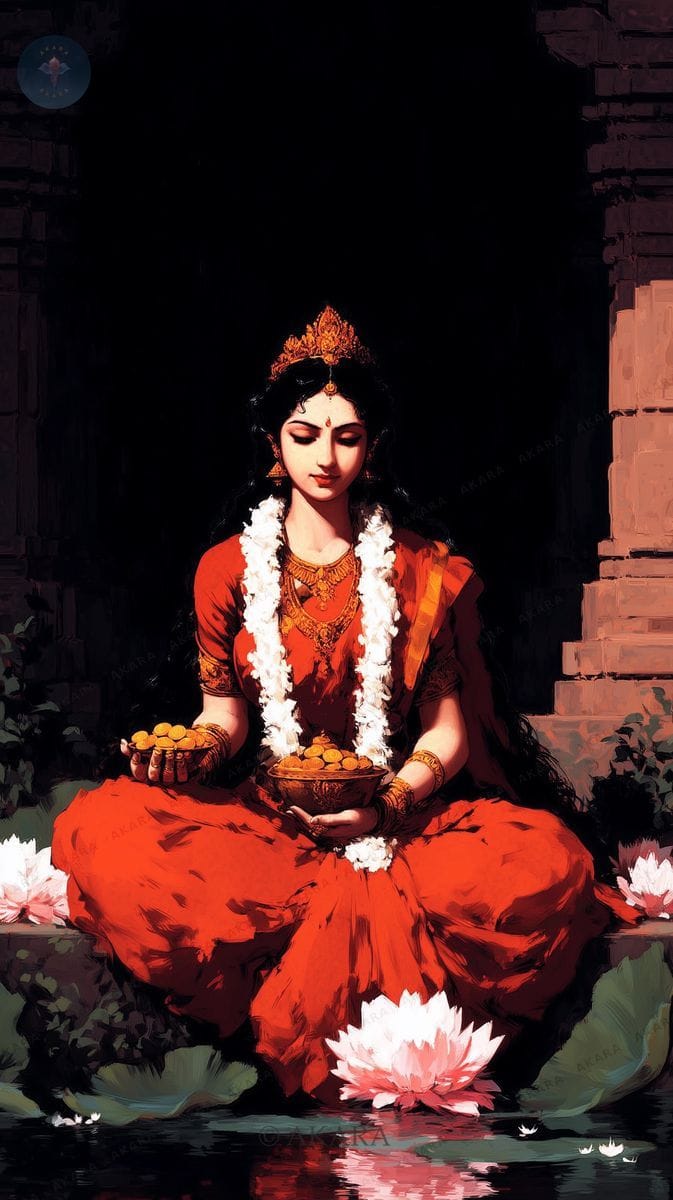
Nine days from now, in the coastal temple city of Puri, Odisha, something will happen that has not happened since last summer and will not happen again for another year: the great wooden deities of the Jagannath Temple — Lord Jagannath, Lord Balabhadra, and Devi Subhadra — will leave their sanctum, cross the outer courtyard in a swaying, song-filled procession, and receive a royal bath under the open sky. This is Snana Yatra, also called Deva Snana Purnima, and it is, by the reckoning of the Skanda Purana, the very birthday of the Lord of the Universe. For seekers across the world attuned to the rhythms of Sanatana Dharma, it is one of the most moving spectacles the living tradition has to offer.
What Is Snana Yatra — and Why Does It Matter Now?
The word snana (स्नान) means bathing; yatra (यात्रा) means journey or festival. Together, Snana Yatra names the annual ceremonial bathing of the Jagannath Trinity — a festival observed on the Purnima (full moon) of the Hindu month of Jyeshtha. <cite index="23-3,23-4">Snana Yatra is the annual ceremonial bathing festival of Lord Jagannath, observed on the full moon day of Jyeshtha, and in 2026 it falls on June 29.</cite> <cite index="23-5">It marks Lord Jagannath's first public appearance of the year and sets in motion the grand Rath Yatra journey.</cite>
For the devotee rooted in bhakti, this is not mere ritual spectacle. <cite index="4-5,4-6">In Hindu tradition, time is not linear — it is cyclical and divine; ancient sages believed that time itself is a manifestation of Brahman, unfolding through cosmic rhythms.</cite> Snana Yatra embodies that truth: the Lord himself submits to the rhythms of creation, accepting a bath on his own birthday, reminding us that even the Supreme delights in the tenderness of devotion.
From the Skanda Purana to the Snana Bedi
The scriptural authority for this festival is ancient and clear. <cite index="21-7">The tradition of Jagannath Snana Yatra has its roots described in the Skanda Purana, one of the eighteen Mahapuranas.</cite> <cite index="32-6">According to the Skanda Purana, King Indradyumna, who installed the wooden deities, introduced the idea of giving them a ritual bath.</cite> The text Niladri Mohadaya, an Odia religious chronicle, records the festival's rituals in some detail, and the classical Sanskrit poet Sriharsa alludes to the bathing of the Puri Trinity in his Naisadhiya Charita — evidence that this observance has been continuous for at least a millennium.
The physical setting of the ritual is itself a theological statement. <cite index="27-7">The bathing platform, the Snana Bedi, is located to the northeast of Ananda Bazar beside the outer wall of the temple and is elevated so that visitors outside the temple can also view the deities.</cite> <cite index="33-3,33-4">While ordinary human bathing seeks seclusion, Lord Jagannath, Lord Balabhadra, Goddess Subhadra, and Lord Sudarshana enjoy their bath out in the open, in front of their devotees, on the Snana Bedi.</cite> The Lord bathes with his people. That is the whole point.
The Ritual Sequence: From Pahandi to Jalabhisheka
The ceremonies unfold with the precision and love of a tradition shaped over centuries.
Pahandi Vijay — the grand procession — begins a day before the Purnima. <cite index="31-9,31-10">The deities are taken out from their sanctum in a rhythmic, swaying procession called Pahandi; temple servitors carry them to the Snana Bedi in a lively atmosphere of chanting, conch shells, cymbals, and devotional music.</cite>
Jalabhisheka — the sacred bathing — is the heart of the day. <cite index="27-8,27-9">A significant part of the Snana Yatra is the Jalabhisheka, where 108 pots of water are fetched from the Suna Kua (Golden Well) in a ceremonial procession; this holy water, drawn only once a year, is then purified by priests with turmeric, whole rice, sandalwood, flowers, and perfumes.</cite> The number 108 — ashtottara shata — is itself a sacred integer in Sanatana Dharma, signifying the fullness of the cosmos.
Sada Besha — the simple attire. <cite index="31-16">Immediately after the bath, the deities are dressed in Sada Besha, a simple, unadorned white attire symbolising purity and the freshly cleansed divine form.</cite>
Hati Besha — the elephant attire — follows in the afternoon, and it is arguably the most theologically layered moment of the entire festival.
The Mystery of Hati Besha: When the Lord Became Ganesha
After the bath, something extraordinary happens. <cite index="31-1">After the ceremonial bath, Lord Jagannath and Lord Balabhadra are dressed in Hati Besha — an elaborate elephant attire that gives them the appearance of Lord Ganesha.</cite> <cite index="27-2">Lord Jagannath and Lord Balaram are dressed like elephants, while Goddess Subhadra wears a lotus flower Besha.</cite>
The origin of this singular tradition carries the fragrance of pure bhakti. <cite index="29-2,29-3">The origin of Hati Besha can be traced back to the 15th century, when Pandit Ganapati Bhatta, a devout devotee of Lord Ganesha, travelled to Puri in order to see Lord Jagannath — but was disappointed, as he was unable to have darshan of his beloved deity.</cite> <cite index="29-5,29-6">On the day of Snana Purnima, Lord Jagannath himself appeared to Ganapati Bhatta posing as a priest and called him back to the temple — where the miracle occurred and Ganapati Bhatta was ecstatic to see Lord Jagannath dressed like an elephant, resembling Lord Ganesha.</cite> <cite index="28-15">To commemorate this divine event, the deities appear in the elephant form after the Snana Purnima ritual</cite> every year since.
What is the deeper meaning? <cite index="25-1">Lord Jagannath wears the Hati Vesha attire, also known as elephant attire, after the Snana Yatra in Puri to signify that all divine forms are ultimately one divine reality.</cite> <cite index="30-14,30-15">Hati Besha signifies Lord Jagannath's compassion and his ability to take any form to bless and comfort his devotees; it blends the qualities of Lord Krishna and Lord Ganesha into a single divine presence.</cite> This is Advaita made visible — the Jagat-Natha, Lord of the Universe, wearing the face of the obstacle-remover for the sake of one devoted heart.
Anavasara: The Lord Falls Ill and Rests
After the exertion of the grand bath, tradition holds that the deities fall ill. <cite index="26-7,26-8,26-9">After the second round of bathing, the idols are taken back to their respective chambers for 15 days; this time is known as Anavasara, when the deities are believed to fall sick due to a cold bath, the temple remains closed during this time, and the deities are given special herbal treatments to recover.</cite> <cite index="27-14">The Raj Vaidya (the King's physician) treats them with specific medicines during this time, and the daily temple rites are suspended.</cite>
This is one of the most tender conceits in all of Hindu bhakti: the omnipotent Lord plays at being ill, so that his devotees may experience the intimacy of caring for him. The fever of the Lord becomes a fast, a vigil, and a deepened longing in the heart of the devotee. After fifteen days, Netrotsav — the festival of the new eyes, in which the deities receive freshly painted faces — marks the Lord's recovery. <cite index="19-6">The Netrotsav ritual marks the deities' recovery, after which the main temple reopens.</cite> Then, on Ashada Dwitiya, comes the Rath Yatra — the grand chariot festival toward which the whole Snana Yatra season is the opening movement.
How to Observe Snana Yatra Wherever You Are
For those who cannot travel to Puri — and most of us are in that happy and humbling position — the tradition offers a path. <cite index="21-9,21-10,21-11">At home, you can perform the sacred Abhishekam of the Lordships using Panchamrita, followed by traditional bhog offerings and Aarti; start the day by waking up early, cleaning the altar, and taking a holy bath before beginning the sacred ceremony; prepare holy water by adding rose water, a few drops of Ganga water, and sandalwood paste.</cite> Chant the Jagannath Ashtakam or simply hold the Lord's name — Jai Jagannath — with a concentrated heart. The Skanda Purana assures us that even the contemplation of this festival carries merit.
<cite index="27-6">Devotees believe that witnessing Lord Jagannath on this holy day washes away their sins, attracting thousands of pilgrims from around the world.</cite> You need not be on the Snana Bedi for that washing to begin. The Lord who stepped out of his sanctum for Ganapati Bhatta can certainly reach a quiet home altar in Pune, in London, or in São Paulo.
A Reflection for the Akara Reader
Today's Panchang — Shukla Shashthi, Nakshatra Magha, Sun in Mithuna — places us in a time of growing light and increasing divine momentum. The Sun in Gemini (Mithuna Rashi) speaks of connection, of bridges between the human and the divine. Magha Nakshatra is ruled by the Pitrs, the ancestors — those who have crossed before us and who continue to watch. In nine days, the Lord of the Universe will cross his own threshold and stand in the open air of Jyeshtha Purnima.
There is a teaching in this crossing. Lord Jagannath — whose very name means master of the universe — does not stay locked in his golden sanctum. He comes out. He bathes. He plays at illness. He takes the face of Ganesha for the sake of one devoted soul. This is not myth; it is instruction. Dharma, sanatana and eternal, is not a closed system. It opens — like the gates of Srimandir on Snana Yatra — to every sincere heart that stands waiting in the courtyard.
The Lord who stepped out of his sanctum for Ganapati Bhatta can certainly reach a quiet home altar in Pune, in London, or in São Paulo.
शान्ताकारं भुजगशयनं पद्मनाभं सुरेशम् śāntākāraṃ bhujagaśayanaṃ padmanābhaṃ sureśam
The peaceful one resting on the serpent, lotus-naveled lord of the gods. Vishnu in his element — holding the universe together while looking effortlessly serene.
Questions & answers
When is Jagannath Snana Yatra in 2026?
Jagannath Snana Yatra 2026, also known as Deva Snana Purnima, falls on June 29, 2026, which is the full moon day (Purnima) of the Hindu month of Jyeshtha.
What happens during Snana Yatra at the Puri Jagannath Temple?
The deities — Lord Jagannath, Lord Balabhadra, Goddess Subhadra, and Lord Sudarshana — are carried in a colourful Pahandi procession to the elevated Snana Bedi (bathing platform) and bathed with 108 pots of sacred water drawn from the Suna Kua (Golden Well) and purified with sandalwood, turmeric, flowers, and perfumes. Afterwards they are dressed in the Hati Besha (elephant attire).
What is Hati Besha and why is Lord Jagannath dressed as an elephant?
After the ritual bath, Lord Jagannath and Lord Balabhadra are dressed in elaborate elephant attire called Hati Besha or Gaja Besha. This tradition commemorates the 15th-century devotee Pandit Ganapati Bhatta, whose pure love for Lord Ganesha moved Lord Jagannath to miraculously appear before him in an elephant-like form. Theologically, it signifies that all divine forms are ultimately one reality.
What is the Anavasara period and why is the Jagannath Temple closed?
After the Snana Yatra bath, tradition holds that the deities fall ill from the cold water. They are moved to a special chamber (Anabasara griha) and cared for by the Raj Vaidya with herbal medicines for 15 days. The main temple is closed to public darshan during this period. The deities return to public view after Netrotsav, when their faces are repainted, just before the Rath Yatra.
How can I observe Snana Yatra at home if I cannot travel to Puri?
You can perform a simplified home Abhishekam of Lord Jagannath's image or shaligram using Panchamrita (milk, curd, honey, ghee, and sugar) or water mixed with rose water, sandalwood paste, and a few drops of Ganga jal. Offer bhog, light incense, perform Aarti, and chant the Jagannath Ashtakam or simply repeat 'Jai Jagannath' with a focused heart throughout the day.