Ganesha: The Elephant-Headed Lord Who Clears Every Path
On this auspicious Wednesday, we bow to the Elephant-Headed One whose blessing precedes every worthy beginning.
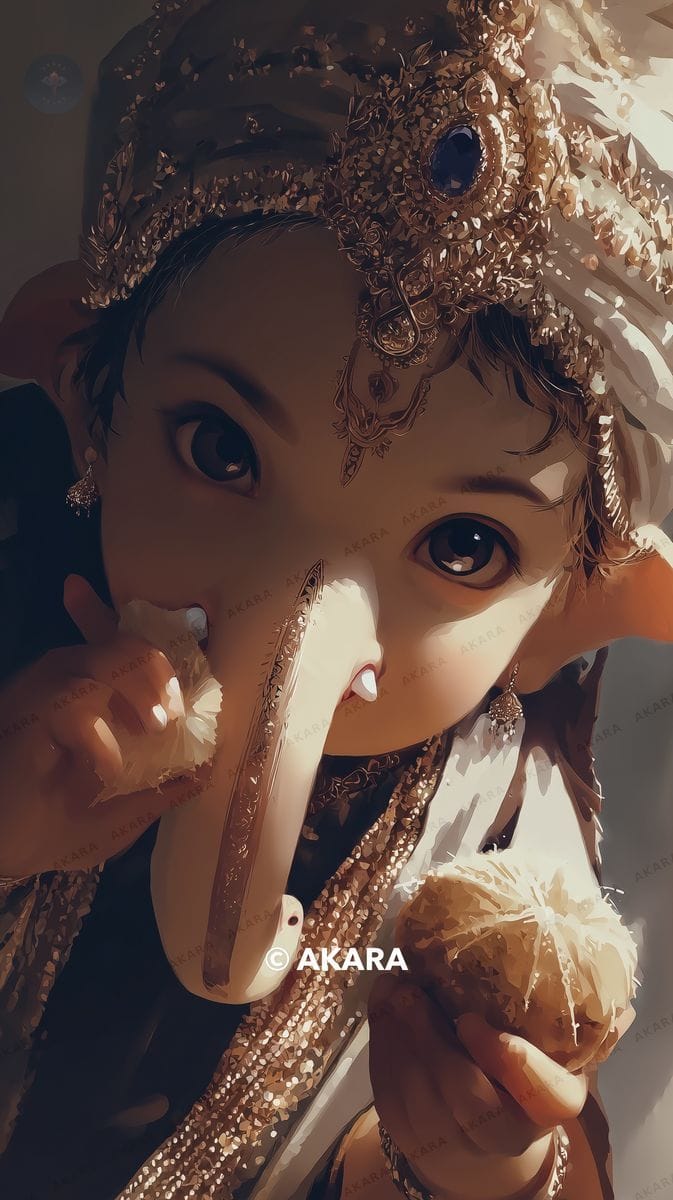
Before the first syllable is spoken, before the first step is taken, before the pen touches paper or the wheel begins to turn — tradition asks us to pause and remember Ganesha. Across the vast, living tapestry of Sanatana Dharma, there is perhaps no deity more universally beloved, more daily invoked, or more tenderly personal than this son of Shiva and Parvati, who sits at every threshold with a broken tusk, a bowl of modakas, and a gaze that holds both mischief and the deepest wisdom.
The Vaar Devata of Wednesday
In the classical panchang, each day of the week carries a presiding deity — its vaar devata. Wednesday, known as Budhavara, belongs most intimately to Ganesha in popular devotional practice. The association is apt: Budha governs intellect, communication, and skill, and Ganesha is Buddhipriya — he who is dear to the faculty of discernment. To begin a Wednesday with even a brief invocation of Ganapati is, in the understanding of bhakti, to align one's intelligence with the cosmic intelligence that governs all auspicious outcomes. Today, with the nakshatra Chitra in its third pada, the creative and artistic energies of this star amplify the beauty of any sincere act of worship.
A Map in Every Limb: The Iconography of Ganapati
No detail of Ganesha's form is accidental. Every curve and colour is a teaching rendered in sacred geometry.
The elephant head (gaja-mukha) represents cosmic scale — the elephant being the largest of earthly creatures, its head a symbol of immense wisdom and memory. The Mudgala Purana and the Ganesha Purana, the two principal scriptures dedicated to this deity, both affirm that his divine form encompasses the entire universe.
The large ears are winnowing fans: they hear all sound but retain only what is true, filtering out the noise of distraction. His small, keen eyes remind us that piercing attention, not wide-eyed distraction, is what sees clearly.
The single tusk — ekadanta, one of his most recognisable names — carries one of scripture's finest stories. When the sage Vyasa wished to dictate the Mahabharata, he needed a scribe who could keep pace with his thought. Ganesha agreed, but on one condition: the sage must never pause. Vyasa countered: Ganesha must never write a word he did not understand. In the flow of that great composition, Ganesha's quill broke; without missing a beat, he snapped off his own tusk and continued writing. The broken tusk is the willingness to sacrifice the self for the greater transmission of wisdom.
The large belly (lambodara, meaning pendulous-bellied) contains multitudes — all experience, all worlds, all contradictions — digested and at peace. The serpent worn as a belt is mastered time and energy, the kundalini at rest after having been understood.
The four hands typically hold a pasha (noose, to pull seekers toward truth), an ankusha (goad, to prod them onward), a modaka (sweet rice ball, symbol of the bliss that awaits disciplined practice), and one hand raised in abhaya mudra — the gesture of fearlessness. His vahana, the mouse (mushika), is ego: small, nibbling, endlessly restless — ridden and mastered, not eliminated.
Two Stories That Shape a Devotion
The Moon and the Fall. On a certain night, Ganesha accepted so many offerings of modaka that he overate and, riding his mouse homeward, toppled over. The moon, witness to the scene, burst into laughter. Ganesha's wrath was swift and just: he cursed the moon to disappear from the sky. The cosmos pleaded. Ganesha softened — slightly. The moon would wax and wane in eternal reminder that mockery of the sacred invites darkness, while humility restores light. This is why, on Ganesh Chaturthi, devotees traditionally avoid looking at the moon.
The Race Around the Worlds. Lord Shiva and Parvati announced that a divine fruit of wisdom — some texts say a mango, others a cosmic ambrosia — would be given to whichever of their sons first circled the universe. Kartikeya, the warrior god, leapt onto his peacock and flew outward toward the infinite. Ganesha, riding the humble mouse, paused, reflected, then simply walked in a complete circle around his parents. "You," he said, "are my world. You are the universe." The fruit was his. The teaching endures: the greatest journey is inward, and the deepest cosmos is found in the sacred ground of one's own origins, one's own parents, one's own being.
The Mantra: Om Gam Ganapataye Namah
Om Gam Ganapataye Namah — these six syllables constitute the shadakshara mula mantra of Ganapati, considered among the most powerful seed-mantras in the Vedic and Tantric corpus.
- Om — the primordial sound, the totality of creation.
- Gam — the bija (seed) of Ganesha, carrying his direct vibrational essence in condensed form.
- Ganapataye — the dative of Ganapati, meaning "to the lord of the Ganas" (the divine attendants of Shiva), invoking him directly.
- Namah — I bow; I offer myself; I place this prayer at your feet.
The Ganapati Atharvasirsha Upanishad — an Atharvaveda text of great antiquity — describes Ganesha as Brahman itself, the source of all the tattvas (elements), present in every direction, the innermost witness. Chanting this mantra 108 times, especially on a Wednesday morning after a simple bath and before one's work begins, is regarded in Sanatana Dharma as a complete act of invocation — clearing the path not by removing difficulty by force, but by granting the intelligence to navigate it.
How Devotees Worship Today
Ganesha worship, or Ganapati puja, requires no elaborate apparatus. A small image or even a handful of earth shaped into his form, a few red hibiscus flowers (japa pushpa, his favourite), a lit lamp, incense, and a modaka or piece of jaggery placed with sincere intention — this is enough. The Mudgala Purana lists twenty-one leaves (patri) that please him, including durva grass, which symbolises the life-force that survives all cutting.
In homes and temples today, devotees may:
- Recite the Ganapati Atharvasirsha at sunrise or at dusk.
- Offer twenty-one modakas and distribute them as prasad.
- Light a ghee lamp and simply sit in his presence, bringing to mind any project, relationship, or inner knot that needs his grace.
- Chant Om Gam Ganapataye Namah with a tulsi or rudraksha mala, completing one full circuit of 108 repetitions.
At Akara, we believe that the creation of beautiful things — music, art, the devotional wallpaper you set on your screen at dawn — is itself a form of Ganesha worship. He is the patron of the arts and the intellect, the one who held the pen for the greatest poem humanity has ever known.
A Reflection: What Ganesha Asks of the Seeker
Perhaps what this beloved deity ultimately asks is not complex at all. He asks for honesty about what obstacles we carry — not denial, not despair, but clear seeing. He asks that we remember our parents, our source, our ground. He asks that we bring our full intelligence, however fumbling, to the sacred work of a life. And he asks, with that gentle half-smile, that we not take ourselves too seriously — that when we fall off the mouse under the weight of too many sweets, we rise, look at the laughing moon, and continue homeward.
The broken tusk on the writing desk. The patient mouse beneath the vast belly. The raised hand that says: do not be afraid.
This is the grace of Ganapati — not a magic that removes all hardship, but a wisdom that reveals, at every beginning, that the path is already open.
Vakratunda mahakaya, suryakoti samaprabha — nirvighnam kuru me deva, sarva karyeshu sarvada. O large-bodied one with the curved trunk, radiant as a million suns — make all my endeavours free from obstacles, always.
The greatest journey is inward, and the deepest cosmos is found in the sacred ground of one's own origins.
वक्रतुण्ड महाकाय सूर्यकोटि समप्रभ। निर्विघ्नं कुरु मे देव सर्वकार्येषु सर्वदा॥ vakratuṇḍa mahākāya sūryakoṭi samaprabha nirvighnaṃ kuru me deva sarvakāryeṣu sarvadā
O elephant-faced one, with a massive form radiant as millions of suns, remove all obstacles in all my endeavors, always.
Questions & answers
Why is Wednesday associated with Ganesha?
Wednesday (Budhavara) is ruled by Budha, the planet governing intellect, communication, and skill. Ganesha is known as Buddhipriya — the one dear to the faculty of discernment — making Wednesday a particularly auspicious day for his worship. Many devotees observe a Wednesday fast or begin their Ganapati mantra practice on this day.
What is the meaning of the Ganesha mantra Om Gam Ganapataye Namah?
The mantra contains Om (the primordial sound), Gam (the bija or seed syllable of Ganesha), Ganapataye (meaning 'to the Lord of the Ganas'), and Namah (I bow or I offer). Together they constitute a direct invocation of Ganesha's energy, widely used to clear obstacles and invite auspicious beginnings. Chanting it 108 times, especially in the morning, is a complete act of Ganapati worship.
Why does Ganesha have only one tusk?
According to tradition, when the sage Vyasa was dictating the Mahabharata, Ganesha agreed to serve as scribe on the condition that Vyasa never pause. When Ganesha's pen broke mid-composition, he snapped off his own tusk to continue writing without interruption. The single tusk (ekadanta) thus symbolises the willingness to sacrifice the self in service of the transmission of wisdom.
What offerings are most pleasing to Ganesha?
Ganesha is traditionally pleased by modakas (sweet rice or coconut dumplings), red hibiscus flowers, durva grass, and the twenty-one sacred leaves listed in the Mudgala Purana. A ghee lamp, incense, and any sincere act of beauty or creative work are also considered acts of Ganapati worship. Simple, heartfelt devotion is always preferred over elaborate ritual without inner sincerity.
What scripture is dedicated to Ganesha?
The two principal scriptures dedicated to Ganesha are the Ganesha Purana and the Mudgala Purana. The Ganapati Atharvasirsha Upanishad, belonging to the Atharvaveda, is a shorter but deeply revered text that identifies Ganesha with Brahman — the ultimate reality — and is commonly recited during Ganesha worship and on Ganesh Chaturthi.