Nirjala Ekadashi 2026: The Waterless Fast That Carries the Weight of All 24
On this Jyeshtha Shukla Ekadashi, the most demanding fast of the Hindu year asks us to set down everything — including water — and simply remember Narayana.
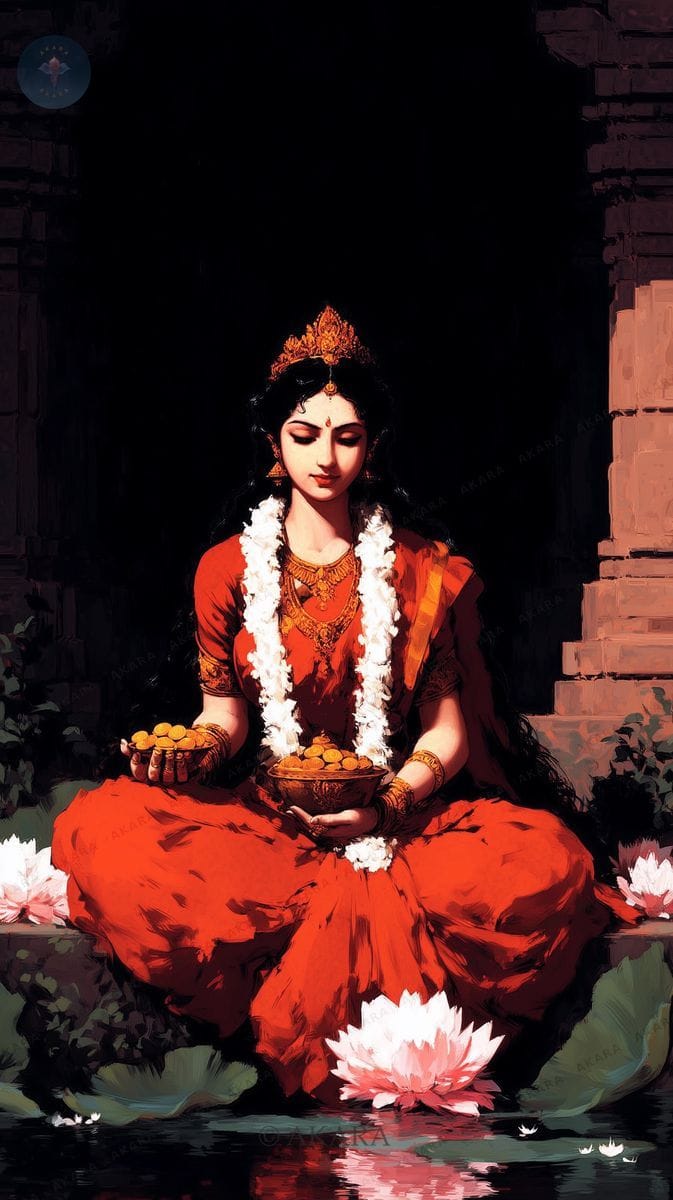
There are twenty-four Ekadashis in the Hindu lunar year, each a doorway of devotion. But once in that turning wheel comes one that stands apart — Nirjala Ekadashi, the fast without water, observed today, Thursday, 25 June 2026, under the nakshatra Swati and the auspicious Yoga Shiva, with the Sun transiting Mithuna. The tithi began at 6:12 PM yesterday evening and holds its presence firmly through 8:09 PM tonight. All day, the eleventh lunar day — Ekadashi — is sovereignly present at sunrise, making the call unmistakable: this is the day. This is the vrat. And for those who answer it, tradition says the merit earned equals the fruit of keeping all twenty-four Ekadashis of the year combined.
Ekadashi: The Meaning Behind the Name
The word Ekadashi (एकादशी) is Sanskrit, built simply and exactly: eka — one, daśa — ten, together making eleven. It names the eleventh tithi, the eleventh lunar day of both the bright fortnight (Shukla Paksha) and the dark fortnight (Krishna Paksha). Each lunar month thus offers two Ekadashis, and each is dedicated to Lord Vishnu — Hari, Narayana, the Preserver who holds the cosmos in its ordered becoming.
Today's Ekadashi is not an ordinary one. Falling in the bright fortnight of the month of Jyeshtha, it bears the name Nirjala — nir meaning 'without', jala meaning 'water'. It is also known as Pandava Nirjala or Bhima Ekadashi, and its significance ripples through scripture, story, and lived devotional practice across the whole of Sanatana Dharma.
The Scriptural and Mythic Heart
The origin of Ekadashi as a sacred observance is rooted in the Padma Purāṇa, where the eleventh tithi is not merely a date but a living presence. According to this account, set in the Krita Yuga, the demon Mura had seized heaven from its base in Candravati, terrorising the gods. Lord Vishnu engaged Mura in battle across a thousand divine years — slaying countless adversaries with his discus, yet finally withdrawing to a cave near Badarikashrama to rest. As Mura crept forward to strike the sleeping Lord, a radiant divine maiden suddenly manifested from Vishnu's own body. With a single resounding humkara, she reduced the demon to ashes. Awakening to find his enemy destroyed, the Lord asked who had accomplished this. The maiden replied that she was born of his own energy, on the eleventh day of the lunar fortnight — she was Ekadashi herself.
Vishnu granted her boons: that she be honoured as the foremost sacred observance, capable of destroying sins, dissolving difficulties, and granting salvation to all who fast in her honour on that tithi. From that moment, the tradition was sealed. As the Padma Purāṇa and other Vaishnava texts repeat across generations: to observe Ekadashi with faith is to be freed of the weight of accumulated karma and set upon the road to Vaikuntha, Vishnu's eternal abode.
The specific origin of today's Nirjala Ekadashi comes from the Brahma Vaivarta Purāṇa, in a conversation between the mighty Pandava Bhima and the sage Vyasa. Bhima, renowned for his formidable appetite, found the twenty-four fasts of the lunar year genuinely impossible to observe. He approached Vyasa in distress. Sage Vyasa's counsel was both compassionate and precise: observe one Ekadashi completely, without food and without water, in the summer month of Jyeshtha, and the merit of all twenty-four will be yours. Bhima kept this fast. And the day became his — Bhima Ekadashi, the complete fast that speaks for a whole year's devotion.
Today's Panchang: The Precise Moment
For devotees who like to orient themselves exactly within the cosmic calendar:
- Tithi: Jyeshtha Shukla Ekadashi begins at 6:12 PM on 24 June and ends at 8:09 PM on 25 June 2026 (IST)
- Fasting day: Thursday, 25 June 2026 — the Ekadashi tithi prevails at sunrise (~5:25 AM IST), making this the ordained fasting day by the principle of Udaya Tithi
- Nakshatra: Swati (Pada 3) · Yoga: Shiva · Sun: Mithuna
- Guruvar (Thursday): Ekadashi falling on Thursday — a day traditionally associated with Lord Vishnu and Brihaspati (Jupiter) — is held to amplify the day's auspiciousness
- Parana (fast-breaking): Friday, 26 June, between 5:25 AM and 10:04 AM (New Delhi/IST). For Ujjain: 5:47 AM to 8:28 AM. Devotees outside India should confirm timing through a local Panchang tool, as the parana window shifts with each city's sunrise
The parana window this year is notably generous — nearly four and a half hours — giving devotees ample time for morning prayer before breaking the fast with water, then light food.
How the Vrat Is Observed
Nirjala Ekadashi asks the most of the body: complete abstention from both food and water for the full fasting day, from sunrise to sunrise. This is its defining mark, and also its earned reputation as the most physically demanding observance in the Hindu devotional year — observed, notably, in the height of the Indian summer. For those for whom the waterless fast is not medically feasible, the tradition is gracious: the classical texts permit adapted observances — phalāhāra (a fruit-based fast), dairy, nuts, and non-grain foods — so that health and compassion are never sacrificed on the altar of rigour. What the scriptures ask for above all is sincerity of bhakti, not the performance of hardship.
The day's ritual arc, in brief:
- Brahma Muhurta (~4:15–5:00 AM): Rise early. Bathe, adding a few drops of Ganga Jal to the water if available. Dress in clean, simple clothes.
- Sankalpa: Take a formal vow — the sankalpa — before sunrise, dedicating the fast to Lord Vishnu/Narayana.
- Puja: Offer yellow flowers, tulasi leaves, incense, a ghee lamp, sandalwood, akshat, fruits, and Panchamrit to the image or shaligrama of Lord Vishnu. Goddess Lakshmi is worshipped alongside him.
- Mantra and Japa: Recite Om Namo Nārāyaṇāya (ॐ नमो नारायणाय) — the eight-syllable ashtakshara mantra of Narayana — as the spine of the day's chanting. The Vishnu Sahasranāma, the thousand names of Vishnu, may also be recited or listened to. Daytime sleep is considered inauspicious; the texts encourage remaining awake and engaged through chanting, Hari-katha, or acts of sewa (selfless service).
- Nighttime Jagran: Staying awake through the night in devotional chanting is considered especially meritorious on Nirjala Ekadashi — part of the instructions Sage Vyasa himself gave to Bhima.
- Parana: The fast is broken on Dwadashi morning within the prescribed window, beginning with water. The parana — the sacred act of breaking the fast — is spiritually as important as the fast itself. It must be completed after Hari Vasara ends and before the Dwadashi tithi closes.
Om Namo Nārāyaṇāya — I bow to Narayana, the one who is the abode of all beings. Eight syllables. One direction. The whole sky.
Ekadashi Across Traditions and Regions
The observance of Ekadashi is woven into the fabric of Hindu spirituality across every region of Bharat and in diaspora communities worldwide. In North India, the emphasis falls on strict fasting and temple visits, with Vishnu at the centre. South Indian communities may incorporate regional temple customs and devotional music — the singing of the Tirupallandu or Divya Prabandham at Vaishnava shrines. In Gujarat and Maharashtra, night-long prayers and kirtan gatherings mark the observance; in Bengal, recitation and listening to sacred Vaishnava texts deepens the day. The ISKCON tradition, following the Vaishnava Gaurabda calendar, observes Ekadashi with particular rigour, including strict avoidance of all grains and the recitation of the Hare Krishna mahamantra through the day and night.
What unifies all these forms is the turn toward Hari — toward the Preserver, the One who sustains dharma (cosmic and moral order) — and the voluntary lightening of the body so that the mind may rise.
A Reflection: Why This Day, Now
We live in a time of relentless stimulation. The demand on attention is constant; the appetite — for food, for news, for sensation — is managed by algorithms designed to feed it endlessly. Into this, Ekadashi arrives twice a month, unbidden, unchanged: put it down. All of it. Remember what you are.
Nirjala Ekadashi, the hardest of the twenty-four, is not about punishing the body. It is about demonstrating — to oneself, in the quiet of a fast that includes not even a sip of water — that the atman, the self, is not reducible to its hungers. That behind the appetite is a witness. And behind the witness, Lord Vishnu, the Preserver, the ground of all that is.
At Akara, we understand the devotional life as one that holds the timeless and the present in the same hands. Today, on this Guruvar Nirjala Ekadashi, under Yoga Shiva with the Sun in Mithuna, that holding is possible. Light the lamp. Offer the tulasi. Speak the name: Om Namo Nārāyaṇāya. The merit, tradition promises, is vast. But the real gift is simpler — a day spent in the direction of the Divine.
Put it down. All of it. Remember what you are.
शान्ताकारं भुजगशयनं पद्मनाभं सुरेशम् śāntākāraṃ bhujagaśayanaṃ padmanābhaṃ sureśam
The peaceful one resting on the serpent, lotus-naveled lord of the gods. Vishnu in his element — holding the universe together while looking effortlessly serene.
Questions & answers
What is Ekadashi and what does the name mean?
Ekadashi (एकादशी) is a Sanskrit word meaning 'the eleventh' — from eka (one) and daśa (ten). It refers to the eleventh lunar day (tithi) of both the bright fortnight (Shukla Paksha) and the dark fortnight (Krishna Paksha) of every month. Each Ekadashi is dedicated to Lord Vishnu and observed as a day of fasting, prayer, and devotion.
What is special about Nirjala Ekadashi compared to other Ekadashis?
Nirjala Ekadashi — 'nirjala' meaning 'without water' — is observed with complete abstention from both food and water, making it the most austere of all twenty-four Ekadashis in the year. According to the Brahma Vaivarta Purāṇa, the merit of this single fast equals the spiritual fruit of observing all twenty-four Ekadashis of the year combined. It falls in the summer month of Jyeshtha and is also called Pandava Nirjala or Bhima Ekadashi.
What are the exact tithi timings for Nirjala Ekadashi 2026 and when should I break the fast?
The Ekadashi tithi begins at 6:12 PM on 24 June and ends at 8:09 PM on 25 June 2026 (IST). The fasting day is Thursday, 25 June, since the tithi is active at sunrise. The parana (fast-breaking) window is 5:25 AM to 10:04 AM on Friday, 26 June 2026 for New Delhi/IST. Devotees in other locations should check a local Panchang for their city-specific parana window.
What mantra should be chanted on Ekadashi, and how?
The primary mantra for Ekadashi is Om Namo Nārāyaṇāya (ॐ नमो नारायणाय), the eight-syllable ashtakshara mantra of Lord Narayana/Vishnu. It may be chanted as japa — repeated continuously on a mala — throughout the day. The Vishnu Sahasranāma (the thousand names of Vishnu) is also traditionally recited or listened to. The key is sincerity and sustained remembrance of Hari throughout the day and, ideally, the night.
Can everyone observe the Nirjala Ekadashi fast? What if complete fasting is not possible?
The classical texts are compassionate on this point. Complete waterless fasting is not expected of young children, the elderly, pregnant or nursing women, or those with medical conditions. Adapted observances — a phalahar (fruit-based) fast, dairy, nuts, and non-grain foods — are fully accepted. The scriptures emphasise sincerity of bhakti over physical endurance. The essence of Ekadashi is devotion and remembrance of Vishnu, not the performance of hardship.