Why We Fast on Ekadashi: The Sacred Science of the Eleventh Tithi
Twice each lunar month, Sanatana Dharma invites us to pause, purify, and turn inward — here is everything you need to know about Ekadashi fasting.
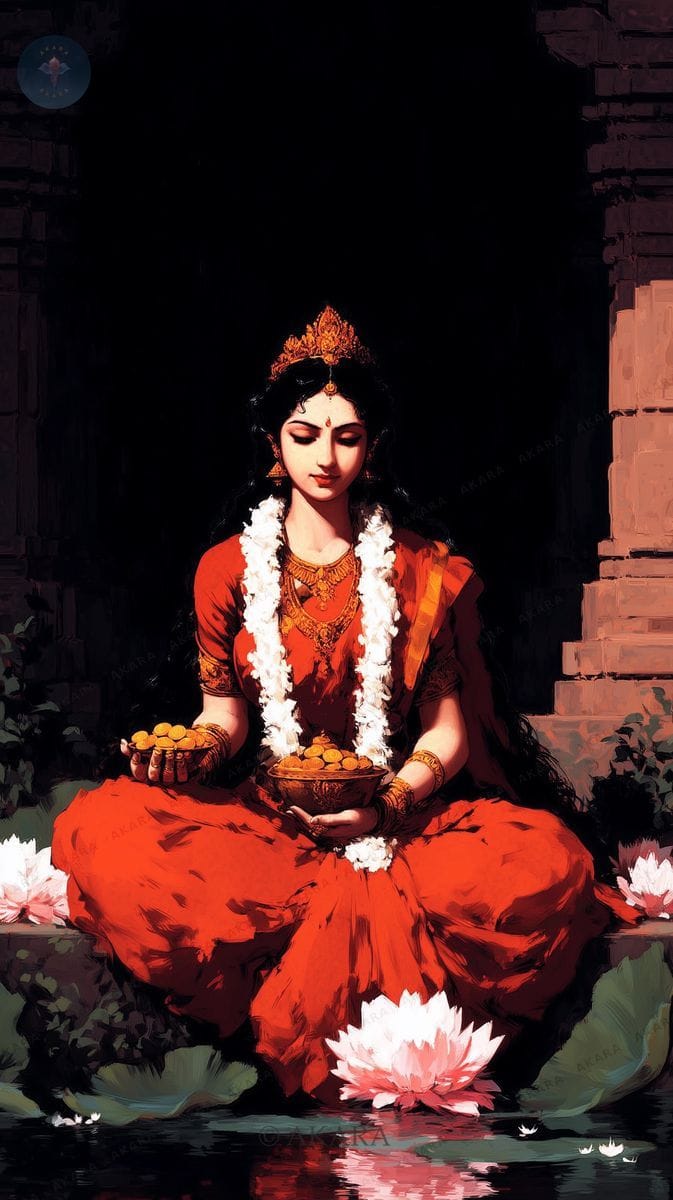
Of all the observances woven into the fabric of Sanatana Dharma, few are as ancient, as universal, or as quietly transformative as Ekadashi. Twice in every lunar month — on the eleventh day of the waxing moon and the eleventh day of the waning moon — millions of devotees across the world set aside grain, slow their pace, and redirect the energies of body and mind toward the Divine. It is a practice that spans Vaishnava, Shaiva, and Smarta households alike, yet its roots run deepest in the Vaishnava tradition, where each Ekadashi carries its own name, its own story, and its own grace.
What Does Ekadashi Mean?
The word Ekadashi (Sanskrit: एकादशी, eka = one, daśa = ten, ī = feminine suffix) simply means "the eleventh." It is the eleventh tithi — lunar day — in each fortnight (paksha) of the Hindu calendar. The fortnight of the waxing moon is the Shukla Paksha; the fortnight of the waning moon is the Krishna Paksha. Each yields one Ekadashi, giving us twenty-four (sometimes twenty-five) Ekadashis in a solar year, every one of them holding a distinct character described in the Puranas.
The names are evocative: Nirjala (the waterless fast of summer), Devutthana (when Vishnu wakes from his cosmic sleep), Vaikunta (opening the gates of the supreme abode), Papamochani (the remover of sins). Each name is a doorway, and each doorway opens onto the same essential truth — that this day is charged with a particular quality of spiritual receptivity.
The Scriptural Foundation
The origins of Ekadashi observance are recorded most fully in the Padma Purana, one of the eighteen Mahapuranas. It is here that we find the conversation between the sage Jaimini and the great rishi Vyasa, in which the story of Ekadashi's birth is told. According to this narrative, a demon named Mura terrorised the heavens, and Vishnu, after a prolonged battle, paused to rest in a cave. From his own body arose a radiant shakti — a luminous feminine power — who slew Mura while the Lord slept. Vishnu named her Ekadashi and granted her the boon that those who observe a fast in her honour on the eleventh lunar day would be purified of sin and freed from the cycle of rebirth.
The Vishnu Purana and the Bhagavata Purana further confirm that Ekadashi is especially dear to Lord Vishnu. The Brahma-vaivarta Purana goes so far as to say that the merit of observing even one Ekadashi surpasses that of great acts of charity or pilgrimage. This is not hyperbole for its own sake — it points to the Dharmic understanding that inner purification is the root from which all outer virtue flowers.
The Physiology and the Philosophy
Sanatana Dharma has always understood that the body is not separate from the spirit; it is the vessel through which sadhana (spiritual practice) is conducted. Fasting on Ekadashi is therefore never mere ritualism — it is a precise interplay between lunar energy, digestion, and consciousness.
Ayurveda recognises that the gravitational pull of the moon affects bodily fluids, and that the eleventh lunar day marks a particular shift in this rhythm. When grain is withheld — grain being the heaviest, most tamasic (inertia-producing) category of food — the digestive system rests, vital energy (prana) is conserved, and the mind becomes more susceptible to clarity and devotion.
The tradition of avoiding grains (anna-tyaga) on Ekadashi is therefore physiologically coherent: rice, wheat, lentils, and most pulses are set aside. What is permitted — fruits, nuts, milk, root vegetables such as potatoes and sweet potatoes, buckwheat (kuttu), and water chestnut flour (singhara) — nourishes without burdening. For those undertaking nirjala Ekadashi, even water is foregone for the full twenty-four hours, a demanding practice reserved for seasoned sadhakas and observed most commonly on the summer Ekadashi of the same name.
"He who fasts on Ekadashi is freed from all sins and attains the supreme abode." — Padma Purana, Uttara Khanda
How to Observe Ekadashi Vrat: A Practical Guide
The vrat (vow or observance) traditionally begins at sunset on Dashami — the tenth day — with a light, grain-free meal. The complete fast runs through the Ekadashi day and breaks only on Dwadashi, the twelfth day, after sunrise and after offering prayers.
Key practices for Ekadashi vrat:
- Rise before dawn (Brahma Muhurta) and bathe, setting the intention for a day of devotion.
- Offer tulasi leaves to a Vishnu or Krishna murti, for tulasi is considered the most beloved plant of Vishnu and its offering on Ekadashi carries special merit.
- Chant or listen to the specific mahatmya (glory narrative) of that day's Ekadashi — these are found in the Puranas and widely available in print and audio.
- **Engage in japa** — the repetition of a divine name. Om Namo Bhagavate Vasudevaya is the classical twelve-syllable mantra associated with Vishnu and Ekadashi observance.
- Read scripture — the Bhagavad Gita, the Bhagavata Purana, or the Vishnu Sahasranama are all traditional Ekadashi readings.
- Rest the senses — avoid unnecessary entertainment, harsh speech, and commercial activity where possible. The day belongs to inner life.
- Break the fast on Dwadashi with a simple, grain-inclusive meal after morning prayer, ideally before noon.
Children, the elderly, pregnant women, and those with medical conditions are generally exempted from strict fasting; they may observe phalahara (fruit and milk diet) or simply the spirit of increased prayer and reduced consumption.
Ekadashi in the Bhakti Tradition
It is within the Bhakti movement — the path of devotion — that Ekadashi finds its most luminous expression. The great Vaishnava acharyas, from Ramanuja to Madhva to Chaitanya Mahaprabhu, all stressed the centrality of Ekadashi in a devotee's life. For Chaitanya and the Gaudiya tradition, Ekadashi is not an obligation but a gift: a recurring invitation to taste the sweetness of complete surrender.
Saints such as Mirabai, Tukaram, and Namdev marked Ekadashi with their most fervent kirtans and abhangas. In the Warkari tradition of Maharashtra, Ekadashi is inseparable from the pilgrimage to Pandharpur and the vision of Vitthal — Vishnu in his most accessible, beloved form.
At Akara, we see in this rhythm a living model for modern spiritual life: not the pursuit of grand, occasional gestures, but the quiet, repeated turning of the compass needle toward the Divine. Twenty-four times a year, the calendar itself extends an invitation. The only question is whether we choose to accept it.
A Closing Reflection
The moon does not explain its influence on the ocean — it simply pulls, and the tides respond. Ekadashi is, in its deepest sense, an invitation to become like the ocean: vast enough to feel the pull of something beyond the ordinary day, humble enough to be moved. When we set aside our grain and our rushing and our appetite for noise, we discover that a different kind of hunger is possible — a hunger for stillness, for beauty, for the Presence that the tradition has always called by many names but recognised as one. That is the gift of Ekadashi vrat, offered twice a month, without fail, for as long as the moon continues her patient turning.
Twenty-four times a year, the calendar itself extends an invitation. The only question is whether we choose to accept it.
शान्ताकारं भुजगशयनं पद्मनाभं सुरेशम् śāntākāraṃ bhujagaśayanaṃ padmanābhaṃ sureśam
The peaceful one resting on the serpent, lotus-naveled lord of the gods. Vishnu in his element — holding the universe together while looking effortlessly serene.
Questions & answers
What is Ekadashi and why is it observed?
Ekadashi is the eleventh lunar day (tithi) in each fortnight of the Hindu calendar. It is observed as a fast and a day of heightened devotion, particularly to Lord Vishnu. The Padma Purana narrates that Ekadashi is a divine shakti born from Vishnu who protects devotees; fasting on this day is said to purify the mind, conserve vital energy, and accelerate spiritual progress.
What foods are allowed during Ekadashi fasting?
Grains, lentils, and most pulses are avoided. Permitted foods include fruits, nuts, milk and dairy products, root vegetables (potatoes, sweet potatoes), and flours made from buckwheat (kuttu) or water chestnut (singhara). Some devotees observe a complete waterless fast (nirjala), while others take only fruit and milk (phalahara).
How many Ekadashis are there in a year?
There are typically 24 Ekadashis in a solar year — two per lunar month — and occasionally 25 when an extra lunar month (Adhika Masa) occurs. Each Ekadashi has a unique name and associated scriptural narrative (mahatmya) found primarily in the Padma Purana and other Puranas.
When should I break the Ekadashi fast?
The fast is traditionally broken on Dwadashi — the twelfth lunar day — after sunrise, following morning prayers and the offering of tulasi to Vishnu. It is considered auspicious to break the fast before noon on Dwadashi with a simple grain-inclusive meal.
Can anyone observe Ekadashi vrat, or is it only for certain devotees?
Ekadashi vrat is open to all sincere seekers regardless of age, gender, or sectarian background. Children, the elderly, pregnant women, and those with health conditions are exempt from strict fasting and may observe the day through increased prayer, scripture reading, and a light fruit-and-milk diet. The spirit of the observance — turning attention toward the Divine — is available to everyone.