Shravana Nakshatra & Krishna Tritiya: A Day to Listen and Act
When the Moon rests in the ear of the cosmos, even silence becomes instruction.
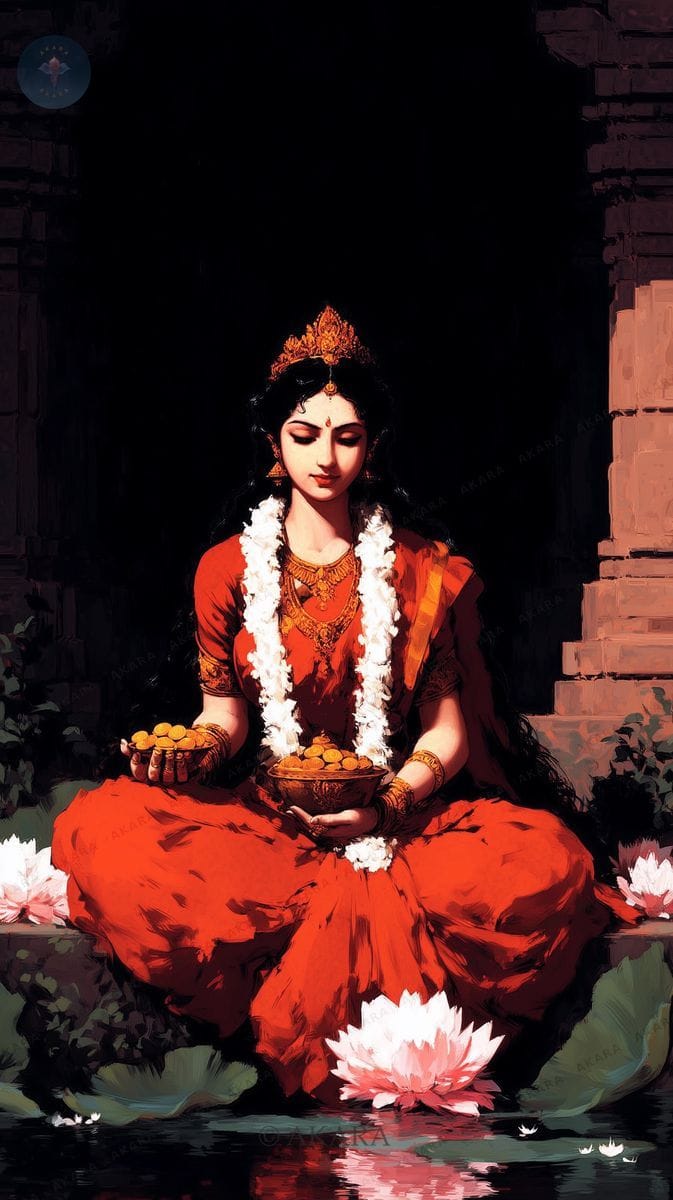
There is an old understanding in Vedic jyotish that the sky does not merely contain stars — it speaks. Today's panchang arranges itself around Shravana, the nakshatra whose very name means 'to hear,' while the Tritiya tithi of Krishna Paksha lends the day a quality of steady, purposeful contraction. The Moon moves through Makara rashi, the sign of the mountain-goat climbing with quiet determination, and the Sun illuminates Mithuna, the realm of communication and exchange. Together, these energies compose a day that rewards attentive listening, careful speech, and disciplined effort — not grand proclamations, but the quiet work of sincere seekers.
Understanding the Panchang: Five Limbs of Sacred Time
The panchang (from Sanskrit pancha, five, and anga, limb) is the classical Vedic almanac that tracks five dimensions of time simultaneously: the tithi (lunar day), vara (weekday), nakshatra (lunar mansion), yoga (luni-solar combination), and karana (half-tithi). In Sanatana Dharma, this framework is not mere superstition but a sophisticated cartography of time's texture — a recognition that just as tides respond to the Moon, human consciousness is subtly shaped by the quality of the moment. Traditional guidance drawn from the panchang is not predictive fortune-telling; it is closer to a farmer reading weather or a musician reading the raga appropriate to the hour. The invitation is to align, not to surrender agency.
Today's panchang reads: Krishna Tritiya, Nakshatra Shravana (pada 4), Yoga Vishkambha, Sun in Mithuna, Moon in Makara. Each element adds a distinct hue to the canvas of the day.
Shravana Nakshatra: The Ear of the Universe
Shravana occupies the span from 10° to 23°20' in Makara rashi and is ruled by the Moon itself. Its presiding deity is Vishnu in his cosmic, all-pervading aspect — the preserver who holds the universe in harmonious order. The nakshatra's symbol is three footsteps, recalling Vishnu's Trivikrama form, the three strides that measured out creation. Its other symbol, a pair of ears, points directly to its essential gift: the capacity for deep, receptive listening.
The root shru in Sanskrit means 'to hear' — and from it come shruti (that which is heard, i.e., the Vedas), shravana (the act of listening), and the very idea that sacred knowledge enters through the ear before it settles in the heart. The Bhagavata Purana lists shravana as the first among nine forms of bhakti (devotion): shravanam kirtanam vishnoḥ smaraṇam pāda-sevanam — hearing, chanting, remembering, serving the feet of Vishnu. On a day ruled by this nakshatra, the cosmos gently places its finger to its lips and says: listen first.
Shravana people, and Shravana days, carry qualities of earnest learning, communication, travel, and connection across distances. The fourth pada falls in Scorpio in the navamsa, deepening the day's quality with intensity and the desire to penetrate surface appearances and reach what is truly being said — beneath the words, beneath the noise.
Krishna Tritiya: The Third Lunar Day in the Waning Fortnight
The tithi today is Tritiya — the third lunar day — in Krishna Paksha, the fortnight of the waning Moon. In the Hindu calendar, the waning Moon is the period of apara paksha, associated with ancestors, completion, inner work, and the gradual withdrawal of outward energy toward reflection. Tritiya is governed by Bhadra, one of the eleven Rudras, and is traditionally considered a madhyama (middling) tithi — neither auspicious nor inauspicious in itself, but stable and workable.
Krishna Tritiya, however, does carry a quieter, more internalized quality than its Shukla counterpart. It favours consolidation over initiation. Beginning entirely new ventures — especially those requiring public momentum or significant outlay — is best approached with patience. What is already in motion, however, may be refined, deepened, and strengthened. Think of a sculptor working clay that has already been shaped: today is for refining the form, not throwing a new lump onto the wheel.
Yoga Vishkambha: A Note of Caution Before Clarity
The yoga of the day is Vishkambha, the first of the twenty-seven luni-solar yogas, and it carries a cautionary note in classical texts. Its name suggests an obstruction or a pillar that must be moved. Vishkambha days in traditional guidance are treated with measured awareness — one does not force open locked doors but rather examines what the lock is teaching. The day is still entirely workable for most activities; the tradition simply counsels against pushing aggressively where resistance appears. Patience and discernment are the yogic prescriptions for Vishkambha.
With Shravana's listening quality layered over Vishkambha's invitation to pause, the day shapes into something almost like a mauna (sacred silence) — a moment in time that rewards stillness more than striving.
What the Day Favours — and Where to Move Gently
Drawing on the combined qualities of today's panchang, traditional Vedic guidance suggests:
Favoured activities today:
- Study, learning, and listening to teachers or elders
- Devotional practices, particularly Vishnu sahasranama or any form of shravana bhakti
- Travel that is already planned and purposeful
- Writing, communication, correspondence — especially that which aims to bridge understanding
- Charitable giving and service, particularly related to food or education
- Visiting temples or sacred sites
Where to exercise patience:
- Launching entirely new financial ventures or signing major contracts
- Confrontational conversations where force is likely to meet equal resistance
- Overextending the body — today calls for measured energy, not exhaustion
A Reflective Practice for Shravana Day
Because Shravana is the nakshatra of sacred hearing, the most natural sadhana today is one of attentive reception. Whether you have five minutes or fifty, consider the following:
Settle into stillness at any comfortable hour — morning is ideal, when the mind has not yet accumulated the day's weight. Place your awareness at the ears. Notice every layer of sound: distant, near, inside the body. Do not name or judge what you hear; simply receive. Offer one simple prayer to Vishnu, the presiding deity of Shravana — even a single sincere Om Namo Narayanaya is sufficient. Then, in the quiet that follows, ask inwardly: What have I not yet truly heard in my own life? What is waiting to be received?
This is not a technique for psychic revelation. It is simply the ancient practice of creating interior space — what the Upanishads call shraddha, earnest receptivity — so that what is already present may be recognized.
Shravanam kirtanam Vishnoḥ — Hearing and chanting the glories of Vishnu. This alone, the Bhagavata assures us, is a complete path.
The Akara Reflection
At Akara, we understand that devotion is not confined to the temple or the puja room. Every day arrives as its own offering — shaped by the Moon's position, the Sun's journey, the river of time that the rishis mapped so carefully across millennia. Today, with the Moon in Makara and listening Shravana overhead, the invitation is beautifully simple: slow the mouth and open the ears. The divine speaks constantly, in scripture, in the voice of a teacher, in birdsong at dawn, in the silence between heartbeats. Shravana nakshatra, once a year or whenever it graces a day, reminds us that the first act of all genuine spiritual life is not to speak, not to do, but to hear — and from that hearing, to let right action arise naturally, as water finds its own level.
May your day be filled with clear hearing and quiet strength.
The cosmos gently places its finger to its lips and says: listen first.
शान्ताकारं भुजगशयनं पद्मनाभं सुरेशम् śāntākāraṃ bhujagaśayanaṃ padmanābhaṃ sureśam
The peaceful one resting on the serpent, lotus-naveled lord of the gods. Vishnu in his element — holding the universe together while looking effortlessly serene.
Questions & answers
What is Shravana nakshatra and why is it significant?
Shravana is the 22nd nakshatra in Vedic astrology, spanning Makara rashi and ruled by the Moon. Its presiding deity is Vishnu and its symbol is a pair of ears or three footsteps. The name derives from the Sanskrit root 'shru' meaning 'to hear,' and it is associated with learning, sacred listening, devotion, and communication. Shravana is considered highly auspicious for study, bhakti, and travel.
What does Krishna Tritiya tithi mean for today's activities?
Tritiya is the third lunar day, and in Krishna Paksha (the waning fortnight) it carries a quieter, inward-turning quality. Traditional guidance treats it as a stable, middling tithi good for consolidating and refining what is already in progress, but counsels patience before initiating bold new ventures or major financial commitments.
What is Yoga Vishkambha and should I be concerned?
Vishkambha is the first of the twenty-seven luni-solar yogas in the Vedic panchang. Classical texts treat it as a day to be mindful of obstacles and to avoid forcing outcomes where resistance appears. It does not make the day inauspicious for all activities — rather, it counsels discernment, patience, and measured action rather than aggressive initiative.
Is this panchang guidance the same as a predictive horoscope?
No. The Vedic panchang provides a traditional map of the day's qualitative texture — much like understanding the season or the weather — to help you align your actions wisely. It is not predictive fortune-telling and does not override individual free will or personal horoscopes. Think of it as traditional wisdom counsel, not fate.
What devotional practice is recommended on a Shravana nakshatra day?
Because Shravana's essence is sacred listening, the most natural practice is one of receptive stillness: sit quietly, bring awareness to sound, and offer a simple prayer to Vishnu, the nakshatra's presiding deity. Chanting or listening to the Vishnu Sahasranama, or simply reciting 'Om Namo Narayanaya,' is especially fitting. Reading from the Bhagavata Purana, which emphasises shravana bhakti, is also traditionally aligned with this nakshatra.