The Symbolism of Ganesha: Every Detail Has a Meaning
From his curved trunk to the mouse at his feet, every element of Ganesha's form is a precise teaching in divine disguise.
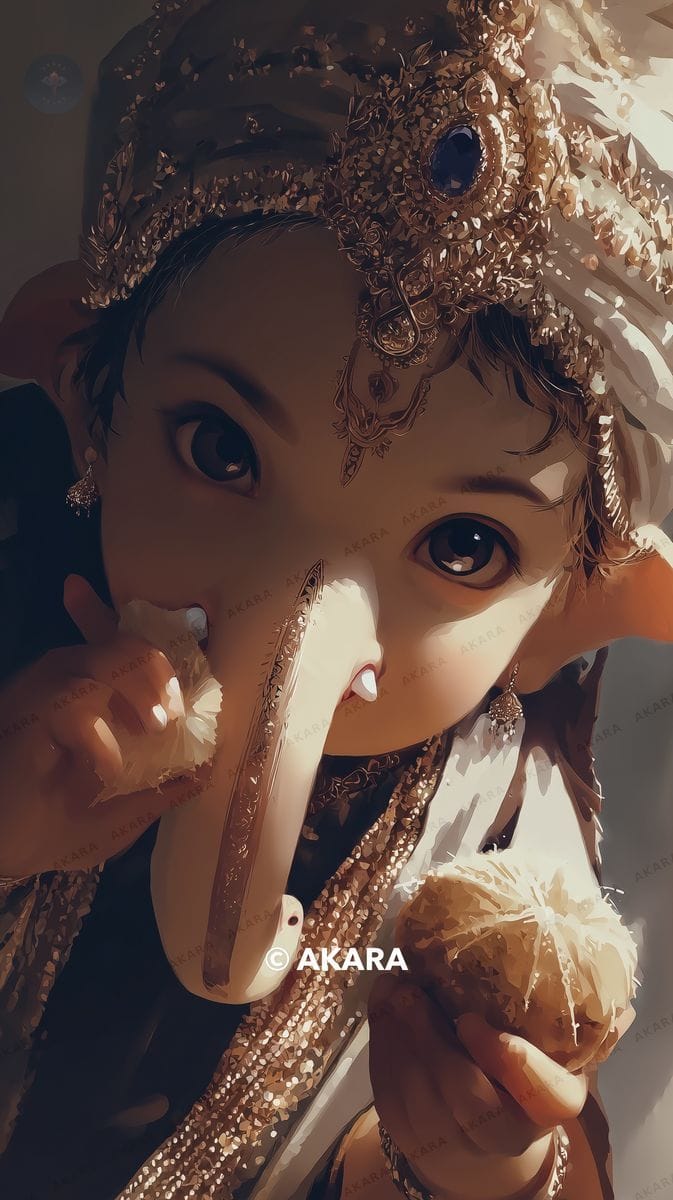
Before a single mantra is chanted, before a journey begins, before a new chapter of life is opened — Ganesha is invoked. He is Agraganya, the one who must be honoured first, and yet for many devotees he remains a beloved mystery: a deity of unmistakable presence whose every detail carries meaning far deeper than ornament. To truly see Ganesha is to receive a complete philosophy of how to live, encoded in the language of sacred form.
Why the Elephant Head? The Wisdom of Mahāgaṇapati
The question that every child asks — and that every sincere seeker eventually returns to — is this: why does Lord Ganesha have the head of an elephant?
The most widely received narrative, told in the Shiva Purāṇa and the Skanda Purāṇa, is that Pārvatī, longing for a son who would be hers entirely, fashioned a boy from the turmeric paste (haridrā) she used for her bath and breathed life into him. She stationed him as a guardian at her door. When Shiva arrived and was barred entry by this unknown boy, a confrontation followed, and the boy's original head was severed. Out of grief and love, Shiva commanded his attendants to bring the head of the first creature they found sleeping with its head pointing north — they returned with that of an elephant. Shiva restored the child and named him Gaṇesha, Lord of the Gaṇas.
But the form chosen is never accidental in Sanatana Dharma. The elephant (gaja) is the supreme symbol of discernment. In Sanskrit, one of Ganesha's names is Gajamukhā — elephant-faced — and the great elephant is celebrated for its extraordinary memory, its capacity to find water across vast distances, its ability to remove obstacles in the forest. The elephant's skull, the largest among land animals, is a vessel of unrivalled intelligence. When devotees see that magnificent head, they are looking at buddhi itself — intellect luminous enough to hold the infinite.
The Ears, Eyes, and Trunk: A Body That Teaches
Every feature of Ganesha's face is a precise instruction.
The large ears are described as śūrpa-karṇa — ears shaped like winnowing fans (śūrpa). A winnowing fan separates grain from chaff. Ganesha's ears signal the quality essential for any seeker: the ability to listen widely, to hear everything, and then to winnow — to retain what is true and sacred, and to let the rest go.
The small eyes (sūkṣma-netra) represent concentration, precision, and the penetrating gaze that sees the essence of things rather than their surface. In a world glutted with images and noise, Ganesha's tiny, focused eyes are a teaching about the quality of attention.
The trunk is perhaps the most discussed feature. An elephant's trunk is simultaneously the most powerful and the most sensitive organ in the animal world — it can uproot trees and also lift a single needle from the ground. This is viveka, discernment: the capacity to act with both strength and delicacy as the moment demands. The curve of the trunk, too, carries meaning. A trunk curving to the left (vāmabhoga) is the more common household form, considered auspicious for homes and temples of ordinary worship. A trunk curving to the right (dakṣiṇābhimukha) is rare, considered highly potent and requiring stricter ritual observance. The curl of the trunk toward the modaka — the sweet — also signals that the reward of spiritual practice is bliss drawn inward, not scattered.
The Four Arms and What They Hold
Ganesha is most commonly depicted with four arms — caturabhuja — representing his sovereignty over all four directions of existence.
- The aṅkuśa (goad or elephant hook) in one hand is the instrument of sādhana, the disciplined effort that guides the wandering mind back toward its goal, much as a mahout guides an elephant.
- The pāśa (noose or lasso) represents the power to bind — to catch and hold attachments that bind the soul, and also to rein in the forces of ego and desire.
- The modaka (sweet dumpling, typically of coconut and jaggery) held in a third hand is mokṣa itself — liberation, the ultimate sweetness that awaits the sincere seeker. The modaka is sometimes described as representing the antaḥkaraṇa, the inner instrument of mind-intellect refined by practice until it becomes pure joy.
- The fourth hand is often raised in abhaya mudrā — the gesture of fearlessness and blessing. Abhaya means
To truly see Ganesha is to receive a complete philosophy of how to live, encoded in the language of sacred form.
वक्रतुण्ड महाकाय सूर्यकोटि समप्रभ। निर्विघ्नं कुरु मे देव सर्वकार्येषु सर्वदा॥ vakratuṇḍa mahākāya sūryakoṭi samaprabha nirvighnaṃ kuru me deva sarvakāryeṣu sarvadā
O elephant-faced one, with a massive form radiant as millions of suns, remove all obstacles in all my endeavors, always.
Questions & answers
Why does Ganesha have an elephant head?
According to the Shiva Purāṇa, Ganesha's original head was replaced with that of an elephant by Lord Shiva. Beyond the narrative, the elephant head symbolises supreme intellect (buddhi), discernment, memory, and the capacity to remove obstacles — all qualities the elephant embodies in nature and in sacred tradition.
What does Ganesha's broken tusk mean?
Ganesha broke his own tusk to use as a writing instrument when transcribing the Mahābhārata for sage Vyāsa. The broken tusk (ekadanta) symbolises sacrifice in the service of knowledge, and teaches that wisdom flows through giving of oneself — not through keeping oneself perfectly intact.
Why does Ganesha ride a mouse?
The mouse (mūṣika) represents desire and the ego — small but capable of gnawing through everything we accumulate. By riding rather than destroying the mouse, Ganesha teaches mastery through awareness and gentle direction, not suppression.
What is the meaning of the modaka that Ganesha holds?
The modaka — a sweet dumpling of coconut and jaggery — represents mokṣa, the bliss of liberation. It symbolises the reward of spiritual practice and the sweetness of a mind purified through devotion and discipline.
What is the significance of Ganesha's four arms?
Ganesha's four arms rule all four directions of existence. The aṅkuśa (goad) represents disciplined effort; the pāśa (noose) the binding of ego and attachment; the modaka the sweetness of liberation; and the raised hand in abhaya mudrā offers the eternal blessing of fearlessness.