The Lord Steps Out: Jagannath Rath Yatra 2026 and the Grace That Meets You on the Road
On July 16, millions will pull three towering wooden chariots through Puri's Grand Road — and in doing so, experience a grace that belongs to everyone.
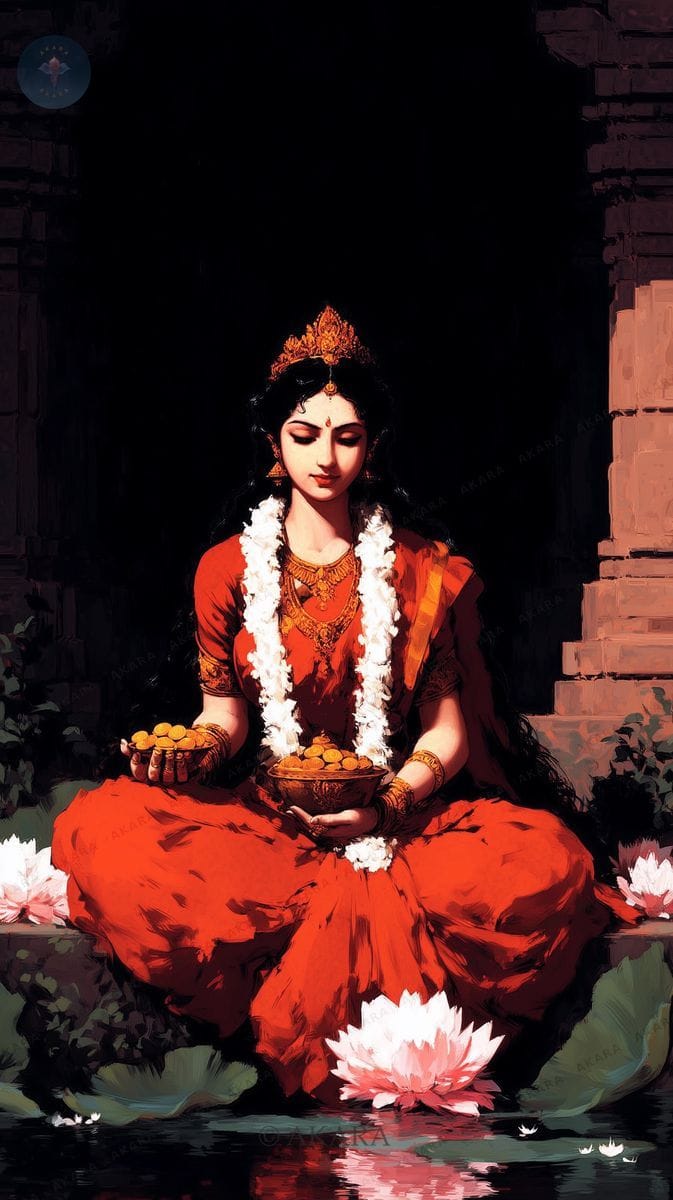
There is a festival in the Hindu calendar that does not wait for you to arrive at the temple. On the second day of Ashadha Shukla Paksha, the temple comes to you. Lord Jagannath — Jagat (universe) + Nath (Lord), the Lord of the Universe — descends from the sanctum, mounts a towering wooden chariot, and rides out into the open streets of Puri, Odisha, accompanied by his elder brother Balabhadra and sister Subhadra. This is Rath Yatra, the Festival of Chariots, and in 2026 it falls on Thursday, July 16. It is among the most searched and most spiritually charged events in the Hindu calendar right now — and with good reason.
Jagannath: Lord of All, Bound by None
Before we speak of the festival, we must sit with the deity. Jagannath is among the most universal of Hindu presences. He is considered an avatara (divine descent) of Lord Vishnu, yet his form — wide eyes, broad smile, armless torso of sacred neem wood — transcends easy categorisation. Scholars and devotees note that the Jagannath tradition weaves together Vaishnava, Shaiva, Shakta, Buddhist, and even tribal threads into one luminous whole. The great tirtha of Puri is one of the four dhamas (sacred abodes) of Sanatana Dharma, and the Jagannath temple has stood as its spiritual heartbeat for over a millennium.
The origin story is ancient and moving. King Indradyumna of Malwa received a divine vision directing him to the coast of Puri, where a sacred log had washed ashore — meant to be carved into the form of the Lord. A divine craftsman appeared, asked not to be disturbed, and then vanished before the work was complete. What remained was the unfinished, icon-like form of Jagannath we know today: a reminder, perhaps, that the divine cannot be fully contained in any human conception.
The Three Chariots: A Living Scripture
The heart of Rath Yatra is the ratha — the chariot — and these are no ordinary vehicles. Every year, without exception, three entirely new chariots are built from scratch by teams of hereditary carpenters following ancient architectural specifications passed down through generations. No measuring tape, no nails, no glue — only seasoned neem wood and traditional wooden joints hold these colossal structures together.
Lord Jagannath's chariot is called Nandighosh (nandi — bliss, ghosh — sound: "the one who brings joy"). It stands approximately 45.6 feet tall and runs on 16 wheels, draped in red and yellow cloth. Lord Balabhadra's chariot is Taladhwaja, 44 feet tall on 14 wheels. Devi Subhadra's chariot is Darpadalana, smaller and clothed in red and black. Together, these three chariots are assembled and decorated each year as an act of devotion — a moving temple.
The Skanda Purana describes the Rath Yatra as the most important festival of Mahaprabhu Jagannath, and a verse from that tradition declares: "Ratha tu Vamanam drustva purnarjanma na vidyate" — one who beholds the divine chariot of the Lord is freed from the cycle of rebirth. This is not metaphor to be explained away; it is the bhakti tradition's recognition that darshan (sacred sight) itself carries transformative power.
The Ritual Arc: From Snana to Bahuda
The Rath Yatra is not a single day but an entire sacred cycle. It begins on Snana Purnima — this year, June 11 — when the three deities are ceremonially bathed with water from 108 sacred pitchers infused with herbs and flowers. After this ritual bathing, the deities are said to fall ill (Anavasara — the period of retreat), and for the next fifteen days they rest in isolation, accessible only to select priests. This pause mirrors the human need for stillness before great emergence.
On July 15, the Gundicha Marjana takes place — the ceremonial cleaning of the Gundicha Temple, the Lord's destination, a practice personally established by the great saint Sri Chaitanya Mahaprabhu, who taught that the heart (the Gundicha Temple, in this inner reading) must be swept clean before it can receive the Lord.
Then comes July 16, the day of the great procession. The deities are carried out of the sanctum in the ritual called Pahandi Bije, to the sound of drums, conches, and devotional singing. Before the chariots begin to move, the Gajapati King of Puri — the traditional royal patron — performs Chhera Pahanra, sweeping the road before the Lord with a golden broom. This gesture, in which a king becomes a sweeper before God, is one of the most powerful symbols in all of Sanatana Dharma: that before the Supreme, every status dissolves.
The return journey, Bahuda Yatra, takes place on July 24, and the deities return home garlanded and blessed. The full cycle, eleven days of celebration, is one of the world's longest continuously observed religious events.
A Festival That Belongs to Everyone
What makes Rath Yatra truly remarkable — and uniquely resonant in our time — is its radical inclusivity. The outdoor chariot procession on Puri's Grand Road (the Bada Danda) is open to all human beings, regardless of faith, origin, or caste. This is, in the deepest sense, the theological message of the festival: Jagannath is Lord of the entire universe, and his grace is not gatekept.
The festival's reach today is genuinely global. Beyond Puri — where between one and two million devotees are expected — Rath Yatras are held in Ahmedabad (one of India's largest processions outside Puri), Kolkata, Vrindavan, Mumbai, Chennai, and through ISKCON, in London, New York, Sydney, and dozens of cities worldwide. Founded in 1966 by A.C. Bhaktivedanta Swami Prabhupada, ISKCON has carried the chariot festival to streets far from the Bay of Bengal, spreading its spirit of universal bhakti (devotion) to seekers of every background.
The 2026 edition also carries added significance: the Puri Heritage Corridor project, a major infrastructure and conservation initiative around the Jagannath Temple, is expected to be substantially advanced by the time the chariots roll, offering pilgrims a more accessible and spiritually dignified environment.
The Akara Lens: What the Chariot Teaches
From the Akara lens — rooted in Sanatana Dharma, attentive to the eternal within the present — Rath Yatra is more than festival. It is cosmology in motion.
The Katha Upanishad itself speaks in the language of the chariot: the body is the rath, the intellect is the charioteer, the senses are the horses, and the Self — the Atman — is the passenger being driven toward liberation. When Jagannath mounts his chariot, he is not merely travelling two kilometres to the Gundicha Temple. He is enacting the universe's own truth: that the divine is always in motion toward its devotees, always seeking reunion, always willing to step out of the sanctum and into the dusty, joyful, imperfect street where real human life unfolds.
Today, on Krishna Panchami with Nakshatra Shatabhisha rising, the stars carry the quality of Ayushman Yoga — long life, vitality, auspiciousness. It is a fitting sky under which to contemplate a festival more than five thousand years old, whose chariots have never stopped rolling, whose Lord has never stopped descending, and whose call — Jai Jagannath! — still echoes from Puri to Pune to the streets of San Francisco.
If you cannot travel to Puri this July 16, pull the rope from wherever you are. Light a lamp. Offer a flower. And know that the Lord of the Universe has already spotted you in the crowd.
"Rath Yatra is the only occasion when the deities leave the sanctum and come among the people, so that anyone may have darshan and serve by pulling the chariots."
Before the chariots begin to move, the Gajapati King sweeps the road with a golden broom — a king becoming a sweeper before God.
शान्ताकारं भुजगशयनं पद्मनाभं सुरेशम् śāntākāraṃ bhujagaśayanaṃ padmanābhaṃ sureśam
The peaceful one resting on the serpent, lotus-naveled lord of the gods. Vishnu in his element — holding the universe together while looking effortlessly serene.
Questions & answers
When is Jagannath Rath Yatra 2026 and how long does it last?
Rath Yatra 2026 begins on Thursday, July 16, the Dwitiya Tithi (second day) of Ashadha Shukla Paksha. The full festival cycle, including the return journey (Bahuda Yatra), runs through July 24 — nine days in all.
What are the three chariots called and how are they different?
Lord Jagannath's chariot is Nandighosh (45.6 feet tall, 16 wheels, red and yellow); Lord Balabhadra's is Taladhwaja (14 wheels, red and green); and Devi Subhadra's is Darpadalana (smaller, red and black). All three are built fresh every year from neem wood, without nails, following centuries-old carpentry traditions.
Can non-Hindus attend and participate in Rath Yatra?
Absolutely. The outdoor chariot procession along Puri's Grand Road is open to people of all faiths and nationalities. Anyone may witness the procession and even join in pulling the chariots. Note that entry into the Jagannath Temple sanctum in Puri itself follows the temple's traditional customs.
What is the spiritual significance of pulling the chariot ropes?
In the bhakti tradition, pulling the chariot rope (participating in the yatra) is an act of selfless service (seva) to the Lord. Scriptural tradition holds that beholding the divine chariot of Jagannath is spiritually liberating. The Katha Upanishad's chariot metaphor also deepens the symbolism: the rath represents the human body journeying toward the Self.
Where else in the world is Rath Yatra celebrated in 2026?
Beyond Puri, major Rath Yatras are held in Ahmedabad, Kolkata, Vrindavan, Mumbai, and Chennai. Globally, ISKCON organises chariot festivals in London, New York, Sydney, and dozens of other cities, bringing the spirit of Jagannath bhakti to seekers worldwide.