The Lord Steps Out: Jagannath Rath Yatra 2026 and the Grace of the Open Road
As three towering chariots roll down the Grand Road of Puri, the Lord of the Universe descends to meet his devotees — and two millennia of bhakti pulse through every rope.
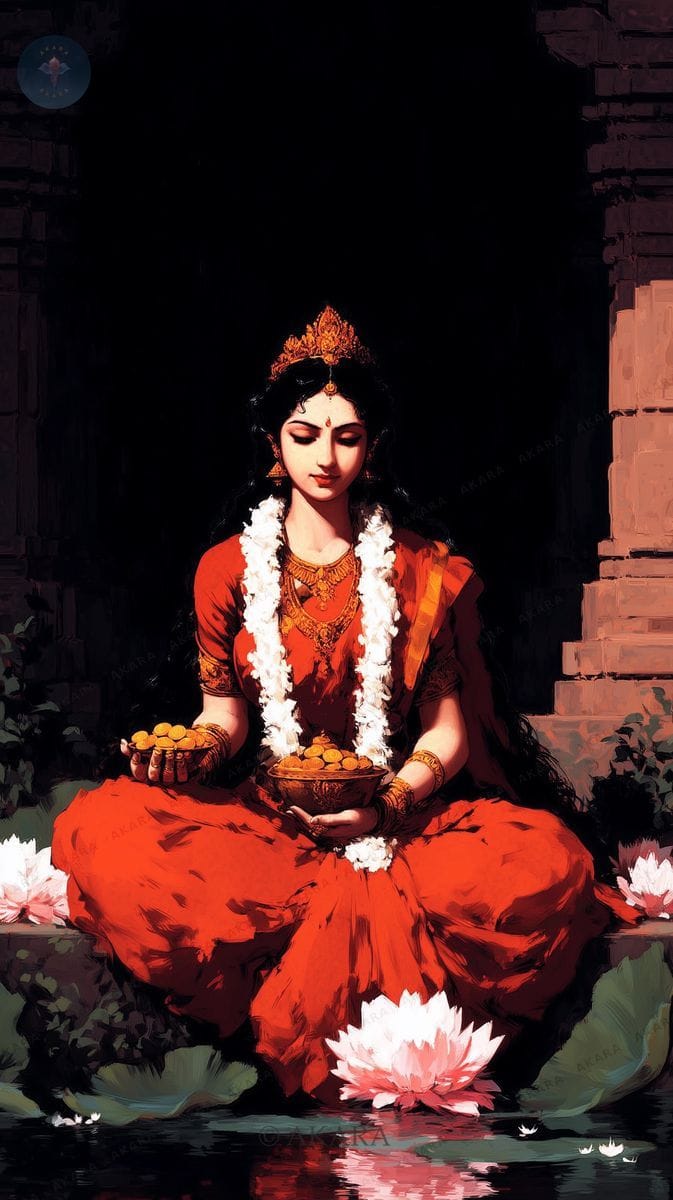
Once a year, the Lord does not wait for his devotees to come to him. He comes to them. On the morning of July 16, 2026 — Ashadha Shukla Dwitiya — the great wooden chariots of Puri began their slow, majestic journey down the Bada Danda, the Grand Road of the sacred city of Puri in Odisha, carrying Lord Jagannath, Lord Balabhadra, and Devi Subhadra toward the Gundicha Temple. This is Rath Yatra: the Chariot Journey, the festival of open grace, and one of the most luminous expressions of Sanatana Dharma alive in the world today.
Jagannath: The Lord of the Universe Who Belongs to Everyone
The name says everything. Jagannātha — from jagat (the moving world) and nātha (lord, protector) — is the Supreme who holds all of creation in his compassion. Worshipped at the Shri Jagannath Temple in Puri, one of the four sacred Char Dhams of Hindu spirituality, <cite index="10-1,10-2">the Yatra honours the journey of Lord Jagannath, revered as the supreme God of Sanatana Dharma and considered by devotees to be an incarnation of Lord Vishnu.</cite> His form here is distinctive — abstract, wide-eyed, arms outstretched — carrying in its very incompleteness a mystery that generations of saints and scholars have meditated upon. According to legend recorded in the Skanda Purana, King Indradyumna was blessed with a divine vision to install three sacred wooden forms; when the sculptor paused his work, <cite index="17-28,17-29,17-30">three incomplete wooden forms — without fully shaped arms or features — were left behind, and a divine voice instructed the king to install and worship these unfinished forms as the living deities. Those three forms became Lord Jagannath, Lord Balabhadra, and Devi Subhadra — and the tradition of Rath Yatra began to honour them.</cite>
That divine incompleteness is itself a teaching: the Absolute cannot be fully grasped by human hands. Yet in his mercy, Jagannath steps down to the street every year so that every hand may touch his chariot rope.
The Festival Underway: Sacred Schedule for 2026
<cite index="19-1,19-2">Rath Yatra — the main procession — began on July 16, 2026, as the deities began their journey to the Gundicha Temple. Bahuda Yatra, the return journey, is set for July 24, 2026.</cite> As you read this, the Lord rests at Gundicha, receiving the intimate, quiet worship of pilgrims who have travelled from every corner of India and beyond.
The full sequence is a spiritual drama played out over days:
- July 16 — Rath Yatra: The grand departure. <cite index="22-5">Lord Jagannath, along with Lord Balabhadra and Devi Subhadra, mount their massive chariots for the town procession, moving toward their maternal aunt's house — the Gundicha Temple.</cite>
- July 17–23 — Gundicha Yatra: <cite index="22-6">The deities reside and rest at the Gundicha Temple for seven days, allowing millions of visiting pilgrims to catch a special glimpse of them.</cite>
- July 20 — Hera Panchami: <cite index="20-5">Goddess Lakshmi visits the Gundicha Temple in search of Lord Jagannath</cite> — a tender episode beloved in Odia devotional poetry, narrating the longing of the Divine Mother for her Lord.
- July 24 — Bahuda Yatra: The Lord's return. <cite index="21-14">After staying at Gundicha Temple, Lord Jagannath and his siblings travel back in their majestic chariots to the Jagannath Temple.</cite>
- July 25 — Suna Besha: <cite index="20-7">The deities are adorned with magnificent gold ornaments while seated on their chariots</cite> — one of the most visually splendid moments of the entire festival cycle.
- July 27 — Niladri Bijay: <cite index="20-8">The deities return to the sanctum of the Jagannath Temple</cite>, completing the sacred circuit.
The Three Chariots: A Moving Temple
The chariots are not vehicles — they are temples in motion. Each year, they are built entirely from scratch. <cite index="10-9,10-10,10-11">The wood of the neem tree is used to build three massive chariots. As many as 1,400 workers trained in ancient carpentry build the chariot from scratch — without any measuring tape, nails, or glue; only wooden pegs and old-school joints.</cite> This act of construction is itself a seva (sacred service), an annual covenant between the craftsmen's hands and the divine.
<cite index="10-33">The three massive wooden chariots — Nandighosa for Jagannath, Taladhwaja for Balabhadra, and Darpadalana for Subhadra — symbolise the deities' annual journey to the Gundicha Temple.</cite> <cite index="20-10,20-11,20-12">Nandighosha, which carries Lord Jagannath, stands around 45 feet tall with 16 wheels and features a striking red and yellow canopy; its sacred flag is known as Trailokyamohini.</cite> <cite index="16-39">The chariot of Goddess Subhadra symbolises peace, compassion, and the nurturing aspect of the feminine.</cite>
One of the most poignant rituals frames the procession before a single chariot moves. <cite index="16-15,16-16,16-17">The Gajapati King of Puri performs the Chhera Pahara ritual — sweeping the chariot platform with a golden broom — symbolising that everyone is equal before God, regardless of wealth or social position. This ritual carries the message of humility and devotion.</cite> A king kneels with a broom. The Lord watches, wide-eyed and smiling.
The Theology of the Open Road: Darśana Without Walls
What makes Rath Yatra unlike almost any other sacred occasion in Sanatana Dharma is its radical, joyful inclusivity. <cite index="15-4">Most Hindu festivals involve devotees visiting temples to seek the darshan of the deities, but Rath Yatra is unique because the deities themselves come out to bless their devotees.</cite>
The chariot rope is the great equaliser. <cite index="15-9,15-10">Equality is one of the key aspects associated with this festival: people, irrespective of their caste or creed, get an opportunity to pull the ropes of the chariots, symbolising that God's blessings are available to everyone.</cite> The Skanda Purana is unambiguous about the spiritual fruit of this act: <cite index="17-22">according to the scripture, the spiritual merit of pulling the rope even once equals the merit earned from performing a hundred yajnas (fire sacrifices).</cite>
<cite index="20-26">One of the most unique aspects of Rath Yatra is that people from all faiths and nationalities can witness the procession and participate in pulling the chariots</cite> — even those who cannot enter the temple's inner sanctum. Bhakti, true bhakti, does not close its doors.
This open-road theology has drawn witnesses across centuries. <cite index="17-32">The 13th-century Venetian traveller Marco Polo wrote of witnessing a massive chariot procession in India — widely considered by historians to be a reference to Rath Yatra in Puri.</cite> <cite index="17-33,17-34">In the 16th century, the Vaishnava saint Sri Chaitanya Mahaprabhu made Puri his home and participated in Rath Yatra with such extraordinary devotion that his accounts transformed how the Vaishnava world understood the festival — his presence elevated Rath Yatra's spiritual stature across all of India.</cite> In our own era, <cite index="10-25">founded in 1966 by A. C. Bhaktivedanta Swami Prabhupada, ISKCON is a global spiritual movement that widely celebrates Rath Yatra in cities around the world, bringing the festival to a global audience.</cite>
Rath Yatra and the Panchang: A Festival in Perfect Cosmic Alignment
Our Panchang today — Shukla Panchami, Nakshatra Purva Phalguni, Sun in Karka — sits beautifully within the arc of this festival. The Sun's transit through Karka (Cancer), a sign of depth, nurture, and lunar devotion, mirrors the inner journey the Yatra asks of us: not the outward spectacle alone, but the inward pilgrimage. Purva Phalguni, the nakshatra of rest, creative renewal, and divine enjoyment (bhoga), resonates with the Lord's own pause at Gundicha — a celestial rest stop where intimacy replaces grandeur.
The Yoga Variyana of today carries connotations of excellence and distinction. What more distinguished spiritual moment could there be than this — the days when Jagannath rests at Gundicha, accessible and present, before beginning his golden return?
For the Akara family of seekers, this week is an invitation: to close the eyes, feel the rope in the hand, and pull — even if only in the heart.
Most festivals ask the devotee to come to the Lord. Rath Yatra reverses the grace: the Lord comes to the devotee.
शान्ताकारं भुजगशयनं पद्मनाभं सुरेशम् śāntākāraṃ bhujagaśayanaṃ padmanābhaṃ sureśam
The peaceful one resting on the serpent, lotus-naveled lord of the gods. Vishnu in his element — holding the universe together while looking effortlessly serene.
Questions & answers
When did Jagannath Rath Yatra 2026 begin, and when does it end?
Rath Yatra 2026 commenced on July 16, 2026 in Puri, Odisha. The festival concludes with Niladri Bijay — the deities' re-entry into the temple sanctum — on July 27, 2026. The return procession (Bahuda Yatra) takes place on July 24, followed by the golden Suna Besha ceremony on July 25.
What is the spiritual significance of pulling the chariot rope during Rath Yatra?
According to the Skanda Purana, pulling the chariot rope even once earns spiritual merit equal to performing a hundred yajnas (fire sacrifices). It is also a powerful symbol of equality — people of all castes, creeds, and nationalities pull the same rope, representing the universality of divine grace.
What is Hera Panchami and why does it fall in the middle of Rath Yatra?
Hera Panchami (July 20, 2026) is a touching interlude within the Rath Yatra festival when Goddess Lakshmi, who was left behind at the main temple, visits the Gundicha Temple in search of Lord Jagannath. The episode is beloved in Odia devotional tradition and captures the longing of the Divine for reunion — a theme central to Vaishnava bhakti.
Why is Lord Jagannath depicted in such an abstract, unusual form?
According to the Skanda Purana legend, a divine sculptor began carving the deities but stopped before completing the arms and features. A celestial voice then instructed King Indradyumna to install and worship these 'unfinished' forms. Theologically, the abstract form points to the truth that the Infinite cannot be fully captured by human craft — the Lord's wide-eyed, all-seeing gaze encompasses all of creation.
Can people outside the Hindu faith participate in Rath Yatra?
Yes. While entry to the inner sanctum of the Jagannath Temple is reserved for practising Hindus, the outdoor chariot procession on Puri's Grand Road (Bada Danda) is open to all, regardless of religion or nationality. Anyone may witness the procession and pull the sacred chariot ropes — an expression of Jagannath's all-encompassing grace.