The Trimurti: Brahma, Vishnu, and Shiva Explained
Three faces, one boundless truth: how the Trimurti reveals the cosmic rhythm that sustains all of existence.
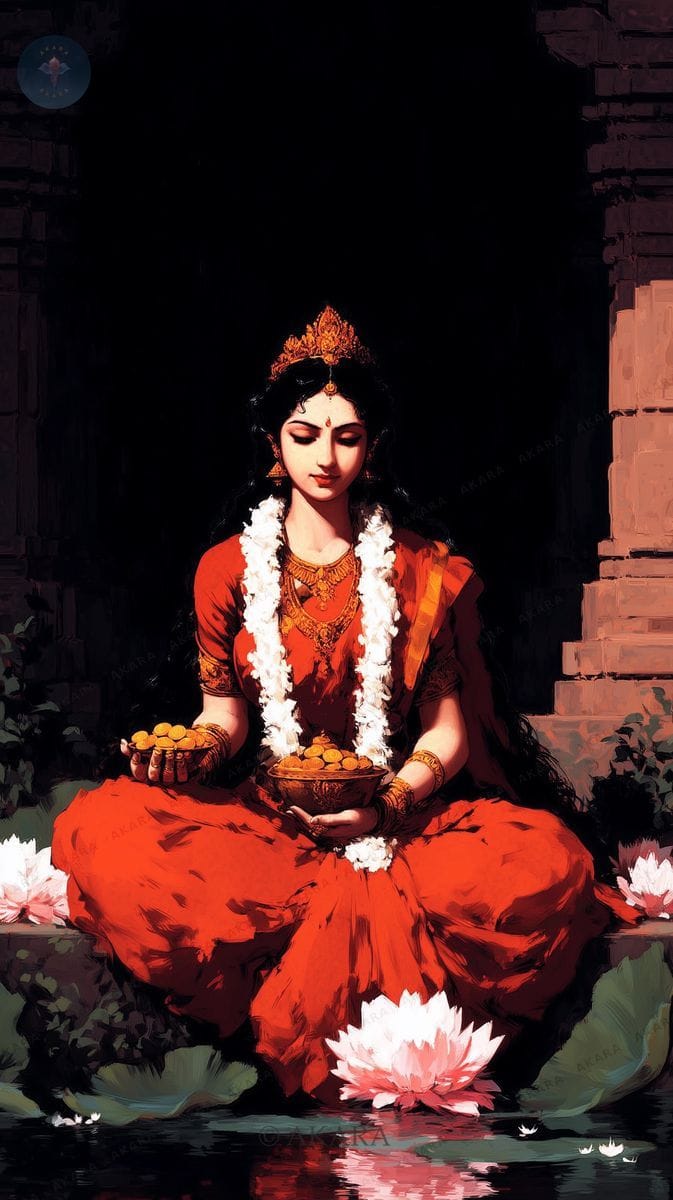
On a day graced by Nakshatra Chitra — the star of luminous craftsmanship — there is no more fitting inquiry than the one seekers have voiced across millennia: Who creates? Who sustains? Who, in the end, dissolves? Sanatana Dharma answers with an image both grand and intimate — three divine forms, one sacred reality. The Trimurti, from the Sanskrit tri (three) and mūrti (form or embodiment), places Brahma, Vishnu, and Shiva as the three primary expressions through which the infinite, formless Brahman engages with the cosmos. Understanding them is not merely theological study; it is an invitation to see the divine rhythm within every breath.
The Word Itself: What Trimurti Really Means
The Sanskrit compound tri-mūrti (त्रिमूर्ति) literally means "three forms" or "three embodiments." It first appears with conceptual clarity in the Matsya Purāṇa and the Kūrma Purāṇa, though the seed of the idea is traceable to the Ṛgveda's hymns to the three great cosmic functions. The term is sometimes rendered into English as the "Hindu Trinity," and while the comparison to trinitarian theology in other faiths is tempting, it can mislead. The Trimurti is not three separate gods in council. It is one ultimate reality — Brahman, the unmanifest absolute — expressing itself through three essential cosmic modes: creation (sṛṣṭi), preservation (sthiti), and dissolution (pralaya). This is a philosophy of dynamic unity, not division.
The Viṣṇu Purāṇa captures it plainly: "The one Brahman, assuming the three qualities of rajas, sattva, and tamas, becomes Brahmā, Viṣṇu, and Śiva for the purposes of creation, preservation, and dissolution respectively." The three guṇas — the primal qualities of nature — are the key: rajas (creative energy and passion), sattva (luminous balance and preservation), and tamas (inertia and dissolution) are not moral categories but cosmic forces, and the Trimurti maps each deity to one.
Brahmā: The Weaver of Worlds
Brahmā (Brahmā, ब्रह्मा — note the long final vowel distinguishing him from Brahman, the absolute, and Brahmin, the priestly caste) is the deity of sṛṣṭi, creative origination. He is depicted with four heads, each traditionally said to have recited one of the four Vedas at the moment of creation. His four faces gaze in all directions simultaneously, symbolising omniscient creative intelligence. His consort is Sarasvatī, goddess of knowledge and eloquence — for without wisdom, creation is chaos.
Brahmā holds the kamaṇḍalu (water vessel, representing the primordial waters of potential), the pustaka (sacred book of the Vedas), the akṣamālā (rosary of time), and sometimes a lotus. He is seated upon a lotus that rises from the navel of Viṣṇu — a beautiful mythic image placing creation as an outgrowth of preservation, suggesting that new beginnings are always rooted in existing sustenance.
It is often asked why Brahmā has so few temples dedicated to him. Tradition offers several narratives — the most common from the Śiva Purāṇa — but the philosophical reading is instructive: creation, once set in motion, requires no further petition. We live within Brahmā's completed act. Our devotional energy naturally flows toward the one who sustains us now (Viṣṇu) and the one who will ultimately liberate us (Śiva).
Viṣṇu: The Sustainer at the Heart of Bhakti
Viṣṇu (Viṣṇu, विष्णु) is the preserver, associated with sattva-guṇa — the quality of clarity, harmony, and nurturing balance. His name derives from the root viś, meaning "to pervade," and this is his essential nature: he is all-pervasive, present within every atom of the sustained universe. He reclines on the cosmic serpent Ādiśeṣa upon the primordial ocean (Kṣīrasāgara), in a state called Yoganidrā — a divine, wakeful rest from which he responds to the cries of creation whenever dharma declines.
This responsiveness is the theological ground for the doctrine of avatāra (descent): whenever righteousness falters, Viṣṇu descends in a new form. The ten principal avatāras — Daśāvatāra — include Matsya (fish), Kūrma (tortoise), Varāha (boar), Narasiṃha (man-lion), Vāmana (dwarf), Paraśurāma, Rāma, Kṛṣṇa, Balarāma (or Buddha in some reckonings), and Kalki, the avatāra yet to come. Each descent addresses a specific cosmic crisis, mirroring the biological process of adaptation and healing.
Viṣṇu's four arms hold the śaṅkha (conch, whose sound symbolises the primordial Oṃ), the cakra (discus of time and dharmic law), the gadā (mace of knowledge), and the padma (lotus of purity). His consort is Lakṣmī, goddess of abundance and auspiciousness — for sustenance and prosperity are inseparable. The bhakti movement — the great devotional renaissance that swept India from the 6th century onward — found its most ardent expression in love for Viṣṇu's forms, particularly Rāma and Kṛṣṇa.
Śiva: The Liberator Who Dissolves and Renews
Śiva (Śiva, शिव) is the deity of pralaya — dissolution — yet his name means "the auspicious one." This is the Trimurti's deepest paradox and its greatest teaching. Dissolution is not destruction in the nihilistic sense; it is the necessary return of form to formlessness, the clearing that makes new creation possible. The Mahāmṛtyuñjaya Mantra of the Ṛgveda (7.59.12) addresses Śiva as the conqueror of death who, like a fruit freed from its vine, liberates the devotee from the bondage of impermanence.
Śiva's iconography is dense with meaning. His jaṭā (matted locks) bear the descent of the Gaṅgā, which he caught in his hair to protect the earth from the river's force. His third eye on the forehead is the eye of transcendent wisdom that perceives beyond duality. The trishūla (trident) represents his sovereignty over the three guṇas, the three worlds, and the three dimensions of time. The crescent moon on his crown measures the flow of cosmic time, and the ḍamaru (hourglass drum) in his hand beats the rhythm of creation at its origin — an echo of Naṭarāja, the cosmic dancer whose dance is the universe itself.
Śiva's consort — Pārvatī, Durgā, Kālī in her fierce forms — is Śakti, the primordial energy without which even Śiva remains inert. Together they represent Puruṣa (pure consciousness) and Prakṛti (dynamic nature), the twin pillars of Sāṃkhya philosophy.
The Trimurti as a Living Philosophy
For the modern seeker, the Trimurti is more than iconography. It is a lens through which to read life itself. Every project, relationship, and era moves through creation, sustenance, and conclusion. The Bhagavad Gītā (4.7–8) frames this cosmically: when dharma wanes and adharma rises, the divine responds. Recognising these three movements in our own lives — beginning with awareness (sṛṣṭi), maintaining with care (sthiti), and releasing without clinging (pralaya) — is the Trimurti teaching lived from the inside.
At Akara, we return again and again to this vision: that devotion (bhakti) is not the worship of three separate beings but an opening of the heart to the one truth that wears three faces. Whether a devotee bows before the Śivaliṅga at dawn, chants a Viṣṇu sahasranāma at midday, or offers a lamp to the image of Brahmā's wisdom in the form of Sarasvatī at dusk, they are touching the same boundless light through different windows.
"Brahman alone is the cause of origination, continuation, and dissolution of the universe. It is He who is known as Brahmā, Viṣṇu, and Śiva." — Kūrma Purāṇa
A Reflection for the Seeker
On this Shukla Ashtami, with the star Chitra — meaning "brilliant" or "variegated" — lending its quality of luminous diversity to the day, the Trimurti offers us a quiet instruction: reality is not monotonous but gloriously multifaceted, and each face of the divine that you encounter in prayer, in art, in the rhythms of nature, is genuine and full. The cosmos is not indifferent machinery; it is a living, breathing intelligence that creates, holds, and releases — with grace, with purpose, and with what Sanatana Dharma has always insisted is the deepest truth of all: Sat-Cit-Ānanda, Being-Consciousness-Bliss, undivided and ever-present.
The cosmos is not indifferent machinery; it is a living, breathing intelligence that creates, holds, and releases — with grace and purpose.
शान्ताकारं भुजगशयनं पद्मनाभं सुरेशम् śāntākāraṃ bhujagaśayanaṃ padmanābhaṃ sureśam
The peaceful one resting on the serpent, lotus-naveled lord of the gods. Vishnu in his element — holding the universe together while looking effortlessly serene.
Questions & answers
What does Trimurti mean in Sanskrit?
Trimurti (त्रिमूर्ति) is a compound of tri (three) and mūrti (form or embodiment). It refers to the three primary divine forms — Brahmā, Viṣṇu, and Śiva — through which the formless absolute, Brahman, enacts the cosmic functions of creation, preservation, and dissolution.
Is the Hindu Trimurti the same as the Christian Trinity?
While the comparison is frequently drawn, the two concepts are distinct. The Christian Trinity addresses the inner nature of God, whereas the Trimurti describes three cosmic functions of one ultimate reality (Brahman). The three forms of the Trimurti are expressions of Brahman's engagement with the universe, not three persons of equal and co-eternal divinity in dialogue with one another.
Why are there so few temples dedicated to Brahmā?
The most commonly cited reason comes from narratives in the Śiva Purāṇa, but the philosophical reading is equally illuminating: Brahmā's act of creation is considered complete and self-sustaining. Devotional energy flows naturally toward Viṣṇu, who actively sustains us now, and Śiva, who grants liberation. Pushkar in Rajasthan remains the most famous Brahmā temple in India.
What are the three guṇas and how do they relate to the Trimurti?
The three guṇas are the fundamental qualities of cosmic nature (Prakṛti): rajas (active, passionate energy), sattva (clear, harmonious balance), and tamas (inert, dissolving tendency). The Viṣṇu Purāṇa associates Brahmā with rajas (creation requires energetic drive), Viṣṇu with sattva (preservation requires clear, sustaining harmony), and Śiva with tamas (dissolution involves a return to inert potential). These are cosmic forces, not moral judgements.
How can the concept of the Trimurti be applied to daily spiritual life?
The Trimurti mirrors the three phases present in every experience: beginning (sṛṣṭi), sustaining (sthiti), and releasing (pralaya). A seeker can use this as a contemplative lens — starting any endeavour with creative intention, nurturing it with sustained care and dharmic integrity, and practising non-attachment when it reaches its natural conclusion. This is the Trimurti as living philosophy, not merely as mythology.