Anuradha Nakshatra & Dashami: A Day for Devotion and Steadfast Purpose
When the Moon rests in Anuradha and the tenth tithi brightens the fortnight, tradition calls us to friendship, discipline, and sincere devotion.
Each morning, long before the age of calendars and clocks, a Vedic householder would step outside and read the sky — not to predict the future, but to align with it. The panchang, that living almanac of time, offered not a script for the day but a quality of awareness to bring to it. Today, with the Moon travelling through Anuradha nakshatra in the sign of Vrishchika (Scorpio), and the fortnight reaching its tenth day — Shukla Dashami — that quality is one of deep loyalty, purposeful effort, and the quiet power of devotion.
The Panchang at a Glance
In the Vedic reckoning of time, a day is never a blank unit. It carries a tithi (lunar day), a nakshatra (the Moon's asterism), a yoga (a combined solar-lunar calculation), and a vara (weekday), each lending its particular texture. Today's combination — Shukla Dashami (the bright tenth), Nakshatra Anuradha in its first pada, Yoga Shukla, with the Sun in Karka (Cancer) and the Moon in Vrishchika — is worth sitting with. This is traditional guidance drawn from classical Jyotish, not personal prediction; the same sky speaks differently to each soul.
Anuradha Nakshatra: The Star of Friendship and Fierce Loyalty
Anuradha occupies the degrees 3°20′ to 16°40′ in Vrishchika (Scorpio) and is governed by Shani (Saturn) as its planetary lord, while its presiding deity is Mitra — one of the twelve Adityas, the solar deity of friendship, covenant, and righteous alliance. The name itself is often rendered as anu (following) + radha (the bright star, or prosperity) — suggesting one who walks in step with grace, who finds brilliance not by standing alone but by honoring bonds.
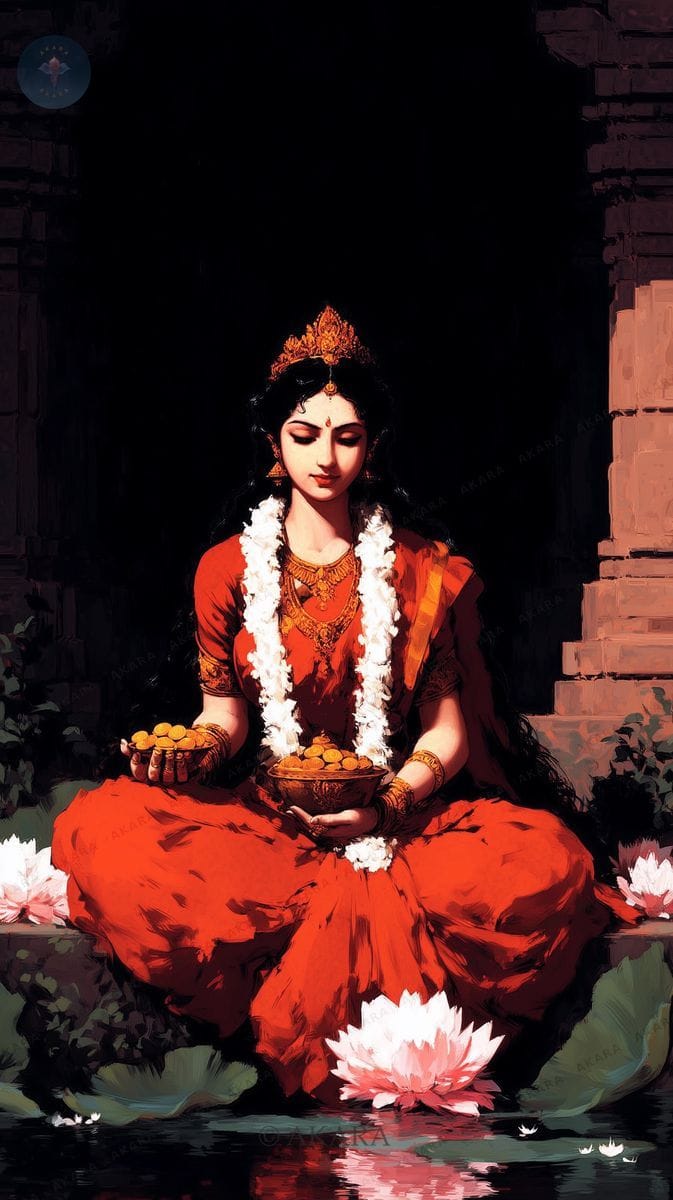
The symbol of Anuradha is the lotus flower — the padma that rises through muddy depths, untouched, luminous. This is not a nakshatra of surface pleasures; it speaks to the kind of beauty that emerges from discipline, from passing through difficulty without bitterness. Classical texts describe Anuradha natives and Anuradha days as carrying energy suited to travel, collaboration, devotional practice, and forming lasting commitments.
Shani's rulership here is instructive. Saturn does not give easily, but what he gives endures. On an Anuradha day, effort that is sincere and patient tends to find its footing. Shortcuts, however, may prove elusive.
"Mitraya svaha" — the ancient Vedic salutation to Mitra reminds us that honoring friendship and covenant is itself a sacred act.
Shukla Dashami: The Tenth of the Bright Fortnight
The tithi is the cornerstone of the panchang. Dashami — the tenth lunar day — belongs to the waxing (Shukla) fortnight, meaning the Moon is building toward fullness. In Jyotish, Shukla Dashami is classified as a Purna tithi (a complete, full tithi) in several classical systems, considered auspicious for acts of substantial undertaking. The deity associated with Dashami is Dharmaraja — Yama in his role as the lord of righteousness and right order — which colours the day with a quality of ethical clarity.
This is traditionally a day favourable for:
- Beginning significant works — particularly those requiring long-term commitment
- Acts of dharma — charitable giving, settling disputes with fairness, honoring elders and teachers
- Spiritual study and recitation — the combination of Dashami and Anuradha makes Vishnu-related mantras and the recitation of the Vishnu Sahasranama particularly resonant
- Travel with purpose — Anuradha has long been associated in the Muhurta texts with auspicious journeys
What the day counsels patience on: matters of pure speculation, hasty financial decisions, or confrontations arising from ego rather than principle. Shani's influence through Anuradha asks us to act with awareness, not impulse.
Moon in Vrishchika: Depth Beneath the Surface
The Moon in Vrishchika (Scorpio) is said to be in a somewhat intense placement — Scorpio is a watery, fixed sign ruled by Mangala (Mars), associated with depth, transformation, and the unseen. The Moon here can amplify emotional sensitivity, the desire to penetrate beneath surfaces, and an almost instinctive awareness of others' motivations.
This is not uncomfortable energy if you work with it. Vrishchika Moon days are well-suited to introspection, research, healing practices, and sincere prayer — all activities that benefit from depth rather than breadth. It is less suited to tasks requiring light, casual sociability or scattered multi-tasking.
The classical principle here aligns with Yoga Shukla — the day's yoga, which carries brightness and clarity as its keynote — softening Vrishchika's tendency toward heaviness and reminding us that even in depth, there is light.
A Reflective Practice for Today
In the spirit of bhakti — the path of devotion that Sanatana Dharma holds as among the most direct routes to the divine — today's energy invites a simple morning practice.
Find a few minutes of stillness. Light a lamp or simply sit by a window where natural light enters. Bring to mind one person, teacher, or community whose friendship or guidance has been a genuine gift in your life. Let that gratitude rest in your chest without words for a moment — this is smrana, remembrance, which the Bhagavata Purana counts among the nine forms of bhakti.
Then, if it feels natural, recite three times:
Om Mitraya Namah — "I bow to Mitra, the beloved friend."
This small gesture is in harmony with Anuradha's essence: it honors the sacred compact between souls, between the human and the divine, and acknowledges that we do not walk the path of dharma alone.
Closing Reflection
The panchang is, at its heart, a spiritual technology — a way of remembering that time is not neutral, that the cosmos is not indifferent, and that aligning our intentions with the grain of the day is itself a form of reverence. Akara holds this wisdom as central to devotional life: not superstition, but attunement; not fate, but orientation.
Today, Anuradha and Dashami together ask a simple question: What covenant will you honor today? Whether it is a promise to a friend, a discipline in your practice, or simply the decision to show up with integrity — this is the day's invitation. The lotus does not force its way through the water. It simply knows its direction, and it rises.
The lotus does not force its way through the water. It simply knows its direction, and it rises.
शान्ताकारं भुजगशयनं पद्मनाभं सुरेशम् śāntākāraṃ bhujagaśayanaṃ padmanābhaṃ sureśam
The peaceful one resting on the serpent, lotus-naveled lord of the gods. Vishnu in his element — holding the universe together while looking effortlessly serene.
Questions & answers
What is Anuradha nakshatra and what qualities does it carry?
Anuradha is the 17th nakshatra in Vedic astrology, spanning 3°20′ to 16°40′ in Scorpio. Ruled by Saturn and presided over by Mitra (the deity of friendship and covenant), it is associated with loyalty, disciplined devotion, the ability to endure difficulty with grace, and the formation of lasting bonds. Its symbol is the lotus flower.
What is Shukla Dashami and is it considered auspicious?
Shukla Dashami is the tenth day of the waxing (bright) lunar fortnight. It is generally considered auspicious for beginning significant works, acts of dharma, travel with purpose, and spiritual recitation. Its presiding deity is Dharmaraja (Yama in his role as lord of righteousness), lending the day a quality of ethical clarity.
Why is the Moon in Vrishchika (Scorpio) described as intense?
In Jyotish, the Moon in Scorpio occupies a sign ruled by Mars — fixed, watery, and associated with depth and transformation. The Moon here heightens emotional sensitivity and introspective awareness. Classical texts suggest this placement favors deep inner work, healing, research, and sincere prayer rather than scattered or purely social activity.
What is the significance of Yoga Shukla in today's panchang?
In Vedic astrology, a yoga is calculated from the combined longitudes of the Sun and Moon. Yoga Shukla carries qualities of brightness and clarity, which in today's panchang helps to balance the depth and intensity of the Moon in Vrishchika, offering a more luminous quality to the day's energy.
How should I use panchang guidance in daily life?
The panchang is best understood as a map of the day's qualities, not a prediction of fixed events. It is traditional guidance drawn from centuries of Vedic observation, intended to help you align your intentions, activities, and spiritual practice with the natural rhythm of time. It does not override free will or individual circumstance — it illuminates the terrain you are walking through.