Purva Ashadha & Chaturdashi: Reading Today's Panchang
When the Moon rests in the archer's bow and the fourteenth tithi approaches fullness, the day carries both fire and grace — here is how to move wisely within it.
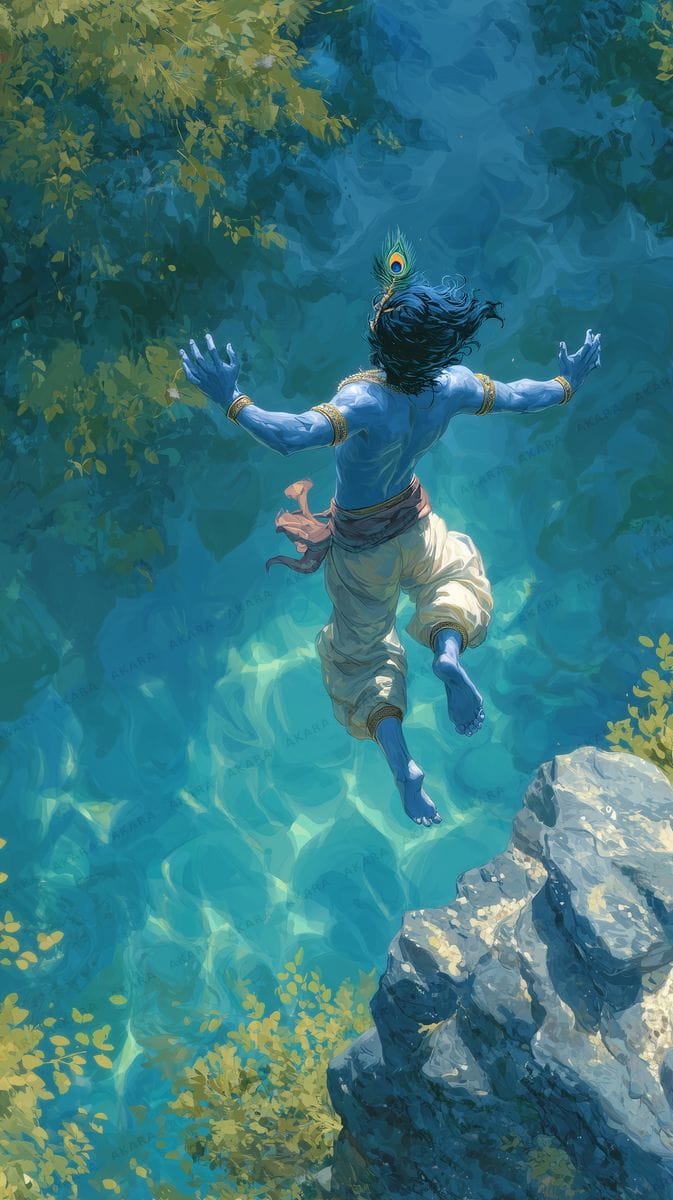
Every morning, before the world of schedules and screens asserts itself, the Vedic tradition offers a quiet gift: the panchang. This ancient five-limbed almanac — tithi, vara, nakshatra, yoga, and karana — maps the living rhythm of the cosmos as it touches our day. Today that map shows Shukla Chaturdashi, the fourteenth day of the bright fortnight; the Moon moving through Purva Ashadha nakshatra in its third pada; and the Sun settled in Karka rashi. To read these together is not to predict fortune, but to understand the quality of time — and to act in harmony with it, as Sanatana Dharma has always counselled.
The Tithi: Shukla Chaturdashi — The Eve of Fullness
In Vedic jyotish, the tithi (lunar day) is considered the most important limb of the panchang, for it governs the energetic relationship between the Sun and Moon. Shukla Chaturdashi is the fourteenth tithi of the bright fortnight (shukla paksha), the night before Purnima, the full Moon. Tradition calls this a Ugra tithi — carrying intensity, potency, even a certain fierceness. The ancient text Muhurta Chintamani notes that Chaturdashi is presided over by Kali and Shiva in their more austere aspects, making it particularly auspicious for deep tapas (spiritual discipline), fasting, and prayers to the Mahadeva.
This does not mean the day is inauspicious — far from it. It means the energy available today is concentrated and directional. Much as a river narrows before a falls and gains force, so too does consciousness on Chaturdashi. Activities requiring sustained intention — prayer, study, artistic creation, inner inquiry — find natural support. What the day counsels patience on: initiating large new ventures, signing binding agreements, or making irreversible decisions. Save those for the clarity that arrives after Purnima.
"Tithi is the face of time. To know the tithi is to know the mood of the day." — Traditional jyotish aphorism
Today's Nakshatra: Purva Ashadha — The Undefeated
The nakshatra is the star-mansion in which the Moon resides, and today it is Purva Ashadha (पूर्वाषाढा), the twentieth of the twenty-seven nakshatras. Its name translates as the earlier undefeated or the invincible one — a name that carries both dignity and aspiration. Purva Ashadha spans 13°20' to 26°40' of Dhanu (Sagittarius), and its presiding deity is Apas, the goddess of cosmic waters — the purifying, life-giving, boundary-dissolving waters of the universe.
The nakshatra's symbol is a hand fan or a winnowing basket — both instruments of purification and discernment. The fan separates chaff from grain; the hand fan cools and refreshes. This symbolism speaks to the central quality of Purva Ashadha: the capacity to purify, to invigorate, and to renew one's sense of purpose. People born under this nakshatra, and days when the Moon transits here, often carry an energy of philosophical boldness — the Sagittarian archer drawing back his bow with total conviction.
The nakshatra's ruling planet is Shukra (Venus), which adds grace, aesthetic sensitivity, and a longing for beauty and connection to what might otherwise be a purely martial energy. Today, then, is excellent for:
- Creative and devotional practice — bhajan, kirtan, painting, writing, poetry
- Study of dharmic texts — the Gita, Upanishads, Puranas, or any scripture that calls to you
- Water-related rituals — offering water to Surya, bathing in sacred rivers, or simply beginning the day with a conscious water ritual at home
- Clarifying intentions — not grand new starts, but refining and purifying what is already underway
The third pada of Purva Ashadha falls in the Aquarius navamsha, adding an element of collective consciousness and humanitarian thought to the day's energy. If your work or practice has a dimension of service to others, that quality will feel especially alive today.
The Moon in Dhanu: Philosophy in Motion
With the Moon in Dhanu rashi (Sagittarius), the emotional body today is oriented toward meaning, toward the horizon, toward the question why rather than merely how. Dhanu is a fire sign ruled by Guru (Jupiter), the great teacher of the gods, called Brihaspati in the Vedic texts. When the Moon moves through Dhanu, there is a natural inclination toward generosity, toward seeking higher understanding, and toward speaking one's truth.
Paired with Purva Ashadha's undefeated quality, this placement supports the devotee who wants to go deeper — not wider. The invitation today is not to scatter energy across many tasks, but to bring the Sagittarian arrow to a single point of genuine inquiry or devotion. Ask: What is the one practice, one relationship, one creative act that most needs my full presence today?
Yoga Vishkambha: Moving Through Resistance
The yoga in today's panchang is Vishkambha, the first of the twenty-seven yogas. Its name means support or foundation pillar, but traditional texts also classify it among the yogas that bring some initial friction or heaviness. Vishkambha is said to be presided over by Yama, the lord of dharmic reckoning. This is not a malefic association — Yama in the Mahabharata and the Upanishads is above all a teacher of truth and right conduct. The Katha Upanishad places the young Nachiketa before Yama precisely to receive wisdom about the soul.
The practical meaning: today may ask you to work through some initial inertia or resistance — in your body, in your plans, or in your inner life. Do not be discouraged by this. The tradition teaches that what is worth doing will yield its reward to patient, steady effort. Begin your practice or your work even if you do not feel immediately inspired. Vishkambha rewards those who push past the first resistance.
A Reflective Practice for Today
The panchang is not merely information — it is an invitation. Here is a simple practice drawn from the spirit of this day's configuration:
At sunrise or soon after, fill a small vessel with clean water. Hold it between both palms and, drawing on the energy of Apas — the deity of Purva Ashadha — silently offer the water your intention for the day. It need not be elaborate. May what is impure in me be winnowed away. May what is true be strengthened. Offer the water to a plant, to the earth, or to a sacred space.
Then, before you enter the noise of the day, read or recite even a few lines of scripture. On a Chaturdashi that approaches Purnima, the Shiva Sahasranama or even a quiet recitation of Om Namah Shivaya carries particular resonance. If your devotion is to another form of the Divine, bring that form fully into your heart.
Carry through the day the nakshatra's great teaching: you are, in your deepest nature, undefeated. Not because life will not bring difficulty, but because the Atman — the eternal witness within — remains untouched by any of it.
A Note on How to Use This Guidance
The panchang is traditional wisdom, not personal prediction. Vedic astrology today, as across centuries, offers a map of time's qualities — a way of reading the rasa (flavour) of the day — but how you walk through that day is always your own dharmic choice. The seers who built this system were careful to distinguish between nimitta (signs and indicators) and fate. As the great commentator Varahamihira wrote, a person of strong character and spiritual practice can work gracefully within any planetary configuration.
Use this panchang note as a lens, not a limit. The cosmos is, in the vision of Sanatana Dharma, not a machine running without consciousness — it is the living expression of the Divine. To read it with reverence and humility, as Akara invites you to do, is itself a small act of bhakti.
You are, in your deepest nature, undefeated — not because life will not bring difficulty, but because the Atman remains untouched by any of it.
त्र्यम्बकं यजामहे सुगन्धिं पुष्टिवर्धनम् tryambakaṃ yajāmahe sugandhiṃ puṣṭivardhanam
we honor the three-eyed one who nourishes all existence. bholenath holding space for the entire universe while barely trying.
Questions & answers
What is Purva Ashadha nakshatra and what does it signify?
Purva Ashadha is the twentieth nakshatra in Vedic astrology, spanning 13°20' to 26°40' of Sagittarius. Its name means 'the earlier undefeated.' Ruled by Venus and presided over by Apas, the goddess of cosmic waters, it carries energies of purification, invigoration, philosophical confidence, and creative renewal. Days when the Moon transits Purva Ashadha are considered supportive of devotional practice, creative work, and clarifying one's deeper intentions.
Is Shukla Chaturdashi auspicious or inauspicious?
Shukla Chaturdashi is a potent tithi rather than simply auspicious or inauspicious. Traditional texts classify it as an Ugra (intense) tithi, suitable for deep spiritual practice, fasting, and prayers especially to Shiva and the fierce forms of the Devi. It is generally not recommended for initiating new enterprises or binding commitments, but it is excellent for tapas, devotion, and completion of ongoing work as Purnima approaches.
What does Yoga Vishkambha mean in the panchang?
Yoga in the panchang is calculated from the combined longitudes of the Sun and Moon, yielding one of twenty-seven yogas. Vishkambha, the first yoga, is associated with some initial heaviness or friction but also with foundational support. Presided over by Yama — who in Vedic tradition is a teacher of dharmic truth — it rewards patient, steady effort. If you feel initial resistance in your practice or work today, persisting through it is the specific counsel of this yoga.
How should I practically use the daily panchang in my life?
The panchang is best used as a map of time's qualities, not as a script for your day. Read it each morning to understand the general flavour of the day — what kinds of activities are supported, what might need extra care or patience. Use it to time prayers, set intentions, and align your most important activities with supportive energetic windows. Above all, approach it with curiosity and humility rather than anxiety, understanding that your own dharmic choices remain primary.
Why is the Moon's nakshatra important in Vedic astrology?
In Vedic jyotish, the Moon is considered the most important personal planet because it governs the mind (manas), emotions, and the quality of daily lived experience. The nakshatra the Moon occupies determines the subtle texture of feeling and perception available on any given day. This is why the Moon's nakshatra — not just the Sun sign — forms the heart of the daily panchang reading and of personal chart interpretation in the Vedic tradition.