Navadurga: The Nine Sacred Forms of Goddess Durga
From Shailaputri to Siddhidatri, each of Durga's nine manifestations reveals a distinct grace — and a distinct invitation to the seeker.
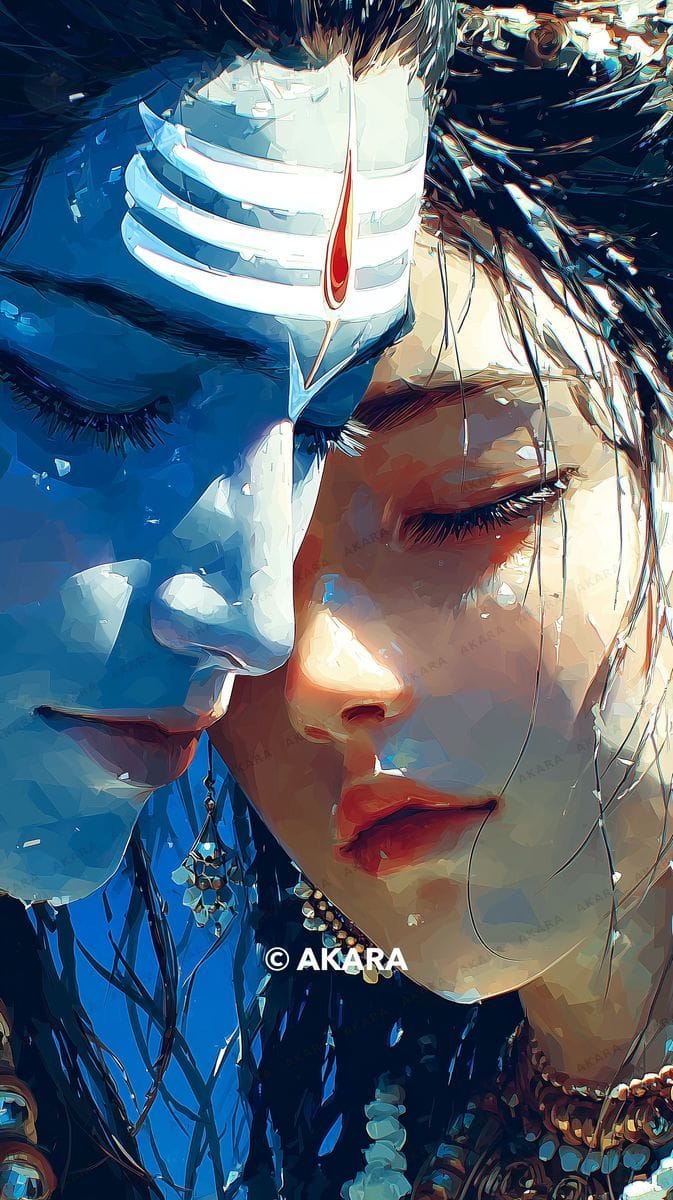
In the devotional calendar of Sanatana Dharma, few observances are as luminous as Navratri — nine nights consecrated to the Divine Mother in her nine sovereign forms. These are the Navadurga, the nine faces of Shakti that tradition holds not as separate goddesses but as nine movements of the one supreme feminine principle, each carrying its own name, iconography, bija mantra, and teaching. To know them is not merely to accumulate theological information; it is, as the Devi Mahatmya reminds us, to recognise that the Mother herself moves through creation in precisely the measure that each soul requires.
The Source: Where Do the Navadurga Come From?
The canonical list of the Navadurga is rooted in the Shiva Purana, the Devi-Bhagavata Purana, and the liturgical tradition surrounding the Devi Mahatmya (also called the Durga Saptashati or Chandi Path) — 700 verses that form the heart of Shakta scripture. The tradition holds that when the supreme Goddess took form to slay the buffalo-demon Mahishasura, she did not do so in a single guise but through successive and complementary expressions of divine power. Each of the nine forms is honoured on one of the nine nights of Navratri, and each corresponds to one of the nine days of worship in the lunar fortnight.
The names themselves are listed in a traditional shloka (verse) that devotees across India memorise:
Prathamam Shailaputri cha, Dwitiyam Brahmacharini, Tritiyam Chandraghanta cha, Chaturtham Kushmanda. Panchamam Skandamata cha, Shashthum Katyayani cha, Saptamam Kalaratri cha, Ashtamam Mahagauri, Navamam Siddhidatri cha, Navadurga prakirthitah.
---
The Nine Forms, One by One
1. Shailaputri (शैलपुत्री) — Daughter of the Mountain The first form. Shaila means mountain, putri means daughter — she is Parvati, born to Himavan, the king of the Himalayas. Riding a white bull (Nandi), bearing a trident and a lotus, she embodies the grounded, foundational energy of Shakti. She governs the Muladhara (root) chakra. Her colour is white; her message is rootedness before ascent.
2. Brahmacharini (ब्रह्मचारिणी) — She Who Moves in the Absolute Brahma here refers not to the Creator but to the supreme reality (Brahman); charini means one who walks in. This is Parvati in her state of fierce ascetic practice (tapas), barefoot, carrying a rudraksha rosary and a water pot, undertaking the penance that wins Shiva. She teaches that the divine is reached through sustained, loving discipline.
3. Chandraghanta (चन्द्रघण्टा) — She Whose Bell is the Moon A half-moon (chandra) shaped like a bell (ghanta) adorns her forehead. She rides a tiger, bears ten arms carrying weapons and a lotus, and is radiant with a golden complexion. This is the warrior bride, the Goddess prepared — the stage after tapas when Shakti assumes her full, fearless sovereignty. She destroys fear and grants courage.
4. Kushmanda (कूष्माण्डा) — She Who Created the Cosmic Egg Ku (small), ushma (warmth/energy), anda (egg) — she is the one whose cosmic smile and inner radiance brought the universe into being from primordial darkness. Eight-armed, riding a lion, she holds a pot of amrita (divine nectar) in one hand. She governs the Anahata (heart) chakra and is the source of solar energy within creation. She is said to reside within the sun itself.
5. Skandamata (स्कन्दमाता) — Mother of Skanda Skanda (also Kartikeya or Murugan) — the divine commander of the celestial armies — is her son. She is depicted four-armed, seated on a lotus throne, holding the infant Skanda in her lap. She is the face of Shakti as fierce yet tender mother-love. Tradition says that worshipping her bestows the blessings of Skanda as well.
6. Katyayani (कात्यायनी) — Born of the Sage Katyayana The wrathful form. When the gods' accumulated anger took shape, it materialised in the ashram of the rishi Katyayana, who received her as a daughter — hence the name. Four-armed, riding a lion, she carries a sword and a lotus. In the Bhagavata Purana, the gopis (cowherd maidens) of Vrindavana worship Katyayani to obtain Krishna as their husband — making her the goddess of devoted longing as much as of righteous wrath.
7. Kalaratri (कालरात्रि) — The Dark Night of Time Kala means both time and death; ratri means night. Her complexion is dark, her hair wild and unbound, she rides a donkey, wields a cleaver and a torch, and her three eyes blaze. She is the most fearsome face of Durga — and yet tradition insists she is Shubhankari, the auspicious one. She destroys only what must be destroyed: ego, illusion, fear of death. No seeker of truth should turn away from her.
8. Mahagauri (महागौरी) — The Supremely Radiant One After Parvati's tapas turned her body dark, Shiva bathed her in the waters of the Ganga, and she emerged radiantly white — Mahagauri, the supremely fair. Dressed in white, four-armed, riding a white bull, she is serenity itself: the stillness after the storm. She purifies accumulated karma and grants peace of mind. She corresponds to the spiritual state of sattvic clarity.
9. Siddhidatri (सिद्धिदात्री) — She Who Bestows All Perfections Siddhi refers to the eight supernatural perfections enumerated in yogic tradition (anima, mahima, garima, and so on); datri means giver. Seated on a lotus, four-armed, surrounded by siddhas and sages, she is the culminating form — Shakti in her fullness, granting liberation (moksha) as the supreme siddhi. The Devi-Bhagavata Purana says that even Shiva received his siddhis from her.
---
Navadurga and the Inner Journey
Read in sequence, the nine forms trace a complete arc of spiritual development. Shailaputri grounds us; Brahmacharini disciplines us; Chandraghanta empowers us; Kushmanda expands our heart; Skandamata awakens maternal compassion; Katyayani sharpens righteous discernment; Kalaratri strips away what is false; Mahagauri restores luminous peace; Siddhidatri completes us. This is not coincidence — it is the pedagogical genius of the tradition, encoding a map of inner transformation within the liturgical calendar.
In Navratri worship (puja), each form is offered specific flowers, colours, and foods. Devotees who observe a fast (upavasa — literally,
शिवशक्त्यात्मकं विश्वं śivaśaktyātmakaṃ viśvaṃ
The universe is the union of Shiva and Shakti - consciousness and creative power merged as one.