Baba Barfani Calls: The Living Grace of Amarnath Yatra 2026
With over 1.60 lakh devotees already at His feet, the ice Shivalinga of Amarnath stands as both miracle and mirror — and the yatra's grand finale approaches.
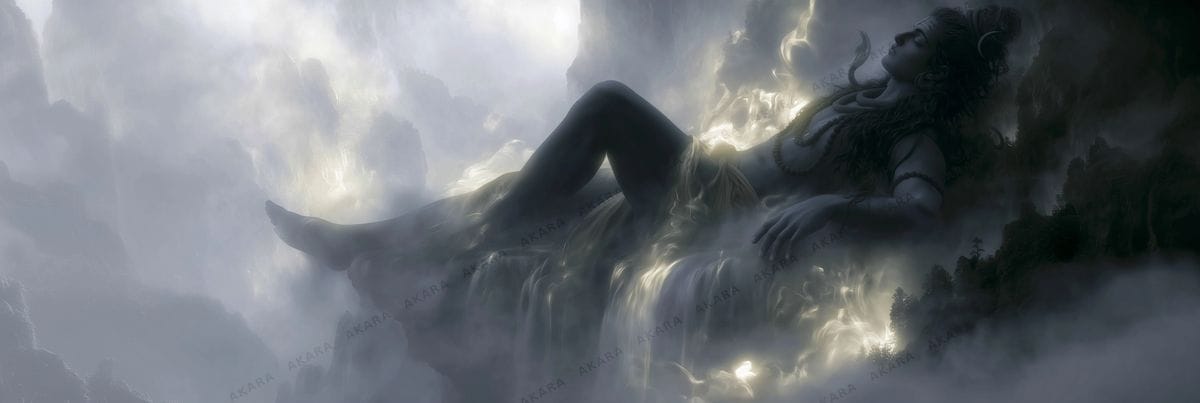
High in the Kashmir Himalayas, at an altitude where breath itself becomes a kind of prayer, a cave of pale limestone holds one of the most extraordinary phenomena in the devotional world: a Shivalinga sculpted not by human hands, but by the slow, patient drip of ice. Every summer, for a brief window carved between snowmelt and the return of winter, hundreds of thousands of pilgrims make their way toward this cave — through pine forests, across glacial rivers, over passes that seem to belong to another world entirely — for a single moment of darshan with Baba Barfani, the Frost-Wrapped Lord. This is the Amarnath Yatra, and in 2026, it is drawing the faithful in numbers that speak to an undiminished, perhaps deepening, hunger for the sacred.
The Miracle That Waxes and Wanes
At the heart of the Amarnath Yatra is a phenomenon that no temple architect could replicate. <cite index="22-3">In the month of Shravan, the Holy Cave Shrine of Shri Amarnathji houses the image of Lord Shiva in the form of a Lingam formed naturally of ice — a stalagmite that waxes and wanes with the moon.</cite> This is Baba Barfani: the ice Shivalinga. <cite index="23-6,23-7">Situated at 3,888 metres in the Himalayas of Kashmir, the cave houses a naturally-formed ice-lingam that waxes and wanes with the moon, reaching its full height during Shravan Purnima — the climactic day of the yatra.</cite>
For the devotee rooted in Sanatana Dharma, this is not merely geological curiosity. The Shivalinga is the nishkala (formless) manifestation of Shiva — pure consciousness taking the barest possible form so that the finite human eye may alight upon the infinite. That this form should be made of ice, and that it should mirror the lunar cycle, connects it directly to two of Shiva's most ancient epithets: Chandrashekhara (He who wears the moon) and Mahakala (the Lord of time and its rhythms). The cave does not need a priest to consecrate it. Shiva consecrates himself, season after season, in silence.
A Yatra at Its Peak
<cite index="20-2,20-3">The Amarnath Yatra is one of the most revered pilgrimages in Hinduism — an annual journey to a high Himalayan cave where a naturally forming ice Shivalinga is worshipped as Lord Shiva, with lakhs of devotees making the trek through Jammu and Kashmir's mountains during the short summer window.</cite>
This year, that devotion is palpable in the numbers. <cite index="17-5,17-6">The ongoing Shri Amarnath Ji Yatra has crossed a significant milestone, with more than 1.60 lakh devotees having completed darshan inside the holy cave shrine since the pilgrimage began — and what is shaping up to be a bigger Yatra than last year.</cite>
<cite index="25-4">The Shri Amarnathji Shrine Board has confirmed that Amarnath Yatra 2026 runs from July 3 to August 28, 2026 — a 57-day pilgrimage window.</cite> <cite index="19-4">The yatra begins on the auspicious occasion of Skanda Sashti and concludes on the occasion of Shravan Purnima.</cite> That final day — August 28 — carries a layered holiness: <cite index="1-1">it is one of the most spiritually significant days of the year, with several important festivals falling together.</cite> Shravan Purnima also coincides with Raksha Bandhan, and, as confirmed by the Shrine Board, with the arrival of the Chhari Mubarak — the sacred mace of Lord Shiva — at the cave itself.
The Chhari Mubarak and the Living Tradition
Among the yatra's most distinctive and moving customs is the procession of the Chhari Mubarak (Sanskrit: chhari — staff or mace; mubarak — auspicious, blessed). <cite index="25-3">The pilgrimage's concluding day coincides with Shravan Purnima and Raksha Bandhan, when the Chhari Mubarak — the ceremonial mace of Lord Shiva — is carried to the cave in a traditional procession led by the Mahant of the Dashnami Akhara.</cite> This mace, believed to embody the divine presence of Shiva himself, travels under ritual escort, receiving worship at each stop. Its arrival at the Amarnath cave on the final day is the formal completion of the yatra's sacred arc — a moment that pilgrims who have undertaken the trek describe as profoundly overwhelming.
This living, walking tradition — unchanged across centuries — is precisely what gives the Amarnath Yatra its character as yatra in the fullest Sanskritic sense: not merely a journey from one geographic point to another, but a sanchara, a movement of the entire being toward the divine.
Two Paths to the Lord
For the pilgrim planning to go — even now, with the yatra in its final weeks — two routes open the way. <cite index="23-3">The two approaches are the Pahalgam Traditional Route (32 km, 3–5 days) and the Baltal Short Route (14 km, 1–2 days).</cite> <cite index="24-5,24-6">The Pahalgam route is longer but offers a gradual ascent, making it suitable for many first-time pilgrims, while the Baltal route is shorter but steeper and more physically demanding.</cite> <cite index="23-4">Helicopter services also operate from both Sonamarg-Panjtarni and Pahalgam-Panjtarni</cite> for those whose health or age may not permit the trek on foot.
The tradition holds that the choice of route reflects something of one's inner disposition. The long Pahalgam path, winding through meadows and high passes, mirrors the gradual unfolding of jnana — knowledge that accrues slowly, through experience and surrender. The steep Baltal route speaks more of vairagya, intense renunciation — the desire to reach Shiva with minimum delay and maximum effort. Both arrive at the same cave. Shiva does not discriminate by route.
<cite index="25-1,25-2">For devotees, the yatra is not only about reaching the ice lingam — it is about the walk itself, through pine forests, glacial valleys, and high-altitude passes, that many describe as a form of penance and devotion in motion.</cite>
Shravan, Shiva, and the Inner Pilgrimage
<cite index="11-2,11-3">India's spiritual landscape comes alive during the monsoon months of July and August, when this period coincides with the holy month of Shravan (Sawan), considered most auspicious for Lord Shiva worship, and encompasses some of the most significant pilgrimage events in the Hindu calendar.</cite>
Shravan is no accident of timing for the Amarnath Yatra. The month carries the quality of ardra — wetness, tenderness, receptivity. The earth, softened by monsoon rains, becomes fertile. The devotee, softened by the rigour of the trek, becomes similarly open. In the Shaiva Agamas and the Puranas, Shravan is the month when Shiva is most easily propitiated — when even a single sincere offering of bilva leaves or a whispered Om Namah Shivaya carries amplified potency. To undertake the Amarnath Yatra in Shravan, then, is to align outer pilgrimage with cosmic timing in a way that Sanatana Dharma considers deeply intentional.
The Akara lens recognises this truth: that every element of the yatra — the cold, the altitude, the simplicity of shared langar meals on the trail, the absence of digital life at 3,888 metres — conspires to strip the pilgrim of the ego's usual props. What remains, in that cave, before that ice-formed Lord, is something old and essential. Call it chitta-shuddhi — purification of consciousness. Call it bhakti. The Himalaya, as the ancient seers knew, is not simply a mountain range. It is a tapobhumi — a land of austerity — and the cave of Amarnath is its innermost sanctum.
A Reflection for the Seeker
As the 2026 Amarnath Yatra moves toward its radiant close on Shravan Purnima, those of us who cannot be on that trail in body may still undertake the inner version. The Shivalinga at Amarnath waxes to fullness as the moon waxes — a reminder that our own consciousness, like the moon, is capable of luminosity it does not always display. The pilgrimage's lesson is not reserved for those who can climb a Himalayan pass. It is available to anyone who chooses, even for a single still moment each day, to turn toward the formless and say: I am here. I am listening.
Baba Barfani, the Frost-Wrapped Lord, asks for nothing elaborate. He forms himself from water and cold and silence, and he waits — patient, lunar, eternal.
The cave does not need a priest to consecrate it. Shiva consecrates himself, season after season, in silence.
गिरिशं गंगाधरं सोमशेखरम् giriśaṃ gaṅgādharaṃ somaśekharam
the mountain lord who holds ganga and wears the moon as his crown. bholenath makes nature his temple.
Questions & answers
When does the Amarnath Yatra 2026 conclude, and why is that date significant?
The Amarnath Yatra 2026 concludes on August 28, 2026, which coincides with Shravan Purnima — the full moon of the sacred month of Shravan — and also with Raksha Bandhan. On this day, the Chhari Mubarak (Lord Shiva's ceremonial mace) arrives at the holy cave, marking the formal close of the pilgrimage season. The ice Shivalinga is believed to be at or near its fullest height around this period.
What is Baba Barfani, and why is the Amarnath Shivalinga considered miraculous?
Baba Barfani means 'the Frost-Wrapped Lord' — a devotional name for Lord Shiva as he manifests in the Amarnath Cave. The Shivalinga there is formed naturally from ice (a stalagmite), with no human construction involved. Remarkably, it waxes and wanes in size with the lunar cycle, reaching its peak around Shravan Purnima. This self-formed (svayambhu) quality is considered a direct, unmediated manifestation of Shiva's presence.
What are the two trekking routes to the Amarnath Cave, and which is better for first-timers?
The traditional Pahalgam route is approximately 32 km and takes 3–5 days, offering a gradual ascent through meadows and valleys — recommended for first-time pilgrims. The Baltal route is about 14 km but is significantly steeper, often completed in a single day by fit pilgrims. Helicopter services operate from both Sonamarg-Panjtarni and Pahalgam-Panjtarni for those who cannot trek.
Why is the Amarnath Yatra undertaken specifically during the month of Shravan?
Shravan (July–August) is the only time the high-altitude cave is accessible, as it is snow-bound for the rest of the year. But the timing carries deep spiritual significance too: Shravan is considered the most auspicious month for worshipping Lord Shiva in the Hindu calendar, and the lunar energy of this month is believed to amplify the potency of devotion and pilgrimage.
What is the Chhari Mubarak, and what role does it play in the Amarnath Yatra?
The Chhari Mubarak is a ceremonial mace considered to embody the divine presence of Lord Shiva. Each year, it travels under ritual escort from Srinagar and arrives at the Amarnath Cave on the final day of the yatra — Shravan Purnima — in a procession led by the Mahant of the Dashnami Akhara. Its arrival marks the formal, sacred conclusion of the pilgrimage season.