The Sacred Shankha: What the Conch Means in Worship
From Vishnu's hand to your puja room, the conch shell carries the oldest sound of creation — and a living invitation to awaken.
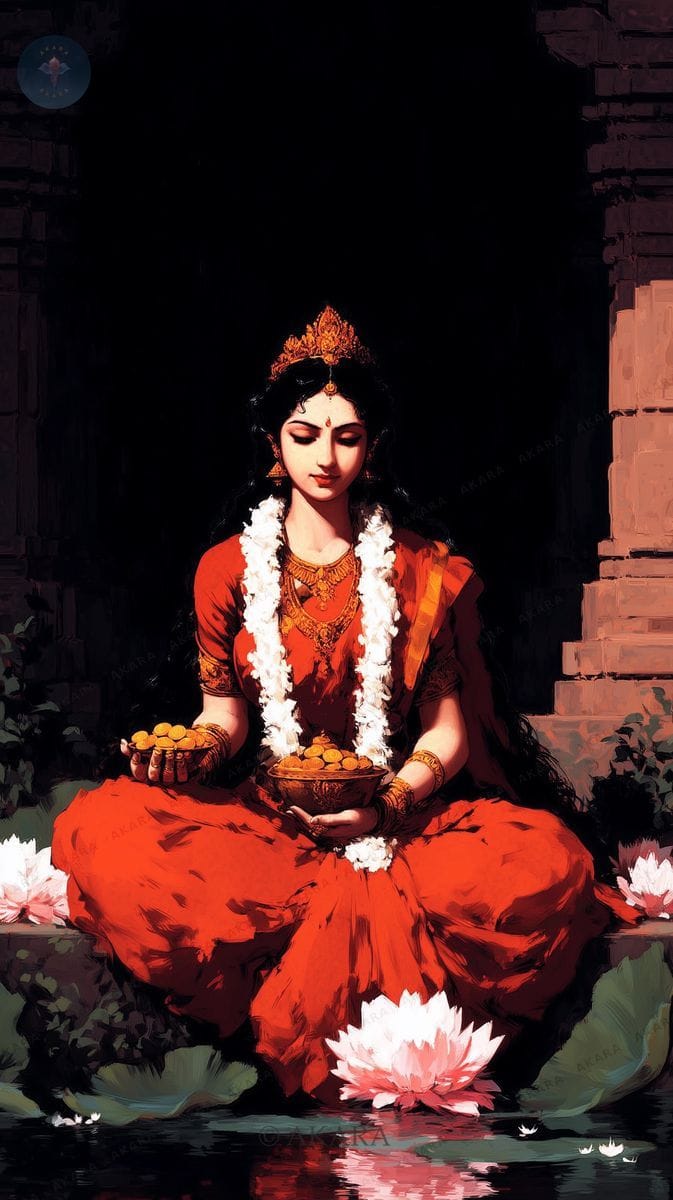
Every morning in millions of homes across India and the diaspora, a single long breath fills a spiral shell and sends a note ringing through the air — low, oceanic, older than any word. This is the shankha, the sacred conch, and its sound has marked the threshold between the ordinary and the holy for as long as Sanatana Dharma has been lived. Yet for many devotees, the conch remains a beautiful object half-understood. What does it actually signify? Why does it appear in the hands of Vishnu himself? And how should a sincere seeker hold, blow, and honour it? This is that explainer.
What Is the Shankha, and Where Does It Come From?
The word shankha (Sanskrit: शङ्ख, from the root śaṃ — conferring auspiciousness — and kha — water or sky) refers to the shell of large marine gastropods, principally Turbinella pyrum, the sacred chank shell harvested in the waters around Sri Lanka and the southern Indian coast. Its coiling form, which winds clockwise (dakshinavarti) or the exceedingly rare counter-clockwise (vamavarti), is itself cosmologically significant: the clockwise spiral mirrors the pattern of the Milky Way, the arrangement of hair on the crown of a sacred image, and the unfurling of a new lotus — all symbols of dharmic order, or rita.
Archaeological evidence places the ritualized use of the conch in the Indus Valley civilisation, where chank shells have been found as ornaments and instruments at Harappan sites. By the Vedic period, the shankha had migrated from the sea into scripture. The Atharva Veda (4.10) praises the conch as a gem born of the ocean, a destroyer of enemies and a grantor of prosperity. This is one of the earliest textual anchors for a symbol that would only deepen in meaning across the millennia.
Shankha in Mythology and the Hands of the Divine
The most iconic image is unmistakable: Lord Vishnu, the preserver of creation, holds the shankha in his upper left hand. This conch is named Panchajanya (पाञ्चजन्य) — meaning "born of the five" or "belonging to the five clans" — and its story is rooted in the Bhagavata Purana. The demon Panchajana had taken the form of a great conch-shell creature dwelling in the ocean; when Krishna slew him and retrieved the shell, it became his divine instrument. At the opening of the Kurukshetra war, as told in the Bhagavad Gita (1.15), Krishna blows Panchajanya, triggering a cascade of conch-calls from every warrior — a moment of cosmic invocation before dharmic battle.
Beyond Vishnu and Krishna, the shankha graces the hands of Devi in her Durga form, appears in the iconography of Lakshmi as a vessel of abundance, and is sounded before Shiva in the great temples of the South. In the Buddhist tradition it became one of the Ashtamangala, the eight auspicious symbols. The conch is, in this sense, pan-dharmic — a symbol large enough to hold many traditions simultaneously.
The Meaning Held in the Sound
When a shankha is blown correctly — air pressed firm from the diaphragm into the narrow end — it produces the primordial syllable Om as a sustained, low drone. This is not metaphor. Acoustic analysis of large Turbinella pyrum shells shows their fundamental resonant frequency falls in a range that closely approximates the deep voiced praṇava (the sacred syllable, AUM). The Brahma Vaivarta Purana states that the sound of the shankha purifies the air within a radius of several hundred metres, driving away inauspicious vibrations and inviting the presence of the divine.
Modern science offers a curious parallel: studies have shown that the low-frequency vibrations produced by conch blowing have a measurable antibacterial effect on the surrounding atmosphere. The seers who prescribed its use at dawn and dusk were, it turns out, working from a sophisticated understanding of sacred acoustics, whether or not they framed it in today's vocabulary.
"The shankha is the voice of the ocean given form — and when it cries out, even the gods pause to listen."
Shankha in Daily Puja: Practical Guidance
For the devotee who wishes to bring the shankha into living practice, tradition offers clear guidance:
- Choosing your shankha: A dakshinavarti (right-spiralling) shankha is considered auspicious for worship, associated with Vishnu and Lakshmi. The vamavarti (left-spiralling) is rarer and is associated with Shiva and Devi, used in Tantric and Shaiva rites. For general household puja, a clean, uncracked right-coiling shell of any size is appropriate.
- Placing the shankha: The conch used to hold water (abhisheka) is placed on the altar to the right of the deity's image. It should rest on a stand or a small pile of raw rice. It is traditionally not blown and used as a water vessel simultaneously — two separate shankhas may be kept for these distinct purposes.
- Filling with water: The shankha sthapana — the ritual seating of the conch — involves filling the vessel with clean water, which then becomes sanctified (tirtha) through its contact with the sacred object. A few drops of gangajala (Ganges water) or tulsi leaves may be added. This water is offered to the deity and later taken as prasad.
- Blowing the shankha: Sound the conch at the beginning and conclusion of puja, and at sunrise and sunset if possible. Hold it in the right hand, lips at the narrow opening, and blow steadily — not in short bursts. Tradition advises facing east in the morning, north during the day. The sound should be long, clean, and from the whole breath, not the cheeks.
- Care and reverence: The shankha should be cleaned with clean water, never with soap that would leave residue inside. It is not placed on bare ground. When not in use, keep it wrapped in clean cloth on your altar.
The Shankha as Philosophical Symbol
At the level of philosophy — darshana — the shankha encodes the teaching of emptiness and resonance. The shell is hollow; its beauty and its power come precisely from what is absent at its centre. This is a tangible image of the Upanishadic teaching that the Atman, the deepest self, is like space: unbounded, uncontained, yet the ground of all experience. When you press the breath of your living body into that emptiness, sound emerges — just as pure consciousness, when it enters the apparent world, becomes all of manifest creation.
In the bhakti traditions, the shankha carries one more layer of meaning: it is the announcement of the Lord's presence. In temple worship, the blowing of the conch signals that the divine has arrived — the curtains before the garbhagriha (sanctum sanctorum) are about to part, the veil between the devotee and God grows thin. For a heart steeped in devotion, that single resonant note is enough to dissolve distraction and bring the whole being into the present moment of meeting.
A Reflection for Today's Seeker
On this Krishna Ashtami, with the sun moving through Karka and the nakshatra Bharani holding court — a star presided over by Yama, the lord of dharmic reckoning — there is something fitting about returning to first principles. The shankha does not ask whether you are expert or beginner, scholar or labourer. It asks only for one honest breath. In Sanatana Dharma, that breath — offered with sincerity, with bhakti — is the beginning of everything. Let the shankha sound in your home not as performance, but as a returning: to the ocean-source of all things, to the hollow centre where silence waits, to the great Om that was here before you and will remain long after. Akara — the first syllable, the primal sound — is what the conch has always been singing.
The shankha is the voice of the ocean given form — and when it cries out, even the gods pause to listen.
शान्ताकारं भुजगशयनं पद्मनाभं सुरेशम् śāntākāraṃ bhujagaśayanaṃ padmanābhaṃ sureśam
The peaceful one resting on the serpent, lotus-naveled lord of the gods. Vishnu in his element — holding the universe together while looking effortlessly serene.
Questions & answers
What does the word shankha mean in Sanskrit?
Shankha (शङ्ख) derives from the roots śaṃ (conferring auspiciousness) and kha (water or sky). It denotes the sacred conch shell used in Hindu worship and is associated with prosperity, purity, and the primordial sound Om.
Why is the conch blown during puja and at temples?
The conch is blown to invoke an auspicious vibration, announce the presence of the divine, and purify the atmosphere. The low resonant sound is considered to approximate the sacred syllable Om and is believed to dispel inauspicious energies, according to texts like the Brahma Vaivarta Purana.
What is the difference between a dakshinavarti and vamavarti shankha?
A dakshinavarti (right-spiralling) shankha is associated with Vishnu and Lakshmi and is the most common for household worship. A vamavarti (left-spiralling) shankha, which is extremely rare, is associated with Shiva and Devi and used in Shaiva and Tantric rites.
What is the name of Vishnu's conch, and what is its story?
Vishnu's conch is called Panchajanya (पाञ्चजन्य). According to the Bhagavata Purana, it was the shell of a demon named Panchajana, slain by Krishna in the ocean. Krishna then bore it as his divine instrument, and blew it at the start of the Kurukshetra war, as described in the Bhagavad Gita (1.15).
Can I keep two shankhas — one for water and one for blowing?
Yes, and tradition actually recommends it. One shankha is kept filled with sanctified water (tirtha) for offering during puja, while a separate shankha is used for blowing. Using the same conch for both purposes is generally discouraged in classical puja vidhi.