Shravan 2026: The Month Shiva Swallowed Death So the World Could Live
As monsoon rain falls and temple bells ring through the night, the sacred month of Shravan calls every seeker back to the most elemental act in Sanatana Dharma — gratitude offered as water.
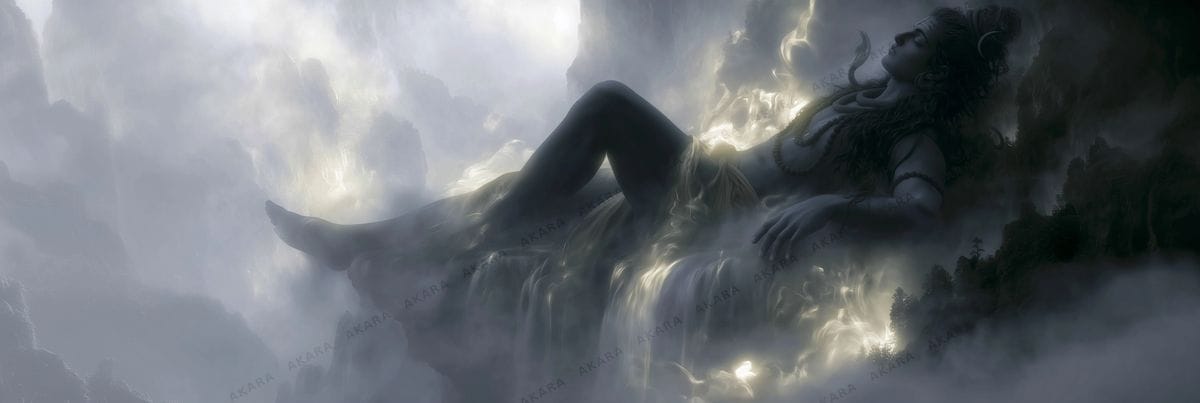
There is a moment, somewhere in the first week of August, when the air across the Indian subcontinent changes. The rains have arrived in earnest, temple forecourts are wet and fragrant, and from Varanasi to Somnath, from Kathmandu to the Shiva mandirs of the diaspora in Leicester and Canton and Singapore, the sound rises: Har Har Mahadev. Sawan — the sacred month of Shravan — is at its beating heart, and Mahadeva, the Great God, is receiving the world's gratitude.
The Month That Belongs to Mahadeva
Of all the months in the Hindu lunar calendar, none is quite like Shravan. <cite index="19-1">The month of Shravan, falling in July–August, is one of the most sacred periods in the Hindu lunar calendar, dedicated especially to Lord Shiva.</cite> This is not merely a festival day, or even a festival week — it is an entire thirty-day consecration of time itself.
<cite index="21-6">In 2026, Shrawan Maas begins on July 30 and concludes on August 28 in North India, as per the Purnimanta calendar.</cite> <cite index="21-7">For Amanta states — Andhra Pradesh, Maharashtra, Gujarat, and their neighbours — it runs from August 13 to September 11, 2026.</cite> The sacred month, in other words, is alive and unfolding right now, wrapping today's Panchang — Krishna Navami under the star Krittika, the Yoga Vriddhi, the Sun deep in Karka — in its larger embrace.
<cite index="22-3,22-4">There are four Sawan Somwars (sacred Mondays) in 2026 for North India: August 3, 10, 17, and 24.</cite> Each of these Mondays is an occasion of extraordinary devotional energy, and even on the days between them, <cite index="19-6">Shravan is a time of heightened spiritual activity, marked by Monday fasting (Somvar Vrat), Shiva Puja rituals, and vibrant regional festivals across India.</cite>
Why the Ocean Was Churned and Why We Pour Water
The deepest root of Shravan lies in one of the most arresting stories in all of Sanatana Dharma — the Samudra Manthan, the churning of the cosmic ocean. The Devas and Asuras, we are told, churned the great ocean of milk to draw out amrita, the nectar of immortality. But before the nectar came something else entirely: halahal, a poison so catastrophic that its mere vapour threatened to annihilate all of creation.
It was Shiva — Mahadeva, the supreme ascetic, the one who holds dissolution and compassion in equal measure — who stepped forward. <cite index="22-1">Shravan commemorates Shiva drinking the deadly Halahal poison during Samudra Manthan to save all of creation, making him Neelkantha, the blue-throated one.</cite> He held the poison in his throat, and the worlds were spared.
<cite index="23-5,23-6">To cool the burning of the poison held in His throat, the Devas poured water over Him, offered Him the leaves of the bael tree, and kept vigil — and because all of this unfolded in the month of Shravana, the whole month became an offering to the Lord who swallowed death so that the worlds might live.</cite>
This is why the central ritual of Shravan is so arrestingly simple: the jalabhishek, the pouring of water over the Shivlinga. <cite index="26-12">Offering water to the Shivling in Sawan — jalabhishek — re-enacts that act of cooling grace, which is why water, bilva leaves, and a simple, sincere fast are held dearer to Shiva this month than any elaborate offering.</cite> The monsoon rains that pour down during Shravan are themselves part of this cosmic grammar. <cite index="24-12">The continuous monsoon rains during this period are seen as nature's own abhishek of the earth, mirroring how devotees pour water and milk over Shivlings throughout Sawan.</cite>
The Name Itself Is a Teaching
The word Shravan (श्रवण) carries within it a teaching that is easy to overlook in the joy of the rituals. <cite index="22-13,22-14">Shravan derives from the Shravana Nakshatra — the lunar constellation that rules the sky on Purnima during this month — and it also means "to listen deeply" in Sanskrit, reflecting the month's nature as a time of spiritual receptivity and learning.</cite>
To observe Shravan well, then, is not only to fast and to pour water and to chant Om Namah Shivaya — though all of these matter deeply. It is also to slow down, to become inwardly quiet enough to hear what the tradition is saying. The great rishis taught that the highest bhakti is not merely action but a quality of attention — a turning of the inner ear toward the divine. Shravan, in its very name, is an invitation to that posture.
<cite index="20-7">The Shravan Nakshatra is considered to govern the sky on Poornima or full-moon day; therefore, the month's name is derived from the Nakshatra.</cite> On today's Panchang, the Moon travels through Krittika — the nakshatra of fire and purification, associated with Agni and with the divine warrior Kartikeya, Shiva's son. Even the stars, in this reading, whisper of the Shaiva current running through this month.
How Devotees Keep Shravan
The practices of Shravan are both universal and beautifully varied across India's regions and traditions. At their core, they share a common grammar of simplicity, discipline, and surrender.
- Somvar Vrat — fasting on Mondays, the day sacred to Shiva. <cite index="19-3">Devotees fast, perform Shiva Abhishekam, chant mantras such as "Om Namah Shivaya," and participate in rituals and folk celebrations.</cite>
- Jalabhishek and Rudrabhishek — <cite index="11-9,11-10">the first Monday of Shravana is one of the most auspicious days for worshipping Lord Shiva; devotees observe a day-long fast and perform Rudrabhishek to seek health, peace, and prosperity.</cite>
- Bilva Patra — offering the trifoliate leaves of the bael tree (Aegle marmelos), held sacred to Shiva, each leaf representing the three eyes, the three gunas, or the trimurti, depending on the tradition consulted.
- Sattvic living — <cite index="22-6,22-7,22-8">avoiding meat, fish, eggs, onion, garlic, and alcohol; cutting hair and nails is considered inauspicious; tamasic food and negative behaviour are understood to disrupt the Sattvic state the month requires.</cite>
- Mangala Gauri Vrat — <cite index="11-11">married women worship Goddess Gauri on Tuesdays, seeking a happy married life, family harmony, and the well-being of their loved ones.</cite>
<cite index="26-4,26-5">Sawan — the month of Shravan — is the most sacred stretch of the Hindu calendar for devotees of Lord Shiva; through these weeks of monsoon, temples fill with the sound of water poured over the Shivling, Mondays are kept as fasts, and a chain of festivals runs from Nag Panchami to Raksha Bandhan.</cite>
The Living Tradition: Temples, Pilgrimages, and the Global Sangha
Across the world today, Shravan is not a memory or a textbook entry — it is alive. In Varanasi, queues of pilgrims form before dawn at the Kashi Vishwanath temple. In Haridwar, kanwariyas — pilgrims who carry sacred Ganga water on their shoulders in decorated vessels — walk hundreds of kilometres to pour that water over a Shivlinga at home. In temples from Michigan to Singapore, from Leicester to Pune, the abhishek vessels are filled and the chanting begins.
<cite index="22-19">Every year, millions of devotees across India, Nepal, and around the world turn their attention to Shravan.</cite> This is what makes Sanatana Dharma so alive as a living tradition: the same cosmic story that was told in the Shiva Purana thousands of years ago is re-enacted, right now, in wet forecourts and monsoon-damp sanctuaries on every continent.
For seekers new to this tradition — and for devotees returning to it after years away — Shravan offers the most accessible of entry points. You do not need elaborate ritual expertise. You need, as the month's own name suggests, the willingness to listen, and a cup of water.
A Reflection: What Neelkantha Offers Us
The image of Neelkantha — the blue-throated one, the God who absorbed the world's poison and held it without swallowing — speaks to something universal in human experience. Each of us encounters, in our lifetimes, things we cannot transmute and cannot release: grief, injustice, the suffering of those we love. The myth does not tell us that Shiva destroyed the poison, or that He denied it. He held it — in his throat, at the threshold between taking in and giving back — and through that act of supreme, loving restraint, He protected all the worlds.
To observe Shravan is to contemplate that image and to ask: what, in my own life, am I being asked to hold with grace? The fast, the cold water, the bael leaf, the vigil — these are not performances. They are practice. They are the body's way of learning what the soul already knows.
Har Har Mahadev.
The month's own name is a teaching: Shravan means 'to listen deeply' — and Shiva's greatest gift to his devotees this month is not a boon but an invitation to stillness.
गिरिशं गंगाधरं सोमशेखरम् giriśaṃ gaṅgādharaṃ somaśekharam
the mountain lord who holds ganga and wears the moon as his crown. bholenath makes nature his temple.
Questions & answers
When does Shravan month 2026 begin and end?
In North India (Purnimanta calendar), Shravan 2026 runs from July 30 to August 28. In South and West India (Amanta calendar), it runs from August 13 to September 11, 2026. Dates vary by region, so consulting your local panchang is always advisable.
Why is Shravan dedicated to Lord Shiva?
According to tradition, the Samudra Manthan — the churning of the cosmic ocean — took place during the month of Shravan. When the deadly Halahal poison emerged and threatened all creation, Lord Shiva drank it and held it in his throat, becoming Neelkantha (the blue-throated one). The entire month is observed in gratitude for this supreme act of sacrifice.
What is the significance of pouring water on the Shivlinga during Sawan?
The ritual of jalabhishek (pouring water over the Shivlinga) re-enacts the act by which the Devas cooled Lord Shiva's throat after he drank the Halahal poison. It is an act of gratitude, devotion, and healing. During the monsoon, even the rains are understood as nature's own abhishek of the Lord.
What are the Sawan Somwar (Monday fast) dates in 2026?
In North India, the four Sawan Somwars fall on August 3, 10, 17, and 24, 2026. In South and West India, they fall on August 17, 24, 31, and September 7. Devotees observe fasts, perform Rudrabhishek, and chant 'Om Namah Shivaya' on these days.
What does the word 'Shravan' mean in Sanskrit?
Shravan has two layers of meaning: it is the name of the Shravana Nakshatra (the lunar constellation that rules the sky on Purnima during this month), and it also means 'to listen deeply' in Sanskrit. This reflects the month's spiritual quality as a time of inner receptivity, learning, and surrender.