Kamika Ekadashi 2026: The Eleventh Day That Stills the World
On this Krishna Ekadashi in Shravana, the Preserver turns His gaze toward those who fast, remember, and keep the lamp burning through the night.
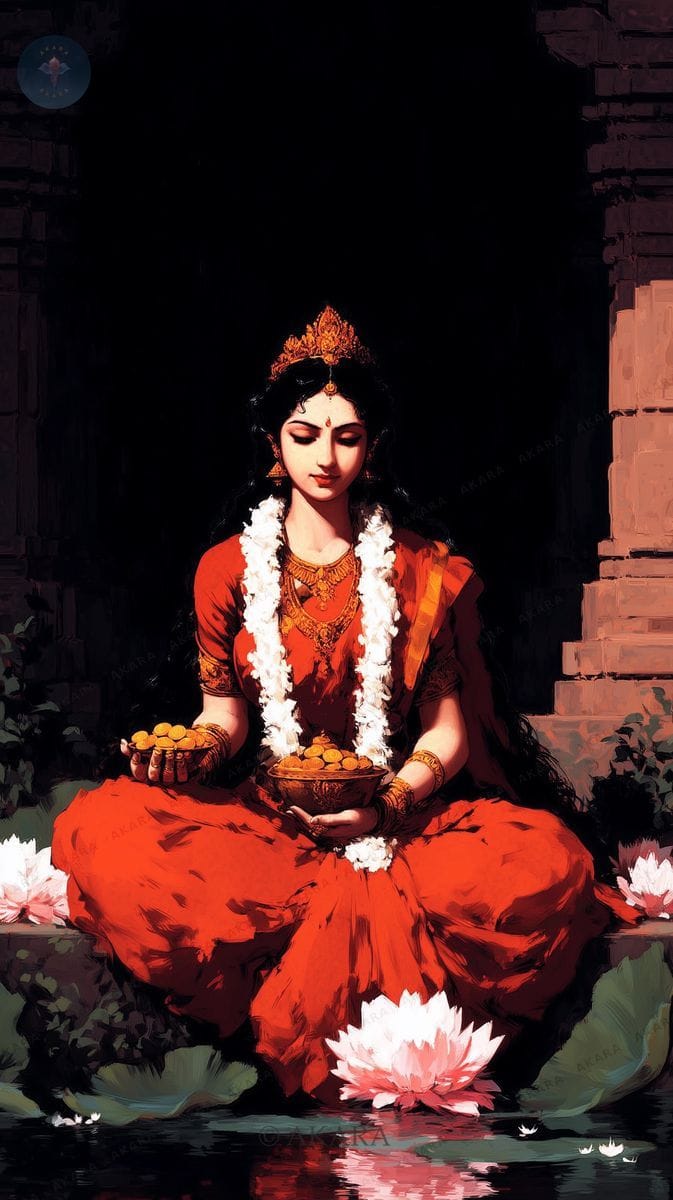
There is a quality of silence that descends on Ekadashi mornings. Kitchens are quieter, the body feels lighter, and somewhere beneath the ordinary hum of life, something ancient stirs. Today, Sunday the 9th of August 2026, is Kamika Ekadashi — the Krishna Paksha Ekadashi of the holy month of Shravana — and it carries one of the more weighty reputations in the entire Vaishnava calendar: the Padma Purana and Brahmanda Purana together describe it as capable of absolving even the gravest sins when observed with sincerity and devotion to Lord Vishnu.
What Is Ekadashi — And Why the Eleventh Day?
The word Ekadashi (एकादशी) is Sanskrit, straightforwardly compound: eka (one) + dasha (ten) = eleven. It names the eleventh lunar day, or tithi, counted from both the new moon (Amavasya) and the full moon (Purnima) — which is why, in a standard year, there are twenty-four Ekadashis, each with its own name, katha (sacred narrative), and mood.
Today's tithi, Kamika Ekadashi, belongs to the waning fortnight (Krishna Paksha) of Shravana. The tithi window, as computed for New Delhi (IST), ran from 1:59 PM on Saturday the 8th of August to 11:04 AM on Sunday the 9th — with the Ekadashi tithi present at sunrise on the 9th, which according to the ancient principle of Udaya Tithi makes this the fasting day for all traditions. The parana — the auspicious breaking of the fast — falls on the morning of Monday, 10 August, between approximately 5:47 and 8:01 AM (IST). Devotees observing from other time zones should consult a local Panchang, as timings shift with longitude.
This Ekadashi also arrives in the heart of Chaturmas — the four-month period of Lord Vishnu's cosmic rest, which began with Devshayani Ekadashi in July — making the entire Shravana month especially charged with spiritual merit.
The Mythic Origin: When the Goddess Arose from Vishnu
The origin of Ekadashi as an observance is not arbitrary. It is rooted in one of the great Puranic narratives, recounted in the Padma Purana. When the demon Mura grew powerful enough to threaten the order of the cosmos itself, Lord Vishnu — Narayana, the one in whom all creation rests — entered a cave in the Himalayas to rest. The demon followed. As Vishnu slept, a radiant shakti (energy) arose from within Him; this luminous force defeated Mura and restored cosmic order. That energy was Ekadashi Devi herself. Pleased, Vishnu blessed her and declared that all who observe the Ekadashi fast with sincerity would be freed from the weight of past actions and moved toward liberation.
The day was thus blessed directly by the Preserver. It is not merely a human invention; it is said to be Hari Vasara — the Lord's own day.
For Kamika Ekadashi specifically, the Brahmanda Purana records Lord Krishna telling King Yudhishthira that observing this fast grants merit equal to bathing at every sacred pilgrimage site (tirtha) on earth. The mythic tradition also preserves the story of a man who, having caused grave harm through anger, was advised by the sage Narada to observe this very fast; through the grace of Lord Vishnu, he was freed from the consequences of his deed. The tradition teaches what philosophy confirms: no action is irreversible where sincere bhakti takes root.
The Inner Logic of the Fast: Cosmos, Body, and Mind
Sanatana Dharma has always understood the human body as a microcosm, shaped by the same forces that govern the universe. The moon, in Vedic cosmology, is intimately connected to the mind — the Sanskrit word manas (mind) shares deep affinity with Chandra (the moon). Ancient Indian science observed that the moon's gravitational pull affects bodily fluids and emotional states, and that tidal patterns and mental fluctuations often move together.
On the eleventh lunar day, Ayurveda holds that the body's Jatharagni — the digestive fire — is at its lowest ebb. Eating heavy foods, especially grains, when digestion is sluggish leads to the accumulation of Ama (undigested residue), which Ayurveda considers the root of many ailments. Grain avoidance on Ekadashi is therefore not an arbitrary restriction: it is a precisely timed reset, aligned with the body's own lunar rhythm. Fasting on Ekadashi, as teachers across traditions have explained, is working with the cosmic rhythm rather than against it. Less digestion, it turns out, genuinely does allow more meditation.
That is why the Vedic tradition advocates periodic cleansing of the digestive system by fasting on every eleventh day of the lunar cycle — not as self-punishment, but as a recalibration that serves body, mind, and spirit simultaneously.
How to Observe Kamika Ekadashi: Vrat, Puja, and Mantra
The observance spans three days in its full form. On Dashami (the tenth day, yesterday), the tradition recommends taking a single sattvic meal in the afternoon and avoiding rice, wheat, lentils, onion, garlic, and tamasic foods — allowing the digestive system to prepare itself.
On Ekadashi day itself:
- Wake during Brahma Muhurta (the auspicious pre-dawn hour), bathe, and take a formal Sankalpa — a sincere vow of intent, dedicating the day to Lord Vishnu.
- Set up a clean puja space. Install an image or idol of Lord Vishnu, preferably alongside Goddess Lakshmi. Yellow is the colour of this worship: wear clean yellow clothes where possible.
- Perform Abhisheka (ritual bathing of the deity) with Panchamrit or Gangajal. Offer yellow flowers, sandalwood paste, Akshat (unbroken rice), and — above all — Tulsi leaves. Tulsi is considered inseparable from Vishnu's worship; offerings made without it are traditionally held to be incomplete.
- Light a ghee lamp and incense. Offer Naivedya (sacred food).
- Chant Om Namo Narayanaya or Om Namo Bhagavate Vasudevaya — 108 repetitions at sunrise is the customary practice. Recitation of the Vishnu Sahasranama (the thousand names of Vishnu) through the day is particularly recommended for Kamika Ekadashi.
- Read or listen to the Kamika Ekadashi Vrat Katha.
- At dusk, light a ghee lamp beside the Tulsi plant and allow it to burn through the night. This practice — Tulsi Deepdaan — is the distinctive ritual of Kamika Ekadashi, described in tradition as carrying the merit of donating a cow. It is a small, luminous act that thousands of households across India will perform tonight.
- Keep a night vigil (Jagran) if possible: sing bhajans and kirtans in praise of Hari.
For the fast itself, devotees may choose according to their capacity: complete waterless fast (Nirjala), water-only, fruit and milk (Phalahari), or a single sattvic meal without grains. All grains, cereals, lentils, onion, and garlic are avoided regardless of the form of fasting chosen.
On Dwadashi morning (Monday, 10 August):
The fast is broken during the Parana window — between approximately 5:47 and 8:01 AM IST for most of India. Breaking the fast at the correct time is considered as important as the fast itself. Begin with something light and sattvic.
Why It Matters Now: Hari in Shravana
Shravana is already the most devotionally charged month of the Hindu year — dense with Shiva worship on Mondays, the Kawad Yatra, and the ongoing austerities of Chaturmas. Into this sacred landscape, Kamika Ekadashi arrives as a day for Narayana — the Preserver, the one who sustains Dharma itself. The coexistence of Shiva and Vishnu devotion within a single month quietly reflects the deepest understanding of Sanatana Dharma: the unity that lies beneath apparent difference, what the tradition calls Hari-Hara — the single divine reality approached through different names and forms.
The Nakshatra today is Mrigashira (pada 3), whose quality is one of seeking — a gentle, questing energy. The Yoga is Harshana: joyfulness. The Sun rests in Karka (Cancer), the sign of nurturing and belonging. The panchang today is, in short, a quiet invitation to turn inward with joy rather than strain.
For seekers worldwide — whether in Pune or Portland, Mumbai or Melbourne — the Ekadashi vow is available in full. No elaborate preparation is required. A clean space, a Tulsi leaf, a flame, and the name of Hari on the breath: this is the ancient technology of Kamika Ekadashi, as alive today as it was when the sages first codified it.
On both fortnights of Ekadashi, one should not eat grains — this rule applies to all four orders of human society. — Cited in the Vaishnava tradition (Ekādaśyāṁ na bhuñjīta pakṣayor ubhayor api)
A Closing Reflection
Om Namo Narayanaya. Six syllables. In them: a salutation to the one who is the ground of all existence, the preserver of the order that makes life possible, the presence that is never truly absent — only forgotten. Ekadashi is the day the tradition formally remembers. The lamp beside the Tulsi tonight is not merely ritual; it is a signal fire, lit in the direction of something that never went away. May it burn steady through the night.
The lamp beside the Tulsi tonight is not merely ritual; it is a signal fire, lit in the direction of something that never went away.
शान्ताकारं भुजगशयनं पद्मनाभं सुरेशम् śāntākāraṃ bhujagaśayanaṃ padmanābhaṃ sureśam
The peaceful one resting on the serpent, lotus-naveled lord of the gods. Vishnu in his element — holding the universe together while looking effortlessly serene.
Questions & answers
When exactly is Kamika Ekadashi in 2026, and when should I break the fast?
Kamika Ekadashi falls on Sunday, 9 August 2026. The Ekadashi tithi runs from 1:59 PM on 8 August to 11:04 AM on 9 August (IST, New Delhi). The parana — the auspicious fast-breaking window — is on the morning of Monday, 10 August, between approximately 5:47 AM and 8:01 AM IST. Those in other time zones should consult a local Panchang for adjusted timings.
What can I eat and drink during the Ekadashi fast?
All grains (rice, wheat, barley), lentils, onion, and garlic are avoided. Depending on your capacity, you may observe a complete waterless fast (Nirjala), a water-only fast, a fruit-and-milk fast (Phalahari), or a single sattvic meal of non-grain foods such as fruits, nuts, milk, and certain roots. The strictest form is Nirjala, but tradition accommodates all levels of capacity.
What is the special ritual unique to Kamika Ekadashi?
The distinctive practice of Kamika Ekadashi is the Tulsi Deepdaan: at dusk, a ghee lamp is lit beside the Tulsi plant and allowed to burn through the night. Tradition in the Padma Purana and Brahmanda Purana describes this as carrying the merit of donating a cow. The mantra 'Om Tulasyai Namah' is recited while placing the lamp.
Why is grain specifically prohibited on Ekadashi, and is there a scientific basis?
The Puranas teach that on the Ekadashi tithi, negative energies are said to reside in grains. Ayurveda adds a parallel explanation: on the eleventh lunar day, the body's digestive fire (Jatharagni) is at its weakest, and grains — the heaviest foods — produce undigested residue (Ama) that taxes the system. Avoiding grains is thus both a spiritual discipline and a precisely timed dietary protocol aligned with the lunar cycle.
Which mantra should I chant on Kamika Ekadashi?
The primary mantras for Ekadashi are 'Om Namo Narayanaya' (salutation to Narayana) and 'Om Namo Bhagavate Vasudevaya' (salutation to Vasudeva-Krishna). Chanting 108 times at sunrise is traditional. Recitation of the Vishnu Sahasranama — the thousand names of Vishnu — through the day is especially recommended for Kamika Ekadashi, as is the Tulsi Deepdaan mantra 'Om Tulasyai Namah' at dusk.