Rudraksha: The Sacred Bead of Shiva — Meaning, Mukhis & Practice
From the tears of Shiva to the wrist of the seeker — a complete guide to Rudraksha, the most revered bead in Sanatana Dharma.
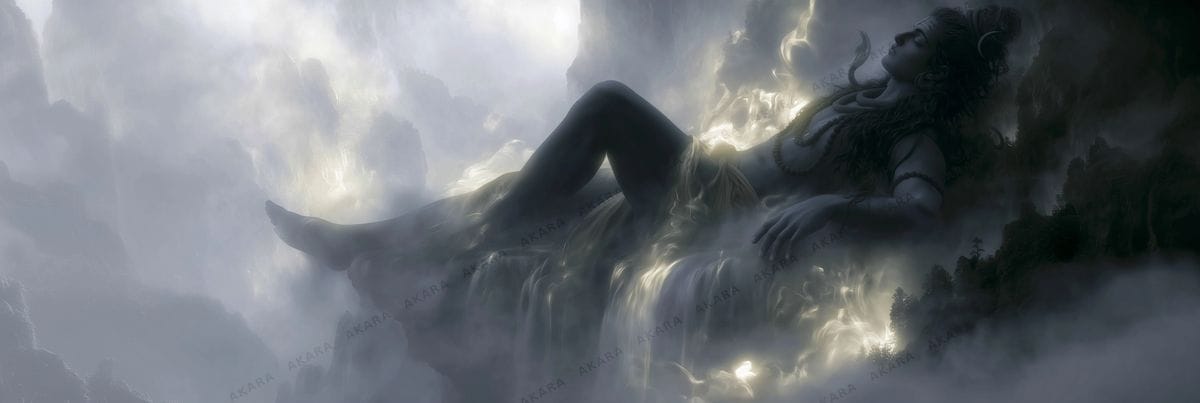
There is a bead worn by ascetics in the high Himalayas and by city-dwellers navigating the noise of modern life alike — a small, rough-surfaced seed that tradition holds was born from the compassion of Shiva himself. That bead is Rudraksha, and few objects in Sanatana Dharma carry so layered a meaning: botanical, cosmological, devotional, and deeply personal. Whether you are approaching it for the first time or seeking to deepen a practice already underway, what follows is a careful, honest account of what Rudraksha is, where it comes from, and how to work with it wisely.
What the Name Reveals
The word Rudraksha (Sanskrit: रुद्राक्ष) is a compound of two roots: Rudra, a Vedic name for Shiva in his fierce, storm-sovereign aspect, and aksha, meaning eye. The full meaning is therefore "eye of Rudra" — or, in the devotional sense recorded in the Shiva Purana, the teardrops that fell from Shiva's eyes after an extended state of deep meditation (samadhi) upon the welfare of all beings. Those tears, on touching the earth, took root and became the Rudraksha tree (Elaeocarpus ganitrus), a large evergreen found primarily across the Himalayan foothills of Nepal and India, as well as in parts of Indonesia, Sri Lanka, and Australia.
The Shiva Purana (Vidyeshvara Samhita, Chapter 25) elaborates that Rudra gazed upon the world with his three eyes for thousands of years and, moved by the suffering he witnessed, shed tears of grace. This is not merely mythology: it frames the bead as an object of divine compassion rather than power, a distinction that shapes correct devotional attitude. In bhakti, one wears Rudraksha not to command the cosmos but to receive Shiva's steadying gaze.
The Mukhi System — Faces of Shiva
The most important technical term for any seeker to understand is mukhi (Sanskrit: मुखी), meaning "face" or "mouth." Each Rudraksha seed has natural vertical lines, called mukhas, running from its crown to its base. These lines are not carved — they are part of the seed's natural anatomy — and their number determines the bead's classification and, in tradition, its presiding deity and governing energy.
Authentic Rudraksha beads range from one mukhi to twenty-one mukhis, though one through fourteen are the most widely available and documented in classical texts. A brief reference to the primary mukhis:
- Ek Mukhi (1-faced): Presiding deity: Shiva himself. Extremely rare. Associated with supreme consciousness and liberation (moksha). Classical texts caution that counterfeit one-mukhis are common; a genuine half-moon or round one-mukhi from Nepal commands great reverence.
- Panch Mukhi (5-faced): The most common and accessible bead. Presiding deity: Kalagni Rudra, one of Shiva's elemental forms. Traditionally worn for general wellbeing, calm, and spiritual receptivity. The standard mala of 108 beads is usually strung from panch mukhis.
- Chatur Mukhi (4-faced): Associated with Brahma and the faculty of speech and intellect — considered auspicious for students and those engaged in learning.
- Sapta Mukhi (7-faced): Associated with Mahalakshmi and considered supportive of prosperity achieved through right action.
- Rudra Mukhi (11-faced): Associated with the eleven Rudras and Hanuman. Considered protective and courage-giving.
- Dwadash Mukhi (12-faced): Associated with Surya, the sun — traditionally worn to cultivate leadership, vitality, and clarity of will.
The Padma Purana and the Mantra Maharnava both provide detailed correlations between mukhis, planetary bodies, and presiding deities. Modern seekers are well served by consulting these traditional sources — or a knowledgeable guru — rather than commercial catalogues, which sometimes conflate traditional Shaiva teachings with newer, unverified attributions.
Authenticity and Where Beads Come From
Nepalese Rudraksha is generally considered the most potent in classical tradition, owing to altitude and soil composition. Indonesian Rudraksha (Java Rudraksha) is also genuine Elaeocarpus ganitrus but tends to be larger, smoother, and less expensive. Both are valid; the distinction matters when purchasing, because the market for Rudraksha — particularly one-mukhis and high-mukhi beads — is rife with counterfeits made from berries, plastic, and carved seeds.
Practical tests mentioned in classical texts include:
- A genuine Rudraksha sinks in water (though this test is not definitive for all varieties).
- When placed between two copper coins, a genuine bead is said to rotate slightly — though this is better understood as a traditional indicator than a laboratory test.
- The surest verification is purchasing from a reputable source with documented provenance, or having a knowledgeable teacher confirm the bead.
How to Wear and Work with Rudraksha
The Shiva Purana and Devi Bhagavata Purana both prescribe wearing Rudraksha with sincerity, cleanliness, and awareness. Practical guidance drawn from these texts and living tradition:
**Energisation (prana pratishtha):** Before wearing, a bead should ideally be purified — washed with clean water, then with panchamrita (milk, honey, ghee, curd, and sugar) if possible — and then consecrated by chanting Om Namah Shivaya (ॐ नमः शिवाय) 108 times, holding the intention of devotion and clarity.
Wearing: Traditionally worn around the neck or on the wrist using a red or black thread, or strung in a mala with a sumeru (a larger anchor bead that marks the beginning and end of the mala). Silk thread is preferred; silver or gold wire is also traditional for single beads.
Conduct: Tradition asks wearers to avoid Rudraksha coming into contact with meat, intoxicants, or ritually impure situations. The spirit of this guidance is mindfulness — the bead is a reminder of one's spiritual intention, not a talisman that operates regardless of one's conduct.
Japa: Chanting Om Namah Shivaya on a Rudraksha mala is among the most classical uses in Shaiva bhakti. Each bead is moved with the thumb and ring finger (the index finger, associated with ego, is traditionally excluded). One round of 108 counts completes one mala of japa.
The Living Significance — Rudraksha in the Present
In a time when attention is fragmented and interiority is rare, Rudraksha functions as what might be called a dharmic anchor — a physical object that, when worn with intention, gently recalls the wearer to their deeper purpose. This is not superstition; it is the same psychological wisdom that underlies any sacred object held across traditions: a rosary, a mala, a knotted cord.
What Sanatana Dharma offers through Rudraksha is unusual, however: a cosmological framework, a botanical reality, a devotional practice, and a direct link to one of the oldest living spiritual lineages on earth, all in a single small seed. For the devotee on the path of Shiva bhakti, the bead is not ornament but relationship — a daily, tactile remembrance that Rudra's gaze, born of compassion, has not left the world.
"He who wears Rudraksha is Rudra himself walking the earth." — Shiva Purana, Vidyeshvara Samhita
This is the invitation Rudraksha holds open: not to become powerful, but to become present — to the divine, to others, and to the grace that, according to tradition, is already flowing toward every sincere seeker.
In a time when attention is fragmented and interiority is rare, Rudraksha functions as a dharmic anchor — a physical object that gently recalls the wearer to their deeper purpose.
गिरिशं गंगाधरं सोमशेखरम् giriśaṃ gaṅgādharaṃ somaśekharam
the mountain lord who holds ganga and wears the moon as his crown. bholenath makes nature his temple.
Questions & answers
What does Rudraksha mean in Sanskrit?
Rudraksha (रुद्राक्ष) combines Rudra — a Vedic name for Shiva — and aksha, meaning eye. It translates as 'eye of Rudra' and, devotionally, refers to the tears of compassion that Shiva shed during deep meditation, which fell to earth and became the sacred tree.
Which Rudraksha is best for a beginner?
The Panch Mukhi (5-faced) Rudraksha is traditionally recommended for beginners. It is the most widely available, documented in classical texts, governed by Kalagni Rudra, and considered conducive to general wellbeing, calm, and spiritual receptivity. A mala of 108 panch mukhi beads is ideal for japa practice.
How do I know if a Rudraksha is genuine?
Authentic Rudraksha beads are seeds of the Elaeocarpus ganitrus tree with naturally formed vertical lines (mukhis). They generally sink in water, and the mukhi lines run continuously from crown to base. Purchase from reputable, provenance-documented sources, and be especially cautious with one-mukhi beads, which are frequently counterfeited.
How should Rudraksha be worn for the first time?
Tradition prescribes purifying the bead with clean water or panchamrita, then consecrating it by chanting Om Namah Shivaya 108 times with a sincere intention of devotion. It is then worn on a red or black thread, or silk, around the neck or wrist. Avoid wearing it to places of ritual impurity and remove it respectfully when required.
How many beads should a Rudraksha mala have?
A standard Rudraksha mala has 108 beads plus one sumeru bead — 109 total. The number 108 is sacred in Sanatana Dharma, representing the product of 12 solar houses and 9 lunar positions, among other cosmic correspondences. During japa, counting stops at the sumeru and does not cross over it.