Onam 2026: When the King Returns and the Lord Strides the Cosmos
As Kerala's ten days of splendour begin this very week, the Akara Times looks at the ancient theology — and timeless invitation — at the heart of Onam.
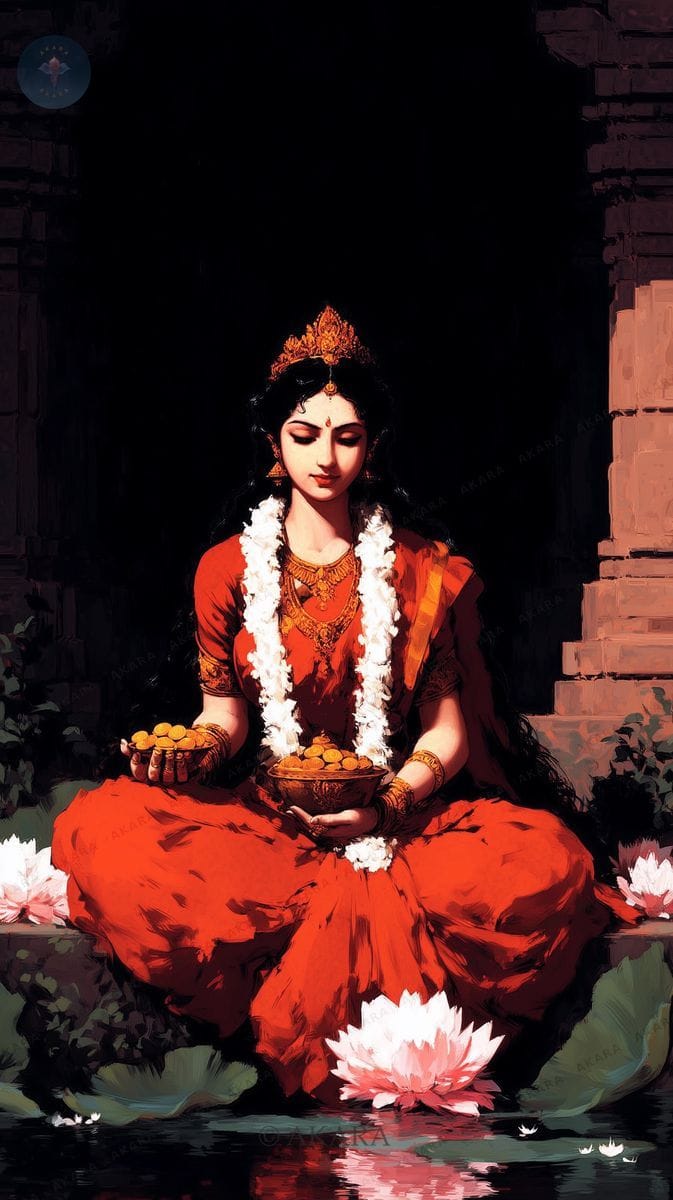
Somewhere in Kerala right now, a child is pressing marigolds and white chamanti petals into a pookalam on the family doorstep, coaxing colour into concentric rings that will greet a king expected home any day. That king is Mahabali — legendary, beloved, and, by the grace of Lord Vishnu himself, still on his annual journey back. Onam 2026 has begun, and with it, one of the most layered, most luminous celebrations in all of Sanatana Dharma.
The Timing: A Festival Already Underway
This year, the ten-day festival of Onam opened on Atham (Monday, 17 August) and builds day by day toward its sacred apex on Thiruvonam — the nakshatra of Shravana — falling on Wednesday, 26 August 2026. Today, as the Panchang holds us in Shukla Saptami under Nakshatra Swati, we are already five days into Onam's luminous arc. Every home in Kerala, and millions of Malayali households scattered across the globe, is alive with preparation. The timing is not coincidental; it arrives in the Malayalam month of Chingam (Simha Rashi, the same sign the Sun now occupies), Kerala's first month of the harvest season.
For seekers on the Sanatana Dharma path, Onam is more than a regional harvest celebration. It is a direct encounter with one of the most philosophically rich episodes in all of Hindu spirituality — the story of the Vamana avatar.
Vamana: The God Who Came Small
The Vamana avatara is the fifth of Vishnu's Dashavatara (दशावतार, the ten principal descents), and uniquely, the first to appear in a fully human form. Described across the Bhagavata Purana, the Vamana Purana, and the Skanda, Matsya, and Brahmanda Puranas, the story is one of dharmic paradox: the Lord arrives not as a warrior, not as a conqueror, but as a small Brahmin boy carrying only a kamandalu (water-pot), a staff, and a gentle request.
King Mahabali — grandson of Prahlada, the great Vaishnava bhakta — had through his extraordinary generosity and just governance brought about what is remembered as a golden age in Kerala: a reign of equality, abundance, and dharma. Yet his power had grown so vast that it destabilised the cosmic order. When the young Vamana arrived at Mahabali's great yajna and asked for just three paces of land, the king — warned by his guru Shukracharya against this strange Brahmin — honoured his own vow of giving. He poured water from his kamandalu into Vamana's hand, sealing the gift irrevocably.
What followed was the revelation of Trivikrama (त्रिविक्रम — "the Lord of Three Strides"). Vamana expanded to fill the entire cosmos. With the first stride he covered the earth; with the second, the heavens. There was no space left for the third. Mahabali, understanding at last that he stood before the Supreme, offered his own head. Vishnu placed his foot upon it and pressed the king gently into Patala — and then, moved by Mahabali's total surrender, granted him a boon: he could visit his beloved subjects on earth once every year. That annual visit is Onam.
The Theology of the Three Steps
The Vamana story has its roots not merely in the Puranas but in the very earliest layer of Vedic literature. The Rigveda itself celebrates Vishnu as the one who traverses the universe in three strides, defining all that exists — a hymn that ancient commentators read as the seed from which the Vamana avatara later blossomed.
The inner meaning is among the richest in all of Hindu spirituality. The three feet that Trivikrama claimed — often identified with the earth, the intermediate space, and the heavens — represent the Lord's total sovereignty over all planes of existence. Nothing, not even a royal ego however generous and just, can stand outside the divine order. Yet the story is not one of punishment; it is one of transmutation.
The Bhagavata Purana is clear: Mahabali is counted among the greatest devotees of Vishnu. His willingness to surrender even his kingdom and his very body is not defeat — it is the highest act of bhakti. As one traditional reading puts it, the king who gives everything to God receives everything in return: Vishnu himself promised to stand as the eternal guardian at the gates of Mahabali's abode in Sutala.
"The message of Onam is that the Lord is won by means of total surrender of the ego. When the heart is pure, the Lord resides therein."
This is the Akara lens at its clearest: the festival is not about a king who lost, but about a devotee who gained the highest boon — the constant presence of the Divine.
The Living Celebration: Pookalam, Sadya, and the Sound of Drums
Onam's theology never floats away from the earth. It is rooted in colour, fragrance, community, and abundance — all of which are understood in Kerala as a reflection of Mahabali's golden reign made present again for ten days.
Pookalam (पूकलम् — floral carpet) is laid fresh each morning, the rings growing more elaborate as Thiruvonam approaches. Families gather to create these living mandalas, a form of devotion no different in spirit from the rangoli offered before a temple sanctum. The most sacred Onam site is Thrikkakara Temple near Ernakulam, where Vamana-Trivikrama is the presiding deity and where Onam is believed to have its oldest ritual roots.
Onasadya — the grand feast served on fresh banana leaves — is itself a sacred act. The full meal, with its dozens of precisely ordered preparations, embodies the abundance that Mahabali's just reign made possible. To cook and share the Sadya is to re-enact the golden age. Traditions including Vallam Kali (snake-boat races), Kaikottikali (clap-dancing), and Pulikali (tiger-dance) fill the days with life, reaffirming that dharma, when it flourishes, fills the world with joy.
Crucially, Onam is observed across communities in Kerala — by devotees of different faiths — as a cultural celebration that belongs to the land and its people. This, too, reflects something Sanatana Dharma has always understood: that where righteous kingship and dharmic living prevail, even the boundaries of community dissolve into a shared abundance.
The Diaspora Keeps the King's Memory Alive
Across the Malayali diaspora — in the Gulf, the United Kingdom, North America, Singapore, and Australia — Onam 2026 is unfolding in community centres, temple halls, and living rooms. Families are donning mundu-set saris, assembling pookalams from whatever flowers the local market offers, and preparing whatever version of the Sadya their kitchens allow. The longing for home that Mahabali himself embodies — the exile who returns — resonates deeply with every Keralite far from the land that shaped them.
For the devotee in Pune, in London, or in New Jersey, Onam whispers the same truth: the golden age is not permanently lost. It returns each year, and the conditions for its return are within us — generosity, justice, and the willingness to place our ego beneath the Lord's foot.
A Reflection for the Seeker
On this Shukla Saptami, as the Sun burns bright in Simha and Kerala opens its doors for a king who comes riding memory and devotion, the invitation is the same for every seeker regardless of tradition or geography. The story of Mahabali and Vamana asks: what would you give if the Divine stood at your door in disguise, apparently small, apparently asking for little? The answer Mahabali gave — everything, freely, without condition — is the very definition of bhakti (भक्ति, devotion as loving surrender).
The Lord, say the sages, is never unmoved by such a gift. He steps into the cosmos and fills it. He places his foot gently upon the head that bows — and lifts that soul toward the eternal.
Onaashamsakal. May the return of the beloved king remind us all of what a golden age truly requires of us.
The story of Mahabali is not about a king who lost — it is about a devotee who gained the highest boon: the constant presence of the Divine.
शान्ताकारं भुजगशयनं पद्मनाभं सुरेशम् śāntākāraṃ bhujagaśayanaṃ padmanābhaṃ sureśam
The peaceful one resting on the serpent, lotus-naveled lord of the gods. Vishnu in his element — holding the universe together while looking effortlessly serene.
Questions & answers
When does Onam 2026 begin and end?
Onam 2026 is a ten-day festival. It begins on Atham (17 August 2026) and culminates on Thiruvonam, the most sacred day, which falls on Wednesday, 26 August 2026, when the Thiruvonam nakshatra is active.
What is the connection between Onam and the Vamana avatar of Vishnu?
Onam commemorates Lord Vishnu's descent as Vamana, the dwarf Brahmin who grew into the cosmic form Trivikrama and, in three strides, reclaimed the universe from King Mahabali. Moved by Mahabali's total surrender, Vishnu granted him a boon to visit his people once every year — and that annual visit is celebrated as Onam.
Why is King Mahabali celebrated if he was an asura king defeated by Vishnu?
The Bhagavata Purana presents Mahabali not as a villain but as one of Vishnu's greatest devotees — a just, generous king who surrendered everything to the Lord without condition. His 'defeat' is understood theologically as the highest bhakti, earning him eternal divine blessing and his people an annual reunion with him.
What is the significance of the Pookalam made during Onam?
The Pookalam (floral carpet) laid fresh each morning during Onam is a form of devotional offering — a living mandala welcoming King Mahabali home. As the days progress toward Thiruvonam, the designs grow more elaborate, reflecting the growing joy of the king's approaching visit.
Where is the most sacred temple associated with Onam?
Thrikkakara Temple near Ernakulam, Kerala, is considered the most sacred Onam pilgrimage site. It is dedicated to Vamana-Trivikrama and is believed to be where the Onam festival has its oldest and deepest ritual roots.