Om Namah Shivaya: The Complete Meaning of the Panchakshara Mantra
A syllable-by-syllable journey into one of Sanatana Dharma's most ancient and beloved invocations to Lord Shiva.
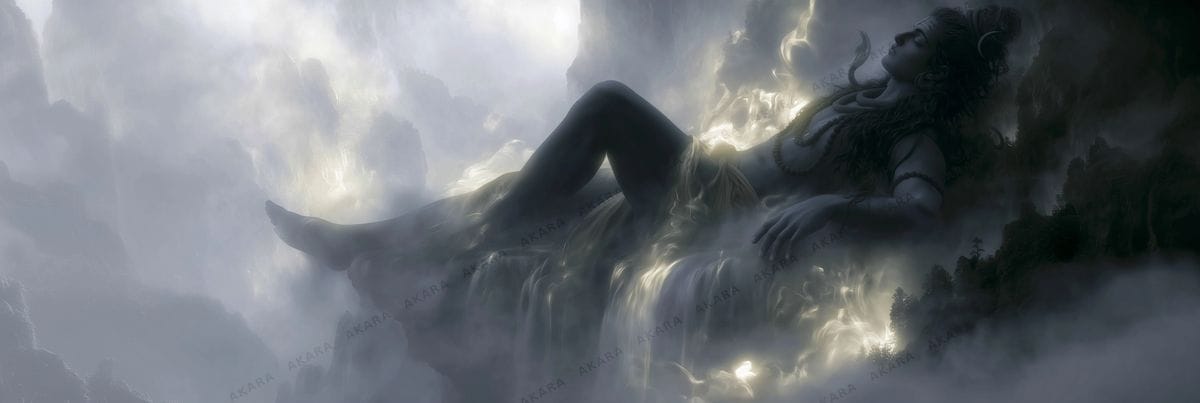
Somewhere in the world at this very moment, a devotee is quietly repeating five syllables that have been on human lips for thousands of years. Na. Ma. Shi. Va. Ya. Together, preceded by the primordial sound Om, they form the Panchakshara mantra — the 'five-syllabled' heart-prayer to Lord Shiva that the Vedic rishis called the king of all mantras. Its sound is simple enough for a child; its depth has occupied the greatest scholars of Sanatana Dharma for millennia. This is its story.
Origins: Where Does the Mantra Come From?
The Panchakshara mantra — pañcākṣara, from pañca (five) and akṣara (syllable, also 'imperishable') — has its root in the eighth anuvāka of the Śrī Rudram, a hymn embedded in the Krishna Yajurveda's Taittirīya Saṃhitā (TS 4.5.8). There, amid a cascade of salutations to Rudra-Shiva in all his forms, the phrase namaḥ śivāya ca śivatarāya ca appears: "Salutation to the auspicious one, and to the most auspicious one." The five syllables na-ma-śi-va-ya were isolated by the tradition as the concentrated essence of the entire Rudram, and ultimately of Shiva himself.
The Shiva Purana declares plainly: "Pañcākṣaraṃ paraṃ mantraṃ" — the Panchakshara is the supreme mantra. The Sage Vasishtha, the Nāyanmār poet-saints of Tamil Nadu, the Shaivite Āgamas, and the Advaita Vedāntin Adi Shankaracharya all comment on it with reverence. Across geography, language, and sect, this mantra has been the common currency of Shiva bhakti.
The Syllables and Their Meaning
Before the five syllables comes Om (or Aum) — the pranava, the primordial sound from which all creation unfolds. When Om is prefixed, the mantra is technically called the Ṣaḍakṣarī (six-syllabled) form, though tradition lovingly calls the whole thing the Panchakshara. Om is not an addition; it is the ground in which the five syllables are planted.
Then come the five:
- Na (नः) — Earth (pṛthvī tattva). The syllable Na corresponds to the element of earth, the most solid and foundational of the five great elements (pañcabhūta). It is associated with the soul's condition of paśu — the bound, embodied being, tied by the rope (pāśa) of ignorance. Na is also said to represent Shiva's power of concealment (tirobhāva śakti).
- Ma (मः) — Water (jala tattva). Ma corresponds to the element water, the principle of cohesion and flow. In Shaiva Siddhanta, Ma symbolises māyā — not illusion in a dismissive sense, but the divine creative principle that makes multiplicity possible. It is the ocean the soul swims in before recognising itself.
- Shi (शि) — Fire (agni tattva). The syllable Shi is Shiva himself, the witness-consciousness, the fire of awareness that illuminates all experience. In iconography this corresponds to Shiva's third eye — the eye of wisdom that burns the veils of ignorance.
- Va (वः) — Air (vāyu tattva). Va is associated with the grace-bestowing power of Shiva (anugraha śakti), the breath of liberation that moves the practitioner toward freedom. Air is the element of prāṇa, the life-force, and Va reminds us that Shiva breathes life into every being.
- Ya (यः) — Space (ākāśa tattva). Ya is the subtlest of the five elements, the all-pervading space in which everything arises and subsides. It corresponds to the ātman — the self — and, in the highest interpretation, to the recognition that individual self and Shiva are not two.
Read together: Namaḥ Śivāya means "Salutation to Shiva," but the inner grammar is richer. Namaḥ derives from namas, meaning a bow of the whole being — not mere politeness, but a surrendering of ego. Śivāya means "to the auspicious one," from the root śiv meaning welfare, blessedness, peace. The mantra is simultaneously a map of the cosmos (five elements), a portrait of the soul's journey from bondage to liberation, and a complete act of devotion.
The Mantra in Living Tradition
The Panchakshara is not a relic. Every morning in Shiva temples across India — from the ghats of Varanasi to the rock-cut shrines of Ellora to the coastal Jyotirlingas — priests chant the Shri Rudram with this mantra at its core. The eleven-cycle recitation, the Ekādaśa Rudram, is performed at sacred occasions precisely because the Panchakshara is believed to purify space, time, and the subtle body of the listener.
In the Bhakti tradition, the Shaiva Nayanmars of Tamil Nadu — poet-saints like Thirugnana Sambandar and Sundaramurthy — wove Namasivaya into their Tevaram hymns in the seventh and eighth centuries CE, proof that this mantra transcended Vedic Sanskrit to become the living breath of popular devotion. The great Advaita philosopher Adi Shankaracharya wrote his Pañcākṣara Stotra — a meditative poem on each of the five syllables — demonstrating that jñāna (knowledge) and bhakti (devotion) are not rivals when it comes to this mantra; they converge.
How to Chant: Practical Guidance for Seekers
The beauty of the Panchakshara is its accessibility. Unlike some mantras that require formal initiation before use, the Shiva Purana and later Agamic texts hold that Om Namah Shivaya may be chanted by any sincere seeker, in any state, at any time.
That said, a few guidelines from tradition enrich the practice:
1. Face east or north at dawn or dusk if possible — but do not let ideal conditions become a barrier to daily practice. 2. A mālā of rudrākṣa beads (108 beads) is the classical accompaniment. One bead per repetition grounds the mind and keeps count without mental effort. 3. Pace is secondary to intention. The mantra can be chanted aloud (vācika japa), in a whisper (upāṃśu japa), or silently in the heart (mānasa japa). Tradition considers silent mental repetition the most refined, but any sincere mode is valid. 4. Visualise or simply feel. Some practitioners hold Shiva's form in the mind's eye — the crescent moon, the river Ganga flowing from his matted locks, the serene third eye. Others simply rest in the sound itself. Both approaches have scriptural sanction. 5. Consistency over intensity. A steady daily practice of 108 repetitions, maintained for months and years, transforms the practitioner far more than marathon chanting sessions separated by long gaps.
"Namaḥ Śivāya is not a password to heaven; it is the voice of the soul recognising its own source." — in the spirit of Shaiva Siddhanta
A Reflection: The Mantra as Mirror
We live in an age of noise — information dense, attention fractured. The Panchakshara mantra offers something radical: five syllables that silence the restless mind not by suppression but by absorption. When a seeker chants Om Namah Shivaya with even a fraction of understanding, the five elements of which their body is made begin, subtly, to recognise the one who pervades them all.
This is the genius of Sanatana Dharma's mantra science. The syllables are not arbitrary sounds; they are structural correspondences between the cosmos outside and the cosmos within. To chant the Panchakshara is to remind yourself, moment by moment, of what you are made of — and of who stands behind the making.
On this auspicious day, with the Sun in Simha and the nakshatra Bharani lending its transformative energy, there is no better time to begin — or to deepen — a Panchakshara practice. Let the five syllables do what they have always done: carry the devoted heart home.
Namasivaya is not a password to heaven; it is the voice of the soul recognising its own source.
गिरिशं गंगाधरं सोमशेखरम् giriśaṃ gaṅgādharaṃ somaśekharam
the mountain lord who holds ganga and wears the moon as his crown. bholenath makes nature his temple.
Questions & answers
What does Om Namah Shivaya mean in English?
Om Namah Shivaya translates roughly as 'Om, salutation to Shiva.' More precisely, Namah means a full surrender of the ego-self, and Shivaya means 'to the auspicious one' — Shiva, the supreme consciousness. The five syllables Na-Ma-Shi-Va-Ya also correspond to the five elements (earth, water, fire, air, space), making the mantra a complete map of creation.
Where does the Panchakshara mantra come from?
The five syllables Namashivaya originate in the Shri Rudram, part of the Taittiriya Samhita of the Krishna Yajurveda (TS 4.5.8). The phrase 'namah shivaya cha shivataraya cha' appears in the eighth anuvaka. Over centuries, Shaiva Agamas, the Shiva Purana, and saints like Adi Shankaracharya and the Tamil Nayanmars elevated these five syllables to the status of the supreme Shiva mantra.
Can anyone chant Om Namah Shivaya, or is initiation required?
The Shiva Purana and later Agamic texts hold that Om Namah Shivaya can be chanted by any sincere seeker regardless of formal initiation. It is considered one of the most open and universally accessible mantras in Sanatana Dharma. While a guru's guidance always deepens any practice, the mantra's grace is not withheld from the sincere and earnest.
What is the best time and method to chant the Panchakshara mantra?
Dawn (brahma muhurta) and dusk are considered ideal, but the mantra can be chanted at any time. Sitting quietly, facing east or north, using a rudrāksha mala of 108 beads, and repeating the mantra 108 times is the classical method. It can be chanted aloud, in a whisper, or silently. Consistency — a daily practice sustained over time — is more important than duration or elaborate ritual.
What is the difference between the Panchakshara and the Shadakshara form?
The Panchakshara ('five-syllabled') refers strictly to Na-Ma-Shi-Va-Ya. When the pranava Om is added at the beginning, making it Om Na-Ma-Shi-Va-Ya, it is technically called the Shadakshara ('six-syllabled') form. In common usage and devotion, the entire phrase 'Om Namah Shivaya' is lovingly referred to as the Panchakshara mantra, with Om understood as its eternal ground rather than a separate prefix.