Ganesh Chaturthi 2026: When the Divine Comes Home to Pune
Eleven days before the world watches the great Visarjan processions, the Akara Times reflects on why Ganesha does not merely receive our worship — He comes home.
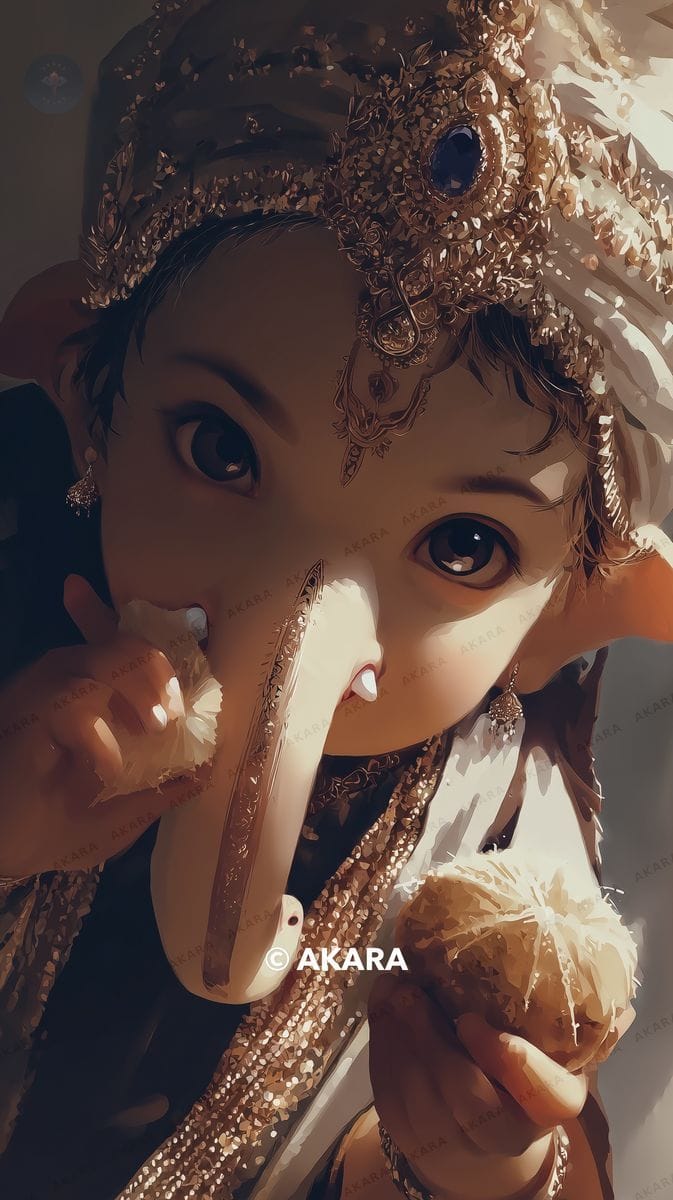
On the morning of Monday, 14 September 2026, millions of families across India and the global Hindu diaspora will open their doors, light the first incense, and do something quietly extraordinary: they will invite God to live with them. Ganesh Chaturthi — Ganeshotsav — is not simply a festival of celebration. It is a ten-day experiment in intimacy with the Divine, a time when the great Vighnaharta steps down from the pedestal of the distant and becomes, for a blessed few days, a guest at the family table.
The Day, the Tithi, and the Muhurat
The Panchang is precise. <a name='cite-21-2'></a>Ganesh Chaturthi 2026 falls on Monday, 14 September, when the Chaturthi Tithi of Bhadrapada Shukla Paksha arrives. The Chaturthi Tithi itself begins at 7:06 AM on September 14 and extends to 7:44 AM on September 15. For those performing the Ganesh Sthapana at home, the traditional puja window — the Madhyahna muhurat, associated with the midday hour of Lord Ganesha's birth — is 11:20 AM to 1:48 PM in Mumbai and 11:16 AM to 1:44 PM in Pune. Devotees in other cities should consult their local Panchang, as exact tithi timings shift with longitude.
The Ganeshotsav unfolds over ten days — odd numbers are considered auspicious for ritual observance in Sanatana Dharma — and concludes with the emotionally charged Ganesh Visarjan on Anant Chaturdashi, Friday, 25 September 2026. Families who cannot observe all ten days may perform Visarjan after one and a half, three, five, or seven days, each a legitimate and scripturally grounded choice.
Who Is Ganesha? The Theology Behind the Trunk
Before one lifts a modak or lights a lamp, it is worth pausing before the question that every earnest devotee eventually asks: Who, truly, is Ganesha?
In the language of Sanatana Dharma, He is Vighnaharta (विघ्नहर्ता) — the remover of obstacles — and Prathamesh (प्रथमेश) — the one worshipped first, before all others. The Mudgala Purana and the Ganesha Purana devote entire canons to His nature. He is Ganapati (गणपति), lord of the ganas, the celestial hosts, making Him a deity of cosmic order as much as personal fortune.
His iconography is a masterclass in Vedic symbol-making. The elephant head speaks of viveka — discriminative wisdom — for the elephant navigates the thickest forest with unhurried certainty. His large belly holds the entire universe within it, a reminder that the material and the sacred are never truly separate. His broken tusk, offered in service when He needed a stylus to transcribe the Mahabharata as dictated by Vyasa, represents the willingness to sacrifice one's ego for the sake of knowledge. And the modak — the sweet rice dumpling offered to Him in sets of 21 — is said to symbolise the bliss (ananda) that awaits the seeker at the end of the inward journey.
From Household Ritual to Community Celebration: A History
For centuries, Ganesh Chaturthi was an intimate household observance, particularly in the Deccan. Its transformation into one of the subcontinent's largest public festivals is a story worth knowing.
In 1893, with British colonial authorities banning political assemblies, the freedom fighter and social reformer Lokmanya Bal Gangadhar Tilak revived Ganesh Chaturthi as a large, public event in Maharashtra. His vision was radical in its simplicity: unite Indians across caste and class in a shared sacred space, creating a culture of community where the dream of independence could breathe. The traditions he established — ten days of public worship and a grand procession to immerse the idol — remain the template for Ganeshotsav celebrations to this day.
From those origins in Pune and Maharashtra, the festival has grown into one of the defining cultural events of South Asia and now of the global Hindu diaspora. Today, the Lalbaugcha Raja idol in the Lalbaug neighbourhood of Mumbai typically draws millions of visitors across the ten-day festival period, making it one of the most visited religious attractions in the world. In 2026, cities including Mumbai, Pune, Hyderabad, Bengaluru, and Nagpur will host magnificent pandals, cultural programmes, and grand immersion processions that pulse with dhol-tasha drumming and the ancient cry: Ganpati Bappa Morya!
The Visarjan: Dissolution as Darshan
The Visarjan — the immersion of the Ganesha murti in a body of water — is the festival's most misunderstood and most profound moment. To the uninitiated eye, it looks like an ending. In the grammar of Sanatana Dharma, it is a teaching.
The dissolution of the clay idol in water enacts the great truth of anityatā — impermanence — while simultaneously affirming continuity. Ganesha does not disappear. He returns to the source, carrying with Him the prayers, the intentions, and the grief and gratitude of every home He visited. The tradition holds that at Visarjan, the Lord takes our burdens with Him. The correct cry at immersion is not farewell but a vow: Ganpati Bappa Morya, Pudcha Varshi Laukar Ya — "O Lord Ganesha, come again soon next year."
In 2026, the principal Visarjan falls on 25 September. Processions from thousands of mandals across Mumbai will converge on the beaches — Girgaum Chowpatty being the principal site — through the night, with some of the largest idols, standing twenty feet or more, transported on decorated trucks in a spectacle of bhakti that has no equivalent anywhere on earth.
For those celebrating at home, many families now choose to dissolve the idol in a bucket or a designated vessel and use the clay-enriched water to nourish their garden — a practice that municipal bodies have encouraged and that retains the full spiritual significance of the ritual while honouring our responsibility to the natural world.
The Akara Reflection: A Guest Who Transforms the Host
At the Akara Times, we are keenly aware that we write from Pune — the very city where Lokmanya Tilak rekindled the public flame of Ganeshotsav. There is something fitting about that geography. Pune is not merely Ganesha's festival city; it is, in a deep sense, a city shaped by His spirit: the love of learning, the refusal to be stopped by obstacles, the belief that culture and dharma can coexist in the public square.
This Ganesh Chaturthi 2026, as devotees install the murti and begin the daily puja cycle — the shodashopachara (sixteen-step) worship, the Atharvashirsha recitation, the evening aarti — let us remember what the ten days are truly for. They are not a performance. They are a sadhana (साधना), a practice. When Ganesha comes home, He does not merely occupy a corner of the puja room. He occupies the practitioner's attention, redirecting it from the anxious and the trivial toward the luminous and the essential.
The Sanskrit invocation that opens every Ganesha puja says it plainly: Vakratunda Mahakaya, Suryakoti Samaprabha — Nirvighnam Kuru Me Deva, Sarva Karyeshu Sarvada. "O Lord of the curved trunk and vast form, radiant as a crore of suns — make all my undertakings free of obstacles, always." It is a prayer not for ease, but for clarity — the kind that allows us to move through difficulty with grace. That is, perhaps, the oldest and most enduring gift of Hindu spirituality: not the promise of a life without challenge, but the wisdom and the will to walk through it with the Divine at our side.
Ganpati Bappa Morya. Come quickly next year.
Ganesha does not promise a life without difficulty — He promises that difficulty will not have the final word.
वक्रतुण्ड महाकाय सूर्यकोटि समप्रभ। निर्विघ्नं कुरु मे देव सर्वकार्येषु सर्वदा॥ vakratuṇḍa mahākāya sūryakoṭi samaprabha nirvighnaṃ kuru me deva sarvakāryeṣu sarvadā
O elephant-faced one, with a massive form radiant as millions of suns, remove all obstacles in all my endeavors, always.
Questions & answers
When is Ganesh Chaturthi 2026?
Ganesh Chaturthi 2026 falls on Monday, 14 September. The Chaturthi Tithi begins at 7:06 AM on 14 September and runs until 7:44 AM on 15 September. The auspicious Madhyahna puja window in Pune is 11:16 AM–1:44 PM; in Mumbai it is 11:20 AM–1:48 PM.
When is Ganesh Visarjan in 2026?
The principal Ganesh Visarjan — on Anant Chaturdashi — falls on Friday, 25 September 2026. Families may also perform Visarjan after 1.5, 3, 5, or 7 days depending on tradition, giving dates of 15, 16, 18, or 20 September respectively.
Why is Ganesha worshipped before all other deities?
In Sanatana Dharma, Ganesha holds the title Prathamesh — 'the one worshipped first.' Scripture and tradition hold that any endeavour begun without His invocation risks obstacles. He is the lord of auspicious beginnings, and His blessing is considered the gateway through which all other worship and activity flows successfully.
What is the significance of the Ganesh Visarjan (immersion)?
The immersion of the clay Ganesha murti in water enacts the Vedantic truth of impermanence (anityatā) while affirming continuity. The Lord is believed to take the devotees' prayers and burdens with Him as He dissolves, and the farewell cry — 'Pudcha Varshi Laukar Ya' (come again soon next year) — reframes the moment as a joyful vow of reunion rather than a sad goodbye.
How can I celebrate Ganesh Chaturthi in an eco-friendly way?
Choose a murti made of natural, uncoated clay with water-soluble natural paints — these have improved significantly in quality and artistry. At Visarjan, you may dissolve the idol in a bucket at home and use the clay-enriched water to nourish your garden. Many municipal corporations also provide designated immersion ponds that contain dissolved material and protect natural water bodies.