Krishna Navami & Mrigashira: A Day to Seek with Steady Heart
The seeker's nakshatra meets the ninth tithi of the waning moon — a day the tradition invites us to refine our search, not rush it.
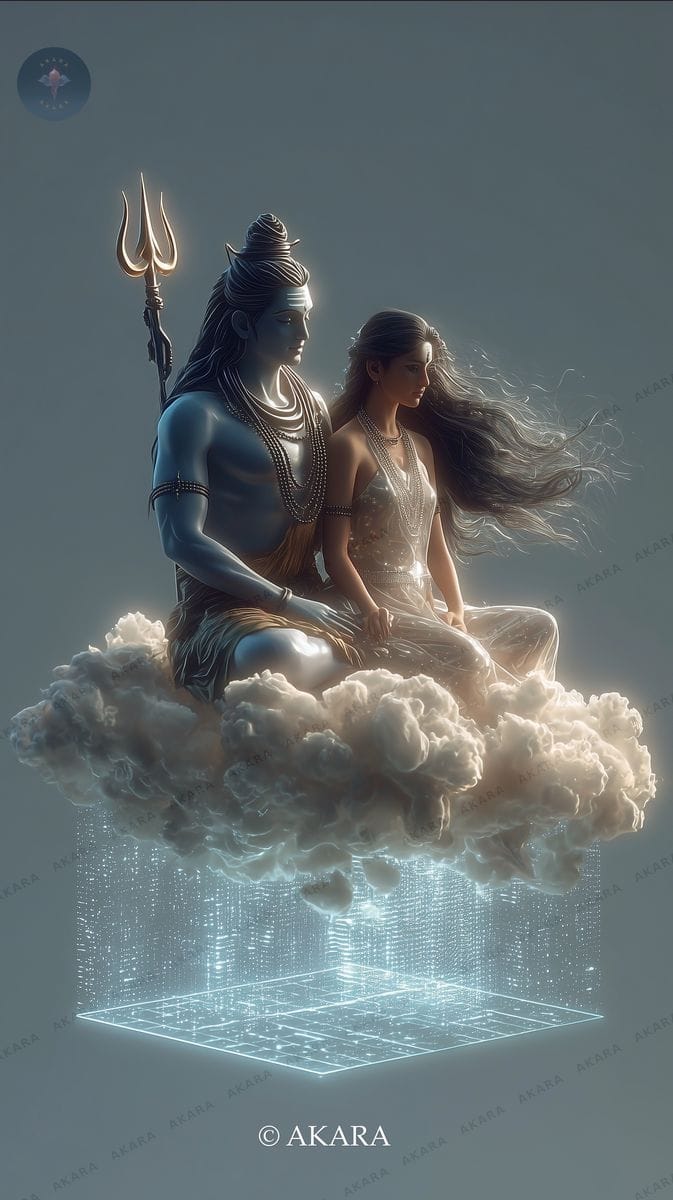
Before the modern world asks anything of you today, the ancient sky has already spoken. The daily panchang — that living almanac of time that Sanatana Dharma has kept for millennia — marks this as Krishna Navami, the ninth day of the waning lunar fortnight, with the Moon moving through the gentle, questing star-field of Mrigashira in the sign of Vrishabha. Add to this the Yoga called Vajra, and the Sun blazing in Simha, and a picture emerges: not of fate written in stone, but of qualities present in this particular slice of cosmic time — qualities a thoughtful person can meet with awareness, intention, and devotion.
What the Panchang Is — and Is Not
The panchang (Sanskrit: pañcāṅga, literally "five limbs") is the classical Vedic calendar that tracks five simultaneous qualities of any moment: the tithi (lunar day), vara (weekday), nakshatra (lunar mansion), yoga (a combined solar-lunar calculation), and karana (half-tithi). Together they form a portrait of time's texture. Vedic jyotish, rooted in the Vedāṅga tradition, uses the panchang not to predict individual fate but to read the qualities inherent in a moment — much as a farmer reads wind and soil before planting. This is traditional guidance offered in that same spirit. It illuminates; it does not decree.
Mrigashira Nakshatra: The Eternal Seeker
The Moon today rests in Mrigashira (Sanskrit: Mṛgaśīrā, "the deer's head"), the fifth nakshatra of the zodiac, spanning 23°20' Vrishabha to 6°40' Mithuna. Its deity is Soma, the Moon-god himself — a fitting convergence when the Moon is the very planet moving through this mansion. Its symbol is a deer's head, and its ruling planet is Mars.
Mrigashira carries the quality of mṛdu — softness, gentleness — and is classified as a sattvic nakshatra, oriented toward clarity and truth-seeking. The deer is in perpetual, graceful motion, scanning the forest for nourishment. This is the nakshatra's essential nature: restless curiosity in search of something higher, something purer. The Vedic texts associate Mrigashira with anveṣaṇa — searching, enquiry, the holy dissatisfaction that drives the seeker onward.
With the Moon in pada 2 of Mrigashira, still within the Vrishabha (Taurus) section, there is an additional Venusian flavour — beauty, sensory refinement, and the desire for comfort and meaning together. The Moon is exalted in Vrishabha, which lends a certain inner steadiness even to this restless nakshatra energy. The seeking today is not anxious; it is patient and purposeful.
For the devotee, Mrigashira days are traditionally well-suited to study, learning sacred texts, beginning a new course of enquiry, and creative or artistic work. The tradition counsels moving gently — the deer does not crash through the forest. Avoid forcing conclusions or rushing negotiations.
Krishna Navami: The Ninth Tithi
The tithi is Krishna Navami — the ninth day (navamī) of the kṛṣṇa pakṣa, the dark or waning fortnight. In the lunar cycle, the Krishna paksha represents a gradual withdrawal of the Moon's light, an inward movement — a time the tradition associates with tapas (discipline), reflection, and release of what no longer serves.
Navami itself holds particular significance in the Vaishnava calendar, most famously as Rāma Navamī (celebrated in the Shukla paksha of Chaitra) — yet every Navami carries the imprint of Devi's energy. The ninth tithi is associated in classical jyotish with Durga among the tithi devatās — the presiding deity of each lunar day. Durga is not merely the warrior goddess; she is Mahāmāyā, the one who both veils and reveals reality. Her grace on a Navami day carries the invitation to pierce through surface appearances toward what is truly real.
Krishna Navami is traditionally considered moderate for auspicious beginnings (shubha kārya), but well-suited to spiritual practice, mantra repetition, fasting, acts of service, and any work requiring deep focus or sustained effort. It is a day to consolidate rather than launch, to refine rather than expand.
Yoga Vajra: Sharpness Meets Steadiness
The yoga of the day is Vajra — the thunderbolt, the diamond, the indestructible weapon of Indra. In panchang calculation, the 27 yogas are determined by adding the longitudes of the Sun and Moon and dividing the sum. Vajra yoga, the third in the sequence, is traditionally described as having both a sharp, clarifying quality and a certain intensity. Classical texts caution that Vajra can be mishra (mixed) in its results — it cuts through, which can be either a gift or a challenge depending on how it is met.
The practical wisdom here is to bring precision and care to everything you undertake today. Vajra does not reward sloppiness or distraction. If you are writing, write with care. If you are speaking, choose words with intention. The same sharpness that can wound can also cut away confusion. Think of the vajra as Indra's tool of discernment — it destroys only what is false.
The Sun in Simha: The Background Warmth
The Sun (Sūrya) currently transits Simha (Leo), his own sign — a placement of strength, dignity, and solar confidence. Simha is the sign of the self, leadership, and luminous expression. While the Sun's sign changes monthly and forms the background of the season rather than the immediate quality of the day, it reminds us that we are in a period when clarity of identity and purpose is supported. The inner light is available — Mrigashira's seeking and Navami's depth are happening against a backdrop of solar strength.
A Short Reflective Practice for Today
The tradition of prataḥ smaraṇa — morning remembrance — asks us to orient the day before the day orients us. Here is a simple practice suited to today's energies:
- Sit quietly for five to ten minutes after rising. Light a lamp or a stick of incense if you have one nearby.
- Bring to mind the image of a deer pausing at the edge of a forest clearing — alert, present, unhurried.
- Ask inwardly: What am I truly seeking today? Not what the calendar demands, but what the soul is quietly reaching toward.
- Offer a few repetitions of a mantra you hold dear — the Gāyatrī, a name of your iṣṭa devatā, or simply Oṃ with full attention.
- Before closing, set one small, specific intention that reflects quality over quantity — one thing done with full presence.
This is bhakti in its most accessible form: not grand ceremony, but conscious orientation toward the sacred in the midst of ordinary time.
A Closing Reflection
The panchang does not write your story. It describes the weather of the soul on any given day — and just as a wise person dresses for the weather without surrendering to it, the devotee reads the panchang as an invitation, not an instruction. Mrigashira asks: are you seeking the right things, and seeking them gently? Krishna Navami asks: are you willing to go inward, to consolidate, to release? Vajra asks: are you willing to be precise?
These are not small questions. In the Akara spirit — rooted in Sanatana Dharma, attentive to the beautiful, devoted to the real — we offer them to you simply, with reverence, as the ancient sky offers them to all of us each day, without exception.
The panchang does not write your story — it describes the weather of the soul, and invites you to dress accordingly.
सहस्रं ते शतं ते अयुतं ते मध्ये वत्सं sahasraṃ te śataṃ te ayutaṃ te madhye vatsaṃ
Among thousands, hundreds, countless beings — You remain the beloved one
Questions & answers
What is Mrigashira nakshatra known for in Vedic astrology?
Mrigashira is the fifth nakshatra, symbolised by a deer's head and ruled by the planet Mars, with Soma (the Moon) as its presiding deity. It is considered a sattvic, gentle (mṛdu) nakshatra associated with seeking, curiosity, and refined enquiry. Days marked by Mrigashira are traditionally favourable for study, learning, creative work, and spiritual searching.
Is Krishna Navami auspicious for new beginnings?
The ninth tithi of the waning (Krishna) fortnight is considered moderate for auspicious outer beginnings but well-suited for spiritual practice, deep work, consolidation, fasting, and service. Its presiding energy is associated with Devi Durga, lending a quality of piercing clarity and inner strength.
What does Yoga Vajra mean in the daily panchang?
Vajra is the third of the 27 yogas calculated by adding the longitudes of the Sun and Moon. Named after Indra's thunderbolt, it carries a sharp, clarifying quality and rewards precision and careful attention. Classical tradition considers it a mixed (mishra) yoga, so mindful, deliberate action is advised.
Why is the Moon's placement in Vrishabha considered significant?
Vrishabha (Taurus) is the sign of the Moon's exaltation in Vedic astrology, meaning the Moon expresses its most stable, nourishing, and grounded qualities here. Even within the restless Mrigashira nakshatra, this placement offers inner steadiness — the seeking is patient rather than anxious.
How should I use the daily panchang in my spiritual practice?
The panchang is best used as a guide to the qualitative texture of time, not as a prediction. You can align your day by choosing activities that resonate with the day's nakshatra and tithi energies — for example, using a Mrigashira day for study or creative enquiry, and a Navami for reflection and mantra practice — while remembering that intention, devotion, and awareness matter more than perfect timing.