What is Sanatana Dharma? The Eternal Way, Explained
Before it was called Hinduism, it was simply the way things are — and always have been.
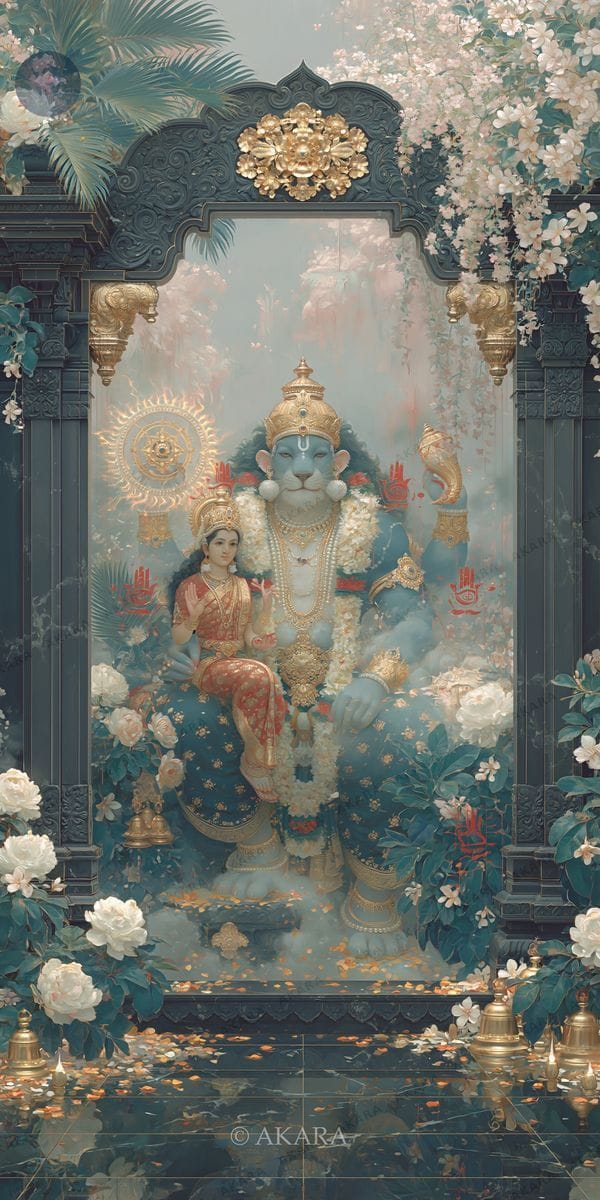
On a morning marked by Yoga Siddha — the nakshatra of achievement — there is no more fitting inquiry than this: What, precisely, is Sanatana Dharma? The phrase is spoken daily by millions, debated in legislatures, and whispered in temple courtyards. Yet its meaning is as vast and as quiet as the sky above the Ganga. It is not a religion in the Western sense — no single founder, no single creed, no single scripture binding all its followers. It is, at its root, a description of reality itself: the eternal order that sustains all life, all consciousness, all creation.
The Meaning of the Words
Sanatana Dharma (Sanskrit: सनातन धर्म) is composed of two words, each carrying immense weight. Sanatana derives from the root san (always) and tan (to stretch or endure), yielding the meaning 'that which has always existed and will always exist' — eternal, beginningless, endless. Dharma comes from the root dhṛ (to hold, to sustain), and refers to the cosmic law, the moral order, the right way of living that upholds both the individual and the universe. Together, the compound means, most precisely, 'the eternal law that sustains all things.' It is what modern physics might grope toward when it speaks of the fundamental forces governing reality — except that Sanatana Dharma situates consciousness, ethics, and the sacred at the very centre of that framework.
The term that the world commonly uses — Hinduism — is a geographical designation, derived from the Persian rendering of Sindhu, the river now called the Indus. It was applied by outside observers to the diverse spiritual traditions of the Indian subcontinent. Sanatana Dharma, by contrast, is the tradition's own self-description: not a religion bounded by a river valley, but a universal truth available to every human being in every age.
Roots in Scripture and Tradition
The foundational texts of Sanatana Dharma are the Vedas — four in number (Rigveda, Samaveda, Yajurveda, Atharvaveda) — which tradition regards as apauruṣeya, 'not of human authorship,' but heard by great sages (ṛṣis) in deep meditative states. They contain hymns, ritual instructions, and, in their culminating sections called the Upaniṣads, some of the most penetrating philosophical inquiry ever recorded. 'Ekam sat viprā bahudhā vadanti' — 'Truth is one; the wise call it by many names' (Rigveda 1.164.46) — is perhaps the single sentence most representative of the Sanatana vision: pluralist not out of indifference, but out of a recognition that the Absolute (Brahman) is inexhaustible.
Beyond the Vedas, the tradition draws on the Itihāsas (the epics Rāmāyaṇa and Mahābhārata), the eighteen Purāṇas, the Bhagavad Gītā, the Yoga Sūtras, the Dharmaśāstras, and a vast river of regional vernacular literature in Tamil, Kannada, Bengali, Marathi, and dozens of other tongues. No single text is binding on all practitioners; the tradition is, as the philosopher Ramanujan once observed, 'a context-sensitive' way of life rather than a context-free rulebook.
The Three Paths and the One Goal
Sanatana Dharma recognises that human beings differ in temperament, capacity, and spiritual inclination. Accordingly, it offers not one highway but a braided network of paths leading to the same summit: mokṣa, liberation from the cycle of birth and death (saṃsāra).
- Jñāna Mārga (the path of knowledge): Through inquiry, discrimination (viveka), and meditation, the seeker realises the identity of the individual self (ātman) with universal consciousness (Brahman). This is the teaching of Advaita Vedānta, given its most brilliant systematic expression by Ādi Śaṅkarācārya in the eighth century CE.
- Karma Mārga (the path of action): Action performed without attachment to its fruits, as taught in the Bhagavad Gītā — 'Let right deeds be thy motive, not the fruit which comes from them' — purifies the mind and exhausts accumulated karma.
- Bhakti Mārga (the path of devotion): Perhaps the most widely practised in the present age, bhakti — wholehearted, loving devotion to the Divine in a personal form — dissolves the ego through surrender. The Bhāgavata Purāṇa presents it as the supreme path for this era of Kali Yuga. The saints of the Bhakti movement — Mīrābāī, Tukārām, Kabīr, Āṇḍāḷ, Nāmdev — sang this path alive across centuries and continue to reverberate in temples and homes today.
These three paths are not mutually exclusive; most practitioners weave all three into their daily lives.
The Practical Shape of the Tradition
Sanatana Dharma is not merely philosophy — it is a lived daily rhythm. The day begins with prātaḥ smaraṇa, remembrance of the Divine upon waking. Meals are offered to the deity before eating, rain is honoured in its season, the cow is treated with reverence, and death is met with careful ritual that acknowledges the soul's onward journey. The pañcāṅga (the sacred almanac — of which today's entry, Krishna Chaturdashi in Nakshatra Magha, is an example) guides the timing of worship, fasting, and celebration, aligning the human calendar with celestial rhythms.
The tradition also carries within it a sophisticated understanding of ecology. Rivers are mātā (mother); mountains are sacred; forests are the dwelling of sages. The concept of Ṛta — cosmic order, the precursor to the very word 'right' and 'ritual' in English — implies that human wellbeing depends on living in harmony with nature, not in dominion over it.
Sanatana Dharma in the Present Day
In an age of fragmentation — of shortened attention spans, ecological anxiety, and a hunger for meaning — the relevance of Sanatana Dharma is not merely cultural but existential. Its insistence that consciousness is primary, that the universe is purposeful, and that every human being carries within them an indestructible divine spark (ātman) offers not escapism but profound orientation.
At Akara, we approach this tradition as living devotees, not as curators of a museum. Whether through a devotional wallpaper of Śrī Lakṣmī, a meditative rāga composed in honour of Śiva, or an article like this one — the intention is the same: to bring the timeless into the present moment, to make the eternal accessible. Hindu spirituality is not a relic; it is a living river, and every seeker who steps into it adds to its flow.
A Reflection
The Mahābhārata — itself a treasury of Sanatana wisdom — offers a definition of dharma that is disarmingly simple: 'Dharmo rakṣati rakṣitaḥ' — 'Dharma protects those who protect it.' To practise Sanatana Dharma is not to memorise doctrines but to orient every thought, word, and action toward what is true, kind, and life-sustaining. That is the eternal way. It was here before us, and it will hold the world long after our names are forgotten — as vast and as patient as the sky on a Magha morning.
Dharma protects those who protect it — Mahābhārata
शुक्लाम्बरधरं विष्णुं शशिवर्णं चतुर्भुजम्। प्रसन्नवदनं ध्यायेत् सर्वविघ्नोपशान्तये॥ Shuklambara-dharam Vishnum shashi-varnam chatur-bhujam. Prasanna-vadanam dhyayet sarva-vighno-pasantaye.
Meditate on Vishnu, clad in white, of moon-like complexion, with four arms and a serene face — for the removal of all obstacles.
Questions & answers
What does Sanatana Dharma literally mean?
Sanatana Dharma (Sanskrit: सनातन धर्म) means 'the eternal law that sustains all things.' Sanatana means beginningless and endless; Dharma means the cosmic order or right way of living derived from the root dhṛ, 'to hold or sustain.'
Is Sanatana Dharma the same as Hinduism?
They broadly refer to the same tradition, but with different emphases. Hinduism is a geographical label coined by outsiders based on the name of the Indus (Sindhu) river. Sanatana Dharma is the tradition's own self-description, stressing its universal, eternal character rather than any regional or ethnic identity.
What are the main scriptures of Sanatana Dharma?
The foundational texts are the four Vedas (Rigveda, Samaveda, Yajurveda, Atharvaveda) and their philosophical culmination in the Upanishads. The tradition also draws on the Bhagavad Gita, the Ramayana, the Mahabharata, the Puranas, and a vast body of vernacular devotional literature.
What are the three main paths in Sanatana Dharma?
The tradition describes three principal paths to liberation (moksha): Jnana Marga (the path of knowledge and inquiry), Karma Marga (the path of selfless action), and Bhakti Marga (the path of loving devotion to the Divine). Most practitioners integrate elements of all three in daily life.
How is Sanatana Dharma relevant in modern life?
Sanatana Dharma offers practical tools — meditation, ethical living, devotional practice, and alignment with natural rhythms — that address the modern crises of meaninglessness, ecological disconnection, and inner fragmentation. Its core teaching that every being carries a divine, indestructible self (atman) provides both dignity and direction in contemporary life.