Bhadrapada Amavasya 2026: When Darkness Becomes the Doorway
On the new-moon night of Bhadrapada — when the sky holds no light — Sanatana Dharma asks us to turn inward, honour our ancestors, and meet the formless face of Mahadeva.
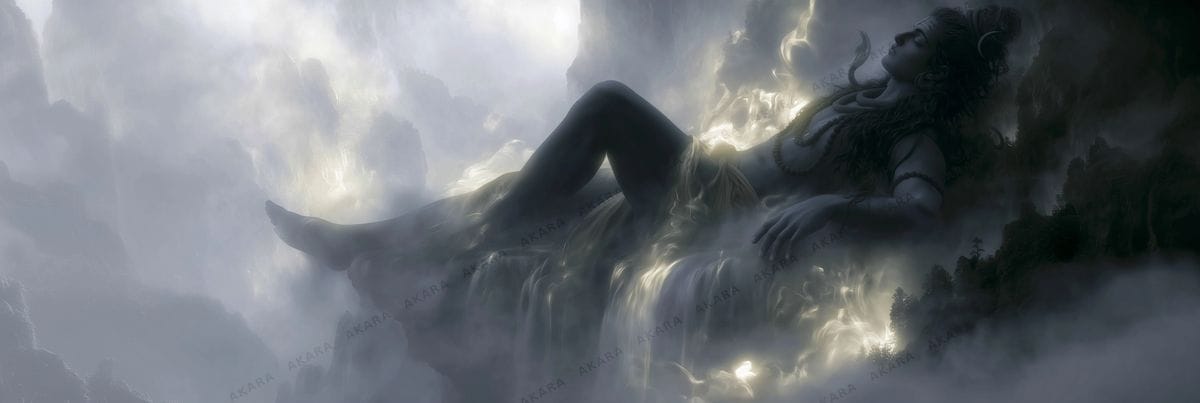
There is a paradox at the heart of every Amavasya: the darkest night of the month is also, by every ancient reckoning, one of its most potent. Tonight, as the Bhadrapada new moon reaches its full depth — the tithi having begun at 10:33 AM on 10 September (IST) and stretching through 8:57 AM on 11 September 2026 — the sky is stripped of reflected light, and something older than moonshine is available to those who know how to listen. The nakshatra is Purva Phalguni, its presiding deity Bhaga, lord of delight and inheritance. The yoga is Sadhya — that which is to be accomplished. And the Sun, enthroned in Simha (Leo), burns with sovereign clarity even as the night erases every lesser lamp. This is Bhadrapada Amavasya: a night worn, in different regions, under four different names, but pointing always toward the same still centre.
What Amavasya Actually Means
<CITE:4-8>Amavasya is a Sanskrit word referring to the lunar phase of the dark moon</CITE> — specifically, <CITE:12-11>the 30th tithi of Krishna Paksha when the moon is not visible from Earth.</CITE> The word itself is formed from ama (together, at home) and vasya (dwelling) — the moment when the Sun and Moon, in Vedic cosmology, share the same celestial house. <CITE:4-5>It also marks the beginning of Shukla Paksha, the bright fortnight, of the lunar month,</CITE> so what appears as an ending is, by astronomical definition, also a beginning. <CITE:9-6,9-7>In Hindu philosophy, the Moon governs the mind and emotions; the absence of the moon during Amavasya signifies detachment from worldly distractions and an opportunity for deep spiritual reflection.</CITE>
<CITE:12-12>It is the most important day for Pitru (ancestral) rites in Sanatana Dharma.</CITE> But it is equally a day for the seeker — for the one who, finding no external light to follow, must locate the luminance within.
Four Names, One New Moon: This Bhadrapada Amavasya
This particular Amavasya is remarkable for the richness it carries in a single tithi. <CITE:31-4,31-5,31-6,31-7,31-8,31-9>There is one Amavasya in the Hindu year that wears four different names in four different parts of India. In Maharashtra it is Pola, the day bullocks are bathed, painted, and garlanded. In the Hindi belt it is Pithori Amavasya, when mothers fast for their children before sixty-four goddesses shaped from flour. To priests and pandits everywhere it is Kushotpatini Amavasya — the single day of the year on which kusha grass is pulled from the earth to sanctify every ritual for the next twelve months. And in the panchang it is simply Bhadrapada Amavasya, a powerful day for tarpan to the ancestors. All four fall on the same new moon this year.</CITE>
For those in Maharashtra and Pune — where the Akara Times itself is rooted — the day carries a special texture. <CITE:24-10>In Maharashtra, this Amavasya is also closely linked with the Pola festival, where bullocks are worshipped, signifying a broader celebration of fertility.</CITE> <CITE:28-4>Falling on Bhadrapada Amavasya in the Hindu calendar, Pithori Amavasya is dedicated to Pithori Mata, a form of the Divine Mother worshipped by married women for their children's health, protection, and longevity.</CITE> <CITE:30-9>According to legend, the vrat was narrated by Goddess Parvati to the wife of Lord Indra, emphasising its importance for protecting children.</CITE> The tithi thus holds, simultaneously, the masculine principle of dissolution (Shiva), the feminine principle of protection (Shakti), and the ancestral chain that links the living to those who came before.
Sadhya — that which is to be accomplished. The yoga of this Amavasya reminds us: tonight is not for idle waiting. It is for the conscious work of remembrance, surrender, and renewal.
Shiva and the Dark Moon: The Formless at the Threshold
Why does Amavasya belong, so naturally, to Mahadeva? The connection runs deep in both mythology and philosophy. <CITE:18-7,18-8,18-9>According to the Puranas, Lord Shiva adorns the moon upon His forehead. In astrology, the Moon is the significator of the mind. Since the moon remains invisible on Amavasya, the human mind can often feel restless, disturbed, or heavy.</CITE> It is precisely then that Chandrashekhara — Shiva, the moon-crested one — becomes the right refuge. <CITE:18-10>When we worship Chandrashekhara on Amavasya, He grants stability to our mind and brings an end to mental afflictions.</CITE>
The deeper philosophical resonance is even more striking. <CITE:19-8,19-9>The Shiva Purana portrays Lord Shiva as the Supreme Being, the formless and transcendental reality from which the entire universe arises and dissolves. It depicts him as the cosmic dancer (Nataraja), the ascetic yogi (Adiyogi), the destroyer of ignorance (Aghora), and the benevolent deity (Rudra).</CITE> <CITE:17-2>The text emphasises the worship of the Shiva Linga as a representation of the formless, infinite aspect of Shiva.</CITE> Amavasya, the night without form, without reflection, without the comforting borrowed light of the moon, is a direct sensory encounter with exactly that formlessness. The sky itself becomes a linga of darkness — the nirguna, the attributeless — inviting the bhakta to step past the name and the form into the boundless.
<CITE:20-5>When external light (the moon) disappears, the internal light — consciousness, Shiva — can be more directly experienced. The darkness of Amavasya is like the void in which the Jyotirlinga appeared. True spiritual light does not depend on external conditions.</CITE> This is not a night to fear. It is a night to enter.
<CITE:21-5,21-6>Shiva's destructive aspect is frequently misconstrued as fearsome or malevolent, yet Shaiva philosophy reveals it as profoundly benevolent. Samhara eradicates impurity, ego (ahamkara), and stagnation, fostering spiritual growth and renewal.</CITE>
How to Observe: Vrat, Puja, and Pitru Tarpan
The observance of Amavasya, rooted in bhakti and dharma, moves through the day in a natural rhythm. Here is a guide drawn from multiple regional traditions:
Dawn — Snanam and Sankalpa Rise before or at sunrise. <CITE:15-3>The day traditionally begins with a ritual bath, followed by the worship of deities like Lord Vishnu or Lord Shiva.</CITE> A simple sankalpa (declaration of intent), whispered over folded hands, anchors the entire day's practice.
Morning — Pitru Tarpan <CITE:11-1,11-2>After sunrise, the most important ritual is Pitru Tarpan, during which devotees offer water mixed with sesame seeds and rice to honour their ancestors. Many families also perform Pind Daan, offering rice balls to departed souls.</CITE> <CITE:11-9>The new moon day is believed to be the time when the souls of ancestors draw closer to the earthly realm.</CITE> For those without access to a river or tank, <CITE:31-19,31-20>take clean water in a copper or brass vessel, add black til and a blade of kusha, face south, and offer the water into a wide plate while reciting your ancestors' names. Empty the plate at the root of a tree or a tulsi plant afterwards.</CITE>
Midday — Dana (Charity) <CITE:3-5>Good deeds, charity, or donations performed on this day are believed to multiply in spiritual merit.</CITE> <CITE:18-14>Donating black sesame seeds and food grains on this day pleases both Mahadev and the ancestors.</CITE> Feed those in need, or contribute quietly to a cause that your own ancestors would have valued.
Evening — Shiva Puja and Deepdan <CITE:11-6>Some communities observe night-long vigils or perform Shiva puja on this auspicious day.</CITE> Offer bilva (bael) leaves at a Shivalinga, pour a slow abhisheka of water or raw milk over it, and settle into mantra. <CITE:18-13>Light a lamp (Diya) under a Peepal tree and in a Shiva temple.</CITE> The five-syllable mantra Om Namah Shivaya — the Panchakshara Stotra, lauded in the Shiva Purana itself — is the simplest, most complete offering. Each syllable (Na, Ma, Shi, Va, Ya) corresponds to the five elements: earth, water, fire, air, and space. To chant it on Amavasya, in the dark, is to return every borrowed element to its source.
What to Avoid <CITE:31-22,31-23>Avoid arguments, harsh words, non-vegetarian food, alcohol, cutting hair or nails, and starting new ventures. Amavasya is a day for quiet, charity, and remembrance rather than celebration.</CITE>
The Panchang Speaks: Nakshatra, Yoga, and the Solar Throne
The panchang today deepens the significance of the vrat. Nakshatra Purva Phalguni, pada 3, is associated with Bhaga — a Vedic Aditya who governs ancestral wealth, lineage, and the blessings that pass from parent to child. There is a beautiful consonance here: a nakshatra of inheritance on a day dedicated to honouring those from whom we have inherited everything. Yoga Sadhya carries the sense of that which can now be achieved — suggesting that the spiritual work of this night will not be wasted. And with the Sun in Simha, the sign of sovereign self-expression, the soul is asked to be both humble before its ancestors and luminous in its own right.
<CITE:3-7>In Vedic astrology, Amavasya is linked to strong intuition and subconscious awareness.</CITE> The veil between the conscious and the deeper layers of the self thins on this night. Meditation, inner examination, and mantra japa find fertile ground in this stillness.
A Closing Reflection
<CITE:3-15>The darkness of Amavasya symbolises introspection and the beginning of new spiritual beginnings.</CITE> In the Akara understanding, every new moon is a blank page — not empty, but potential. Sanatana Dharma does not ask us to deny the dark. It asks us to inhabit it with awareness, to light one small lamp, to pour one cup of water southward in gratitude, to speak the names of those who carried us here, and to chant — quietly, steadily — the five syllables that have anchored seekers for millennia.
The moon will return. It always does. But tonight, Lord Shiva — the Chandrashekhara who wears what is absent upon His brow — is all the light we need.
The sky itself becomes a linga of darkness — the nirguna, the attributeless — inviting the bhakta to step past the name and the form into the boundless.
गिरिशं गंगाधरं सोमशेखरम् giriśaṃ gaṅgādharaṃ somaśekharam
the mountain lord who holds ganga and wears the moon as his crown. bholenath makes nature his temple.
Questions & answers
What is the exact tithi timing for Bhadrapada Amavasya 2026?
According to the Ujjain Panchang, the Amavasya tithi begins at 10:33 AM on 10 September 2026 and ends at 8:57 AM on 11 September 2026 (IST). Pithori Amavasya vrat is observed on 10 September, while the main Bhadrapada Amavasya rituals including Pitru Tarpan are performed on 11 September. Always verify with your local panchang, as timings can vary slightly by region.
Why is Shiva especially worshipped on Amavasya?
According to the Puranas, Lord Shiva bears the moon upon His forehead — the title Chandrashekhara reflects this. When the moon vanishes on Amavasya, the mind becomes unsettled. Worshipping Shiva (Mahadeva) on this night is said to restore mental equilibrium and draw the devotee toward the formless, infinite reality that Shiva represents. The Shiva Purana describes Him as the transcendental ground from which all creation arises and into which it dissolves — the void of Amavasya is a direct encounter with that truth.
How do I perform Pitru Tarpan at home if I cannot reach a river?
Take a clean copper or brass vessel filled with water, add black sesame seeds (kala til) and a blade of kusha grass. Face south — the direction of the ancestors — and pour the water slowly into a wide plate while speaking the names of your departed family members. After the offering, carry the water and pour it at the root of a tree or a tulsi plant. This simple home tarpan is considered valid across most sampradayas.
What is Pithori Amavasya and how is it different from Bhadrapada Amavasya?
They are the same tithi observed with different regional emphases. Pithori Amavasya — named from 'pitha' (flour) — is primarily observed in North and Central India by married women, who fast and worship the 64 Yoginis and Saptamatrikas using flour idols, praying for their children's health and longevity. In Maharashtra, the same new moon is called Pola, honouring cattle and agricultural abundance. In both cases, Pitru Tarpan and charity are also performed, making the day spiritually layered.
What mantra is recommended for Shiva on Amavasya, and how should it be chanted?
The Panchakshara mantra — Om Namah Shivaya — is the traditional choice, praised in the Shiva Purana and accessible to every devotee regardless of initiation. On Amavasya, it is best chanted after evening puja, ideally in front of a Shivalinga or a lit ghee lamp, using a rudraksha mala of 108 beads. The five syllables Na-Ma-Shi-Va-Ya correspond to the five elements (earth, water, fire, air, and space), making the mantra both a cosmic prayer and a mapping of the self. Chanting 108 times — or a multiple thereof — in the quiet of the new-moon night is considered especially meritorious.