The Meaning of Om (Aum): The Primordial Sound Explained
From the Mandukya Upanishad to the morning puja, Om is not merely a word — it is the universe itself, compressed into a single syllable.
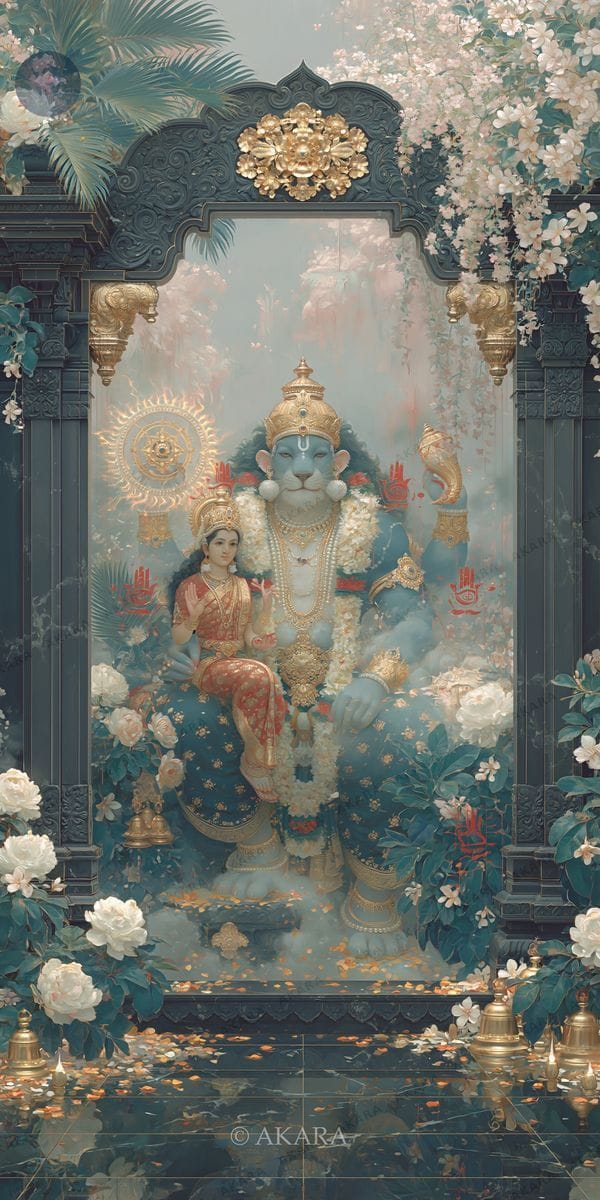
Before the first star ignited and before the first breath was drawn, something resonated. The ancient seers of the Vedic tradition called it Pranava — the primordial sound that underlies all existence. We know it today by a name so universal that even those unfamiliar with Sanatana Dharma recognise its shape and its hum: Om, or in its more complete transliteration, Aum. Yet familiarity has a way of blunting wonder. This explainer sets out to restore that wonder — to unpack, carefully and faithfully, what Om actually means, where it comes from, and why it remains one of the most potent objects of devotion and meditation in any living spiritual tradition.
What Is Om? Roots and Transliteration
The syllable is written in Devanagari as ॐ and in romanised Sanskrit as both Om and Aum. Both spellings are correct, though Aum is the more phonetically precise rendering. In Sanskrit phonology, the vowel O is a natural fusion of the short vowels A (अ) and U (उ); when the nasal resonance M (म्) — technically the anusvara — is added, the full syllable becomes A-U-M, the three elements traditionally held to mirror three fundamental states of consciousness and three divisions of sacred time.
The word Pranava (प्रणव) derives from the root pra-nu, meaning "to resound" or "to reverberate mightily." Some scholars trace it also to prāṇa (life-force), suggesting that Om is not merely sound but the very breath of the cosmos. The Taittiriya Upanishad calls it udgītha, the high chant at the heart of the Sama Veda. The Yoga Sutras of Patanjali (I.27) identify it directly with Ishvara: tasya vācakaḥ praṇavaḥ — "The Pranava (Om) is His designator."
The Three Syllables and What They Represent
The Mandukya Upanishad — twelve verses, considered one of the most concentrated doctrinal texts in all of Vedanta — opens with the declaration: Oṃ ity etad akṣaram idaṃ sarvam — "Om: this syllable is all this." It then maps the three components of Aum onto the four states of consciousness (avasthā):
- A (अ) corresponds to Vaishvanara, the waking state (jagrat). It is the realm of gross experience, the world we navigate with open eyes.
- U (उ) corresponds to Taijasa, the dreaming state (svapna). Here the mind creates its own luminous interior universe.
- M (म्) corresponds to Prājña, the deep-sleep state (suṣupti). Thought dissolves; the individual touches, unknowingly, the bliss of the Self.
- **The silence that follows — the fourth quarter (turīya)** — is what the three syllables together point toward: pure, undivided awareness, Brahman itself, beyond characterisation.
This four-part structure is not mere metaphysical poetry. Meditators across generations have used it as a precise map: chant Aum slowly, linger on each phoneme, and let the trailing silence become the meditation itself. The sound is the ladder; the silence is the destination.
The Sacred Symbol: Reading the Shape of ॐ
The written form of the Om symbol is one of the most recognised icons on earth, yet its internal geometry carries meaning that deserves slow attention.
The symbol has four visible parts and one subtle mark:
1. The large lower curve represents the waking state (jagrat), the broadest and most outwardly engaged of our experiences. 2. The upper curve represents the deep-sleep state (suṣupti). 3. The middle curve, jutting to the right, represents the dream state (svapna). 4. The dot (bindu) at the apex represents turīya — the fourth, transcendent state, the still point of the turning world. 5. The curved line beneath the dot is the māyā veil, the illusion that separates the individual from the turīya. The dot floats above it, untouched.
To wear or display the Om symbol, then, is not mere aesthetic choice. In Hindu spirituality it is an act of allegiance — a quiet declaration that one acknowledges the primacy of consciousness over matter.
Om in Scripture, Ritual, and the Living Tradition
Every Vedic mantra traditionally opens and closes with Om. The Bhagavad Gita (17.23) places it at the summit of sacred utterance: Om tat sat — "Om, That, Truth" — these three are declared the triple designation of Brahman. The Chandogya Upanishad (1.1.1) calls it udgītha and devotes its opening chapters to extolling its glory.
In daily temple worship (puja), the priest intones Om before every sacred action — lighting the lamp, offering flowers, waving the ārati flame. In classical music, the ālāpa (the slow, improvised opening of a raga) is considered the musician's Om — the formless exploration before form arrives. Yoga practitioners will recognise it as the customary opening and closing of any class, though it reaches far deeper than the studio.
In the Shaiva tradition, Om is identified with the Nāda-Brahman — Brahman as primordial sound-vibration. For Vaishnavas, it is the first syllable of the Ashtakshara mantra Om Namo Narayanaya. For Shaktas, it precedes every invocation of the Devi. The symbol thus belongs equally to all streams of Sanatana Dharma — a rare universal.
Practical Guidance: Meditating with Om
For the seeker who wishes to move from understanding to practice, tradition offers a simple and tested method:
1. Posture: Sit with the spine erect — on the floor, in a chair, wherever you can be still. Rest the hands on the knees, palms upward or downward. 2. Breath: Take three slow, conscious breaths to settle the nervous system. 3. Chant: Inhale fully. On the exhale, sound Aum — beginning with the open A resonating in the belly, transitioning to U rising through the chest, closing with M humming at the lips and skull, then releasing into silence. 4. Linger: Do not rush back into the next breath. Sit with the silence. This pause is the practice. 5. Duration: Even three to seven repetitions, done with full attention, carry measurable calm. Traditional practice recommends multiples of 108, using a japa mālā (rosary of 108 beads).
Modern neuroscience has noted that the vibration of M (the anusvara hum) stimulates the vagus nerve, reducing cortisol and activating the parasympathetic nervous system. What the Upanishads mapped in consciousness, physiology confirms in the body.
A Closing Reflection
On this Shukla Tritiya, with the moon in Chitra nakshatra — the star of the architect and the artist — it feels fitting to contemplate Om as both blueprint and building material of the cosmos. Akara, the first letter A, is itself considered the seed of Om in many Vedantic analyses; it is from Akara that all other sounds — and thus all of manifest creation — unfold.
Akṣarāṇām akāro'smi — "Among letters, I am the letter A," declares Krishna in the Bhagavad Gita (10.33).
To understand Om is not a finishing line but a beginning. Every honest inquiry into its nature leads inward, toward the silence that the seers of the Upanishads spent lifetimes trying to point us toward. That silence, they insisted, is not emptiness. It is the fullest thing there is.
The Pranava (Om) is His designator — Yoga Sutras of Patanjali, I.27
शुक्लाम्बरधरं विष्णुं शशिवर्णं चतुर्भुजम्। प्रसन्नवदनं ध्यायेत् सर्वविघ्नोपशान्तये॥ Shuklambara-dharam Vishnum shashi-varnam chatur-bhujam. Prasanna-vadanam dhyayet sarva-vighno-pasantaye.
Meditate on Vishnu, clad in white, of moon-like complexion, with four arms and a serene face — for the removal of all obstacles.
Questions & answers
What is the correct spelling — Om or Aum?
Both are correct. 'Om' is the conventional English rendering, while 'Aum' is more phonetically precise, reflecting the three constituent Sanskrit phonemes A, U, and M. In Devanagari it is written ॐ.
What does Om mean in Hinduism?
Om (Aum) is the Pranava — the primordial sound that the Vedic tradition identifies with Brahman, the ultimate reality. The Mandukya Upanishad teaches that the syllable encompasses all three states of consciousness (waking, dreaming, deep sleep) and points toward the fourth, transcendent state called turīya.
Why is Om chanted at the beginning and end of mantras?
Every Vedic mantra is traditionally framed by Om because the syllable is considered the direct designator of the Divine (Ishvara), as stated in Patanjali's Yoga Sutras. Chanting it first sanctifies the space and intention; chanting it last seals the offering.
What do the parts of the Om symbol (ॐ) represent?
The lower curve represents the waking state, the upper curve represents deep sleep, the middle curve represents the dream state, the dot (bindu) represents the transcendent fourth state (turīya), and the curved line beneath the dot represents the veil of maya that separates ordinary awareness from liberation.
How long should I chant Om in meditation?
Even three to seven slow, attentive repetitions are beneficial. Traditional practice uses a japa mālā of 108 beads for a full round. The key is quality over quantity — sounding each of the three phonemes (A-U-M) consciously and resting in the silence that follows each chant.