Pitru Paksha 2026: The Fortnight When Heaven Listens
As the month of Bhadrapada ripens, Hindu families worldwide turn inward — to remember, to offer, and to be blessed by those who came before.
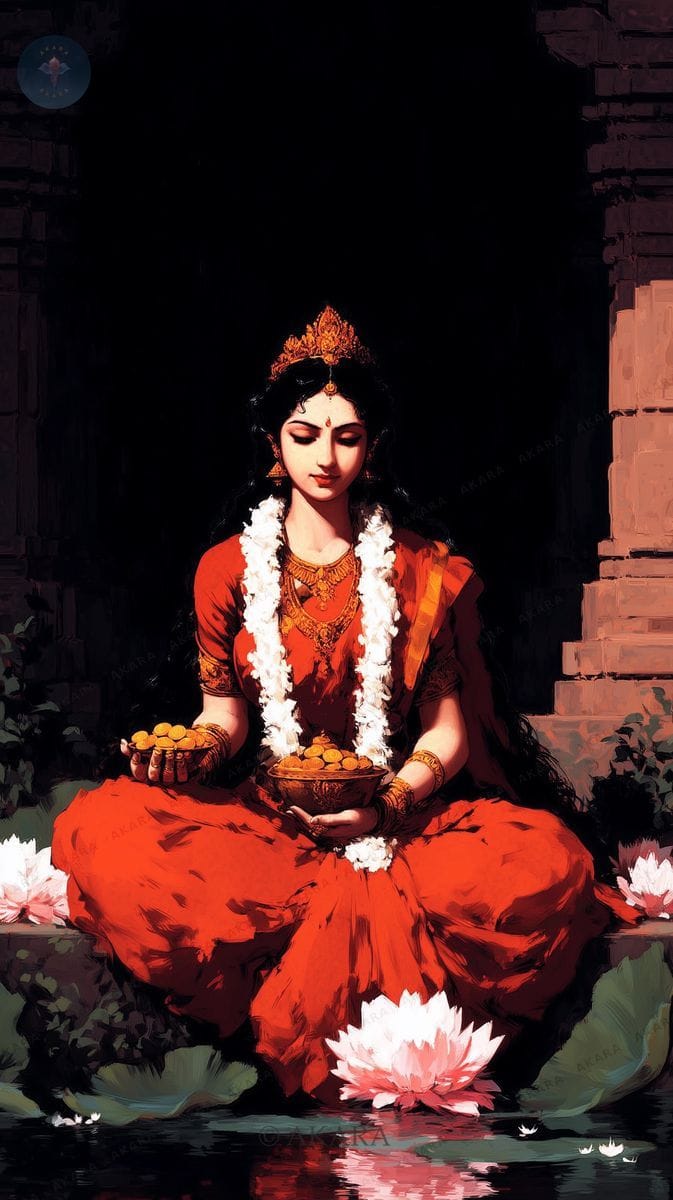
Somewhere between the last echoes of Ganesh Chaturthi's drums and the first lamps of Navratri, the Hindu calendar exhales into a quiet, luminous pause. It is Pitru Paksha — the Fortnight of the Ancestors — and it arrives this year on 26 September, asking of us not celebration but remembrance, not festivity but filial love. For sixteen lunar days, Sanatana Dharma invites every seeker to look backwards across the river of time and offer a handful of sesame-laced water to those whose blood and karma we carry forward.
The Cosmic Architecture of Grief and Gratitude
The word Pitru (Sanskrit: पितृ) means 'ancestor' or 'father,' and Paksha (पक्ष) means 'fortnight' — a lunar half-month. Together, Pitru Paksha names a sacred interval that falls in the waning half of the month of Bhadrapada, when the sun, as the Vedic tradition observes, moves through Virgo (Kanya Rashi). <cite index="22-2,22-5">According to Vedic astrology, this time of year opens a gateway between the physical world — Bhu-Loka — and the ancestral realm — Pitru-Loka — allowing ancestors to draw near their descendants and receive offerings.</cite>
This is not mythology dressed as metaphor. For millions of devotees, it is cosmological fact: the subtle planes thin during this fortnight, and the whispered prayers of the living reach the ears of the departed with unusual clarity. The tradition is ancient, enshrined in the Markandeya Purana and alluded to throughout the Mahabharata, and it remains as alive today as it was at the banks of the Ganga four thousand years ago.
When Does Pitru Paksha Fall in 2026?
<cite index="24-3,24-4,24-5">Pitru Paksha 2026 runs from Saturday, 26 September to Saturday, 10 October — a sixteen-lunar-day period in the Bhadrapada-Ashwin fortnight when Hindu families offer water, food, and rice balls to departed ancestors. The last day, 10 October, is Sarva Pitru Amavasya, the most important day for Shraddha.</cite>
For those observing this sacred fortnight, the Panchang determines everything. <cite index="18-5">The specific Shraddha date for an individual ancestor is generally determined by the lunar Tithi of their death.</cite> This means that the fortnight is not a single undifferentiated block of mourning but a finely calibrated calendar in which each day honours souls who departed on that particular lunar date. Families consult their local panchang or a trusted purohit (priest) for exact muhurtas — auspicious timings — which vary by city and latitude.
The Three Sacred Acts: Shraddha, Tarpan, Pind Daan
The devotional architecture of Pitru Paksha rests on three interlocking pillars.
Shraddha (श्राद्ध) is the overarching ritual ceremony performed in memory of the departed. The word shares its root with shraddha (श्रद्धा) — faith, sincerity, reverence. <cite index="18-12,18-13,18-14">Hindu tradition places great importance on remembering those who came before and acknowledging their role in the family's continuity. Shraddha rituals are therefore not simply about offerings; they are a way of expressing faith, gratitude, remembrance, and familial responsibility. Many families use this period to pray for the peaceful onward journey of departed souls and to perform charitable acts in their memory.</cite>
Tarpan (तर्पण) — from the root tṛp, 'to satisfy' — is the offering of water mixed with sesame seeds (tila), barley, and kusha grass, poured cupped in the hands toward the south, the direction of Pitru-Loka. <cite index="20-9">Tarpan is especially performed on Mahalaya Amavasya, with a holy bath in the Ganga or another sacred river followed by offerings of sesame and water.</cite> Even those far from a sacred river may perform Tarpan at home with a clean vessel of water, facing south, reciting the gotra (lineage) and name of the departed.
Pind Daan (पिण्ड दान) is the offering of rice balls — pinda — shaped from cooked rice, sesame, ghee, honey, and occasionally barley. <cite index="19-14">Together with Tarpan, Pind Daan is performed to express gratitude and ensure the ancestors' souls find peace.</cite> The most celebrated site for Pind Daan is Gaya in Bihar, where the Vishnupada temple stands — a place so potent that, as the Ramayana records, Lord Rama himself performed Shraddha here for his father Dasharatha. <cite index="23-14">The story of Rama performing Shraddha at Gaya elevates the significance of sacred places in this ritual tradition.</cite>
What the Scriptures Say
The Markandeya Purana states in a celebrated verse that ancestors who are satisfied through Shraddha bestow upon their descendants ayu (long life), praja (progeny), dhana (wealth), vidya (knowledge), svarga (heavenly merit), moksha (liberation), and sukha (happiness). This is not transactional religion — it is the acknowledgement of an unbroken chain of being. We are not self-made souls. We arrive carrying the karma, the blessings, the unresolved longings of generations. Pitru Paksha is the annual moment when Sanatana Dharma asks us to consciously honour that chain rather than sleepwalk through it.
<cite index="19-8,19-9,19-10">During these days, it is believed that the spirits of ancestors descend from Pitruloka to Earth, residing with their descendants. The rituals performed, collectively known as Shraddha, are meant to nourish, protect, and please these ancestral souls, ensuring their wellbeing. The act of Shraddha is itself a demonstration of shraddha — faith and reverence.</cite>
The Garuda Purana, widely read during these days, speaks at length of the subtle body's journey after death and the role of Pitru Karma — ancestral duty — in determining the quality of that journey. It is worth noting that the tradition honours not only blood relatives but also teachers, spiritual preceptors, and those who shaped us morally and intellectually — a profoundly inclusive vision of 'family.'
Sattvic Living and Sacred Simplicity
Pitru Paksha calls devotees to adopt a sattvic (pure, light) mode of living for its duration. <cite index="23-15,23-16">Offerings include simple sattvic foods like kheer, dal, rice preparations, and pumpkin, served on banana leaves. During this period, one avoids meat, eggs, onions, garlic, alcohol, and tamasic or stale items to maintain purity.</cite>
<cite index="23-17,23-18,23-19">Pitru Paksha is a solemn period of remembrance. Celebrations like weddings, engagements, housewarmings, and new purchases are traditionally set aside, as they disrupt its sacred atmosphere. The focus remains on ancestral duty, not personal milestones.</cite>
For the diaspora Hindu — whether in London, Singapore, Toronto, or Sydney — the observance need not require a river or a priest. A clean space, a vessel of water, sesame seeds, a photograph of the departed, and genuine bhakti (devotion) are sufficient. The tradition is robust enough to travel across oceans; it is the inner sincerity that the ancestors recognise, not the grandeur of the setting.
The Akara Reflection: Gratitude as Spiritual Practice
In a world that glorifies the new — new products, new identities, new beginnings — Pitru Paksha stands as a counter-cultural act of breathtaking depth. It says: before you move forward, turn around and bow. It teaches that dharma is relational: we owe a debt — Pitru Rin (पितृ ऋण), the ancestral debt — to those through whom we arrived. To honour them is not to be shackled by the past but to be rooted in it, the way a great banyan tree is rooted: the deeper the roots, the wider the shade it can offer the world.
<cite index="22-6">Performing these rituals for departed ancestors creates lasting peace for them and provides the family with Pitru Ashirwad — blessings from the ancestors.</cite> That blessing, the tradition assures us, flows forward through the very children and grandchildren in whose hands tomorrow rests.
As the Panchang today marks Shukla Chaturthi under the gentle star of Swati — a nakshatra associated with independence, travel, and the wind that scatters seeds — let us remember that we ourselves are seeds, scattered forward by the hands of those who came before. Pitru Paksha is the season to water the roots.
Before you move forward, turn around and bow — Pitru Paksha is the season to water the roots.
शान्ताकारं भुजगशयनं पद्मनाभं सुरेशम् śāntākāraṃ bhujagaśayanaṃ padmanābhaṃ sureśam
The peaceful one resting on the serpent, lotus-naveled lord of the gods. Vishnu in his element — holding the universe together while looking effortlessly serene.
Questions & answers
When does Pitru Paksha begin and end in 2026?
Pitru Paksha 2026 begins on Saturday, 26 September 2026 (Purnima Shraddha) and concludes on Saturday, 10 October 2026, with Sarva Pitru Amavasya — the most important day for ancestral rites. Exact timings vary by city, so consult your local panchang.
What is the difference between Shraddha, Tarpan, and Pind Daan?
Shraddha is the overall ritual ceremony of honouring ancestors, performed with faith and devotion. Tarpan is the offering of water mixed with sesame seeds and barley to satisfy the thirst of the departed. Pind Daan is the offering of rice balls (pinda) made from cooked rice, sesame, ghee, and honey — symbolically nourishing the subtle body of the ancestor.
Can I perform Shraddha at home without a priest or a sacred river?
Yes. While performing Tarpan at a sacred river like the Ganga or at Gaya is considered especially meritorious, sincere home observance is valid. A clean space, a vessel of water, sesame seeds, kusha grass, and genuine devotion are the essential ingredients. A purohit can guide the mantras if needed, and many temples now offer virtual or community Shraddha sessions for the diaspora.
Why is Sarva Pitru Amavasya the most important day of Pitru Paksha?
Sarva Pitru Amavasya — the New Moon that closes the fortnight — is considered the most potent day because it is open to all ancestors, regardless of which Tithi they departed on. Those who missed performing Shraddha on a specific Tithi can do so on this day for all departed relatives, making it a universal day of ancestral remembrance.
What foods are appropriate to offer and eat during Pitru Paksha?
Offerings to ancestors should be sattvic: kheer (rice pudding), cooked rice, dal, pumpkin preparations, and food served on banana leaves. Practitioners traditionally avoid meat, eggs, onions, garlic, alcohol, and stale food during the entire fortnight to maintain ritual purity. Simple, freshly cooked vegetarian food is offered first to crows, cows, and dogs before the family eats.