Why We Fast on Ekadashi: The Sacred Science of the Eleventh Tithi
From lunar astronomy to liberation of the soul, Ekadashi vrat is one of the most profound and complete spiritual practices in the Sanatana tradition.
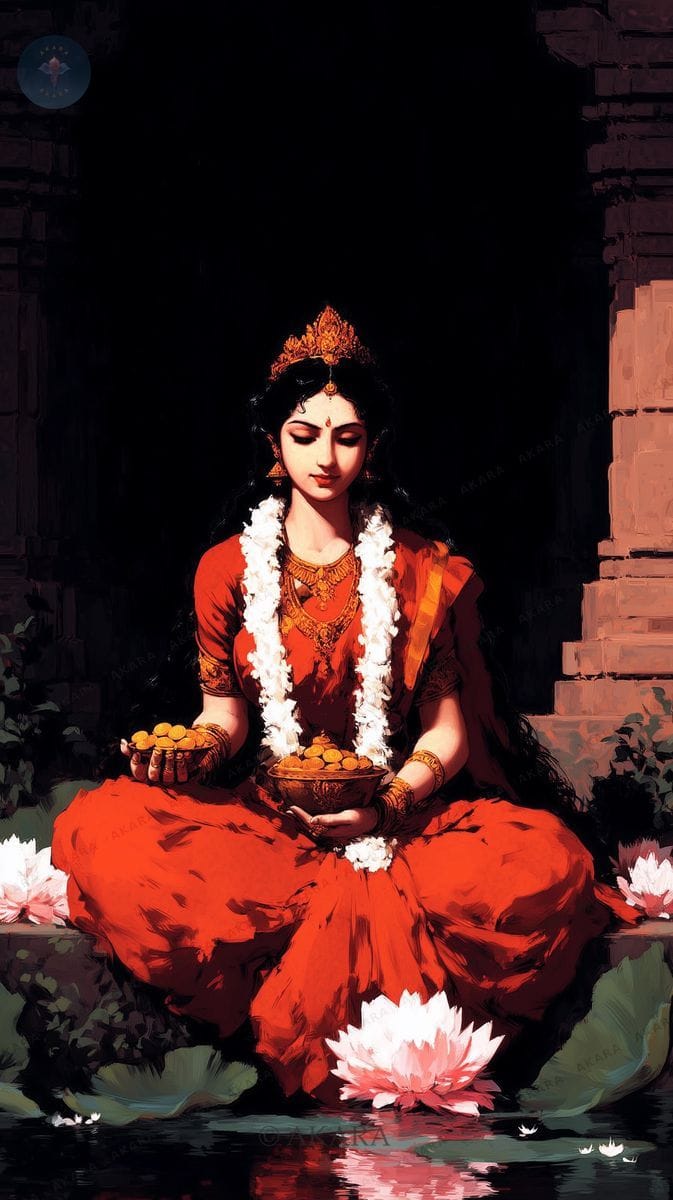
Twice a month, as the moon waxes or wanes to its eleventh day, millions of devotees across the world quietly set aside their meals, still their minds, and turn toward the divine. This is Ekadashi — not merely a day of abstention, but one of the most luminous observances in all of Sanatana Dharma, carrying within it an entire philosophy of body, mind, and bhakti.
What Ekadashi Means
The word Ekadashi (एकादशी) is Sanskrit: eka means "one" and daśī is a contracted form of daśamī plus one — literally, "the eleventh." It refers to the eleventh tithi (lunar day) of each fortnight (paksha) in the Hindu lunar calendar. Because there are two fortnights in every lunar month — the bright fortnight (Shukla Paksha) and the dark fortnight (Krishna Paksha) — Ekadashi occurs twice every month, yielding approximately 24 Ekadashis in a year, sometimes 26. Each carries its own name, presiding deity, and specific scriptural legend.
Some of the most beloved among these are Nirjala Ekadashi (observed without even water), Vaikunta Ekadashi (celebrated especially in South India as the day the gates of Vaikuntha open), and Devshayani Ekadashi (when Lord Vishnu is said to rest in yogic sleep for four months). Together, they form a living liturgical calendar woven through the year.
The Scriptural Foundation
The practice of Ekadashi fasting is rooted in the Puranas, most extensively in the Padma Purana and the Bhavishya Purana, as well as in the Skanda Purana. The Vishnu Purana affirms that observing Ekadashi with sincerity destroys accumulated karma and purifies the antahkarana — the inner instrument of mind, intellect, and ego.
One of the most cited origin stories appears in the Padma Purana, where a demon named Mura was slain by a radiant power that emerged from Lord Vishnu during his cosmic slumber on the eleventh day. This power became known as Ekadashi Devi, and the Lord declared that whoever honours this tithi with fasting and devotion would receive his grace. For this reason, Ekadashi is considered fundamentally a Vaishnava observance — though its practice cuts across sects, for the underlying philosophy is universal.
The Brahma Vaivarta Purana records a conversation between Yudhishthira and Lord Krishna in which Krishna himself extols Ekadashi as the supreme day of fasting, saying: "There is no vrata equal to Ekadashi; there is no God superior to Vishnu." Whether one reads this as sectarian assertion or as a pointer to the all-pervading consciousness, the intent is clear — this is a practice of the highest order.
The Lunar Science Behind the Fast
Sanatana Dharma is never merely ritualistic; it is always also scientific in the deepest sense — an empirical engagement with the laws governing existence. The lunar calendar is not an arbitrary cultural artefact; it is a precise mapping of gravitational and electromagnetic influences on the Earth and on living beings.
Modern physiology confirms what ancient rishis observed through sustained contemplation: the human body is roughly 70% water, and as the moon's gravitational pull affects the tides, it similarly affects the fluid dynamics within the body. On the eleventh day of each lunar fortnight, the pull reaches a particular intensity. Ayurvedic tradition notes that on Ekadashi the digestive fire (agni) is somewhat subdued, making heavy eating inadvisable and lighter eating — or fasting — far more beneficial to the body.
Fasting on this day thus serves a dual purpose: it rests the digestive system at a moment when it naturally desires rest, and it redirects the pranic energy that would otherwise be consumed by digestion toward meditation, prayer, and inner clarity. The fast is not punishment; it is alignment.
How the Vrat Is Observed
The Ekadashi vrat begins technically on the Dashami (tenth tithi) with a sattvic evening meal taken before sunset, free of grains, legumes, and heavy foods. On Ekadashi itself, the observances vary by tradition, family custom, and personal capacity:
- Nirjala — complete fast, without even water; considered the most rigorous and meritorious form
- Phalahar — fruit and dairy only, the most widely practised middle path
- Naktabhojana — a single meal at night, for those with health limitations
All traditions agree on what must be avoided: rice and grains (anna), lentils, and certain vegetables such as onion, garlic, and some leafy greens — foods considered tamasic (heaviness-inducing) or specifically prohibited in Ekadashi niyamas (rules). Allowed foods include fruits, roots, sendha namak (rock salt), milk, curd, nuts, and certain specific flours such as singhara (water chestnut) or kuttu (buckwheat).
The day is ideally filled with japa (repetition of a divine name or mantra), reading or listening to the Vishnu Sahasranama or the particular mahatmya (glory-narrative) of that Ekadashi, attending temple, or simply sitting in quiet devotion. The night may be spent in jagaran — a loving vigil of song, prayer, and scripture.
The fast is broken on Dwadashi (the twelfth day), ideally within the prescribed parana window — a specific time interval mentioned in the panchang — after offering worship and taking teertha (sacred water). Breaking the fast outside this window or on a Dwadashi that has been contaminated by the overlap of a subsequent tithi is considered inauspicious and is carefully avoided.
The Deeper Invitation: Bhakti and Liberation
At its heart, Ekadashi fasting is an act of bhakti — devotion that is not sentiment alone but a disciplined, embodied turning of the whole self toward the divine. The Sanskrit word vrat (व्रत) means "vow" or "resolve" — it is not a diet but a covenant between the devotee and the Lord.
The eleventh tithi is also symbolically connected to the eleven indriyas — the ten sense organs (five of perception, five of action) and the manas (mind) that governs them. To fast on Ekadashi is thus to fast the senses themselves: to pull them inward, away from the ceaseless consumption of the outer world, and to taste, even briefly, the stillness that lies beneath.
In the Akara understanding of Sanatana Dharma, such practices are doorways. They do not confine the devotee to ritual; they open a space within the ordinary rhythm of days where the eternal can be felt. The seeker who observes Ekadashi regularly — with sincerity rather than rigidity, with love rather than mere compliance — often reports a gradual refinement of perception: a quieter mind, a more grateful heart, a body that feels lighter not only on that day but throughout the month.
Every Ekadashi is an invitation. The moon wanes, the tide turns within us, and the door to Vaikuntha — that inner heaven of clarity and love — stands gently ajar.
"On Ekadashi, the wise person fasts and keeps vigil, fixing the mind on Keshava. Such a person crosses the ocean of birth and death." — Padma Purana
To fast on Ekadashi is to fast the senses themselves — to pull them inward, away from the ceaseless consumption of the outer world.
शान्ताकारं भुजगशयनं पद्मनाभं सुरेशम् śāntākāraṃ bhujagaśayanaṃ padmanābhaṃ sureśam
The peaceful one resting on the serpent, lotus-naveled lord of the gods. Vishnu in his element — holding the universe together while looking effortlessly serene.
Questions & answers
What does Ekadashi mean in Sanskrit?
Ekadashi (एकादशी) means 'the eleventh' — from eka (one) and a contracted form of dashami (tenth day), referring to the eleventh tithi (lunar day) of each fortnight in the Hindu calendar.
How many Ekadashis occur in a year?
There are approximately 24 Ekadashis in a standard lunar year, one in each fortnight (Shukla and Krishna Paksha). In some years, an intercalary (adhika) month adds two more, bringing the total to 26.
What foods are allowed during Ekadashi vrat?
Common Ekadashi-safe foods include fruits, milk, curd, nuts, root vegetables, sendha namak (rock salt), and flours such as kuttu (buckwheat) or singhara (water chestnut). Grains, legumes, onion, garlic, and regular table salt are avoided.
When should the Ekadashi fast be broken?
The fast is broken on Dwadashi (the twelfth tithi) during the specific parana window listed in the daily panchang. Breaking the fast outside this window, or eating prohibited foods before it, is considered inauspicious in most traditions.
Can people with health conditions observe Ekadashi?
Yes. Tradition offers flexible forms of the vrat — from complete fasting (nirjala) to fruit and dairy only (phalahar) to a single light meal at night (naktabhojana). Pregnant women, the elderly, children, and those with medical conditions are generally advised to follow the lighter forms or consult their physician.