Radha Ashtami 2026: The Day Devotion Itself Descended to Earth
On Bhadrapada Shukla Ashtami — today — Braj and the bhakti world celebrate the appearance of the one through whom Krishna himself is reached.
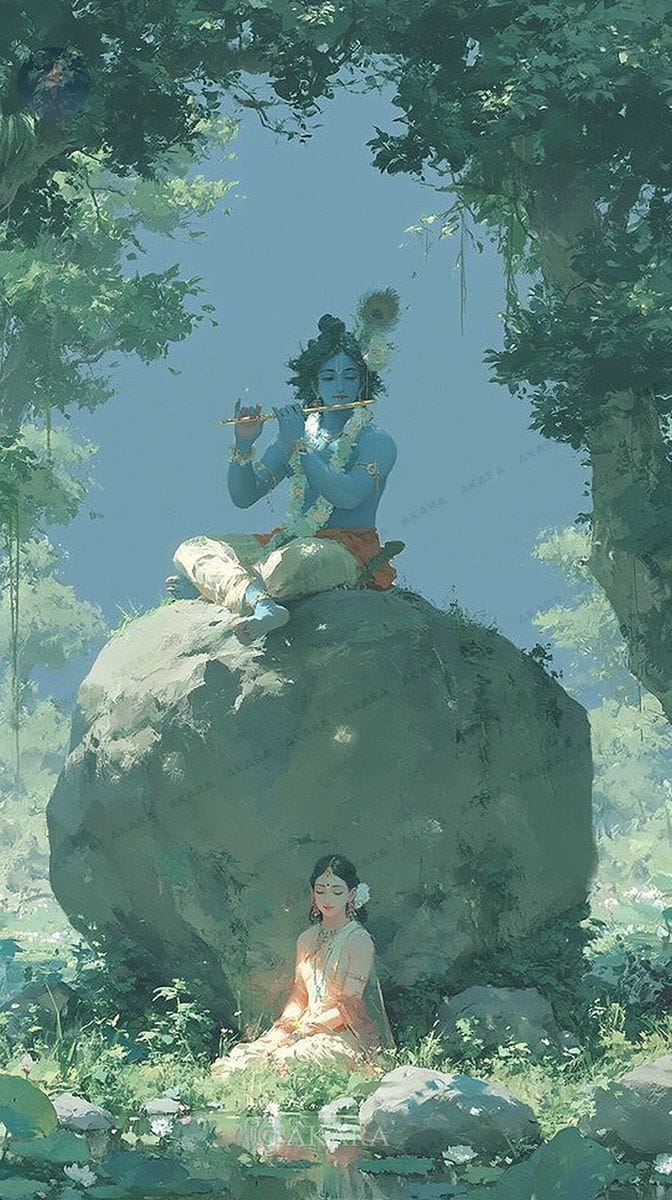
There is a saying whispered across the ghats of Vrindavan and the rose-strewn lanes of Barsana: 'Krishna is great, but Radha is his greatness.' Today, on Bhadrapada Shukla Ashtami — the eighth lunar day of the bright fortnight — that greatness is celebrated in its own right. Radha Ashtami 2026 falls on Saturday, 19 September, and across the sacred land of Braj, in temples from Mathura to Melbourne, devotees are honouring Shrimati Radharani: the eternal consort of Lord Krishna, the hladini-shakti of the Supreme, and for millions of seekers, the very face of divine love.
Who Is Radha Rani? Beyond the Beloved
In the popular imagination, Radha is Krishna's beloved — the most celebrated figure of longing in all of world literature. But in the deeper grammar of Sanatana Dharma and Vaishnava theology, she is far more. The Brahma Vaivarta Purana and the Garga Samhita describe Shri Radha as ayonija — not born of a womb in the ordinary sense, but manifested from the very essence of the divine. She is, in the language of the Vaishnava acharyas, the hladini-shakti (आह्लादिनी शक्ति): the bliss-power of the Supreme Being, the force through which Krishna himself experiences and expresses joy.
<cite index="36-12,36-13,36-14">There is a saying in Braj that Krishna is approached only through Radha. She is not worshipped merely as his beloved, but as his hladini-shakti — the very power of bliss and love through which the divine becomes reachable. This is why devotees say Radhe-Shyam and never the other way around: bhakti is named first, and Bhagavan follows.</cite>
This is no small theological point. It means that Radha does not merely love God — she is the principle of love that makes God accessible. To worship Radha is, as the tradition insists, to worship devotion itself.
Radha Ashtami: The Panchang Alignment Today
<cite index="28-3,28-10">Radha Ashtami 2026 is observed on Saturday, 19 September 2026. It falls on the eighth day, or Ashtami Tithi, of the bright fortnight, Shukla Paksha, of the Hindu month of Bhadrapada.</cite> Today's Panchang — Shukla Ashtami, with the Nakshatra Mula and Yoga Ayushman, and the Sun transiting Kanya (Virgo) — carries a particular resonance. The Sun in Kanya is itself deeply significant: <cite index="24-6">according to the Markandeya Purana, Shraddha has to be performed when the Sun enters Kanya Rashi</cite>, making this entire solar passage a time of heightened spiritual attention. Radha Ashtami arrives in this charged window like a luminous gift.
<cite index="33-4">Because Radha Rani is believed to have appeared at noon, the puja is done in the Madhyahna period rather than at dawn.</cite> <cite index="28-4">The Madhyahna Puja Muhurat is from 11:19 AM to 1:45 PM.</cite> This midday hour, when the sun stands at its zenith, is considered paripurna — complete — befitting the appearance of one who is herself the fullness of bhakti.
Barsana, Vrindavan, and the Living Braj
No place on earth marks Radha Ashtami quite like Barsana, the hilltop village in Uttar Pradesh that tradition identifies as Radharani's birthplace. <cite index="31-5">The festival is celebrated with great devotion in Barsana, Vrindavan, Mathura, and Nandgaon, where thousands of devotees gather for special darshan, kirtans, abhishek ceremonies, and spiritual celebrations.</cite> <cite index="31-6">The festival transforms the sacred land of Braj into a vibrant centre of devotion and Krishna consciousness.</cite>
At the Shri Radha Rani Temple atop Barsana's Brahmagiri hill, the deity is bathed in panchamrit — the five-fold offering of milk, curd, honey, ghee, and sugar — and dressed in elaborate shringar (divine adornment). Flowers cascade in the thousands. The air rings with kirtan, with the names Radhe Radhe echoing off sandstone walls. In Vrindavan, ISKCON temples host grand abhishekam ceremonies open to the worldwide community of bhaktas. <cite index="29-5,29-6">Devotees are warmly invited to participate and experience the blessings of Srimati Radharani — whether in person or online — immersing themselves in bhakti yoga and divine love.</cite>
The celebration is not confined to North India. Radha Ashtami is observed in Vaishnava communities across the globe — from London to Los Angeles, from Singapore to São Paulo — wherever a deity of Radha-Krishna has been installed and a lamp kept burning.
The Vrat and the Puja: How to Observe
<cite index="28-12">Devotees observe the day through prayers, fasting, puja, bhajan, kirtan, and devotional activities.</cite> The vrat (fast) of Radha Ashtami is considered especially meritorious, but tradition here is notably gentle in spirit. <cite index="36-15,36-16">No fast is required to earn Radha Rani's grace — the tradition celebrates remembrance and love, not endurance. Those who cannot fast at all may simply keep her name on their lips through the day.</cite>
For those who do observe the vrat:
- Begin the morning with a bath, a sankalpa (formal intention), and the kindling of a lamp before Radha-Krishna.
- Recite or listen to the Radha Ashtami Katha — the account of her appearance from the Brahma Vaivarta Purana.
- At midday, perform the Madhyahna Puja: offer fresh flowers (lotus and champa are traditional), panchamrit, makhan (fresh butter), and mishri (rock sugar).
- Sing or listen to bhajans in her honour — the compositions of Surdas, Mirabai, and the Braj poets are especially beloved.
- Break the fast with prasad at dusk, after the evening aarti.
<cite index="35-4">Shri Radha Rani is believed to have appeared during Madhyahna (noon), hence the main puja is performed around midday.</cite> This anchors the entire observance in a specific sacred time — not merely a symbolic gesture, but a re-enactment of the moment the divine love principle entered the world.
The Theology of Radha: Why She Matters to Every Seeker
In a tradition as vast and various as Sanatana Dharma, Radha holds a uniquely universal place. She is revered by Vaishnavas of the Gaudiya, Nimbarka, Vallabha, and Radhavallabha sampradayas. She appears — sometimes by name, always in spirit — in the Bhagavata Purana's celebrated Rasa Lila passages, and is named explicitly in the Brahma Vaivarta Purana and the Devi Bhagavata.
But her significance reaches beyond sectarian boundaries. <cite index="33-1">Radha Ashtami is celebrated to mark the birth of Shri Radha, the divine consort of Krishna and the highest symbol of pure, selfless love.</cite> <cite index="33-14,33-15">Worshipping Radha is a way of honouring devotion itself, and many families pray for harmony and grace on this day.</cite>
This is the Akara lens: in Sanatana Dharma, bhakti — devotion — is not merely a method. It is a destination. And Radha is the presiding deity of that destination. The saint-poets of the Braj tradition did not merely compose verses about longing; they mapped, with great precision, the interior landscape of a soul turning toward the divine. Radha's viraha (longing in separation) and milana (union) are not just romantic themes — they are the two great movements of the spiritual life itself.
Today, on Radha Ashtami, Hindu spirituality offers the seeker a mirror. Whatever form your devotion takes — whatever name you call the divine — the qualities that Radha embodies are worth contemplating: selflessness, constancy, the willingness to love without condition or return.
A Reflection for Shukla Ashtami
The Yoga Ayushman — 'long-lived' — that graces today's Panchang feels entirely apt. Radha has outlasted every empire, every commentary, every dispute about her theological status. She lives because love lives, because bhakti is indestructible. On this sacred Ashtami, whether you stand in a crowded temple in Vrindavan or sit quietly before a home shrine in Pune, Sydney, or Toronto, the invitation is the same: say her name. Let Radhe ring like a bell through the mind, clearing everything else away. In that sound, tradition says, Krishna himself turns and smiles.
Radha does not merely love God — she is the principle of love that makes God accessible. To worship Radha is to worship devotion itself.
राधाकृष्णौ जगत्पाणी गोविन्दौ गोपिकाप्रिया rādhākṛṣṇau jagatpāṇī govindau gopikāpriyā
Radha-Krishna, holders of the world, beloved of the cowherd maidens—their love transcends all boundaries.
Questions & answers
When is Radha Ashtami in 2026?
Radha Ashtami 2026 falls on Saturday, 19 September. It is observed on the Ashtami Tithi (eighth lunar day) of Shukla Paksha in the Hindu month of Bhadrapada.
What is the best time to perform Radha Ashtami puja in 2026?
The most auspicious time is the Madhyahna (midday) Muhurat, from approximately 11:19 AM to 1:45 PM, because Radha Rani is believed to have appeared at noon. Timings may vary slightly by city, so check your local panchang.
Where is Radha Ashtami celebrated most fervently?
The most celebrated observances are in the Braj region — especially Barsana (traditionally Radha's birthplace), Vrindavan, Mathura, and Nandgaon — where temples host abhishekam ceremonies, kirtans, and special darshan for thousands of pilgrims.
Is fasting compulsory on Radha Ashtami?
No. While many devotees observe a vrat (fast) from dawn until the midday puja, tradition emphasises love and remembrance over strict austerity. Those who cannot fast may simply chant Radha Rani's name and participate in kirtan throughout the day.
What is the difference between Radha Ashtami and Janmashtami?
Janmashtami (4 September 2026) celebrates the birth of Lord Krishna, while Radha Ashtami, exactly fifteen days later, celebrates the appearance of Shrimati Radharani. Together, the two observances form the devotional heart of the Braj festival season.