Uttara Ashadha & Shukla Dashami: A Day of Steady Victory
When the Moon rests in Uttara Ashadha on the tenth lunar day, tradition counsels disciplined effort, righteous action, and the quiet power of lasting resolve.
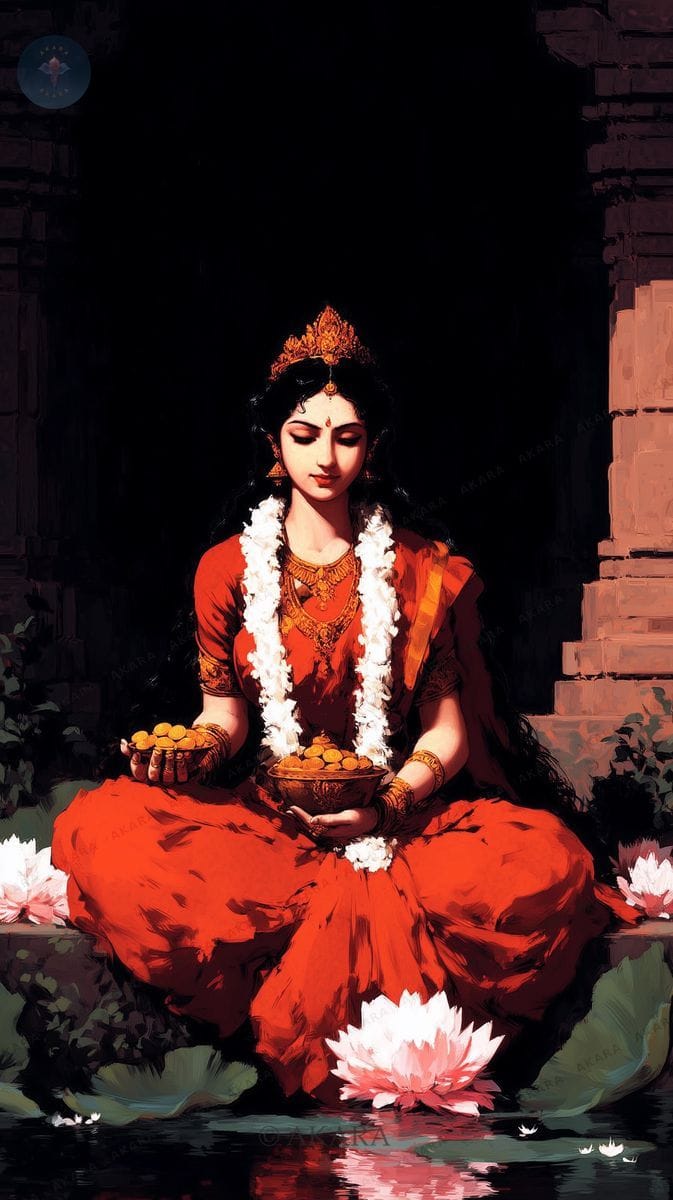
There is a particular quality of light that arrives not with fanfare but with a settled certainty — the kind that follows patient effort. Today's panchang carries precisely that quality. With the Moon transiting Uttara Ashadha nakshatra in Dhanu rashi, the tithi standing at Shukla Dashami, and the auspicious Yoga Shobhana gracing the day, the cosmic arrangement speaks not of dramatic revelation but of something deeper and more enduring: the victory that comes from staying the course.
The Nakshatra: Uttara Ashadha — The Later Invincible One
Uttara Ashadha (उत्तर आषाढ़) translates as 'the later invincible one,' the second of a pair of nakshatras that together carry the energy of ashadha — conquest and triumph. Its presiding deity is the Vishvedevas, the universal gods, whose collective power symbolises cooperation, ethical strength, and the might of righteous purpose. The nakshatra spans the final degrees of Dhanu (Sagittarius) and the opening degrees of Makara (Capricorn); today's Moon occupies its first pada, firmly in the territory of Dhanu rashi.
The ruling deity bestows upon this nakshatra a quality rarely celebrated enough in modern life: sthira vijaya, or lasting victory. Not the quick gain that dazzles and fades, but the durable achievement built on integrity. Its symbol is an elephant's tusk — elegant, strong, and shaped by years of steady growth. Its shakti, according to classical jyotish texts, is apradhrishya shakti — the power of being unchallengeable when one walks in dharma.
For the devotee and the seeker, this nakshatra is a gentle teacher. It does not hand out rewards impulsively. It asks: Have you done the work? Have you stayed true to your purpose? If yes, it affirms and consolidates. The first pada of Uttara Ashadha falls in the Sagittarius navamsha, lending the day a philosophical and idealistic flavour — a good time to reconnect with why you do what you do, not just how.
The Tithi: Shukla Dashami — The Tenth Radiance
In the Vedic reckoning of time, each tithi (lunar day) carries its own divine character. The Dashami, or tenth day of the bright fortnight (Shukla Paksha), is associated with the Lord of the Cosmic Ocean and dharmic authority. Classical texts including the Muhurta Chintamani consider Dashami a generally auspicious tithi — firm, stable, and conducive to constructive endeavours.
The number ten holds deep resonance in Sanatana Dharma: the ten Mahavidyas, the ten directions (dashadas), and perhaps most famously the Dashavataras — the ten principal incarnations of Lord Vishnu. On Dashami, there is a subtle invitation to honour completeness, to review what has been undertaken and to consolidate, rather than scatter energy into new beginnings without foundation.
Traditionally, Dashami favours: long-term planning, legal and official matters conducted with integrity, educational pursuits, acts of service, and sincerely offered prayer. It is not a day that rewards haste or shortcuts.
Yoga Shobhana: The Ornament of the Day
The yoga in a panchang is calculated from the combined longitudes of the Sun and Moon, yielding twenty-seven qualities that colour each day's energy. Today's yoga is Shobhana (शोभन) — meaning 'brilliant,' 'beautiful,' or 'auspicious.' It is counted among the benefic yogas in classical jyotish.
Shobhana yoga adds a quality of refinement to the day's activities. It is particularly favourable for creative work, beautification, acts of worship (puja), music, and any endeavour where aesthetics and intention must align. For those who work in devotional arts — whether crafting sacred images, composing music in praise of the divine, or designing spaces for meditation — this is a quietly powerful backing.
Shobhana does not mean easy; it means the conditions are aligned for what is beautiful and true to shine through, if we bring the necessary attention and sincerity.
Sun in Kanya, Moon in Dhanu: The Axis of Refinement and Vision
With the Sun moving through Kanya (Virgo), the solar energy of this period inclines toward discernment, service, and careful attention to detail. Kanya's influence asks us to purify our methods, to be of genuine use rather than merely appearing useful. It is a time of honest self-assessment.
The Moon in Dhanu (Sagittarius) brings an expansive, philosophical counterpoint. Where Kanya refines and analyses, Dhanu seeks the horizon, the larger meaning, the teaching that transcends the particular. Together, these two placements create a productive tension: the call to both perfect the detail and hold the larger vision simultaneously. The practical mystic, the devoted craftsperson, the scholar who also prays — these archetypes are nourished today.
In the language of bhakti, this is a day that honours both jnana (knowledge, discernment) and shraddha (faith, vision). Neither alone is sufficient; together, they constitute the path.
What the Day Favours — and Where to Move Slowly
Favoured today:
- Deepening existing commitments: projects, relationships, spiritual practices already underway
- Study of scripture, philosophy, or any body of knowledge that requires sustained attention
- Devotional practice — puja, japa, meditation, sacred music and art
- Formal or legal matters conducted with honesty and care
- Acts of service that express gratitude rather than obligation
Counsel patience:
- Starting entirely new ventures from scratch — the energy today consolidates more than it initiates
- Impulsive financial decisions or speculative actions
- Confrontational conversations; the Moon in Dhanu can occasionally make opinions feel more absolute than they are — pause before insisting
A Reflective Practice for Today
Uttara Ashadha's presiding deities, the Vishvedevas, remind us that dharmic action is rarely a solitary achievement. Before beginning your day's main work, take five minutes in stillness. Light a small lamp or simply sit with hands open in your lap. Bring to mind one endeavour — professional, creative, relational, or spiritual — that you have been tending with patience over time. Offer it mentally to the divine, not asking for a quick result, but affirming your continued commitment to doing it rightly. This small act of samarpana (offering) aligns personal effort with the larger order that Uttara Ashadha embodies.
If you have a favourite mantra or name of the divine, let it accompany your breath for a few minutes. The day's Shobhana yoga will hold the beauty of that intention.
A Closing Reflection
The panchang is not a fortune-teller. It is, as the tradition teaches, a mitra — a friend who knows the seasons. What it offers today is the quiet encouragement of Uttara Ashadha: that the victory worth having is the one built with integrity, sustained by devotion, and offered back to the source from which all effort springs. In the spirit of Sanatana Dharma, the timeless rhythm of the cosmos is not separate from our daily choices — it is the very ground beneath them. Walk steadily today.
The victory worth having is the one built with integrity, sustained by devotion, and offered back to the source from which all effort springs.
शान्ताकारं भुजगशयनं पद्मनाभं सुरेशम् śāntākāraṃ bhujagaśayanaṃ padmanābhaṃ sureśam
The peaceful one resting on the serpent, lotus-naveled lord of the gods. Vishnu in his element — holding the universe together while looking effortlessly serene.
Questions & answers
What is Uttara Ashadha nakshatra and what does it signify?
Uttara Ashadha is the 21st nakshatra in the Vedic system, spanning late Sagittarius and early Capricorn. Its name means 'the later invincible one,' and it is governed by the Vishvedevas — the universal gods. It signifies lasting victory, ethical strength, and achievements built on patience and integrity rather than quick gains.
Is Shukla Dashami considered auspicious in the Hindu panchang?
Yes, Dashami — the tenth day of the bright lunar fortnight — is generally regarded as a stable and auspicious tithi in classical jyotish texts such as the Muhurta Chintamani. It is considered favourable for constructive, long-term endeavours, education, service, and devotional practice.
What does Yoga Shobhana mean in a daily panchang?
Yoga in the panchang is a quality derived from the combined longitudes of the Sun and Moon. Shobhana means 'brilliant' or 'beautiful' and is counted among the benefic yogas. It is particularly supportive of creative, devotional, and aesthetic activities undertaken with sincerity and care.
How should one use the panchang — is it predictive?
The panchang is best understood as traditional guidance rooted in Vedic observation of time's qualities, not as personal prediction or fortune-telling. It describes the energetic character of a day so that a practitioner can align their activities accordingly — much like a farmer consulting weather patterns to decide when to sow.
What activities does the Moon in Dhanu (Sagittarius) favour?
The Moon in Dhanu inclines the mind toward philosophical thinking, broad vision, teaching, learning, and spiritual seeking. It supports activities that connect the particular to the universal — study of scripture, long-range planning, and conversations about meaning and purpose. It can make opinions feel strong, so it also calls for a degree of openness and humility.