Parivartini Ekadashi 2026: When the Preserver Turns in Cosmic Sleep
On this Bhadrapada Shukla Ekadashi, Lord Vishnu — resting on the cosmic serpent Shesha — turns upon His side, and the universe quietly realigns.
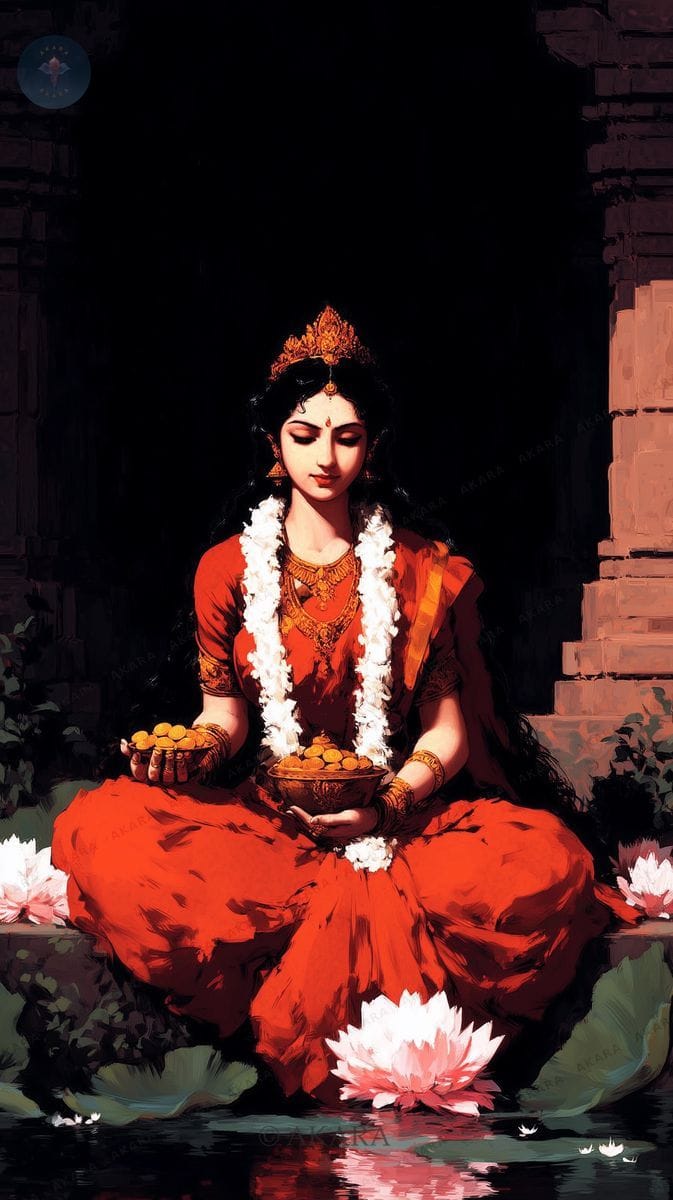
There are twenty-four Ekadashis in the Hindu lunar year, each a doorway. But the one that falls today — Tuesday, 22 September 2026, the Shukla Ekadashi of Bhadrapada — carries a resonance all its own. Known variously as Parivartini Ekadashi, Parsva Ekadashi, or Vamana Ekadashi depending on one's tradition, it marks the precise midpoint of the sacred four-month vigil called Chaturmas: the season when Lord Vishnu, the great Preserver, rests in Yoga Nidra upon the primordial ocean, and on this day, tradition tells us, He turns upon His side. The universe notices.
What Is Ekadashi — And Why the Eleventh?
The word Ekadashi (एकादशी) is simply Sanskrit for "eleventh" — eka (one) + dasha (ten). It refers to the eleventh tithi, or lunar day, of each fortnight. The Hindu calendar tracks the moon's journey from new to full and back again as fifteen equal arcs of twelve degrees each; every arc is one tithi. Ekadashi thus arrives twice each lunar month — once in the bright fortnight (Shukla Paksha) and once in the dark (Krishna Paksha) — making twenty-four observances a year, each with its own name and presiding narrative.
Today's panchang confirms the tithi precisely: the Shukla Ekadashi of Bhadrapada commenced at 8:00 PM on the evening of 21 September and runs until 9:43 PM tonight. The Nakshatra at dawn was Uttara Ashadha, the Yoga is Atiganda, and the Sun has entered Kanya (Virgo), the sign of discernment and order — a fitting backdrop for a day devoted to the Preserver of cosmic dharma.
The choice of eleven is not incidental. Classical texts note that the tenth lunar day (Dashami) belongs to the world of the senses; the twelfth (Dwadashi) returns the devotee to ordinary time. But the eleventh stands apart — a liminal threshold where the pull of the material loosens just enough for the soul to turn toward the Divine. Every Ekadashi, whether Shukla or Krishna Paksha, is considered auspicious and beneficial, making it singular among all tithis.
Parivartini: The Cosmic Turning
This particular Ekadashi has earned several names from the tradition, and each illuminates a different facet of the same truth.
Parivartini (परिवर्तिनी) comes from the Sanskrit root parivartan — transformation, shift, change. Ancient texts including the Brahma-vaivarta Purana and the Skanda Purana record that during the four months of Chaturmas, Lord Vishnu reposes on Adi Shesha, the primordial serpent, upon the Ksheer Sagar — the Ocean of Milk. On this Ekadashi, the sleeping Lord undergoes anga-parivartana: He turns upon His other side. According to the Skanda Purana's Vrataraj chapter, it is this cosmic turning that gives the day its name — tasmād enāṃ janāḥ sarve vadanti parivartinīm, "therefore all people call her Parivartinī."
The turn is not trivial. Vishnu devotees understand that even in His rest, the Lord sustains all of creation. This subtle movement in His cosmic sleep is said to bring about a profound realignment of spiritual and material energies across the universe. The narrative thread is connected also to the story of King Mahabali: it is on this very Ekadashi that Bali — the noble demon king humbled by Lord Vishnu's Vamana avatar — installed a form of the Lord in his own palace in the netherworld, an act of supreme surrender and devotion. The Brahma-vaivarta Purana places this story at the heart of the day's glory.
A second name — Parsva Ekadashi — refers to the Lord's parsva, His side or flank, the very limb that pivots. A third name, Vamana Ekadashi, honours the avatar of Vamana, the dwarf Brahmin who in three steps measured and claimed all the worlds, and whose story reaches its culmination in the Bhadrapada season. In Gujarat, Rajasthan and Madhya Pradesh, the day is lovingly called Jal Jhulani Ekadashi or Dol Gyaras, marked by the ceremonial procession of Vishnu's image to a body of water — a folk memory of the Lord's ocean-borne sleep.
Vrat, Puja, and the Way of Restraint
The vrat (vow) of Ekadashi is among the most widely kept in Sanatana Dharma, observed by millions across traditions. Its logic is both physiological and spiritual: the fast lightens the body, quiets the digestive system, and — tradition holds — withdraws energy from the lower centres so that it may ascend. Fasting, meditation, and devotion performed on Ekadashi are understood to bring spiritual upliftment and liberation from the weight of accumulated karma.
The fast begins at sunrise and is ideally kept through the night. Those who observe the traditional Ekadashi vrat avoid all grains — rice, wheat, millets — and pulses. Permitted foods include fruits, milk, rock salt, sabudana (tapioca), singhara (water chestnut) flour, and potatoes. Some devotees keep a complete fast; others sustain themselves on water and fruit. The focus, as every wise acharya has said, is not the stomach but the heart — prayer, devotion, self-discipline and spiritual reflection, not mere abstention from food.
The puja itself is simple and deep. Before dawn, after bathing, the devotee places a form or image of Lord Vishnu — especially in His Vamana aspect today — on a clean altar. The offering includes Tulsi (Ocimum tenuiflorum), the sacred plant inseparable from Vishnu's worship; flowers; a lamp; incense; and seasonal fruit. The Vishnu Sahasranama — the thousand names of Hari — may be chanted, or simply the eight-syllable ashtakshara mantra:
Om Namo Narayanaya (ॐ नमो नारायणाय)
This mantra — addressed to Narayana, the One who is the foundation (ayana) and refuge (nara) of all beings — is the heartbeat of Vaishnava bhakti. Each of the eight syllables, the tradition says, unlocks one of the eight divine qualities of the Lord. Chanting it on Ekadashi, when the veil between the seeker and the sought is thinnest, carries a particular potency.
For those who can, staying awake through the night in kirtan, japa, or the reading of the vrat katha deepens the observance. The Brahma-vaivarta Purana's own words on this Ekadashi affirm that one who simply hears its narration with devotion will be exalted — so powerful is the merit of this night.
Parana: Breaking the Fast with Grace
The fast is broken on the following morning, Dwadashi, in a window called Parana — ideally between 7:02 AM and 8:37 AM on Wednesday, 23 September 2026 (for India; those in other countries should verify against local sunrise). One must wait until the Hari Vasara period ends — at 7:02 AM — before eating. Breaking the fast within the Parana window is itself considered an act of dharma. The tradition recommends offering food or charity before one eats, and the Skanda Purana's chapter on this Ekadashi specifically mentions the gift of curd with rice — dadhi-danam — as particularly meritorious on this day, befitting the monsoon season of Bhadrapada.
Why It Matters Now
We live in what many traditions call the Kali Yuga — an age of haste, distraction, and the forgetting of what is essential. In such an age, the observances of Sanatana Dharma are not nostalgia; they are navigation tools. Ekadashi arrives twice a month, predictable as the moon, offering every seeker — regardless of caste, region, or sectarian affiliation — a natural pause. A reset.
Paivartini Ekadashi asks something specific: can you, like the Lord Himself, turn? Can you shift from the outward-rushing momentum of daily life to something quieter, deeper, more sustaining? The cosmic parivartan — the Lord's gentle turning in His sleep — is a mirror held up to the devotee. Change, the day whispers, is not disruption. It is realignment. Even the Preserver of the universe pauses, rests, and renews.
For seekers at Akara and beyond, this Ekadashi is an invitation: light a lamp for Narayana this evening, set aside the grain, take up the mala, and let the mantra Om Namo Narayanaya do its quiet, ancient work. The Lord is not absent. He is simply turned toward you.
Even the Preserver of the universe pauses, rests, and renews. The cosmic turning is a mirror held up to every seeker.
शान्ताकारं भुजगशयनं पद्मनाभं सुरेशम् śāntākāraṃ bhujagaśayanaṃ padmanābhaṃ sureśam
The peaceful one resting on the serpent, lotus-naveled lord of the gods. Vishnu in his element — holding the universe together while looking effortlessly serene.
Questions & answers
What is Ekadashi and why is it observed?
Ekadashi is the eleventh lunar day (tithi) of each fortnight in the Hindu calendar, occurring twice a month. It is considered one of the most sacred tithis, dedicated to Lord Vishnu. Fasting, prayer, and devotion on Ekadashi are believed to bring spiritual upliftment, purify accumulated karma, and draw the devotee closer to moksha (liberation).
What makes Parivartini Ekadashi (22 September 2026) special?
Parivartini Ekadashi falls in Bhadrapada Shukla Paksha and marks the midpoint of the Chaturmas, the four sacred months of Lord Vishnu's Yoga Nidra. On this day, scripture records that the sleeping Vishnu undergoes anga-parivartana — a turning upon His side — an event believed to cause a profound realignment of cosmic and spiritual energies. It is also associated with the story of King Bali and the Vamana avatar.
What can and cannot be eaten during an Ekadashi fast?
Traditional Ekadashi observers avoid all grains (rice, wheat, millets) and pulses. Permitted foods include fruits, milk, rock salt, sabudana (tapioca), singhara (water chestnut) flour, potatoes, and nuts. Some devotees keep a complete or water-only fast. Health, age, and family custom determine the level of observance, and those with medical conditions should consult their physician.
When is the Parana (fast-breaking) time for Parivartini Ekadashi 2026?
For most of India, the Parana window on 23 September 2026 (Dwadashi) is between 7:02 AM and 8:37 AM. Devotees should wait until the Hari Vasara period ends at 7:02 AM before eating. Those outside India should confirm the Parana window against their local panchang, as timings vary with sunrise.
What mantra should be chanted on Ekadashi for Lord Vishnu?
The primary mantra for Ekadashi worship of Lord Vishnu is the ashtakshara (eight-syllable) mantra: Om Namo Narayanaya (ॐ नमो नारायणाय). The Vishnu Sahasranama (thousand names of Vishnu) and the reading or listening of the Ekadashi vrat katha are also highly recommended. Tulsi offerings, japa with a mala, and night-long kirtan deepen the observance.