Purnima & the Goddess: When the Full Moon Bows to Devi
On this Bhadrapada Purnima, as the full moon holds the sky from dusk to dawn, Sanatana Dharma invites every seeker to turn inward — and meet the Goddess who has never left.
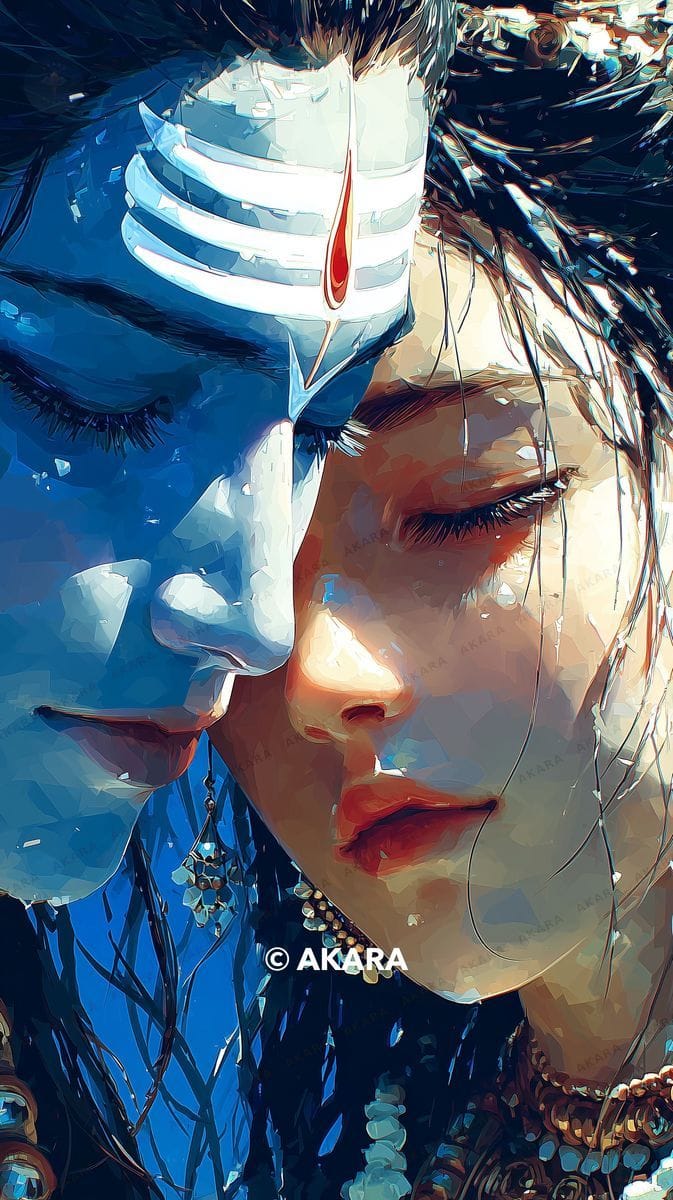
There is a moment each lunar month when the sky becomes a mirror of the sacred. The Moon, Chandra, reaches fullness — Purnima — and stands exactly opposite the Sun, the two great luminaries holding the cosmos between them like a stretched thread of light. Today, Saturday the 26th of September 2026, is that moment. The tithi of Shukla Purnima in the month of Bhadrapada governs the day from its opening breath at sunrise, the Moon having reached fullness at 11:07 PM last night and remaining so until 10:19 PM tonight. Nakshatra Purva Bhadrapada illuminates the early hours before the lunar station transitions to Uttara Bhadrapada at 11:31 AM. Yoga Ganda prevails. The Sun rests in Kanya (Virgo), the sign of discernment and service. And at the centre of this Panchang portrait sits an invitation — ancient, patient, inexhaustible — to approach the Devi, the Great Goddess, whose presence Sanatana Dharma has always recognised in the very radiance of the full moon itself.
Purnima: What the Word Itself Reveals
Language, in the Vedic tradition, is never merely descriptive — it is participatory. <cite index="3-3,3-4">The term Purnima derives from the Sanskrit roots Purna ("full") and Ma ("Moon"), together pointing to the day when the Moon stands in its complete, fully illuminated state — a symbol of fullness, prosperity, and spiritual illumination.</cite> That quality of Purnatva — wholeness — is not incidental. It is the central teaching. The full moon does not merely light the night sky; it enacts, visibly and reliably each month, the truth that completeness is possible. In Sanatana Dharma, every outer phenomenon is a language the cosmos uses to speak to the soul.
<cite index="3-5,3-6">Purnima Tithi occurs on the fifteenth day of Shukla Paksha, the waxing phase of the lunar cycle. On this day the Moon rises in its full glory, directly opposite the Sun, and is completely visible throughout the night sky.</cite> <cite index="3-7,3-8">The energy of the Moon is at its peak. According to Vedic understanding, the Moon significantly influences the mind (manas), emotions, and spiritual consciousness — which is why Purnima is regarded as an ideal occasion for spiritual practice, meditation, and the performance of sacred ritual.</cite>
This Purnima — Bhadrapada Purnima 2026 — carries its own particular mood. <cite index="7-3,7-4,7-5,7-6">Bhadrapada Purnima is associated with ancestral worship and the honouring of past generations. Devotees offer prayers and practise meditation to honour departed ancestors. It symbolises respect for one's roots and the purification of the soul through gratitude and devotion — and it encourages moral introspection and the alignment of personal values with Dharma.</cite> We are, in other words, not merely celebrating a celestial event. We are locating ourselves in the great chain of being — grateful, grounded, and open.
The Goddess at the Heart of the Full Moon
Why centre Purnima on Devi — on Durga, Kali, Parvati, the Supreme Shakti? Because in the deepest strata of the tradition, the Moon and the Goddess are not separate realities. The Moon is called Chandrama, and Chandra is the presiding deity of the mind. The Goddess, in every one of her forms, is the sovereign of consciousness itself. When the lunar disc is full, it reflects something the tradition has always known: that Shakti — the divine feminine energy, the animating power of all existence — reaches toward completeness, toward that luminous wholeness we call Purna.
<cite index="20-1,20-2">The Devi Mahatmyam — whose very name means "Glorification of the Goddess" — is also known as the Durga Saptashati, the collection of seven hundred shlokas (verses) in her praise.</cite> <cite index="21-4,21-5">This text forms part of the Markandeya Purana, composed by the sage Markandeya, and narrates the victory of Goddess Durga over the demon Mahishasura</cite> — a mythic victory that maps, for every devotee, an inner battle: the conquest of tamas (inertia and delusion) by the luminous, unstoppable power of the awakened self.
<cite index="16-6">Hindus across the world observe Purnima through various rituals and prayers, dedicating their worship to deities including Lord Shiva, Lord Vishnu, Goddess Lakshmi, and Goddess Parvati.</cite> On a day governed by Bhadrapada and illuminated by the ancestral sentiment that flavours this month, turning toward Devi is not merely permissible — it is fitting. She is Parvati, the mountain-born, rooted and serene. She is Durga, the indomitable protector. She is Kali, the liberator who dissolves what no longer serves. She is all three, and none of these forms exhaust her.
The Mantra: Ya Devi Sarvabhuteshu
Of all the hymns the tradition has gifted us for approaching the Goddess, the Ya Devi Sarvabhuteshu stanzas from the Devi Mahatmyam stand apart in both their elegance and their theological audacity. <cite index="23-1,23-2,23-3">This mantra is a sacred Sanskrit invocation honouring Durga as the divine animating principle within all beings. Its literal meaning is "She, the Goddess, who abides in all beings."</cite> <cite index="23-4,23-5">It appears in Chapter 5 of the Devi Mahatmya and names the Goddess in her supreme form — the divine mother and Shakti. The mantra recognises her as the animating principle dwelling within every being, whether as power, consciousness, intellect, sleep, or hunger.</cite>
Each verse follows the same architecture:
Ya Devi Sarvabhuteshu [quality] rupena samsthita | Namastasyai, namastasyai, namastasyai namo namah || "To that Devi who in all beings abides in the form of [quality] — salutations, salutations, salutations again and again."
<cite index="23-7">The Devi Mahatmya represents a revolutionary theological statement rooted in Shakta philosophy: the divine is not distant but immanent, woven into every force and quality of existence.</cite> This is not abstraction. When you chant Ya Devi Sarvabhuteshu Shakti rupena samsthita — "She who abides in all beings as Power" — you are recognising your own strength as a manifestation of the Goddess. When you chant Buddhi rupena — "in the form of intelligence" — you are consecrating your own capacity for thought. <cite index="26-10">Chanting this mantra is understood to invoke the divine feminine energy of Maa Durga, bringing courage, mental clarity, inner peace, divine protection, spiritual growth, and positivity.</cite>
The triple namastasyai — offered three times in each verse — is itself a practice. <cite index="23-14">The repeated triple refrain creates a powerful field of devotional surrender that systematically dissolves ego-attachment and cultivates the experience of complete yielding to divine will.</cite> In a world saturated with the noise of self-assertion, this is radical medicine.
How to Observe This Purnima: Vrat, Puja, and Daan
Purnima observance, across all regional traditions of Sanatana Dharma, shares a luminous common grammar.
- Brahma Muhurta and sacred bathing: The day ideally begins before dawn. <cite index="1-18">Brahma Muhurta today is from 4:53 AM to 5:41 AM</cite> — the most sattvic hours of the day, when the mind is closest to stillness. <cite index="18-2">Bathing in a sacred river at dawn is a traditional Purnima practice.</cite> Those without access to a river may add a pinch of Ganga water or sacred herbs to their morning bath, with intent.
- Vrat (fasting): <cite index="17-3,17-5,17-6">The Purnima Vrat is a sacred fasting ritual observed on the full moon day. It is considered significant in Hinduism as it is believed to bring spiritual growth, prosperity, and good fortune. The fast is typically observed from sunrise to sunset, with rituals and customs varying by region and family tradition.</cite> For those centring the day on Devi, the fast may be accompanied by recitation of the Devi Mahatmyam or selected stanzas of Ya Devi Sarvabhuteshu.
- Puja at the auspicious hour: <cite index="1-17">The Abhijit Muhurat today falls between 12:07 PM and 12:55 PM</cite> — an excellent window for formal worship. Offer red hibiscus flowers, kumkuma, and a ghee lamp to the image or yantra of Devi. Recite the Ya Devi stanzas or the Devi Kavacham.
- Daan (charity): <cite index="14-9">Any good action performed on Purnima is understood to yield multiplied results, whether it is giving charity, chanting mantras, or sitting in simple silence.</cite> Feeding those in need, offering food at a temple, or contributing to a cause that relieves suffering — each is a direct enactment of the Goddess's own nature as Annapurna.
- Moonrise and offering: <cite index="5-6">Tonight, the Moon rises at 5:55 PM against a sunset of 6:13 PM</cite> — a near-simultaneous emergence of the full disc as day yields to night. Stand in the open, offer water mixed with kumkuma toward the rising Moon, and chant. The moment is complete in itself.
- Avoid the inauspicious windows: <cite index="1-14,1-15">Rahu Kaal today runs from 9:30 AM to 11:00 AM; Yamaganda Kaal from 2:01 PM to 3:32 PM.</cite> New ventures and important beginnings are traditionally not commenced in these periods.
The Akara Reflection: Fullness Is Already Here
At Akara, we return to one question again and again: how does the timeless speak to the present moment? Purnima answers that question with disarming simplicity. The full moon does not become full through effort. It becomes visible in its fullness when nothing stands between it and the eye that looks. The Goddess — Ya Devi Sarvabhuteshu, She who abides in all beings — has never been absent. She is consciousness in the one who thinks, courage in the one who acts, grief in the one who mourns, love in the one who protects. <cite index="14-16">This sacred full moon is not regarded merely as a natural event; it is understood to be a highly spiritual period in Sanatana Dharma.</cite>
Today, as Bhadrapada Purnima arches across the sky, the invitation is not to reach for something remote. It is to recognise what has always been present — and to offer, with threefold salutation, the simplest and most complete prayer the tradition knows:
Namastasyai, namastasyai, namastasyai namo namah. Salutations to Her. Salutations to Her. Salutations to Her, again and again.
May the full moon of this Bhadrapada illuminate every seeker's path — outward and inward, both.
The Goddess has never been absent — She is consciousness in the one who thinks, courage in the one who acts, love in the one who protects.
शिवशक्त्यात्मकं विश्वं śivaśaktyātmakaṃ viśvaṃ
The universe is the union of Shiva and Shakti - consciousness and creative power merged as one.
Questions & answers
What is the exact tithi timing for Purnima on 26 September 2026?
According to multiple Panchang sources, the Shukla Purnima tithi for Bhadrapada begins at approximately 11:07 PM on 25 September and ends at approximately 10:19 PM on 26 September 2026 (IST, calculated for central India). Timings may vary slightly by city. The Abhijit Muhurat — ideal for puja — is 12:07 PM to 12:55 PM, and tonight's moonrise is at 5:55 PM.
What does Ya Devi Sarvabhuteshu mean, and where does it come from?
Ya Devi Sarvabhuteshu literally means 'She, the Goddess, who abides in all beings.' It is a series of stanzas from Chapter 5 of the Devi Mahatmya (also called the Durga Saptashati), part of the Markandeya Purana. Each verse names a quality — power, consciousness, intelligence, beauty, sleep — and recognises it as a form of the Goddess, followed by the triple salutation: Namastasyai, namastasyai, namastasyai namo namah.
How should I observe Purnima Vrat dedicated to Devi?
Begin at Brahma Muhurta (4:53–5:41 AM today) with a bath and a lamp offering. Fast from sunrise to moonrise, or as your health allows. At the Abhijit Muhurat (12:07–12:55 PM), perform puja with red flowers, kumkuma, and a ghee lamp, chanting Ya Devi Sarvabhuteshu. At moonrise (5:55 PM), offer water toward the full Moon. Close the day with daan — charity or feeding those in need. Avoid starting new tasks during Rahu Kaal (9:30–11:00 AM).
Why is Bhadrapada Purnima associated with ancestral reverence?
The month of Bhadrapada in the Hindu calendar is deeply tied to the theme of Pitru (ancestral) energy. Bhadrapada Purnima marks the conclusion of the month and is traditionally a day for offering prayers and gratitude to departed ancestors, honouring one's roots, and purifying the soul through acts of devotion and charity. It encourages moral introspection and the realignment of one's life with Dharma.
Is Purnima significant in all streams of Sanatana Dharma, or only Shaiva or Vaishnava traditions?
Purnima is honoured across virtually all streams of Sanatana Dharma. Vaishnavas traditionally associate it with Lord Vishnu and perform the Satyanarayan Katha. Shaivas honour Shiva's cosmic rhythm. Shaktas — devotees of Devi — chant hymns from the Devi Mahatmya and perform special worship of Durga, Parvati, or Kali. Buddhist and Jain traditions also mark full-moon days as sacred. Purnima is, in this sense, one of the most ecumenical tithis in the Dharmic calendar.