Pitru Paksha 2026: The Fortnight When Ancestors Come Home
As the sun settles into Kanya and the moon wanes toward silence, Sanatana Dharma calls every household to its most intimate duty — remembering those who gave us life.
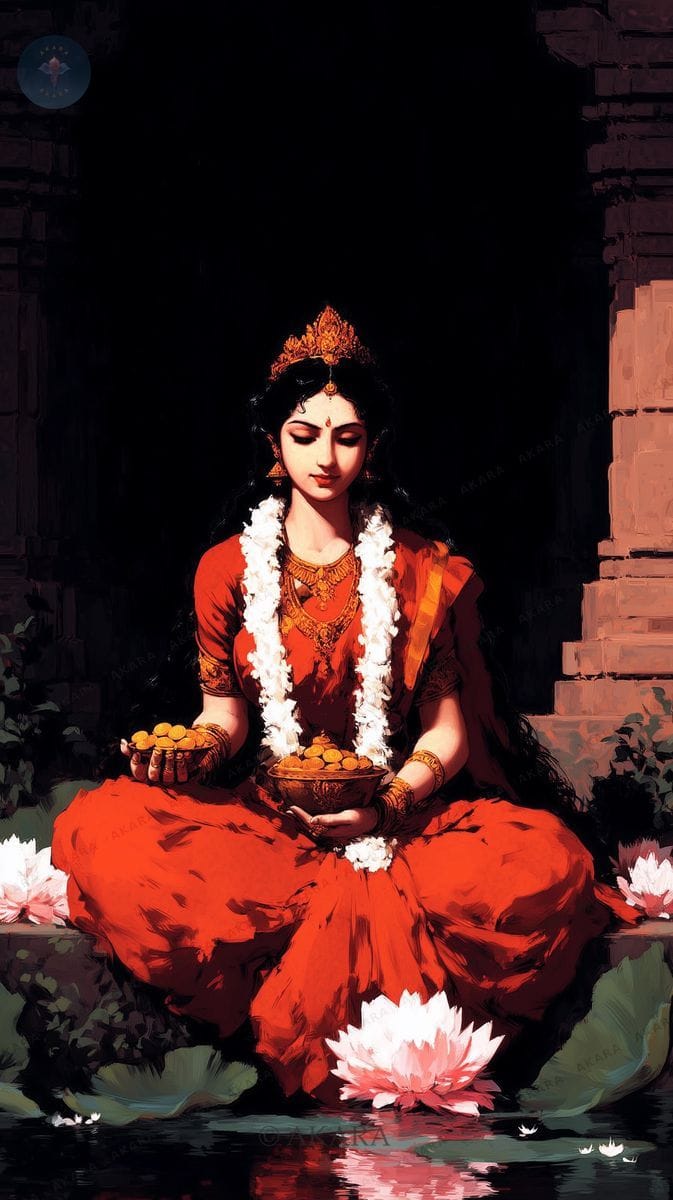
There is a moment each September when the Hindu calendar turns quietly inward. The grand festivals — Janmashtami, Ganesh Chaturthi — have just concluded, and before the brilliance of Navratri arrives, a hushed fortnight opens like a door left ajar. This is Pitru Paksha, the Fortnight of Ancestors, and as of today, 27 September 2026 — Krishna Pratipada, Sun in Kanya — it has begun. Across India and in diaspora homes worldwide, families are drawing water, scattering sesame seeds, and whispering the names of the beloved dead. In Gaya, Bihar, tens of thousands of pilgrims are already gathered at the Vishnupada ghat, performing Pind Daan beside the Phalgu river. This is not mourning. This is bhakti directed upstream — toward every soul that built the bridge on which we stand.
What Is Pitru Paksha — And Why Does It Begin Today?
The Sanskrit words are simple: pitru (पितृ) means ancestor or father, and paksha (पक्ष) means fortnight. Together they name the sixteen-day lunar period that falls in the Krishna Paksha — the waning half — of the month of Ashwin (or Bhadrapada under the Purnimanta reckoning of North India). Crucially, the Markandeya Purana specifies that Shraddha is to be performed for fifteen days when the Sun enters Kanya Rashi (Virgo) — and today, with the Sun firmly in Kanya and the moon on its first waning day, those words are astronomically exact.
Pitru Paksha 2026 runs from today, Saturday 27 September, through to Sarva Pitru Amavasya on Saturday 10 October — the New Moon that concludes the fortnight and which the tradition regards as its most important single day. On that final Amavasya, also called Mahalaya Amavasya, even those who have observed no other Shraddha during the period may offer a single, heartfelt rite for all ancestors known and unknown.
The panchang timing is never accidental in Sanatana Dharma. The waning moon, krishna paksha, is the domain of the ancestors — the pitrloka is said to be illuminated by the reflected light of the moon's retreat, and ritual offerings made in this half-month are believed to reach departed souls more directly. Today's nakshatra, Uttara Bhadrapada, is itself ruled by Ahir Budhnya, a form associated with the cosmic deep and ancestral waters — a quietly auspicious signature for the opening of this sacred period.
The Gaya Mela: Where Tradition and the Present Meet
No place on earth is more associated with ancestral rites than Gaya in Bihar. The Vishnupada Temple there stands on the footprint of Lord Vishnu pressed into stone, and the Phalgu river beside it is the traditional site for Pind Daan (piṇḍa dāna — offering of rice balls to the ancestors). The Mahabharata and the Valmiki Ramayana both mention Gaya as the supreme place for performing these rites; even Lord Rama is said to have come here to perform Shraddha for his father Dasharatha.
This year, the Pitru Paksha Mela at Gaya is witnessing what reports describe as a blend of traditional religious practice and modern technology, with extensive administration arrangements made for the safety and smooth movement of pilgrims arriving from across India and abroad. Hundreds of thousands are expected over the course of the fortnight. The scene — priests chanting by the river at dawn, the smell of sesame and kusha grass, families clutching photographs of parents and grandparents — is one of the most quietly moving in the entire Hindu calendar.
Beyond Gaya, Kashi (Varanasi), Prayagraj, Haridwar, and Rameswaram are also important centres for Pind Daan, each carrying its own regional scriptural authority. Families may also perform Shraddha and Tarpan at home, near a river, or at a local temple — the tradition is inclusive by design.
The Rites Themselves: Shraddha, Tarpan, Pind Daan
Three words carry the heart of the practice.
- Shraddha (śraddhā, श्रद्धा): The root means faith, sincerity, or reverent care. The Drikpanchang tradition cites the scriptural formula: "Shraddhaya Idam Diyate Iti Shraddham" — that which is given with sincere devotion is Shraddha. The Vishnu Purana, Manusmriti, and the Shraddha Kalpalata all contain extensive chapters on its proper performance. Maharishi Parashara defined it as any act performed with devotion, with sesame seeds (yava), Kusha grass (darbha), and mantras, offered at the right place, right time, and to the right recipient.
- Tarpan (tarpaṇa, तर्पण): The libation of water — often mixed with black sesame seeds, flowers, and sacred ingredients — offered while facing south, the direction of Pitrloka, with the sacred thread (yajnopavita) shifted to the right shoulder. The act is simultaneously an offering of nourishment and a declaration of remembrance. It is performed at rivers, tanks, or at home with a vessel of water.
- Pind Daan (piṇḍa dāna, पिण्ड दान): Rice or barley balls, sometimes mixed with sesame, honey, and ghee, offered to the departed. Each Pind represents a generation — typically three: the father, the grandfather, and the great-grandfather — acknowledging that we are not isolated individuals but the living tip of a long lineage.
Among the especially significant days within the fortnight, Maha Bharani — when the Bharani Nakshatra coincides with Pitru Paksha — carries special weight, as Bharani is associated with Yama, the lord of Dharma and the guardian of the departed. In 2026, Maha Bharani falls on 29 September, just two days from now. Madhyashtami, the Ashtami of the fortnight, falls on 3 October.
The Philosophy: Why Remember the Dead?
Modern life moves fast, and it is tempting to see these rites as archaic obligation. The tradition offers a different framing entirely.
The Taittiriya Upanishad places the duty to ancestors alongside the duty to the gods: one should not neglect either. In Sanatana Dharma, the web of existence is not simply horizontal — connecting us to those alive around us — but also vertical, reaching backward through the ancestors (pitrs) who transmitted life, language, dharma, and wisdom, and forward through the children who will carry what we leave. The English word lineage is thin compared to the Sanskrit santana — a continuous thread, the same root as Sanatana Dharma itself.
Pitru Paksha is, at its depth, a meditation on gratitude and continuity. Ancestral offerings are understood in some traditions to nourish and uplift the departing souls, addressing what is called pitru rina — the ancestral debt — one of the three great debts (tri-rina) a person is born into: to the gods (deva rina), to the sages (rishi rina), and to the ancestors. Performing Shraddha is not fear of ghosts; it is the settling of a love-debt, a civilised acknowledgement that we did not make ourselves.
Charitable acts — feeding cows, crows, Brahmins, and the poor — are woven through the fortnight. In many Hindu households, crows are received as honoured guests during these days, held to carry the spirit of visiting ancestors. A crow that accepts food from the Shraddha plate is considered a blessing. Even if one has no priest, no river, no elaborate ritual — sitting quietly before a photograph of a departed parent and offering them a cup of water with a sincere heart is, the tradition says, received.
How to Observe — Wherever You Are
For seekers and devotees worldwide, the fortnight offers a graded path of participation:
"The spirit of charity should be sincere service rather than display."
At a sacred river or tirthasthana: If you can travel to Gaya, Prayagraj, Haridwar, Kashi, or Rameswaram, do so — the scriptural merit assigned to Pind Daan at these places is immense. If you are near any river, perform Tarpan at sunrise or in the Aparahna (early afternoon) period, which is the traditional muhurta for ancestral rites.
At home: Set aside a clean space. Place photographs or simply speak the names of your departed. Offer water with sesame seeds facing south. Light a lamp. Feed a crow, a cow, or a hungry person in your ancestor's name. If possible, arrange a Shraddha puja with a priest — many now offer this remotely for diaspora families.
Through the inner life: Even beyond ritual, the fortnight invites a quality of reflection that is itself devotional — pausing to feel gratitude for the parents who raised you, the grandparents whose hands shaped the culture you inhabit, the teachers whose words still sound in your thinking. This, too, is Shraddha in its oldest sense: sincere, faithful remembrance.
A Closing Reflection
Sanatana Dharma, the eternal way, holds time as sacred texture rather than mere passing. Every tithi, every nakshatra, every solar ingress is a doorway — and today's doorway is the one that faces inward, toward the roots of the tree rather than its branches. The Gaya Mela roars with pilgrims; river ghats from the Ganga to the Thames will see folded hands and falling water. The ancestors are invoked not because they are lost, but because they are close — closer, perhaps, in these sixteen days than at any other time of year.
Light a lamp. Speak a name. Let gratitude flow upstream. That is the whole of it — and it is enough.
The ancestors are invoked not because they are lost, but because they are close — closer, perhaps, in these sixteen days than at any other time of year.
शान्ताकारं भुजगशयनं पद्मनाभं सुरेशम् śāntākāraṃ bhujagaśayanaṃ padmanābhaṃ sureśam
The peaceful one resting on the serpent, lotus-naveled lord of the gods. Vishnu in his element — holding the universe together while looking effortlessly serene.
Questions & answers
When does Pitru Paksha 2026 start and end?
Pitru Paksha 2026 begins on Saturday, 27 September 2026 — Krishna Pratipada of Ashwin — and concludes on Saturday, 10 October 2026, with Sarva Pitru Amavasya (also called Mahalaya Amavasya). The fortnight spans sixteen tithis in the waning lunar phase when the Sun is in Kanya (Virgo).
What is the difference between Shraddha, Tarpan, and Pind Daan?
Shraddha is the overarching term for any sincere ritual offering made to ancestors with faith and devotion. Tarpan is the specific rite of offering water (often mixed with black sesame seeds) to departed souls while facing south. Pind Daan is the offering of rice or barley balls representing successive generations of ancestors — it is most famously performed at Gaya, Prayagraj, Kashi, and Rameswaram.
Can Shraddha be performed at home, without travelling to a sacred river?
Yes. While tirtha-kshetras like Gaya and Kashi carry special merit in the tradition, Shraddha and Tarpan may be performed at home near any body of water, or even with a vessel of water. The sincerity of the offering — the shraddha within the Shraddha — is considered essential. Many families engage a Vedic priest in person or remotely, while others simply light a lamp, speak the ancestor's name, and offer water with sesame seeds.
What is Sarva Pitru Amavasya and why is it the most important day?
Sarva Pitru Amavasya (10 October 2026) is the New Moon day that concludes Pitru Paksha. 'Sarva' means 'all' — this day is set aside to honour every ancestor, known and unknown, and is especially used by families who do not know the exact death tithi of a forebear. It is also called Mahalaya Amavasya. Even a single offering made on this day with full devotion is considered to cover the entire ancestral line.
Why is Gaya the most sacred place for Pind Daan?
Gaya in Bihar is scripturally significant because of the Vishnupada Temple, said to mark the footprint of Lord Vishnu, and the Phalgu river beside it. Both the Mahabharata and Valmiki Ramayana name Gaya as the supreme tirthasthana for ancestral rites. Lord Rama himself is said to have performed Shraddha here for his father Dasharatha. The annual Pitru Paksha Mela at Gaya draws hundreds of thousands of pilgrims from across India and abroad every year.