Bharani Nakshatra & Krishna Chaturthi: Today's Panchang Guidance
When Bharani's fierce transformative energy meets the inward pull of Chaturthi, the day asks us to hold our power with patience and clear intention.
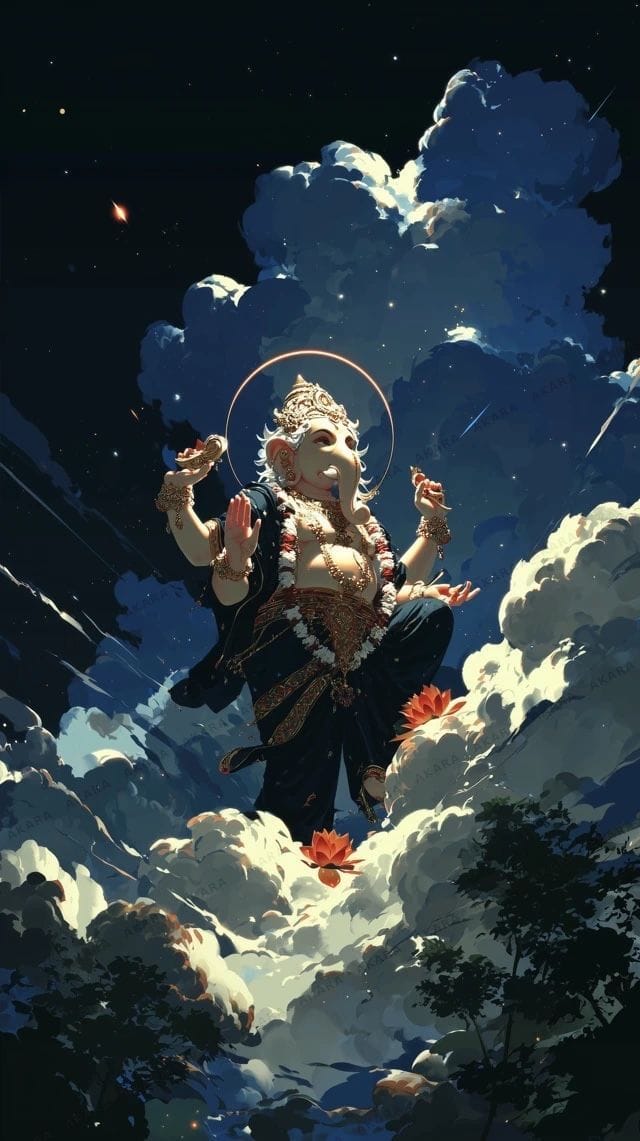
Every dawn in the Sanatana tradition arrives not as a blank slate but as a living configuration — a panchang, literally a 'five-limbed' reading of time that weaves together the tithi, nakshatra, yoga, karana, and vara into guidance older than any almanac. Today that configuration places the Moon in Mesha rashi, traversing the fourth pada of Bharani nakshatra, under the yoga called Vajra, on the Krishna Chaturthi tithi. To those schooled in Vedic jyotish, these are not merely astronomical coordinates. They are a temperament, a texture of time — and knowing it well allows us to move through this day with greater awareness, grace, and devotion.
The Five Limbs of Today: A Brief Orientation
The word panchang (Sanskrit: पञ्चाङ्ग, pañcāṅga) means five limbs: tithi (lunar day), vara (weekday), nakshatra (lunar mansion), yoga (a combined solar-lunar calculation), and karana (half-tithi). Traditional households across India still consult the panchang before beginning any significant undertaking — not out of superstition, but from a conviction rooted in Vedic cosmology that time itself is qualitative, not merely quantitative. Each configuration carries a distinct guna, a quality of energy that can either support or complicate our intentions. Today's reading holds several strong flavours worth understanding.
Bharani Nakshatra: The Womb of Transformation
Bharani (Sanskrit: भरणी) is the second of the twenty-seven lunar mansions, spanning 13°20' to 26°40' of Mesha (Aries). Its presiding deity is Yama, the lord of dharma and the sovereign of death — not death as tragedy, but as the great orderer, the one who ensures that what must end does end so that what must begin may begin. Its symbol is the yoni, the womb, signalling that Bharani is fundamentally a nakshatra of creative containment: things gestate here before they are born.
The ruling planet of Bharani is Shukra (Venus), lending the nakshatra an intensity of feeling and a capacity for deep pleasure as well as deep suffering. Bharani natives and Bharani days carry enormous creative and sensual energy — but this energy, like the womb itself, must be contained before it becomes generative. Bharani's shadow is restlessness, excess, and the impulse to force outcomes before their season.
Today the Moon moves through Bharani's fourth pada, which falls in the Navamsha of Dhanu (Sagittarius), giving this particular slice of the day a philosophical and idealistic undertone. There is longing here — a yearning toward meaning, toward the horizon. This is a good quality to honour. Let it deepen your reflection rather than scatter your attention.
"Mrityor mā amritam gamaya" — Lead me from death to immortality. (Bṛhadāraṇyaka Upaniṣad 1.3.28)
Yama, Bharani's lord, is ultimately a teacher of this very transition. The day quietly invites us to release what has already served its purpose.
Krishna Chaturthi: The Tithi of Ganesh and Inwardness
The tithi today is Krishna Chaturthi — the fourth lunar day of the waning (krishna paksha) fortnight. Chaturthi tithi is sacred to Shri Ganesha, the Vighnaharta (remover of obstacles) and Buddhipriya (lover of intelligence). On Chaturthi, tradition recommends worship of Ganesha with sincere devotion: the offering of durva grass, the chanting of the Ganapati Atharvashirsha, or simply a quiet moment of invocation before beginning any task.
Krishna paksha Chaturthi carries the energy of the Moon waning — inward, consolidating, and reflective rather than outwardly expansive. Where Shukla Chaturthi (the bright-fortnight fourth) surges with the confidence of new beginnings, Krishna Chaturthi is better suited to completion, to review, and to honest introspection. The Dharmasindhu, an authoritative digest of Hindu observance, notes Chaturthi as particularly favourable for worship, study, and the resolution of complex matters — and counsels restraint in inaugurating brand-new ventures on this day.
The combination of Bharani's intensity and the waning Chaturthi's inward pull creates an interesting dialogue: there is energy here, even urgency, but the wiser counsel is to direct it inward — into creative work already in progress, into relationships that need tending, into learning that deepens rather than dashes.
Vajra Yoga: Handle with Care
The yoga of the day is Vajra (Sanskrit: वज्र), named for Indra's thunderbolt — hard, brilliant, and capable of both illumination and destruction. Vajra yoga is traditionally classified among the ashubha yogas (inauspicious combinations) in standard jyotish texts such as the Muhurta Chintamani. This does not mean the day is inauspicious for living — far from it. It simply counsels that the force available today is double-edged. Sharpness of mind, directness of speech, and vigour of action are all heightened; so is the risk of bluntness becoming harshness, or energy becoming aggression.
Practice: before any important conversation today, pause for one full breath. Let the thunderbolt of your thought be aimed, not merely flung.
Moon in Mesha: Fire Meets Containment
With the Moon transiting Mesha (Aries), the emotional body is quickened — alert, eager, and sometimes impatient. Mesha is a chara (cardinal, moveable) rashi ruled by Mangal (Mars), and it gives the Moon an activist, pioneering quality. Combined with Bharani's own Martian setting (Aries) and the Venusian overlay of the nakshatra, today can feel charged with creative restlessness.
For those whose janma rashi (Moon sign) is Mesha, this is a chandrashtama-adjacent period calling for gentle self-care. For other rashis, Moon in Mesha may bring heightened initiative and the confidence to act — but today's tithi and yoga ask that initiative be channelled into existing commitments rather than impulsive new starts.
What the Day Favours — and What Counsels Patience
The day traditionally supports:
- Devotional practice (bhakti), especially Ganesha puja and any form of japa or mantra sadhana
- Creative work that is already underway — writing, music, artisanal craft, design
- Honest self-examination and journaling
- Study of scripture or philosophy (Bharani's fourth pada in Sagittarius blesses this warmly)
- Respectful resolution of pending conflicts — not their ignition
The day counsels patience on:
- Launching entirely new ventures or signing new agreements
- High-stakes confrontations — Vajra yoga amplifies edges
- Overextending physical energy; rest is productive today
- Impulsive financial decisions (Shukra rules Bharani, and waning Moon is not a day for acquisition)
A Reflective Practice for Today
In the spirit of Akara's devotional offering: find five quiet minutes this evening as the day consolidates. Light a small lamp if you have one. Offer a moment of gratitude to Ganesha — the lord of beginnings and the guardian of thresholds — for all that was begun and all that was wisely held back. Then place your palms together and sit with this question that Bharani and Yama together whisper: What am I still holding that has already fulfilled its purpose? You need not answer aloud. Simply let the question breathe. That is the real practice of this day.
This is traditional guidance drawn from Vedic jyotish principles. It speaks to collective tendencies in the energies of time — not to individual fate, which is the domain of your personal birth chart and your own discerning heart.
What am I still holding that has already fulfilled its purpose? That is the real practice of this day.
वक्रतुण्ड महाकाय सूर्यकोटि समप्रभ । निर्विघ्नं कुरु मे देव सर्वकार्येषु सर्वदा ॥ vakratuṇḍa mahākāya sūryakoṭi samaprabha | nirvighnaṃ kuru me deva sarvakāryeṣu sarvadā ||
O Lord with the curved trunk and mighty form, whose radiance equals a million suns, remove all obstacles from my path in all endeavors, always.
Questions & answers
What is Bharani nakshatra and why is it significant in Vedic astrology?
Bharani is the second of the twenty-seven lunar mansions (nakshatras), spanning 13°20' to 26°40' of Mesha (Aries). Its presiding deity is Yama, lord of dharma and death, and its symbol is the yoni (womb), representing creative containment and transformation. Ruled by Shukra (Venus), Bharani days and natives carry intense creative energy that works best when directed with patience and clear intention.
What is Krishna Chaturthi and how should one observe it?
Krishna Chaturthi is the fourth lunar day of the waning fortnight (krishna paksha). It is sacred to Lord Ganesha and is traditionally observed through Ganesha puja, chanting of the Ganapati Atharvashirsha, or quiet invocation. The waning Moon gives this tithi an inward, consolidating character — ideal for worship, study, completion of existing work, and honest reflection rather than new launches.
What does Vajra yoga in the panchang mean for the day?
Vajra yoga is a combined solar-lunar calculation (one of twenty-seven yogas in the panchang) named for Indra's thunderbolt. It is traditionally classified as an inauspicious yoga, not because the day is bad, but because the energy is sharp and double-edged. It heightens mental clarity and directness but also the risk of harshness. The practical guidance is to be thoughtful before speaking and to channel vigour into purposeful rather than impulsive action.
Does the daily panchang apply to everyone equally?
The panchang describes a collective quality of time — a shared backdrop, much like weather. How it interacts with your life depends on your individual birth chart (janma kundali), your current planetary periods (dasha), and your own choices. Traditional guidance from the panchang is best understood as a framework for awareness, not a personal prediction. For individual guidance, consultation with a trained Vedic astrologer is recommended.
What activities are considered inauspicious on today's panchang?
Given the combination of Krishna Chaturthi (waning Moon), Bharani nakshatra's intensity, and Vajra yoga, traditional jyotish guidance counsels patience on: launching entirely new ventures, signing new agreements, high-stakes confrontations, overextending physical energy, and impulsive financial decisions. The day favours inward, devotional, and creative-consolidation activity over outward expansion.