Maha Mrityunjaya Mantra: Meaning, Origins & Significance
The most ancient of healing mantras, the Maha Mrityunjaya calls on Lord Shiva to liberate us from the fear of death and the cycle of ignorance.
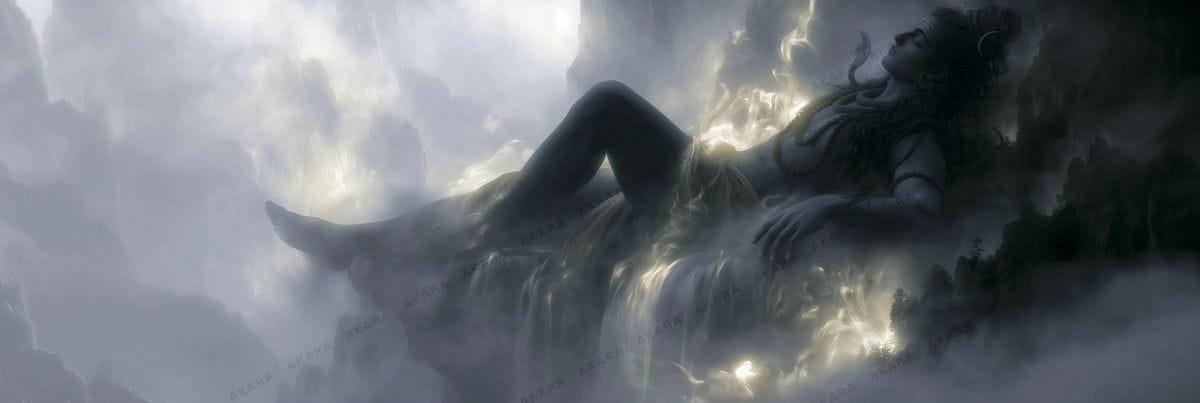
On a morning when Yoga Shiva graces the panchang and the Sun stands in Kanya — the sign of discernment and healing — there is no more fitting moment to turn our attention to the mantra that Sanatana Dharma calls the great conqueror of death: the Maha Mrityunjaya. Older than cities, older perhaps than writing itself, this seven-syllable-rooted verse from the Rigveda has been chanted at bedsides, on riverbanks, and in the quietest corners of the seeking heart for millennia. To understand it is to receive a gift the tradition has been carefully preserving for us.
The Source: Where Does the Mantra Come From?
The Maha Mrityunjaya Mantra appears first in the Rigveda (Mandala VII, hymn 59, verse 12), attributed to the great rishi Vasishtha. It recurs in the Krishna Yajurveda (within the Taittiriya Samhita, 1.8.6.i) and is intimately associated with the Shri Rudram, a canonical hymn to Lord Shiva's fierce and benevolent form, Rudra. The mantra is also called the Tryambaka Mantra — named for its very first invocation — and the Rudra Mantra, acknowledging its Shaivite lineage.
Tradition attributes its revelation to the sage Markandeya, whose own story is inseparable from the mantra's power. Born with a destined lifespan of only sixteen years, Markandeya worshipped Lord Shiva with such single-pointed devotion that when Yama, the god of death, came for him, Shiva himself interceded — striking Yama back and granting the boy immortality. The mantra Markandeya chanted is said to be this very verse. His story is told in the Shiva Purana and the Markandeya Purana, and it encodes the mantra's essential teaching: sincere devotion (bhakti) directed toward the eternal transforms our relationship with mortality itself.
The Full Mantra: Transliteration and Word-by-Word Meaning
The verse, in Devanagari and transliteration:
ॐ त्र्यम्बकं यजामहे सुगन्धिं पुष्टिवर्धनम् । उर्वारुकमिव बन्धनान् मृत्योर्मुक्षीय माऽमृतात् ॥
Oṃ tryambakaṃ yajāmahe sugandhiṃ puṣṭi-vardhanam | urvārukam iva bandhanān mṛtyor mukṣīya mā'mṛtāt ||
Broken down with care:
- Oṃ — The primordial sound, the cosmic syllable that precedes all creation.
- Tryambakam (त्र्यम्बकम्) — Tri (three) + ambaka (eye or mother). "The three-eyed one" — Lord Shiva, whose third eye is the eye of wisdom that perceives beyond time.
- Yajāmahe (यजामहे) — "We worship, we honour, we offer." A plural of reverent inclusion; the entire community worships together.
- Sugandhim (सुगन्धिम्) — "The fragrant one." Shiva pervades existence as a sweet, invisible presence, the way fragrance fills a room without being seen.
- Puṣṭi-vardhanam (पुष्टिवर्धनम्) — "The one who nourishes and increases strength" — puṣṭi meaning nourishment of body, mind, and spirit; vardhanam meaning that which causes growth.
- Urvārukam iva (उर्वारुकमिव) — "Like the cucumber (or melon)." A precise agricultural metaphor: the ripe fruit separates naturally and effortlessly from the vine when its time has come.
- Bandhanāt (बन्धनात्) — "From bondage" — the binding to samsara, to ego-identification, to the illusion that we are only this body.
- Mṛtyoḥ (मृत्योर्) — "From death" — mṛtyu, from the root mṛ, to die.
- Mukṣīya (मुक्षीय) — "May we be liberated, released." From mukti, liberation — the same root as moksha.
- Mā amṛtāt (माऽमृतात्) — "Not from immortality" — a-mṛta, that which does not die. The prayer is not for escape from the deathless, but to be released from death into deathlessness.
The complete prayer, in luminous prose: We worship the three-eyed Lord Shiva, the fragrant one who nourishes all beings. May He liberate us from the bondage of death, as the ripe fruit is released from the vine — but never from immortality.
Notice the elegance: the devotee does not ask to avoid death, but to pass through it the way fruit passes from vine — naturally, fully ripe, without violence or clinging.
The Three Eyes of Tryambaka: A Philosophical Reading
The epithet Tryambakam deserves quiet attention. The three eyes of Shiva are understood in the Shaiva Agamas and the commentaries of Shankaracharya as symbols of the three modes of perception: the sun (active awareness), the moon (reflective mind), and fire (the inward eye of wisdom). Together they constitute complete, undistorted vision — seeing past, present, and future; form and formlessness; the mortal and the immortal.
In the context of the mantra, to invoke Tryambaka is to ask for this triple vision to be turned upon our own condition — so that we, too, begin to see ourselves as more than the body that will one day cease. This is the philosophical heart of the healing mantra: healing is not only of tissue and organ, but of perception. We suffer because we identify with what is perishable. The mantra gently invites a reorientation.
How and When to Chant: Practical Guidance
The tradition offers generous guidance for the sincere seeker:
- Time: Brahma-muhurta (the hour before sunrise) is ideal, when the mind is clear and the atmosphere is sattvic. The mantra may also be chanted at any hour of genuine need.
- Number of repetitions: 108 is classical — once for each of the 108 beads on a rudraksha mala, which is itself sacred to Shiva. For special intentions (illness, grief, transition), 1008 repetitions over consecutive days is a traditional sankalpa (vow).
- Accompaniment: Offering bilva (bael) leaves to a Shivalinga while chanting amplifies the traditional power of the practice. Water charged with the mantra is used in healing and purification rituals.
- **Intention (sankalpa)**: Before beginning, state your purpose clearly in your heart — whether healing for yourself or another, peace for the departing, or simply the deepening of your bhakti and surrender.
- Voice: The mantra may be chanted aloud (vaikhari), whispered (upamshu), or silently in the mind (manasika). All three carry efficacy; the inward chant is considered the most refined.
The Living Mantra: Presence in the Modern World
The Maha Mrityunjaya Mantra is perhaps the most universally recognised verse in Hindu spirituality, chanted across Shaiva, Vaishnava, and Shakta traditions alike with equal reverence. It is heard at hospitals and hospices, at the start of surgical procedures, at last rites, and at the quiet beginning of an ordinary morning. Scientists studying mantra meditation have documented reductions in cortisol and measurable shifts in heart rate variability during repetitive chanting — not, the tradition would say, because the mantra is merely a relaxation technique, but because its vibration genuinely resonates with something real in the fabric of consciousness.
At Akara, we understand the sacred arts — sound, image, devotion — as pathways that the tradition has always used to keep the seeker anchored in what is eternal. The Maha Mrityunjaya is the supreme example: seven metric syllables that have carried uncounted human beings across the threshold of fear and into the open space where death is seen for what it is — not an ending, but a release into the deathless.
A Closing Reflection
There is a reason this mantra has survived every century since the Rigveda was first heard. It does not promise that the body will not perish. It promises something far more valuable: that the one who chants with understanding and devotion will ripen — like the cucumber from the vine — and that the release, when it comes, will come naturally, without the violence of unreadiness. To chant the Maha Mrityunjaya is to practise, daily, the art of letting go — of false identities, of fear, of the belief that we are only what can be lost. It is, in the deepest sense, a mantra not about death at all. It is a mantra about learning, at last, to live.
To chant the Maha Mrityunjaya is to practise, daily, the art of letting go — of false identities, of fear, of the belief that we are only what can be lost.
गिरिशं गंगाधरं सोमशेखरम् giriśaṃ gaṅgādharaṃ somaśekharam
the mountain lord who holds ganga and wears the moon as his crown. bholenath makes nature his temple.
Questions & answers
What does the Maha Mrityunjaya Mantra literally mean?
Word for word, it translates as: 'We worship the three-eyed Lord Shiva, the fragrant one who nourishes all beings. May He liberate us from the bondage of death, as the ripe fruit is released naturally from the vine — but never from immortality.' The key prayer is for liberation from fear and attachment to mortality, not a plea to avoid death itself.
Who composed the Maha Mrityunjaya Mantra and where does it appear in scripture?
The mantra is attributed to the rishi Vasishtha and appears first in the Rigveda (Mandala VII.59.12). It also appears in the Krishna Yajurveda (Taittiriya Samhita 1.8.6). Tradition also associates it with the sage Markandeya, whose story of devotion to Shiva and conquest of death is recounted in the Shiva Purana and Markandeya Purana.
How many times should the Maha Mrityunjaya Mantra be chanted?
The classical count is 108 repetitions, ideally on a rudraksha mala. For specific intentions — healing of illness, prayers for someone nearing death, or a formal vow — 1008 repetitions over 11 or 21 consecutive days is the traditional practice. Even a single sincere recitation, according to tradition, carries great value.
What is the significance of the cucumber (urvārukam) image in the mantra?
The metaphor of the cucumber or gourd separating naturally from the vine when ripe is one of the most precise images in all of Vedic poetry. It conveys that the ideal death — and the ideal liberation — is natural, timely, and without suffering or clinging. The devotee prays to ripen fully in wisdom and devotion so that the release from mortality comes as gracefully as fruit falls from the vine.
Can the Maha Mrityunjaya Mantra be chanted for someone else?
Yes. The mantra uses the plural 'yajāmahe' — 'we worship' — and its intention naturally encompasses others. It is traditionally chanted for the ill, the dying, and those who have recently passed. A sankalpa (a stated intention at the outset) dedicating the practice to a specific person makes the offering more focused and, in the understanding of bhakti, more powerful.