Indira Ekadashi 2026: The Day the Preserver Listens for Ancestors
On the eleventh lunar day of Ashwin Krishna Paksha, devotion to Narayan and remembrance of the departed converge in one of the year's most tender observances.
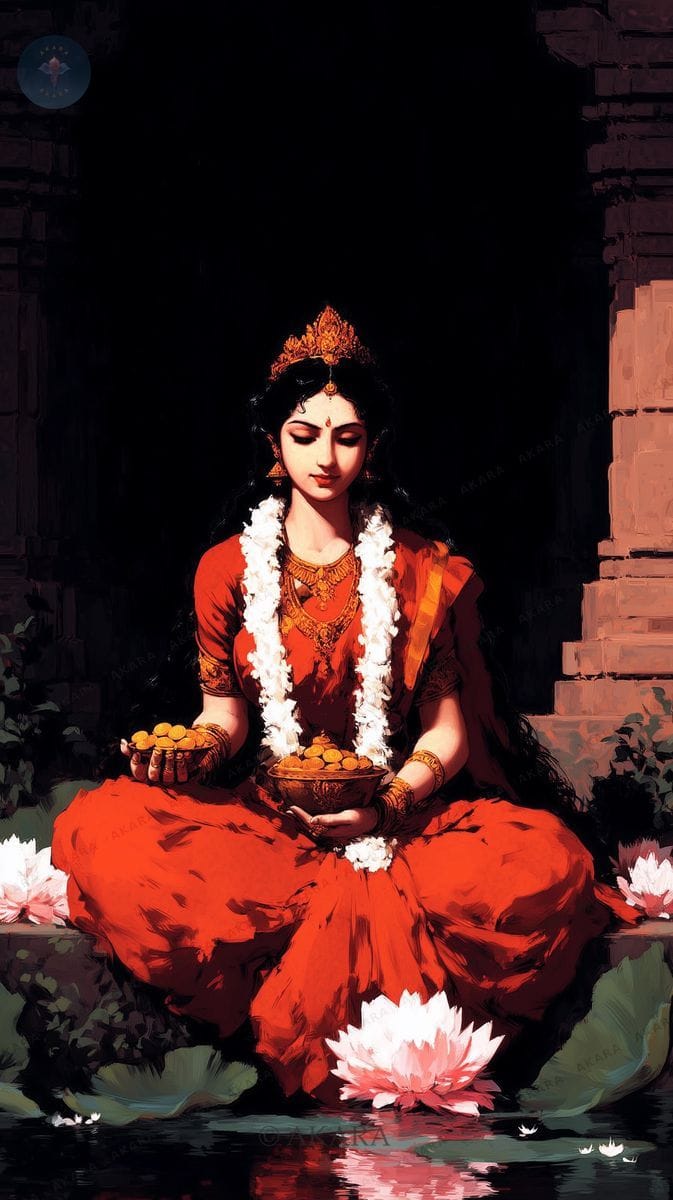
There are days in the Hindu calendar when the present and the ancestral past seem to thin into a single breath. Indira Ekadashi — observed today, Tuesday 6 October 2026 — is one of those days. Falling on the Krishna Paksha Ekadashi of the month of Ashwin, right in the heart of Pitru Paksha, it asks us to do two things at once: to turn toward Lord Vishnu, the great Preserver of all worlds, and to turn toward the faces of those who came before us. That double gaze — forward into the divine, backward into lineage — is what makes this particular Ekadashi unlike any other in the year.
What Is Ekadashi — and Why the Eleventh?
The word Ekadashi (एकादशी, Ēkādaśī) is deceptively simple: eka means "one" and daśī is a contraction of daśan, "ten" — together, "the eleventh." <ref:4-1,4-2>Ekadashi is the eleventh lunar day (tithi) of the waxing (Shukla Paksha) and waning (Krishna Paksha) cycles in the Vedic calendar.</ref> There are therefore twenty-four Ekadashis in a solar year, two in every lunar month, each with its own name, its own presiding form of Vishnu, and its own scriptural narrative (katha). Yet all share a single axis: the worship of Hari, the remover of pain, the one the Puranas call Vishnu — the All-Pervading.
The astronomical logic is precise and elegant. <ref:4-7,4-8,4-9,4-10,4-11>The Hindu calendar marks each arc of the moon's journey in twelve-degree segments, each measuring one lunar day (tithi). The eleventh tithi corresponds to a precise angle and phase of the waxing and waning moon.</ref> On this day, tradition has long observed that the mind is more porous — drawn naturally toward sattva, toward clarity and quiet. <ref:33-2>The Ayurvedic view, too, recognises this: one day of light food in a fortnight is rest for the digestion, and the moon's influence on the mind is particularly strong on Ekadashi — making it a day of natural restraint.</ref>
The Myth at the Root: Ekadashi Devi and the Padma Purana
Every great observance in Sanatana Dharma has a story behind it, and Ekadashi's story lives in the Padma Purana. <ref:18-7,18-8,18-9,18-10,18-11>The origin of Ekadashi is narrated there: once, a powerful demon named Mura terrorised the world. Lord Vishnu, to protect dharma, manifested a divine energy from his own body — a radiant, celestial force — who destroyed the demon. Vishnu named her Ekadashi Devi, and declared that those who observe the fast on this day will be blessed with victory over sins and attain liberation.</ref>
But today's Ekadashi carries a second, equally moving narrative. <ref:25-5,25-6,25-7>According to tradition, King Yudhishthira once asked Lord Krishna about the Ekadashi observed during Pitru Paksha. Lord Krishna explained that the Ekadashi falling in the Krishna Paksha of the Ashwin month is known as Indira Ekadashi, and he narrated the story of King Indrasena to illuminate its significance.</ref> In that Puranic account, King Indrasena's father was suffering in the lower planes — trapped there by the weight of unfulfilled karma. The sage Narada appeared to Indrasena in a dream, instructing him to observe the Indira Ekadashi vrat and to dedicate its spiritual merit — its punya — to his father. The king obeyed. <ref:22-11,22-12>According to the legend, his father was freed from his suffering and attained a higher spiritual state. The story forms the heart of Indira Ekadashi's religious significance: devotion and remembrance can become acts of love extending across generations.</ref>
Today's Tithi: Panchang for 6 October 2026
For those observing from India, the tithi details are precise. <ref:7-2>Indira Ekadashi falls on 6 October 2026, a Tuesday, with the Ekadashi tithi running from 2:08 AM to 7 October at 12:35 AM.</ref> The auspicious Brahma Muhurta opens the day: <ref:1-9>Brahma Muhurat runs from 4:39 AM to 5:28 AM, with Pratah Sandhya from 5:03 AM to 6:17 AM and the Abhijit Muhurta at 11:46 AM.</ref> Those who wish to break the fast on Dwadashi tomorrow have a clear window: <ref:7-13>for Indira Ekadashi, parana runs from 6:18 AM to 8:39 AM on 7 October 2026 — a window of approximately two hours twenty minutes.</ref> Devotees outside the Delhi–Pune meridian are advised to verify timings against their local sunrise, as tithi observance is keyed to location and panchang tradition.
Today's panchang also notes Nakshatra Ashlesha pada 2, Yoga Siddha, and the Sun in Kanya (Virgo) — a configuration that lends the day its contemplative, inward quality. Siddha yoga is considered especially auspicious for undertaking vows (sankalpa).
The Double Grace: Vishnu and the Pitrus
What makes Indira Ekadashi singular in the wheel of the year is its layering. <ref:19-5,19-6,19-7>Indira Ekadashi is observed on the eleventh day of the Krishna Paksha in the Hindu month of Ashwin, and it is distinct from other Ekadashis because it falls during Pitru Paksha — the fortnight dedicated to ancestral remembrance and offerings. Observing this vrat is believed to bring peace to the souls of deceased forefathers, particularly those who may not have achieved liberation.</ref>
<ref:22-9,22-10>Devotees believe that prayers, charity and religious observances performed on this day can help bring spiritual merit to ancestors. The observance therefore combines two important themes of Hindu tradition: devotion to Vishnu and reverence for one's forefathers.</ref> This is not mere coincidence of the calendar. The Puranic instinct is that Vishnu — as Jagadisha, Lord of all worlds — holds jurisdiction over all states of existence, including those planes in which departed souls await their next movement. The devotee who fasts and prays for the mukti of an ancestor is, in the deepest sense, surrendering that ancestor to the grace of Narayana.
<ref:19-12>This practice reinforces the Vedic concept of Rina — the debt we owe to our ancestors — which is fulfilled through gratitude and ritualistic remembrance.</ref> Indira Ekadashi is thus an act of bhakti that is simultaneously personal and cosmic: personal in its love for the departed, cosmic in its appeal to the Preserver of dharma.
How to Observe: Vrat, Puja, and Mantra
The vrat begins, properly speaking, the evening before — on Dashami. <ref:33-4>On the evening of Dashami, a sattvic meal is taken (no rice, garlic, or onion in many homes), with nothing after sunset; celibacy is observed, and Tulsi leaves are plucked today, as plucking Tulsi on Ekadashi itself is forbidden.</ref>
On Ekadashi morning: <ref:33-6>bathe during the Brahma Muhurta or at sunrise; wear clean clothes (yellow is traditional); take the sankalpa — the formal inner vow; then worship Vishnu or Lakshmi-Narayana with panchamrit, yellow sandalwood, Tulsi leaves (considered essential), yellow flowers, incense, and a lamp.</ref>
The fast itself admits gradations of intensity: <ref:28-3>for those who cannot maintain a complete fast, a single sattvic, grain-free meal using ingredients like sabudana or singhara flour is acceptable.</ref> The central rule — the one from which no tradition permits departure — is the avoidance of grains. <ref:33-1>According to the Padma Purana, sin resides in grain on Ekadashi; the vrat destroys sin, grants Vishnu's realm, and the fulfilment of righteous wishes.</ref>
Throughout the day, the mantra Om Namo Narayanaya (ॐ नमो नारायणाय — "I bow to Narayana") is the thread that holds everything together. Simple, ancient, and complete, this eight-syllable ashtakshara mantra is considered Vishnu's own name-offering, a direct invocation of the one who sustains all beings. Chanting it 108 times on a Tulsi mala during the morning puja or in quiet afternoon sits is the recommended practice. <ref:22-7>Devotees observe fasting, prayer, meditation, and the chanting of Vishnu's names as the core of the day's observance.</ref>
In the evening, perform Vishnu aarti. <ref:33-9>At the Pradosh hour, light a Tulsi lamp and sing the aarti; a night vigil — with bhajan, kirtan, or the recitation of the Vishnu Sahasranama — is traditional and especially meritorious on Indira Ekadashi.</ref>
Because this is Pitru Paksha, many families also perform tarpan — the offering of water in the name of departed ancestors — after the morning puja. <ref:19-13,19-14>Devotees offer yellow flowers, incense, lamps, and seasonal fruits to the deity; and since the observance falls during Pitru Paksha, many also perform tarpan, the water offering to ancestors, after the morning puja.</ref>
Why It Matters Now
<ref:18-1>Scriptures mention that sincere observance of Ekadashi, along with devotion to Vishnu, helps the soul transcend karma and reach Vaikuntha.</ref> That ancient promise finds fresh resonance in an age of restless acceleration. Modern life rarely affords us the stillness to remember those who carried us into existence — grandparents whose names we may barely know, ancestors who held the thread of our lineage across centuries. Indira Ekadashi asks us to pause. To fast — not merely from food, but from noise, from haste, from the ceaseless demand of screens and schedules. <ref:28-4>The focus must remain on maintaining a pure mind and avoiding negative speech or actions throughout the day.</ref>
The Akara understanding of bhakti — devotion as a living practice, not a ritual formality — finds its clearest expression in observances like this one. Here, worship is not performance. It is the sincere tilting of one's whole being toward Hari, toward the Preserver, and asking that his grace flow not only forward into one's own life, but backward, into the subtle realms where ancestors still linger. That is a prayer both humble and audacious — and it is precisely the kind of prayer that Sanatana Dharma has always known how to make.
Om Namo Narayanaya — three words, one universe, offered in the stillness of the eleventh day.
Devotion and remembrance can become acts of love extending across generations.
शान्ताकारं भुजगशयनं पद्मनाभं सुरेशम् śāntākāraṃ bhujagaśayanaṃ padmanābhaṃ sureśam
The peaceful one resting on the serpent, lotus-naveled lord of the gods. Vishnu in his element — holding the universe together while looking effortlessly serene.
Questions & answers
When exactly is Indira Ekadashi in 2026, and what are the tithi timings?
Indira Ekadashi is observed on Tuesday, 6 October 2026. The Ekadashi tithi begins at approximately 2:07–2:08 AM IST on 6 October and ends at approximately 12:34–12:35 AM IST on 7 October. The parana (fast-breaking) window on Dwadashi is from around 6:17–6:18 AM to 8:37–8:39 AM on 7 October. Timings are calculated for New Delhi/IST; devotees in other cities or countries should verify against their local sunrise.
Why is Indira Ekadashi considered especially significant compared to other Ekadashis?
Indira Ekadashi falls during Pitru Paksha, the fortnight dedicated to ancestral remembrance. This means the day carries a double grace: devotion to Lord Vishnu, and the opportunity to offer the merit of the vrat to departed ancestors — a practice believed to help liberate souls that have not yet attained moksha. Most Ekadashis focus on personal spiritual benefit; Indira Ekadashi uniquely extends that benefit to one's lineage.
What are the basic rules of the Ekadashi fast — what can and cannot be eaten?
The single non-negotiable rule is the avoidance of all grains — rice, wheat, millets — and pulses. Traditionally permitted foods include fresh and dried fruit, milk, curd, sabudana (tapioca), singhara (water chestnut) flour, kuttu (buckwheat) flour, potatoes, peanuts, sendha namak (rock salt), and ghee. Onion, garlic, alcohol, and non-vegetarian food are strictly avoided. Those who cannot maintain a full fast may take a single sattvic, grain-free meal. Medical conditions should take precedence — consult a physician if in doubt.
What mantra should be chanted on Ekadashi, and how?
The primary mantra for Ekadashi devotion is Om Namo Narayanaya (ॐ नमो नारायणाय) — the ancient eight-syllable (ashtakshara) salutation to the All-Pervading Lord. It may be chanted 108 times on a Tulsi mala during morning puja, repeated softly through the day, or offered in evening aarti. Om Namo Bhagavate Vasudevaya is also widely chanted. The Vishnu Sahasranama — the thousand names of Vishnu — is traditionally recited during the night vigil.
How should one perform the ancestral remembrance (tarpan) on Indira Ekadashi?
Tarpan is the offering of water — typically from cupped palms tilted southward — in the name of departed ancestors, accompanied by their names and gotras if known. On Indira Ekadashi, it is performed after the morning bath and Vishnu puja. Families who follow a priest-led tradition may have the tarpan performed under priestly guidance. The intention (sankalpa) to dedicate the merit of the day's fast and puja to the peace and liberation of ancestors is considered as important as the ritual itself.