Lord Ganesha: The Elephant-Headed God Who Clears the Path
On this Wednesday, the day that belongs to Ganapati, we explore the depths of the elephant-headed deity who stands at every threshold.
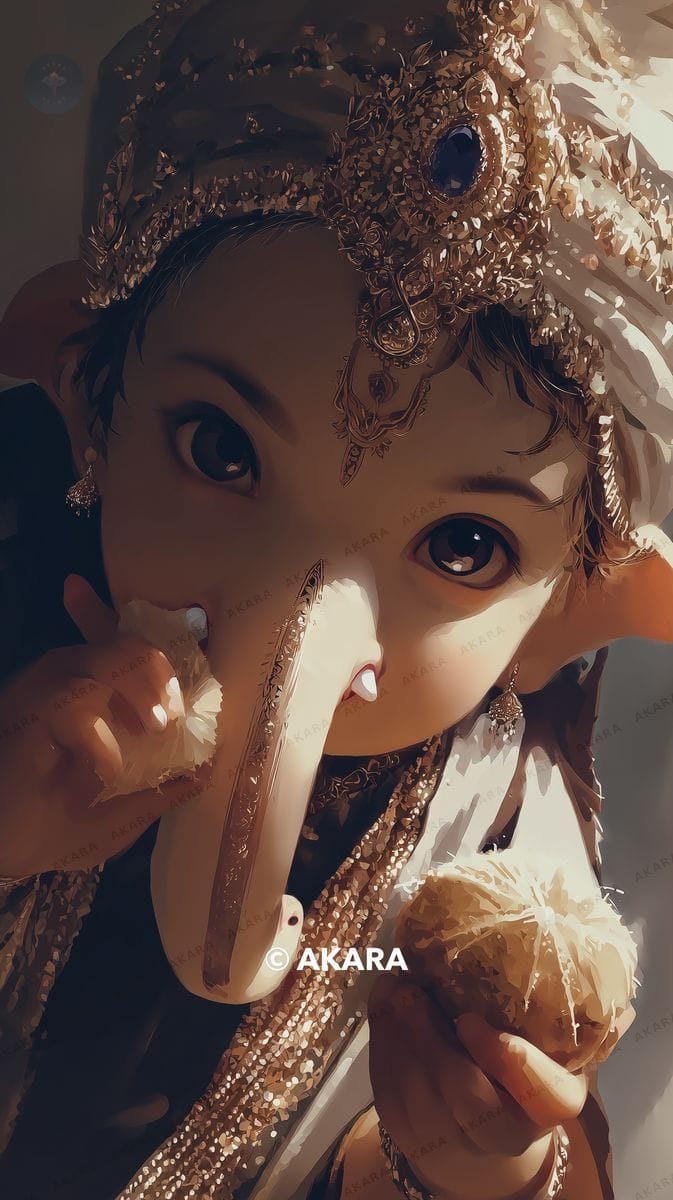
Before a single syllable is chanted, before a new venture is launched, before a bride and groom exchange garlands — Ganesha is invoked first. Across every corner of Sanatana Dharma, from a village shrine in Tamil Nadu to a family puja room in Toronto, the elephant-headed lord receives the first flower, the first flame, the first prayer. This primacy is not accident or convention; it is theology. Ganesha is Vighneshvara, the sovereign over all obstacles, and Adi-puja-arha, the one who deserves the opening act of worship. On this Wednesday — his day, his vaar — we sit with his story, his form, and the quiet but transforming invitation he extends to every seeker.
The Day That Belongs to Him
In the traditional Hindu week, each day carries a presiding deity — a vaar devata whose energy colours the hours. Wednesday, Budhavar, is governed by Budha (Mercury), planet of intellect and communication. Yet in popular devotional practice across Maharashtra, Rajasthan, and beyond, Wednesday has become intimately associated with Lord Ganesha — the master of buddhi (discriminative wisdom) and the lord of all auspicious beginnings. The resonance is elegant: Mercury rules the mind's agility; Ganesha rules the wisdom that guides it. Worshipping Ganapati on this day, especially during Shubha Yoga as the panchang marks today, is considered particularly auspicious for removing mental blocks, clearing confusion, and welcoming clarity.
Today's nakshatra, Magha, belongs to the Pitrs — the ancestral luminaries — and carries a regal, rooted energy. Beginning any learning, initiation, or devotional resolve under Magha's second pada, with the Sun placed in Kanya (Virgo), the sign of discernment, deepens the Ganesha quality of the day: clear seeing, careful thinking, purposeful beginning.
Who Is Ganesha? The Theology Behind the Form
Ganesha is the son of Shiva and Parvati, yet his significance exceeds biography. The Ganapati Atharvashirsha Upanishad, one of the 108 canonical Upanishads, opens with a declaration that stops the breath: Tvam eva pratyaksham tatvamasi — "You alone are the visible form of That" (the supreme Brahman). In other words, Ganesha is not merely a doorkeeper-deity to be quickly propitiated before addressing the "real" divine. He is himself the whole. The Ganapatya tradition — one of the six major Hindu sects — worships him as the supreme being from whom all creation unfolds.
For most devotees, however, Ganesha occupies a beloved middle space: he is the approachable, almost tangible face of the infinite. His pot-bellied, elephant-headed form is not whimsical folk invention; it is a map of the cosmos compressed into an image.
Reading the Iconography: A Living Symbol System
Every element of the traditional Ganesha murti (image) carries precise meaning:
- Elephant head: The elephant is the largest land animal and the symbol of supreme intelligence (medhashakti) and irresistible will. An elephant does not go around obstacles — it moves through them.
- Large ears: He listens to all prayers. Shaped like winnowing baskets, they separate the essential from the trivial.
- Small eyes: They see with precision and focus, not with the scatter of distraction.
- Single tusk: Ganesha broke his own tusk to use as a pen when transcribing the Mahabharata at Vyasa's dictation. The broken tusk teaches that great creation demands personal sacrifice.
- The trunk: Curved left (towards the heart) or right (the more energetically intense form), the trunk is Aum itself — the pranava mantra given visible shape.
- Modaka (sweet dumpling): Held in one hand or pressed to his trunk, the modaka is the sweetness of self-realisation, the fruit of sincere practice.
- Four arms: They typically hold the modaka, a noose (pasha) to draw seekers toward spiritual life, a goad (ankusha) to remove obstacles and conquer the ego, and one hand extended in abhaya mudra — the gesture that says, do not fear.
- Mouse as vahana: The mouse represents the restless, nibbling mind. Ganesha sits upon it — he is the master of that mind, not its servant.
"He who is the lord of beginnings, seated on the mouse — that sacred paradox is the whole of the spiritual path: riding the very thing that once scattered us."
Two Stories That Illuminate His Nature
The Race Around the World: In the Shiva Purana, Shiva and Parvati once offered a divine fruit — the prize of supreme wisdom — to whichever of their sons first circumambulated the universe. Kartikeya mounted his peacock and set off across the cosmos. Ganesha, with his round belly and small mouse for a vehicle, simply walked around his parents. "You are the universe," he said. "To circumambulate you is to encompass all." He received the fruit. The story is not about cleverness over athleticism — it is about the recognition that the divine is not elsewhere. The seeking mind that recognises its own parents as the whole does not need to travel far.
The Transcription of the Mahabharata: The sage Vyasa wished to dictate the Mahabharata but needed a scribe capable of keeping pace with his inspired transmission. Brahma advised him to call upon Ganesha. Ganesha agreed — but on one condition: Vyasa must not pause. Vyasa agreed — on his own condition: Ganesha must not write a single word without fully understanding it. This divine negotiation built depth and contemplation into the very act of recording. The Mahabharata is thus, from the first, a text meant not to be raced through but pondered. Every syllable was understood by its first scribe.
The Mantra: Om Gam Ganapataye Namah
The primary mantra of Lord Ganesha is: Om Gam Ganapataye Namah (ॐ गं गणपतये नमः). Broken down: Om is the primordial sound; Gam is the bija (seed) mantra of Ganesha — a compact, vibrational key to his energy; Ganapataye is the dative form of Ganapati, meaning "to the lord of the ganas (hosts)"; Namah is "I bow, I offer reverence." Chanting this mantra 108 times — on a rudraksha mala or simply in the quietude of the heart — is the simplest and most complete form of Ganesha worship. On Wednesdays, many devotees begin their morning with this japa before any other task.
The Ganapati Atharvashirsha recommends dawn recitation facing east. Even a single sincere repetition, the scripture says, purifies the speaker and clears the path ahead.
How Devotees Worship Today
Ganesha puja is among the most accessible forms of bhakti in Hindu spirituality — and that accessibility is itself his gift. A few red hibiscus flowers (his preferred offering), a handful of durva grass (the three-bladed grass that cools and blesses), a modaka or even a piece of jaggery, incense, and a lamp — this is enough. The Shodashopachara puja (sixteen offerings) is the elaborate form; the Panchopachara (five offerings) serves equally well for daily devotion.
In the Akara spirit of connecting the ancient to the everyday: before opening your laptop, before a difficult conversation, before sitting down to create — light a small diya, breathe in, and offer the mantra. The ritual need not be elaborate. The intention need only be sincere.
What Ganesha Asks of the Seeker
Every deity in Sanatana Dharma is also a mirror — a reflection of a quality the devotee is being invited to cultivate. Ganesha asks for three things.
First, humility before beginnings. The impulse to rush past the start, to skip the foundation and reach the destination — he blocks that tendency with his very body. Every new project, every new day, deserves its moment of consecration.
Second, intelligent devotion. The story of the Mahabharata's transcription tells us that understanding is not opposed to reverence — it deepens it. Ganesha was the first scholar-devotee. He asks us not to leave our minds at the temple door.
Third, trust in the path, not just the destination. The mouse-rider who circles his parents rather than racing across galaxies is the model of a seeker who understands that the divine is already here, already present in what is near and dear — and that recognising this is itself the great arrival.
On this auspicious Wednesday, in the light of Yoga Shubha and the steady discernment of the Sun in Kanya, we offer our bow to Ganapati — and take one careful, clear-eyed step forward.
He who is the lord of beginnings, seated on the mouse — that sacred paradox is the whole of the spiritual path: riding the very thing that once scattered us.
वक्रतुण्ड महाकाय सूर्यकोटि समप्रभ। निर्विघ्नं कुरु मे देव सर्वकार्येषु सर्वदा॥ vakratuṇḍa mahākāya sūryakoṭi samaprabha nirvighnaṃ kuru me deva sarvakāryeṣu sarvadā
O elephant-faced one, with a massive form radiant as millions of suns, remove all obstacles in all my endeavors, always.
Questions & answers
Why is Wednesday associated with Lord Ganesha?
Wednesday (Budhavar) is ruled by Budha (Mercury), the planet of intellect and communication — qualities that resonate deeply with Ganesha's domain of wisdom and discernment. Over centuries, devotional tradition has made Wednesday a particularly auspicious day for Ganesha worship, especially for removing mental obstacles and beginning new endeavours with clarity.
What is the correct way to chant the Ganesha mantra Om Gam Ganapataye Namah?
The mantra is ideally chanted 108 times on a mala (rosary), preferably at dawn facing east. Each bead is moved with a sincere mental repetition. Even a single heartfelt chant has value. The Ganapati Atharvashirsha Upanishad recommends dawn recitation for maximum benefit, but the mantra can be offered at any time of day.
Why does Ganesha have only one tusk?
According to the Brahma Vaivarta Purana and other sources, Ganesha broke his own tusk to use as a pen when transcribing the Mahabharata at Vyasa's dictation. The broken tusk symbolises the sacrifice that great creative and spiritual work demands — giving of oneself completely for the sake of wisdom.
What is the significance of the mouse (mushika) as Ganesha's vehicle?
The mouse represents the restless, nibbling, distracted mind — the very obstacle to meditation and clarity. By making the mouse his vahana (vehicle), Ganesha demonstrates that the spiritual path is not about eliminating the mind but mastering it. The seeker who rides — rather than is ridden by — the mind has found the teaching.
What offerings are best for Ganesha puja at home?
Ganesha is particularly pleased with red hibiscus flowers, durva grass (three-bladed), modaka (sweet dumplings), jaggery, and coconut. A simple puja with a diya (lamp), incense, and these offerings made with sincere bhakti is considered wholly complete. Elaborate rituals are beautiful but never required — devotion is the essential ingredient.