Swati Nakshatra & Shukla Dwitiya: Today's Panchang Guidance
When the wind-born star of independence meets the second lunar day, the cosmos invites us toward balance, initiative, and steady inner devotion.
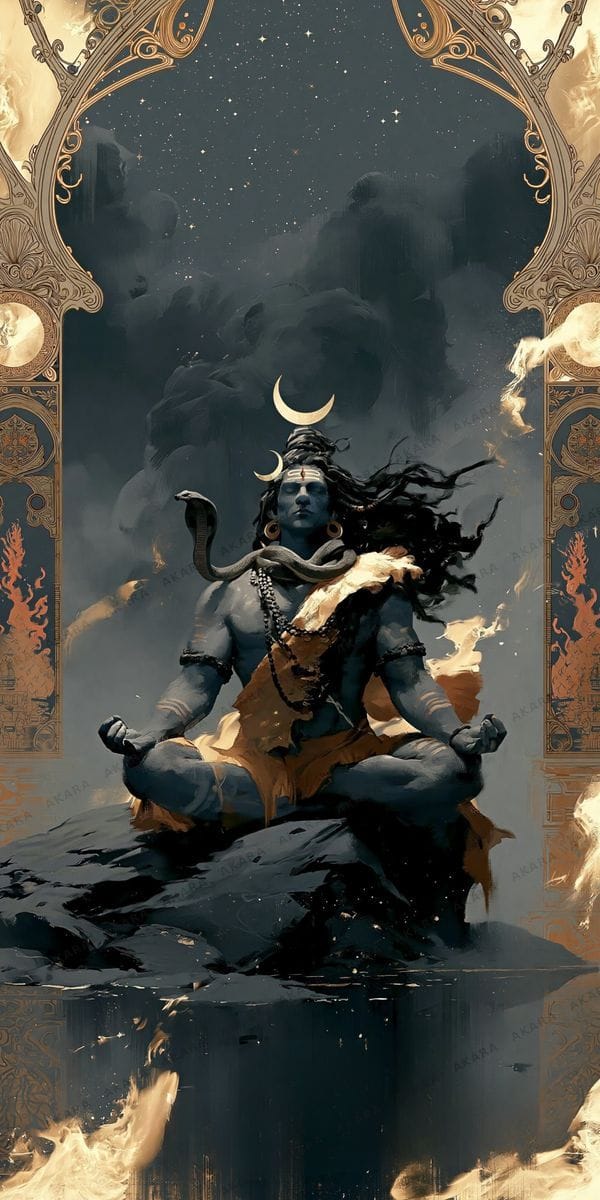
Each morning, before the world's noise finds us, the Vedic panchang offers a quiet orientation — a map not of destiny but of dharmic attunement. Today, that map reads Shukla Dwitiya for the tithi, Swati for the nakshatra, Moon resting in Tula rashi, and the Sun still in Kanya. The yoga of the day is Vishkambha. Each of these elements, understood in the light of classical jyotish and the spirit of Sanatana Dharma, carries a particular texture — an invitation to align our actions, our attention, and our inner life with the rhythms the rishis observed and preserved for us.
The Tithi Today: Shukla Dwitiya
In the Vedic reckoning of time, the tithi — the lunar day — is among the most sacred units of the panchang. Shukla Dwitiya is the second day of the waxing fortnight (shukla paksha), when the crescent moon has just emerged from the darkness of Amavasya and is gently gaining light. The Dharmasindhu and other classical texts describe Dwitiya as a tithi of growth, of beginnings that have found their feet, and of auspicious commencement.
Traditionally, Dwitiya is considered favourable for activities that build upon something newly started — continuing a venture, nurturing a relationship, deepening a practice. The waxing moon carries vriddhi (growth energy), and Shukla Dwitiya rides that tide with particular grace. What was sown at the new moon now receives its first nourishment. This is not a day for grand new launches, but an excellent one for consolidating and tending what you have already set in motion.
"Tithi is the very soul of the panchang," say the classical texts — it governs the quality of the lunar day and the nature of worship suited to it.
Swati Nakshatra: The Star of the Independent Breath
Swati is the fifteenth nakshatra in the Vedic system, spanning 6°40' to 20°00' of Tula (Libra). Its presiding deity is Vayu, the god of wind and breath — subtle, pervasive, and essential. Its symbol is a young sprout trembling in the breeze, or sometimes a sword, representing both adaptability and the capacity to cut through what is superfluous.
Today's moon nakshatra places us in this wind-governed, Tula-anchored energy. Swati is known in classical jyotish as a nakshatra of independence (sva can be read as "self" and ati as "going beyond"), of trade, of movement, and of balance. Vayu's presence here reminds us that breath — prana — is the most immediate bridge between the outer world and our inner life. Those attentive to pranayama traditions will recognise Swati as a nakshatra particularly receptive to breathwork and to the cleansing of subtle channels.
The Moon in Tula rashi amplifies these qualities. Tula is ruled by Shukra (Venus), and its natural orientation is toward harmony, beauty, exchange, and relationship. With the Moon here in Swati's pada, there is a heightened sensitivity to fairness, to aesthetic refinement, and to the quality of our connections with others.
What the Day Traditionally Favours
Drawing from classical texts such as the Muhurta Chintamani and the general principles of Vedic astrology, a day graced by Swati nakshatra and Shukla Dwitiya traditionally supports:
- Trade, commerce, and negotiations — Swati is considered one of the nakshatras auspicious for business dealings, especially those requiring tact and balance.
- Travel, particularly by air or over long distances — Vayu's domain is movement; journeys begun under Swati often unfold smoothly.
- Study and learning — The second tithi supports intellectual pursuits, particularly the continuation of existing studies.
- Arts and music — Tula's Shukra connection brings aesthetic sensitivity; creative work done today may carry unusual refinement.
- Dialogue and diplomacy — Both Tula and Swati incline toward fairness; this is a good day for conversations that require listening as much as speaking.
The yoga today is Vishkambha — the first of the twenty-seven yogas in the panchang. Classical sources describe Vishkambha as one of the arishta yogas (inauspicious yogas), counselling some caution around major new commitments or irreversible decisions, particularly in the early hours. This does not mean the day is inauspicious — it simply suggests that patience and discernment, rather than impulsive action, are the wiser companions today.
Where the Day Counsels Patience
Vishkambha's presence is worth honouring quietly. The tradition does not ask us to become paralysed by astrological caution, but it does invite us to slow the reflex toward haste. On a Vishkambha day, it is wise to:
- Avoid signing contracts or making large financial commitments early in the day.
- Bring extra care to communications that could be misread — Swati's wind-energy can scatter words as easily as it carries them.
- Practise patience if plans feel delayed; the waxing moon will carry forward what is worth carrying.
The Sun in Kanya (Virgo) adds a complementary note of discernment and precision to the day. Kanya's influence, ruled by Budha (Mercury), favours careful analysis, service, and attention to detail — a counterbalance to Swati's sometimes restless independence.
A Reflective Practice for Today
The ancient insight of jyotish is not that the stars compel us, but that they illuminate a particular quality of time — and that a wise person moves with that quality rather than against it. Today, Vayu and Tula together suggest a practice of conscious breath and balanced awareness.
Sit quietly for ten to fifteen minutes, ideally in the morning. Place one hand on your chest, one on your abdomen. Simply witness the breath — swasa (inhalation) and prashwasa (exhalation) — without controlling it. Notice how breath, like Vayu, cannot be seized; it can only be attended to with reverence. This is the spirit of Swati: not grasping, but being present to what moves through us.
If you have a personal deity or a mantra, let it rest lightly on the breath. The Vayu Stuti — a short hymn to the wind-god — or simply the syllable Om carried on the outbreath, is entirely appropriate. Bhakti, as the tradition teaches, does not require elaborate ritual: a moment of genuine attention offered to the divine is itself devotion.
Close with a moment of gratitude for the panchang itself — that careful, centuries-deep inheritance through which our ancestors ensured that no day would pass without an invitation to wakefulness.
A Closing Reflection
The daily panchang is one of Sanatana Dharma's most practical gifts: a living document that marries astronomy, philosophy, and devotional sensibility into a single morning orientation. To consult it is not superstition — it is an act of humility before the intelligences that govern time. Today, Swati's wind carries the crescent moon of Dwitiya across the balanced sky of Tula. The invitation is clear: breathe, tend what you have begun, move with grace rather than force, and let the day's beauty find you.
At Akara, we return to these ancient rhythms not to be governed by them, but to be reminded — each morning — that we live within a cosmos that is, at its heart, deeply ordered and profoundly generous.
Breath, like Vayu, cannot be seized — it can only be attended to with reverence.
Questions & answers
What is Swati nakshatra known for in Vedic astrology?
Swati is the fifteenth nakshatra, ruled by Vayu, the god of wind. It is associated with independence, trade, travel, and adaptability. Its symbol — a young sprout bending in the breeze — captures its essential quality: resilience through flexibility rather than rigidity.
Is Shukla Dwitiya an auspicious tithi?
Yes, Shukla Dwitiya is generally considered auspicious. As the second day of the waxing fortnight, it carries growth energy (vriddhi) and is considered favourable for continuing endeavours, nurturing relationships, and deepening existing practices. Major new beginnings are better reserved for other tithis.
What does Vishkambha yoga mean in the daily panchang?
Vishkambha is the first of the twenty-seven panchang yogas, formed by a specific combination of the sun and moon's positions. Classical texts class it among the less auspicious yogas, counselling caution around irreversible decisions and new major commitments, particularly in the early part of the day. It does not make the entire day inauspicious.
How should I use the daily panchang practically?
The panchang is best understood as a map of time's qualities, not a rigid schedule of what is permitted. Use it to choose the better moments for important activities, to understand the mood of the day, and to select appropriate prayers or practices. It is a tool for attunement, not prediction.
What is a simple spiritual practice suited to Swati nakshatra?
Given Swati's ruling deity Vayu and its connection to breath and movement, a simple breathwork or pranayama session is ideal. Sit quietly, witness the natural rhythm of inhalation and exhalation without forcing it, and if you have a mantra, let it ride gently on the breath. Even ten minutes of this practice honours the nakshatra's spirit.