Maa Kushmanda: The Goddess Who Smiled the Universe Into Being
Today, on Shukla Chaturthi under Nakshatra Anuradha, millions bow before the fourth of the Navadurga — the radiant Goddess whose divine smile kindled the first light of existence.
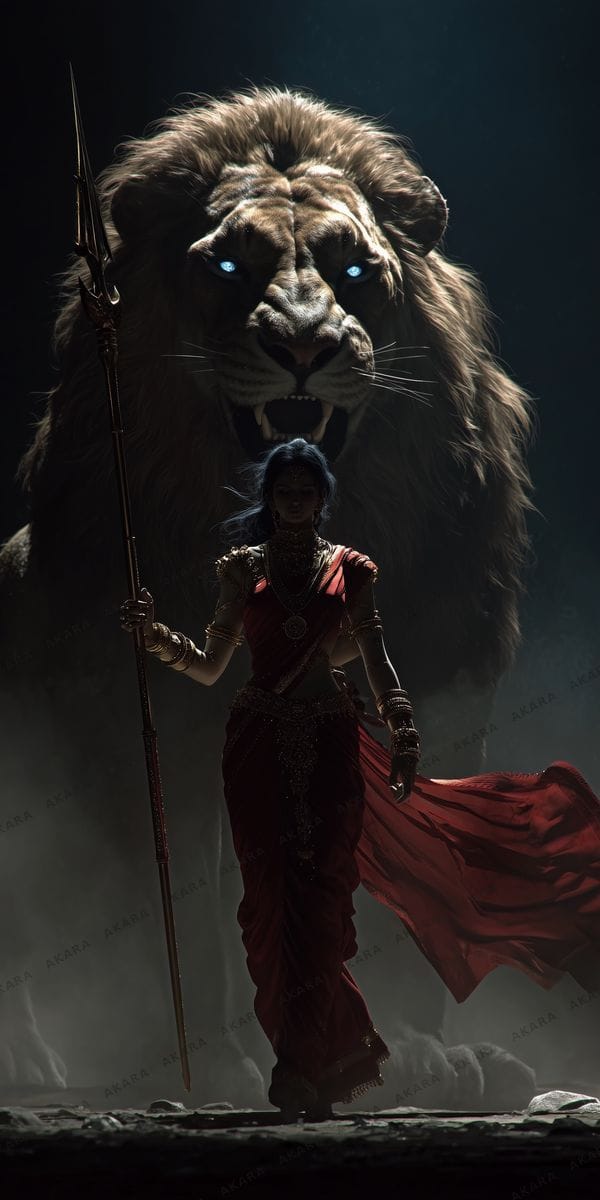
There is a moment, older than time itself, that the Devi Bhagavata Purana asks us to imagine: before creation, there was only an unfathomable void — tamas, the profound dark — and then the Goddess smiled. From that single, luminous gesture, the cosmic egg cracked open, the sun blazed into being, and life poured forth across the fourteen worlds. That Goddess is Maa Kushmanda, the fourth of the Navadurga, and today — on the fourth day of Sharad Navratri 2026, a Shukla Chaturthi graced by the benevolent Nakshatra Anuradha and the auspicious Yoga Ayushman — her name is on the lips of devotees from the Himalayas to the diaspora worldwide.
Who Is Maa Kushmanda? Unpacking the Name
The name Kushmanda (कूष्माण्डा) is a compound of three Sanskrit roots: ku (small or little), ushma (warmth or energy), and anda (egg or cosmic sphere). Together they render her as "She who holds the warm, little cosmic egg within herself" — the primordial womb of the universe, pulsing with solar heat. The Devi Bhagavata and the Markandeya Purana both point to her as the creatrix who preceded all other divine activity. Before the Gods took their seats, before the sages composed a single mantra, Maa Kushmanda was already present — smiling, radiant, and full.
This is precisely why her association with Surya, the Sun, is not merely symbolic. <cite index="22-6">She governs the Sun, and her worship on this day is deeply connected to strengthening the Sun in Vedic astrology.</cite> When the Sun is weakened in one's natal chart — when vitality, confidence, or the capacity for self-expression dims — the tradition points the seeker toward her feet. She is the source-light behind the light.
The Iconography: Eight Hands, One Smile
In temple imagery, Maa Kushmanda is depicted seated upon a lion — simha, the vehicle of courage and dharma. <cite index="22-9,22-10,22-11">She rides a lion, symbolising fearlessness and dharma. In her eight hands, she holds a kamandal filled with the nectar of life, a bow, an arrow, a lotus, a mace, a discus, a rosary, and a jar of honey. The presence of the kamandal of nectar and the jar of honey signifies her role as a healer.</cite>
Eight arms (ashta-bhuja) are the sign of a deity whose reach encompasses all eight directions of the cosmos — no corner of existence lies outside her care. The lotus speaks of purity arising from the waters of creation; the discus (chakra) marks her as a guardian of cosmic order; the jar of honey (madhu-kalasha) is the sweetness of amrita, the nectar of immortality she pours freely upon those who turn toward her.
Her complexion in traditional texts is described as luminous, resembling the golden glow of the rising sun — an apt expression for a Goddess who is solar radiance made feminine and accessible.
Today's Observance: Chaturthi, Anuradha, and the Auspicious Alignment
<cite index="21-6,21-7">October 14, 2026, marks the fourth day of the nine-day festival, which is dedicated to the worship of Maa Kushmanda. On this auspicious occasion, devotees offer prayers and perform rituals to seek the goddess's blessings for good health, longevity, and prosperity.</cite>
The panchang this morning adds further grace to the occasion. <cite index="17-6,17-7">Nakshatra Anuradha rules through the day, and Drik Panchang lists Sarvartha Siddhi and Amrita Siddhi Yoga for this day, which many panchang readers treat as supportive for starting a good deed.</cite> Sarvartha Siddhi (सर्वार्थसिद्धि) — "the fulfillment of all purposes" — and Amrita Siddhi (अमृतसिद्धि) — "the attainment of nectar" — align perfectly with the Goddess who herself holds the nectar of immortality. Yoga Ayushman, governing long life and vitality, completes the frame: this is a day when prayers for health, strength, and longevity land with particular force.
The colour most associated with her worship today is royal blue — <cite index="23-4">a shade said to stimulate vitality and spiritual richness</cite> — and the traditional bhog (sacred offering) is malpua, a sweet pancake, symbolising the sweetness she showers upon her devotees.
The Puja Vidhi: How to Approach Her
The puja vidhi (ritual methodology) for Maa Kushmanda is accessible to every household regardless of elaborate resources. The spirit of the practice is what the tradition emphasises: <cite index="24-2">cleanliness, respectful handling, and sincere devotion are central to the ritual.</cite>
A simple guide for today's worship:
- Sankalpa — take a conscious resolve (sankalpa) at sunrise, stating your intention to honour Maa Kushmanda for health, vitality, and spiritual growth.
- Invocation — light a ghee lamp facing east, the direction of the rising sun, her natural abode.
- Offering — place yellow flowers, a lotus if available, and malpua or sweet rice before her image or a sacred yantra.
- Mantra — the traditional stotra from the Devi Kavach reads: "Surāsampūrṇa Kalaśaṃ Rudhirāplutam Eva Ca / Dadhānā Hastapadmābhyāṃ Kūṣmāṇḍā Śubhadāstu Me" — "May Kushmanda, who holds in her lotus hands a pot overflowing with divine nectar, grant me auspiciousness."
- Anahata Dhyana — <cite index="23-4">her ruling chakra is the Anahata, the heart chakra</cite>; spend a few minutes in meditation, visualising a golden-solar light at the centre of the chest, expanding outward with each breath.
- Closing Aarti — conclude with the Navadurga aarti and distribute the prasad.
<cite index="22-13,22-14">Devotees recite her katha on the fourth day of Navratri to remember that even in the darkest of times, a single spark of divine energy can create a universe of light. The story reminds us that she holds the power to heal, to nourish, and to dispel the darkness of ignorance and disease.</cite>
The Akara Lens: Creation as an Act of Joy
In our age of searching — for purpose, for healing, for a sense that the universe is not indifferent — Maa Kushmanda offers a theology that is quietly revolutionary. She did not create the world out of necessity or obligation. She created it by smiling. The cosmos, in this vision, is not a burden to be endured but an expression of divine delight — ananda — and every living being within it is, at the deepest level, a continuation of that original joy.
Sanatana Dharma has always understood the universe as lila — the sacred play of consciousness — and Kushmanda is perhaps its most vivid metaphor. The seeker who comes to her does not come in fear but in recognition: that the same creative warmth that ignited the sun lives, dormant and glorious, within every human heart. <cite index="22-7">When you observe this day, you are essentially aligning yourself with this solar energy.</cite>
The Upanishadic declaration "Aham Brahmasmi" — "I am the Infinite" — finds its most accessible, warm, and motherly face in Kushmanda. She does not ask the devotee to ascend to some austere height. She simply smiles — and the light comes on.
"Even in the darkest of times, a single spark of divine energy can create a universe of light."
On this Shukla Chaturthi, under the steady stars of Anuradha and the life-giving Yoga Ayushman, may every seeker find in Maa Kushmanda's smile the warmth they have been looking for. May the ghee lamps burn bright in every home, may the malpua be offered with an open heart, and may the universe — that ancient, radiant egg she holds within herself — feel just a little less vast and a little more like home.
She did not create the world out of necessity — she created it by smiling. The cosmos is a continuation of that original joy.
Questions & answers
Why is Maa Kushmanda worshipped on the fourth day of Navratri?
The nine nights of Navratri follow a sequence honouring the nine forms of the Goddess (Navadurga) in a progression from earth to cosmos. Maa Kushmanda, as the creatrix who gave birth to the universe itself, occupies the fourth position — marking the midpoint of the festival, when devotion deepens and the seeker turns from the personal toward the universal.
What is the meaning of the name 'Kushmanda'?
Kushmanda is a compound of three Sanskrit words: ku (little/small), ushma (warmth/energy), and anda (egg or cosmic sphere). Together they describe her as 'She who holds the warm cosmic egg within herself' — a beautiful image of the primordial creatrix carrying all potential existence inside her.
What is the significance of Maa Kushmanda's connection to the Sun?
In Vedic tradition, Maa Kushmanda is the deity who governs Surya, the Sun. She is regarded as the source of solar energy and its life-giving warmth. Worshipping her is believed to strengthen a weak Sun in one's astrological chart, thereby improving vitality, confidence, digestion, and the quality of one's life-force (prana).
What should be offered to Maa Kushmanda on Navratri Day 4?
The traditional bhog (sacred food offering) for Maa Kushmanda is malpua — a sweet pancake — symbolising sweetness and nourishment. Yellow flowers, a ghee lamp, and pure water are also traditional offerings. Sincerity and cleanliness of heart are considered more important than elaborate materials.
Which chakra is associated with Maa Kushmanda, and how does one meditate on it?
Maa Kushmanda governs the Anahata chakra, the heart centre, located at the centre of the chest. During her puja, devotees meditate on a warm golden-solar light at the heart, visualising it expanding with each breath. This practice is said to cultivate compassion, vitality, and an open heart — qualities the Goddess herself embodies.