Maha Ashtami 2026: The Night the Goddess Blazed as Chamunda
As the Ashtami tithi unfolds across India and the world, the Goddess reveals her most luminous and most fierce faces simultaneously — and every devotee is invited to witness the turning of the cosmic tide.
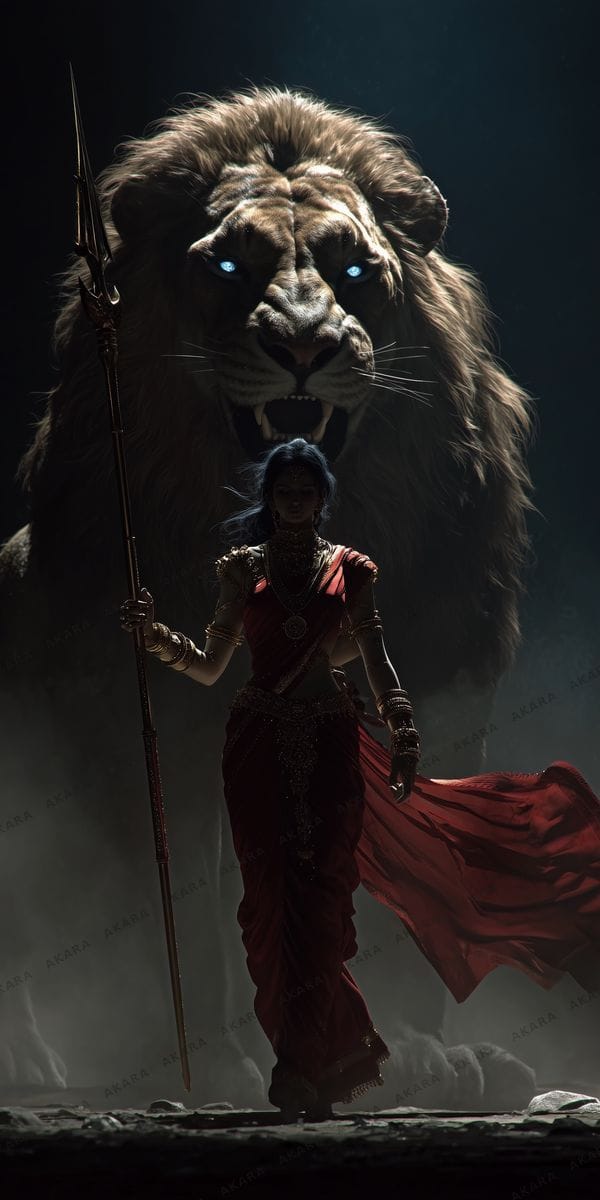
There is a moment in Sharad Navratri when the atmosphere itself seems to change — lamps burn a little brighter, the air in the puja room feels charged, and even those who have spent the day in an office or a kitchen feel the unmistakable pull of the sacred. That moment is Maha Ashtami, the eighth night of the Great Nine, when Devi is worshipped simultaneously as Mahagauri — radiant, serene, white-robed — and as Chamunda, the blazing slayer of demons. This year, the Ashtami tithi begins on October 18 and is observed as Maha Ashtami on Monday, October 19, 2026, at the heart of Sharad Navratri. Temples from Varanasi to Vancouver are alive with pushpanjali and the sound of dhak drums. For seekers on the Akara path, this is not a festival to observe from a distance — it is an invitation to step inside the fire of devotion.
Ashwin Shukla Ashtami — Reading the Tithi
The Hindu Panchang is never merely a calendar; it is a map of sacred time. Today, Shukla Saptami gives way to the Ashtami tithi, which according to the New Delhi Panchang begins at 8:27 AM on October 18 and concludes at 10:51 AM on October 19. Because the sunrise rule (udaya tithi) governs festival observance — meaning that the tithi present at sunrise on a given day determines that day's character — Maha Ashtami is formally observed on Monday, October 19. Yet the Ashtami energy is already fully present, and devout households across India have begun their preparations.
<cite index="21-6">Sharad Navratri 2026 is being celebrated from October 11 to October 20, with Maha Ashtami and Maha Navami falling on October 19, according to the commonly followed North Indian Panchang.</cite> The confluence of two great tithis on one calendar date is not confusion — it is the cosmos concentrating its grace.
Maa Mahagauri: The Goddess Who Earned Her Radiance
<cite index="20-2">Maha Ashtami is dedicated to Goddess Durga and her eighth form, Maa Mahagauri.</cite> The name itself carries the teaching: Maha (great) + Gauri (the bright, the fair). Yet this luminosity was not given — it was won.
<cite index="27-13">According to tradition, Goddess Parvati's skin turned dark from years of severe penance to win Lord Shiva.</cite> <cite index="27-6,27-7">Pleased with her devotion, Shiva bathed her in the waters of the Ganga, and she became radiant and fair, earning the name Mahagauri. The day is therefore seen as a reward for patience and devotion.</cite>
This myth speaks directly to every sadhaka. The darkness of tapas — the long discipline, the unglamorous inner work — does not diminish us. It prepares us for a radiance we could not have sustained without it. Mahagauri is dressed in white, rides a white bull, and holds a trident and a damaru: purity riding on Dharma, with the instruments of Shiva at her sides. She is the form of Devi that says: your constancy has been seen; your brightness is coming.
<cite index="20-10,20-11">The day honours Goddess Durga as the source of divine strength and protection, and devotees worship the eighth form of Navadurga, associated with purity, peace and compassion.</cite>
The Sandhi Puja: 48 Minutes at the Edge of Eternity
If there is one ritual of Sharad Navratri that stands utterly apart in its precision and power, it is the Sandhi Puja — the junction worship. Sandhi (सन्धि) means meeting-point, junction, the seam between two states.
<cite index="28-7">Sandhi Puja is performed at the precise moment where Ashtami tithi ends and Navami tithi begins — a 48-minute window considered the most powerful time of Navratri.</cite> <cite index="26-8,26-9">This 48-minute window (24 minutes before and 24 minutes after the transition) is considered the most auspicious moment of the entire Navratri cycle. According to scripture, it was during this exact transition that Goddess Chamunda appeared and slew the demons Chanda and Munda.</cite>
<cite index="27-3,27-4">In Bengal, Maha Ashtami marks the peak of Durga Puja, with Sandhi Puja held at the Ashtami-Navami junction. This year the Sandhi Puja falls around 10:27 AM to 11:15 AM, where Ashtami meets Navami.</cite>
For the 108 lamps that are lit at the Sandhi moment in great Bengali pandals, for the drumbeats that crescendo at that precise junction, there is a single idea at work: time has a pulse, and at this pulse-point the veil between the manifest and the unmanifest grows thin. The Devi Mahatmya (Durga Saptashati), the foundational scripture of Navratri, describes how Ambika — the Great Goddess — commanded the emergence of Chamunda from her own brow to destroy Chanda and Munda when their presence threatened to tip the cosmic war. Chamunda did not emerge gently. She came with a roar, dark and terrifying and precise. The Sandhi Puja honours that exact moment of sacred ferocity — the instant when the universe chose Dharma over chaos.
Kanya Pujan: The Living Goddess in Every Child
Among the most moving expressions of Shakta bhakti is Kanya Pujan — the ritual worship of young girls as living embodiments of the Goddess.
<cite index="26-10,26-11,26-12">Maha Ashtami is marked by Kanya Puja, in which nine young girls (between the ages of 2 and 10) are worshipped as the nine forms of Navadurga. Their feet are washed, they are adorned with red clothing and flowers, offered a full meal of puri, chana, and halwa, and given gifts. This beautiful ritual embodies the Shakta teaching that the divine feminine is present in every woman and girl.</cite>
<cite index="21-8">The ritual is performed to honour the feminine form of the Divine and seek the blessings of Maa Durga.</cite> Nine girls, nine forms of Devi — Shailaputri, Brahmacharini, Chandraghanta, Kushmanda, Skandamata, Katyayani, Kalaratri, Mahagauri, and Siddhidatri — each embodied in a living child who has no idea she is, at that moment, a goddess receiving worship. There is a radical theological statement in this: the sacred is not locked in stone or gold. It breathes, it runs, it asks for another serving of halwa.
<cite index="20-5">Devotees celebrate the day by offering prayers, observing fasts, performing Kanya Puja and seeking the Goddess's blessings for peace, courage and prosperity.</cite> Families who have kept the Navratri fast through all nine days often choose Ashtami morning, immediately after Kanya Puja, as the moment to break their fast — an act of receiving the Goddess's permission before returning to ordinary nourishment.
How Devotees Around the World Are Marking the Day
Maha Ashtami in 2026 is vibrantly alive across every time zone where the Hindu diaspora has put down roots. <cite index="1-3">Temples such as the Ganesha Temple in New York are observing Durgashtami with Sri Durga Deepa Namaskaram this evening, alongside Ras Garba through the night.</cite> <cite index="16-2,16-3">Sanatan Mandir in Atlanta is holding Navratri Mata Ki Chowki and a Durga Ashtami Havan today, followed by Aarti, Kanjak Pujan, and Mahaprasad.</cite>
In Kolkata — Durga Puja's undisputed world capital — every neighbourhood pandal is at its highest pitch. <cite index="27-14">Ashtami is also the busiest day at Mumbai's Durga Puja pandals, where film families have for years offered pushpanjali in traditional attire.</cite> In homes, the Durga Saptashati is read aloud; in temples, the dhak and shehnai play through the night. The fragrance of shiuli flowers, which bloom at dawn in Bengal and are offered to the Goddess, carries a particular poignancy — they last only a day, these small white blossoms, and their brief, complete flowering is itself a teaching about offering.
A Reflection: On the Eve of the Junction
Sanatana Dharma, at its deepest, is not a religion of escape — it is a tradition of engagement. Maha Ashtami does not ask us to flee the darkness of the world. It shows us a Goddess who enters the darkness, names it, and defeats it — first as the patient, luminous Mahagauri, then as the ferocious, compassionate Chamunda. Both faces are hers. Both are needed.
As this Ashtami tithi deepens and moves toward its Sandhi — that 48-minute window when the cosmic tide turns — the invitation of the Akara path is simple: light your lamp, sit before the Goddess, and be present. Not with a list of requests, but with an open heart. Sarva mangala mangalye, shive sarvartha sadhike — O auspicious one, who accomplishes all purposes. In that stillness, you may find that you are not watching the battle from the outside. You have always been inside it, and She has always been winning.
The Sandhi Puja does not ask you to watch the cosmic battle from the outside — it places you inside it, for 48 luminous minutes.
Questions & answers
When exactly is Maha Ashtami in 2026 — October 18 or 19?
The Ashtami tithi begins on October 18 at approximately 8:27 AM IST and ends on October 19 at approximately 10:51 AM IST. Because the udaya tithi (sunrise rule) governs festival observance, Maha Ashtami is formally celebrated on Monday, October 19, 2026, when the Ashtami tithi is present at sunrise. Some communities in western India and the diaspora observe it on the 18th.
What is Sandhi Puja and why is it so important?
Sandhi Puja is the ritual performed at the precise junction of Ashtami and Navami tithis — a 48-minute window (24 minutes before and 24 minutes after the transition). It is considered the most powerful moment of the entire Navratri cycle. According to the Devi Mahatmya, it was at this exact transition that Goddess Chamunda appeared and slew the demons Chanda and Munda. In 2026, the Sandhi window falls around 10:27–11:15 AM IST.
Who is Maa Mahagauri and what does she represent?
Mahagauri is the eighth form of Navadurga, worshipped on Maha Ashtami. She is depicted in white, riding a white bull, and is associated with purity, peace, and compassion. According to tradition, she achieved her radiant complexion after years of severe penance for Lord Shiva. Her story teaches that patient, sustained devotion — however dark the process — ultimately results in luminous grace.
What is Kanya Pujan and how is it performed?
Kanya Pujan (also called Kanjak) is the ritual worship of nine young girls, aged between 2 and 10, as living embodiments of the nine forms of Navadurga. Their feet are washed, they are offered red clothing, flowers, and a full meal of puri, chana, and halwa, and given gifts. Many devotees who have fasted through Navratri break their fast only after completing Kanya Pujan on Ashtami morning.
How can I observe Maha Ashtami if I am not near a temple?
A simple home observance is deeply valid in the Shakta tradition. Rise before sunrise, bathe, light a lamp or diya before an image of Devi, and recite any portion of the Durga Saptashati or the Devi Stuti. If you have young girls in the family or neighbourhood, honouring them with a small Kanya Pujan is deeply auspicious. At the Sandhi time, light 108 diyas if possible, or simply sit in still meditation and offer the Goddess your full, undivided attention.