Shravana Nakshatra & Navami Tithi: A Day to Listen and Devote
When the Moon rests in the nakshatra of the Cosmic Listener, every act of attention becomes a form of worship.
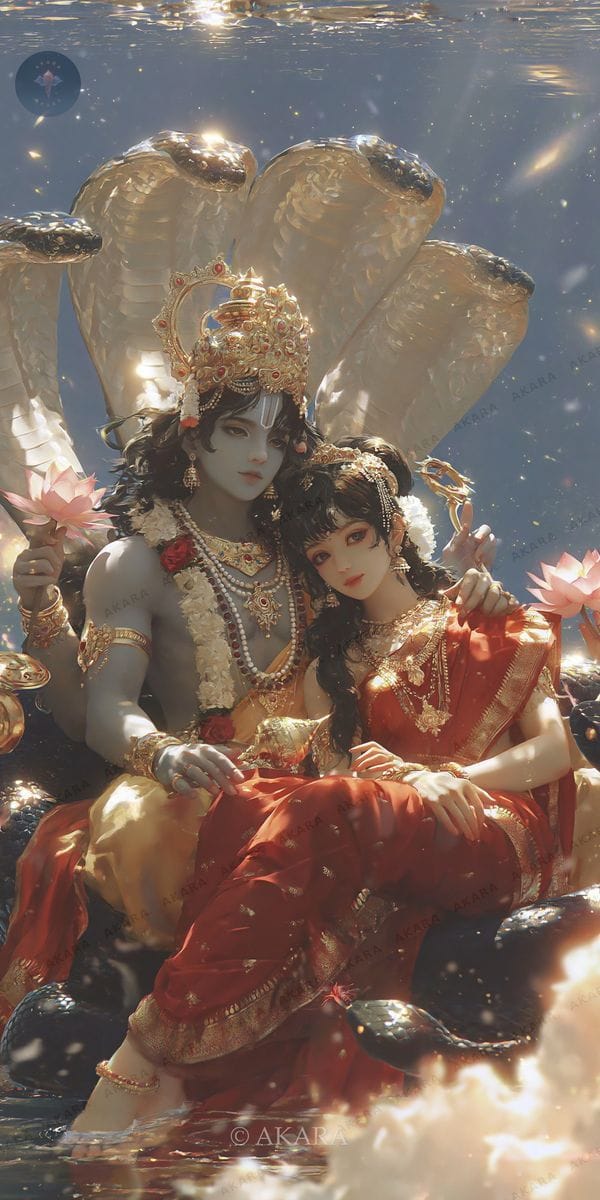
There is a particular quality of stillness that arrives when you sit near someone who truly listens — not waiting for their turn to speak, but genuinely receiving what is offered. The nakshatra called Shravana, presided over by Vishnu himself, carries precisely that quality into the day. Combined with the Shukla Navami tithi, a Moon settled in the steady earth sign of Makara, and the Sun's passage through Tula, today's panchang is an invitation: slow the noise, open the inner ear, and let devotion find its own direction.
Understanding the Panchang: The Living Calendar
The Vedic panchang — literally 'five limbs' (pancha = five, anga = limb) — is far more than a calendar. It tracks the tithi (lunar day), vara (weekday), nakshatra (lunar mansion), yoga (a combined luni-solar measure), and karana (half-day division). Ancient sages understood that time is not a neutral container but a qualitatively textured field. Each configuration carries its own svabhava — inherent nature — that shapes what is likely to flow easily and what may ask for more patience. Reading the panchang is not about superstition; it is about alignment, the art of moving with the current rather than against it.
Today's configuration: Shukla Navami tithi, Shravana nakshatra (third pada), Yoga Shoola, Sun in Tula (Libra), and Moon in Makara (Capricorn). Each of these deserves a moment's attention.
Shravana Nakshatra: The Star of Sacred Listening
Shravana — from the Sanskrit root śru, 'to hear' — spans degrees 10°00' to 23°20' in Makara (Capricorn) and is presided over by Vishnu, the Preserver, whose very nature is to sustain through attentive, compassionate engagement with creation. The nakshatra's symbol is three footprints, said to represent the three strides of Vamana, Vishnu's dwarf avatar, who measured and reclaimed the universe in three steps. This imagery points to something profound: enormous things can be accomplished through what appears modest and methodical.
The third pada of Shravana falls in the navamsha of Gemini, lending the day a communicative, curious edge. This is an excellent time for:
- Deep listening — to teachers, to elders, to scripture read aloud
- Learning and study, especially from oral tradition (shruti means both 'that which is heard' and the Vedic canon itself)
- Pilgrimage in spirit or in person — Shravana is associated with sacred journeys
- Chanting and recitation — the vibrational quality of sound is especially potent under this nakshatra
- Acts of service rooted in Vishnu's qualities of care and steadiness
The Vishnu Sahasranama, traditionally recited on days aligned with Vishnu-related nakshatras, finds a natural home here. Even a few verses chanted with attention honour the day's spirit.
Shukla Navami: The Ninth Lunar Day
The Navami tithi — the ninth day of the bright fortnight (Shukla Paksha) — is associated with Durga in many Shaiva-Shakta traditions, most famously in the Navratri sequence where Navami marks the culmination of the goddess's worship. Even outside that festival context, Navami carries an undercurrent of shakti — divine power — and is traditionally considered favourable for works requiring courage, clarity, and purposeful conclusion.
In traditional muhurta (electional astrology), Navami is a Rikta tithi — one of the 'empty' tithis (4th, 9th, 14th) that the texts counsel should be approached thoughtfully for new undertakings. This does not mean the day is inauspicious; it simply suggests that Navami is better suited for continuation, completion, and contemplation than for inaugural ventures. Beginning a new business contract or a major construction project on Navami is traditionally deferred; deepening a practice already begun, or bringing something to its natural close, is supported.
"The tithi governs the quality of time as the rasa governs the quality of experience. Neither is good nor bad — each calls for its own wisdom." — traditional jyotish teaching
Moon in Makara and the Yoga Shoola
With the Moon moving through Makara (Capricorn), the emotional body is drawn toward practicality, structure, and endurance. Makara is a chara (movable) rashi ruled by Shani (Saturn), and though Saturn's influence can sometimes feel austere, it gifts the day with a rare steadiness — a capacity to sit with what is, without rushing toward what might be. This is a good day for patient, methodical work rather than impulsive action.
The Yoga Shoola (literally 'trident' or 'thorn') is one of the twenty-seven yogas derived from the combined longitudes of the Sun and Moon. Shoola yoga asks for careful navigation — it is not a day to force matters, pick quarrels, or push against resistance. Traditional guidance advises avoiding confrontation, being measured in speech, and channelling the day's energy inward. Interestingly, Shoola also resonates with Shiva's trishula, the trident that destroys illusion — making this a quietly powerful time for inner clearing and honest self-examination.
The Sun in Tula (Libra) is in a state of neecha (debilitation) in Vedic astrology, which means the solar principle of will and self-assertion is subtler than usual. This is not cause for alarm — it is simply a season for diplomacy, balance, and relationship over ego-assertion. Partnerships and collaborative work find a more natural current than solo, forceful initiatives.
A Reflective Practice for Today
Rooted in the spirit of Shravana — the nakshatra of sacred hearing — today's practice is simple and can be done in five minutes or fifty.
**The Practice of Mauna and Shravanam:**
1. Find a quiet place. Sit comfortably, spine upright. 2. Close your eyes. For the first few minutes, observe every sound in your environment without labelling or judging — simply hear. 3. Then, either play or recite aloud a verse from scripture — a shloka from the Bhagavata Purana, a verse of the Vishnu Sahasranama, or any mantra you hold dear. Listen to the sound rather than merely producing it. 4. Rest in the silence after the chant. In jyotish tradition, Shravana is said to bestow wisdom upon those who genuinely receive knowledge rather than merely accumulate it. 5. Before rising, offer a short intention: "May my listening today be an act of devotion."
This practice aligns with the bhakti path at its most elemental — not grand ritual, but a humble turning of the senses toward the sacred.
Closing Reflection
Sanatana Dharma has always understood that the cosmos speaks — through the movement of planets and moons, through the qualities of each passing tithi, through the subtle texture of an ordinary day. The panchang is one way the tradition makes this cosmic speech legible. Today, Shravana and Navami together counsel the same thing: do less, receive more. Finish what is underway, honour what has already been given, and let the practice of listening — to scripture, to elders, to the quiet pull of your own dharma — be the axis around which the day turns. This is not passivity; it is the kind of attentive stillness from which all genuine action eventually springs.
May my listening today be an act of devotion.
शान्ताकारं भुजगशयनं पद्मनाभं सुरेशं śāntākāraṁ bhujagaśayanaṁ padmanābhaṁ sureśaṁ
In peaceful form, resting on the serpent, lotus-naveled Lord of gods — the eternal protector who sustains all creation through divine repose.
Questions & answers
What is Shravana nakshatra and why is it significant?
Shravana is the 22nd nakshatra in Vedic astrology, spanning Makara (Capricorn). Its name comes from the Sanskrit root meaning 'to hear,' and it is presided over by Vishnu. It is associated with sacred listening, learning, pilgrimage, and the oral transmission of wisdom. Days governed by Shravana are traditionally favourable for study, chanting, and devotional practice.
What does Shukla Navami tithi mean for daily activities?
Navami is the ninth lunar day of the bright fortnight. It is a Rikta tithi, which traditional muhurta texts advise is best suited for continuing or completing existing work rather than beginning major new ventures. It carries an undercurrent of Shakti energy and is associated with Durga in many traditions. Activities like study, spiritual practice, and completing projects in progress are well supported.
What does Moon in Makara indicate in Vedic astrology?
Moon in Makara (Capricorn) lends the emotional field a practical, structured, and enduring quality. Ruled by Shani (Saturn), Makara encourages patience, methodical effort, and steadiness over impulsive action. This placement is good for grounded, sustained work and for sitting with situations as they are rather than forcing change.
What is Yoga Shoola in the panchang?
Yoga Shoola is one of the 27 yogas calculated from the combined longitudes of the Sun and Moon. Shoola means 'thorn' or 'trident.' Traditionally it counsels care in speech and action, avoiding confrontation, and turning energy inward. It can also be seen as a time for clearing inner obstacles, resonating with Shiva's trishula that destroys illusion.
How can I honour the panchang without being superstitious?
The panchang is best understood as a qualitative map of time, not a fatalistic script. Just as a weather forecast helps you plan without controlling the weather, the panchang helps you align your activities with natural rhythms. Treating it as traditional guidance — a framework for mindful living rooted in Sanatana Dharma — keeps it meaningful and grounded, far from superstition.